Virtual reality (VR) is transforming how luxury properties are marketed, especially mega mansions. Instead of relying on static photos, VR tours allow potential buyers or renters to explore properties remotely, immersing them in the lifestyle and ambiance each home offers. Here’s what you need to know:
- Why VR Works: 75% of buyers prefer virtual tours, and properties with VR see increased engagement and faster sales or luxury rentals.
- Key Features: VR tours highlight architectural details, local surroundings, and lifestyle elements, making properties feel more personal and appealing.
- Practical Benefits: Buyers can explore properties from anywhere, while property managers can showcase unique features, local experiences, and beautiful event venues.
- Cost and Tools: Basic 360° tours cost $300–$500, while interactive VR tours range from $2,000–$5,000. Popular platforms like Matterport and iGUIDE are recommended for high-end results.
Incorporating VR into property marketing isn’t just a trend – it’s an effective way to connect with high-net-worth clients, showcase a property’s potential, and close deals faster.
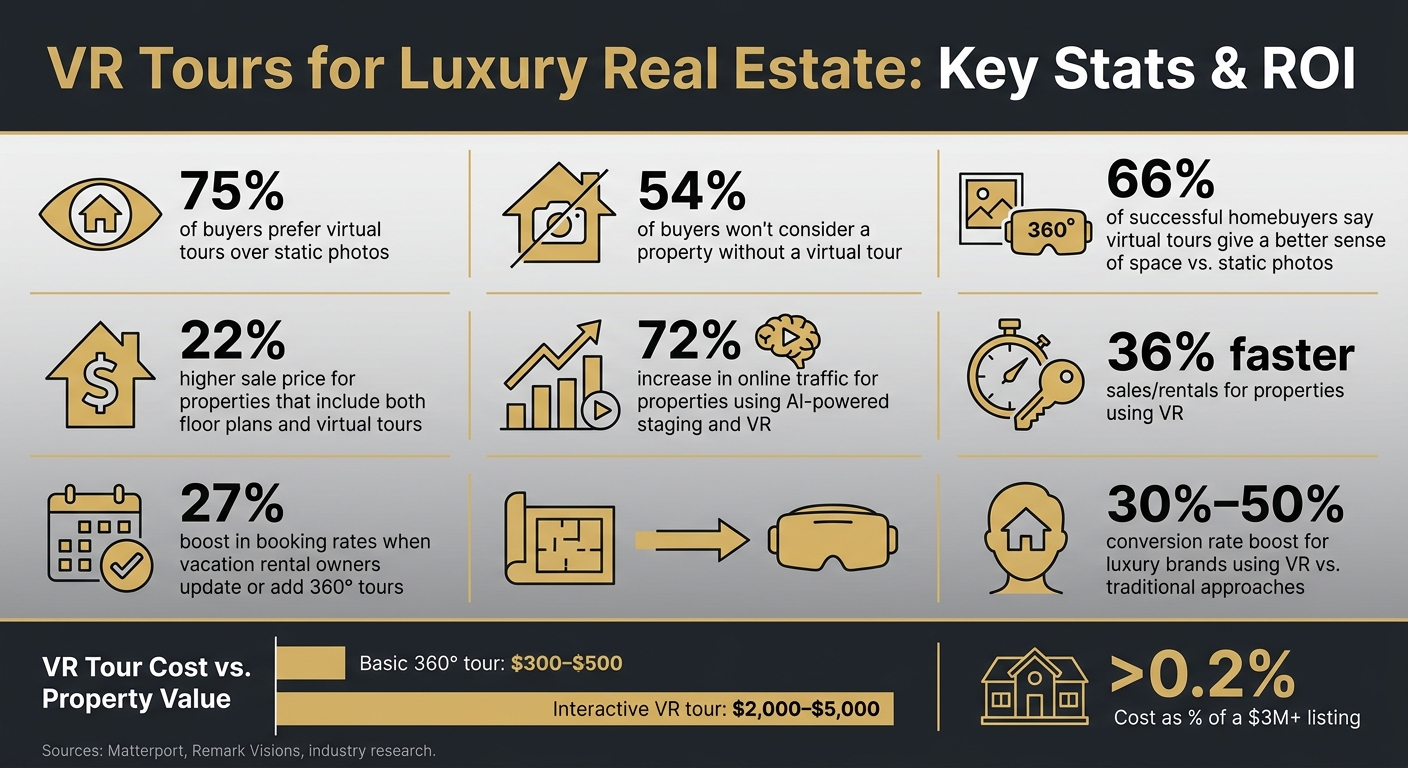
VR Tours for Luxury Real Estate: Key Stats & ROI
360 PM Luxury VR Home Tour – West Hollywood, California
sbb-itb-161ccc1
Preproduction Strategy Checklist
Preproduction is the stage where you define a property’s story, weaving it into every visual, sound, and interactive element of your VR experience.
Define the Property’s Location Narrative
The location of a property – whether it’s a Malibu cliffside estate, a Texas Hill Country ranch, or a Miami waterfront compound – plays a huge role in shaping its identity. Your first step is to clearly define that identity.
Start by pinpointing the core objective of the VR experience: is it about showcasing a coastal lifestyle, highlighting historical architecture, or demonstrating event potential? The answer will guide every decision you make from that point forward. After identifying the objective, select a theme that feels authentic to the location.
"A well-chosen theme not only enhances the guest experience but also attracts specific target markets that are passionate about particular interests or hobbies." – LocalVR Team
Next, identify key storytelling points within the space – places where viewers naturally pause, like a grand foyer, a window with sweeping views, or a chef’s kitchen island. These spots act as anchors for your narrative. Add interactive elements at these points, such as audio commentary, architectural details, or insights into local art, to deepen the story tied to the location.
Identify the Target Audience
The design of your VR tour will vary depending on the audience. A tour for a film scouting team will look very different from one aimed at high-net-worth vacationers or corporate event planners. Understanding your audience is crucial to deciding what to highlight.
For event planners, focus on logistics: the capacity of the great room, the flow between indoor and outdoor spaces, and how the lighting looks at specific times, like dusk. For vacationers, emphasize lifestyle elements: waking up to ocean views, the privacy of the pool, or the property’s proximity to dining and activities. On the other hand, film and media teams care about the space’s raw potential and technical access. Tailor your content to meet the specific needs of each group.
Also, consider accessibility. Ensure the tour works across platforms – whether it’s a browser or a VR headset – and include narration or captions to accommodate international clients.
Once you’ve nailed down the audience and technical requirements, expand the strategy by tying the property to its surroundings.
Plan How to Integrate the Surrounding Destination
A property doesn’t exist in a vacuum, and neither should your VR tour. Incorporating the local destination adds depth to the story and makes the experience more engaging.
"By leveraging local experiences, such as tours, activities, and partnerships with nearby businesses, you can offer your guests a deeper connection to the destination and create a unique selling point for your property." – LocalVR Team
Create a detailed run sheet that outlines each content moment based on time, location, and purpose. This could include a sunrise shot from a rooftop terrace, a visit to a nearby farmers’ market, or a chef’s demonstration using local ingredients. Schedule these moments during optimal conditions, like the golden hour, to capture the best visuals.
Look for local partners – such as wineries, private boat charters, or celebrated restaurants – that can be seamlessly integrated into the narrative. These partnerships can showcase the lifestyle that comes with the property, extending its appeal beyond its physical boundaries.
With a solid preproduction plan in place, you’ll be ready to move into the technical setup phase and bring the story to life.
Technical and Design Setup Checklist
Building on your preproduction strategy, these technical choices help bring the mansion’s story to life.
Choose the Right VR Format and Platform
Pick a VR format that fits your goals and budget. For a basic overview, 360° photo tours cost around $300–$500, while interactive walkthroughs, priced between $2,000–$5,000, deliver a more immersive experience. For luxury properties, the interactive option is often worth the cost – 54% of buyers won’t even consider a property without a virtual tour.
When it comes to platforms, Matterport Pro is the go-to for high-end immersive walkthroughs, while iGUIDE stands out for detailed floor plans and precise measurements, particularly useful for clients working with architects or designers. Whatever platform you choose, ensure it works seamlessly across smartphones, tablets, desktop browsers, and VR headsets. Mobile optimization is especially crucial for international buyers or busy professionals.
"Virtual tours aren’t optional for luxury real estate anymore – they’re the primary qualification tool for serious buyers." – Marci James
Start with the property’s most striking feature – whether it’s a grand foyer, a rooftop terrace with sweeping views, or a drone shot showcasing the estate. These first impressions set the tone for the entire tour. From there, stage the property to reflect its unique setting.
Stage the Property to Reflect Its Location
Once you’ve chosen your platform and format, focus on staging. The visual presentation should capture the essence of the property’s location. For instance, a Malibu beachfront mansion should exude a completely different vibe than a home in New Orleans’s Garden District. Highlight the architectural style – Mediterranean, Modern, Colonial Revival, or another – and use staging to make that style instantly recognizable. Incorporate ambient audio that matches the setting to deepen the sense of place.
"One client may appreciate the industrial aesthetic with intricate mechanical structures. Another might be drawn to antique statues and terracotta features." – RexTheme
Meet Technical Quality and Accessibility Standards
High-quality visuals are critical. Use 4K or higher resolution to capture details like marble veining or intricate woodwork. For accuracy, professional 3D scanning can create a digital twin with dimensions accurate to within 1%, giving remote buyers a realistic sense of scale.
"Anything less than 4K resolution will appear amateur compared to the property’s actual quality." – Remark Visions
Accessibility is just as important. Aim for WCAG 2.1 AA compliance by including features like captions, multilingual audio or text for international clients, keyboard navigation shortcuts, and an instant mute option for those with hearing devices. For added inclusivity, consider a "Visually Impaired Mode" and an "Epilepsy Safe" mode to minimize flashing or high-contrast effects. Finally, be transparent – clearly label any virtual staging or digital enhancements so viewers know they’re seeing a representation rather than the current physical state.
Destination Storytelling Checklist
Integrate the local context to create a strong connection between the property and its surroundings.
Highlight Architectural and Design Details
Use VR hotspots to draw attention to standout architectural elements, like a hand-carved staircase or a ceiling medallion featuring regional designs. These interactive points can include short audio clips or pop-up text explaining the craftsmanship or the story of the artisan behind the work.
For delicate or historically important features, consider using photogrammetry to create detailed 3D models. This allows users to explore intricate details – like marble veining or custom woodwork – virtually and without physical contact. Enhance these visuals by simulating golden-hour lighting with a mix of ambient, task, and accent lighting.
Another way to engage design-focused clients is by highlighting the origins of furnishings. Share details about where each piece came from and the artisans involved in its creation. This approach appeals to those who value meaningful, well-crafted design.
The story of a property isn’t just about its structure – it’s also about the cultural elements that bring it to life.
Feature Local Art, Food, and Lifestyle Experiences
Pair architectural features with touches that reflect the local vibe. Include items like artisanal ceramics, locally sourced guidebooks, or thoughtfully curated welcome baskets to give guests a sense of place. In the VR tour, integrate short lifestyle video clips (15–30 seconds) showcasing unique experiences – such as a private chef preparing a regional dish or a serene yoga session at sunrise on the terrace.
For properties managed by platforms like Essentialyfe, highlight real services such as private chefs or concierge amenities, showing them in action to enhance the tour’s authenticity.
Collaborating with local galleries or wineries to feature their work in the VR experience can also add depth. This not only boosts the cultural connection but also creates co-marketing opportunities without significantly increasing production costs.
While these interior elements set the scene, the outdoor environment completes the story.
Add Destination Scenes to the VR Tour
Use drone photography and 360° cameras to capture breathtaking views of the property’s surroundings. Whether it’s a canyon glowing at dusk, a vineyard bathed in midday light, or a city skyline sparkling at night, these scenes help anchor the property to its environment. Showcasing the property under different lighting conditions – like sunrise versus midday – adds authenticity and gives potential clients a richer perspective.
To elevate the experience, some teams are experimenting with scent diffusers synced to the VR tour. Imagine the scent of an ocean breeze during a beachfront walkthrough or the earthy aroma of cedar in a mountain retreat.
Finally, include an interactive guide or digital content highlighting nearby attractions, such as hiking trails, restaurants, and cultural landmarks. This allows potential clients to envision not just the property but the lifestyle that comes with it.
Operations, Testing, and Upkeep Checklist
Once you’ve nailed the storytelling elements for your destination, it’s time to focus on how to roll out, refine, and maintain your VR experience over time.
Use VR Tours in Marketing and Event Planning
Incorporate VR tours into every client interaction – don’t just treat them as an extra. Use them during listing presentations on a tablet or laptop to guide potential renters, event planners, or production scouts through the property’s flow before they even step foot on-site. For event proposals, a VR walkthrough helps clients visualize how a reception, film shoot, or private dinner could unfold across the estate.
This approach is particularly effective for properties listed on platforms like Essentialyfe. Event planners organizing private chef dinners, luxury car arrivals, or large-scale gatherings can use the VR tour to coordinate logistics remotely. You can also boost your digital marketing by creating a dedicated landing page for each property with the VR tour as its centerpiece. Properties that include both floor plans and virtual tours tend to sell for up to 22% more. Additionally, 66% of successful homebuyers report that virtual tours provide a better sense of a space compared to static photos.
Test and Refine the VR Experience
Once VR is integrated into your strategy, ensure it’s running smoothly and offers a seamless user experience. Test it with a range of users – renters, event planners, and production scouts – to see how they navigate the tour. Pay attention to areas where users might feel confused or disoriented. Watch for stitching errors, especially in spaces with intricate patterns like tiled floors or wallpaper, and double-check that every horizon line is perfectly level.
"A crooked horizon line is incredibly disorienting in VR." – wangfred, INAIRSPACE
Make sure the tour works flawlessly across all devices. Confirm that interactive hotspots load properly, audio cues play at the right moments, and the tour complies with WCAG 2.1 AA accessibility standards, including screen-reader support and keyboard navigation. For high-end properties priced at $3 million or more, the cost of creating a fully interactive VR experience ($2,000–$5,000) is less than 0.2% of the listing price, making it a smart investment. These fine-tuned adjustments ensure the VR experience aligns with the property’s destination narrative.
Keep VR Content Up to Date
After testing, it’s crucial to keep the VR tour accurate and relevant. An outdated tour – featuring landscaping that no longer exists or a guest suite that misrepresents the property – can do more harm than good. Regularly update the tour to reflect improvements and seasonal changes. Capturing these updates ensures the narrative stays relevant.
Maintain a network of trusted vendors, including photographers, VR specialists, and stagers, so you can implement updates quickly. Refresh hotspots and destination scenes to reflect new art, appliances, or design upgrades. By keeping the VR content current, you uphold the destination’s storytelling integrity. Vacation rental owners who update or add 360° tours see an average 27% boost in booking rates, proving that VR content is a dynamic and valuable asset.
Conclusion
Virtual reality (VR) has evolved from being a novelty to becoming a game-changer for showcasing mega mansions. For luxury properties, VR doesn’t just streamline the rental process – it also instills confidence in clients and can even justify higher price points. In fact, travel and luxury brands using VR have reported conversion rate boosts ranging from 30% to 50% compared to traditional approaches.
This guide provides detailed checklists covering every step – from crafting a compelling location narrative and staging the property to testing and refining the VR tour. These steps ensure high-end clients get an immersive sense of both the property and its surroundings. By following these strategies, property managers and planners can enhance client engagement and deliver a more impactful experience.
For those collaborating with platforms like Essentialyfe, which specializes in curated luxury rentals and event production, VR tours add another layer of value. They allow clients to visualize logistics, experience the ambiance, and make decisions with greater confidence.
As Meegle puts it, "Virtual reality (VR) stands out as a front-runner in transforming how we engage with the world… offering educational, emotional, and intellectual experiences that transcend traditional boundaries."
The numbers speak for themselves: properties using AI-powered staging and VR see a 72% increase in online traffic and sell or rent up to 36% faster. These stats underscore why integrating VR into the presentation of mega mansions is a smart move.
FAQs
What should my VR tour show first?
Start your VR tour by showcasing the mega mansion’s most striking and notable features. This creates an immediate sense of intrigue and sets the stage for the entire experience. Focus on elements like distinctive architectural designs, historical highlights, or location-specific details that give the property its character and charm.
How do I add local culture without feeling staged?
To bring the essence of local culture to life, focus on incorporating elements that genuinely reflect the destination’s identity. Think about using authentic local artwork, traditional decor, or weaving in storytelling that highlights the area’s history and customs. Skip the overly polished, staged displays – aim for connections that feel natural and organic. Collaborating with local artisans or showcasing time-honored traditions can create a warm, genuine atmosphere that resonates with visitors and avoids feeling forced or artificial.
How often should I update a VR tour?
Virtual tours need regular updates to stay accurate and showcase the property’s current condition and features. Ideally, these updates should happen at least once a year or whenever there are major changes, like renovations or the addition of new amenities. Keeping the tour up-to-date ensures it remains appealing and trustworthy for potential viewers.