Planning a wellness retreat with a cultural focus? Here’s how you can create an experience that blends relaxation, learning, and local traditions. From defining your retreat’s purpose to choosing the right venue, every step matters. Here’s a quick breakdown:
- Start with Intentions: Decide what your guests should gain – stress relief, spiritual growth, or cultural understanding.
- Know Your Audience: Identify your target group (e.g., professionals aged 26–45 or women over 40) and tailor the retreat to their needs.
- Select a Meaningful Location: Choose destinations known for their heritage, such as Sedona, AZ, or Rishikesh, India.
- Build a Balanced Itinerary: Combine wellness practices like yoga with local activities such as artisan workshops or guided rituals.
- Plan Logistics Early: Secure venues, facilitators, and transportation at least six months ahead.
Pro Tip: Respect local practices by hiring community experts and ensuring fair compensation. Thoughtful planning leads to a retreat that’s both impactful and respectful. Let’s dive into the details.
Step 1: Set Your Intentions and Define Your Audience
Define the Purpose of Your Retreat
First things first: What do you want your guests to walk away with?
"A wellness retreat is an intentional experience designed to support physical, mental, or emotional well-being. Unlike a vacation, every activity, environment, and interaction is planned to promote healing." – SquadTrip
The purpose of your retreat – whether it’s helping attendees recover from burnout, grow spiritually, or learn about a different way of life – becomes the backbone of every decision you make. It shapes your schedule, location, and even the tone of your communication. For example, a retreat focused on resetting the nervous system might feature restorative activities like gentle movement and quiet mornings. Getting specific about your goal ensures your retreat doesn’t try to do too much and end up falling short.
Know Your Target Participants
Now, think about who you’re designing this retreat for. The typical wellness retreat audience includes professionals aged 26 to 45, with women making up about 61.6% of the market. But within that broad group, you can narrow it down further. Are you catering to burnt-out creatives, women over 40, or busy professionals looking for a quick, purposeful getaway? Each group has its own unique needs.
Keep your group size manageable – somewhere between 10 and 25 guests. This strikes a balance between fostering a sense of community and providing personalized attention. Don’t forget to factor in things like experience levels, mobility needs, and cultural backgrounds. International guests often seek authenticity and immersion, while domestic participants tend to value a warm, personal approach.
Once you’ve nailed down your audience, it’s time to ensure your retreat is built on respect and cultural integrity.
Build an Ethical and Respectful Foundation
With your audience in mind, it’s crucial to create a retreat that respects the cultural traditions it draws from. Wellness retreats that incorporate cultural elements carry a responsibility to honor the origins of those practices. The difference between a retreat that feels meaningful and one that misses the mark often lies in who leads the cultural activities and how they are treated.
"Authentic rituals – when presented with respect and proper context – provide a sense of continuity and belonging that generic spa rituals rarely achieve." – Avery Larkin, Senior Editor
From the start, commit to hiring local experts – whether they’re guides, practitioners, or artisans – and make sure they are paid fairly. Always seek explicit consent before including specific ceremonies or rituals in your program, and avoid using practices simply because they seem visually appealing. Ask yourself key questions: Who is leading this activity? Where do the materials come from? Are community partners compensated appropriately? And is this practice being shared in its authentic cultural context?
Laying this ethical groundwork early on ensures your retreat doesn’t just borrow from a culture’s aesthetics but genuinely honors its traditions.
sbb-itb-161ccc1
Step 2: Choose the Right Location and Venue
Pick a Destination With Cultural Depth
Once you’ve nailed down your retreat’s purpose and audience, selecting the perfect destination becomes a cornerstone of the experience.
Destinations with a strong cultural identity that ties into your retreat’s theme can elevate the entire event. For instance, Sedona, Arizona, is famous for its energy vortexes and spiritual atmosphere, making it a natural fit for retreats focused on energy work or emotional healing. Rishikesh, India – nicknamed the "Yoga Capital of the World" – attracts visitors seeking a blend of physical, mental, and spiritual well-being. Meanwhile, Scottsdale, Arizona, offers a mix of luxury and authenticity: think desert spas, Native American cultural experiences, and over 225 miles of trails in the McDowell Sonoran Preserve for immersive nature activities.
"Scottsdale offers a rare combination. You can find high-end resort properties alongside boutique desert retreats, artist communities, and Native American cultural experiences." – SquadTrip
The key is ensuring the destination’s unique qualities align with your retreat’s focus, creating a seamless connection between the location and the experience.
Factor in Season and Climate
Timing is everything. The season you choose will influence your retreat’s daily structure, guest comfort, and even the overall mood.
In the American Southwest, October through April is peak season, with temperatures ranging from the mid-60s to low 80s°F. This makes it perfect for outdoor activities like yoga, hiking, and cultural ceremonies. However, summer heat can soar past 110°F, limiting outdoor sessions to early mornings or evenings and requiring indoor alternatives for midday programming. On the flip side, hosting during off-peak months can slash venue costs by 30–50%, allowing you to allocate more budget to practitioners or premium amenities.
Winter retreats bring a different vibe altogether. Shorter days and quieter surroundings encourage introspection and rest – ideal for themes like recovery, journaling, or digital detoxing. Just be prepared for weather-related changes by having indoor alternatives for planned outdoor activities.
"Winter is often seen as a season to slow down, reflect, and restore… as routines quiet down and travel crowds thin, winter creates the perfect environment for meaningful wellness experiences." – SquadTrip
If you’re eyeing high-demand seasons, like January through March in Scottsdale, make sure to book your venue 3–4 months in advance to secure your spot. Once the timing is locked in, focus on finding a venue that complements both the climate and the cultural backdrop.
Find the Right Venue
The venue is where your retreat’s vision takes shape. It should support both your wellness activities and any cultural experiences you plan to incorporate.
Look for properties offering quiet spaces for meditation, treatment rooms for bodywork, proximity to cultural landmarks, and outdoor areas for group activities or ceremonies. Venues that promote "digital detox" by offering limited or optional Wi-Fi can help guests stay present and engaged. If your retreat includes culinary elements, seek out locations with farm-to-table dining or on-site gardens to integrate food into the cultural narrative.
For a streamlined experience, Essentialyfe provides luxury properties tailored for retreats, complete with concierge services like private chefs, in-home massages, and shuttle options. This level of support can be a game-changer for organizers, especially when managing groups of 10 to 25 guests where every detail counts.
Finally, ensure the venue is conveniently located – 20 to 45 minutes from any cultural sites on your itinerary – and can meet your group’s specific needs, from dietary preferences to mobility accommodations.
Step 3: Build the Program
Structure a Balanced Daily Schedule
Once your venue is secured, it’s time to design a daily schedule that works with natural energy rhythms instead of just filling time slots. Think of the day in four key phases: mornings for energizing, midday for learning, afternoons for rest, and evenings for reflection.
A helpful guideline is the 70/30 split – dedicating about 60–70% of the day to structured sessions and leaving 30–40% as open time. This balance helps avoid burnout and gives guests the opportunity to process their experiences. To keep things relaxed, include 15–30 minute breaks between sessions, allowing smooth transitions.
- Morning – Energizing: Start the day with sunrise yoga, breathwork, or intention-setting exercises to create focus and energy.
- Midday – Learning: Schedule cultural workshops or expert-led sessions during this alert period.
- Afternoon – Rest & Integration: Provide time for journaling, spa treatments, or solo reflection to help guests absorb what they’ve experienced.
- Evening – Reflection: Close the day with sound baths, communal dinners, or sharing circles to foster connection and relaxation.
For the arrival day, keep activities light. Travel can be draining, so a grounding meditation or a welcoming circle can set a calm, inviting tone. This thoughtful structure creates the perfect foundation for a meaningful retreat experience.
Plan the Cultural Activities
To truly engage guests, weave cultural activities into the schedule. These activities go beyond typical wellness offerings, creating deeper connections and authentic experiences. The most impactful sessions are led by local experts who share their knowledge and traditions. For instance, a retreat in Peru might feature Andean shamans guiding ceremonial practices or cooking classes focused on organic, locally sourced ingredients. Similarly, in the American Southwest, Indigenous-led land-based workshops or desert sound baths can offer a profound sense of place. Midday is an ideal time for these activities, as guests are typically most attentive and ready to learn.
"When a retreat weaves local culture into programming, the experience deepens… Community-rooted programming helps travelers leave with both calm and context." – Avery Larkin, Senior Editor, Sundays
Include Wellness Practices
Wellness practices should complement the cultural elements of your retreat. By blending modern approaches like yoga and breathwork with traditional practices such as Ayurveda, shamanic rituals, or Zen techniques, you create a well-rounded experience that nurtures the mind, body, and spirit. This combination reinforces the retreat’s connection to its cultural roots.
Studies show that integrating mindfulness and yoga can lower cortisol levels by 20–30%, offering measurable health benefits. Evening sessions, such as sound healing or guided meditation, are particularly effective for winding down after a day filled with cultural and wellness activities.
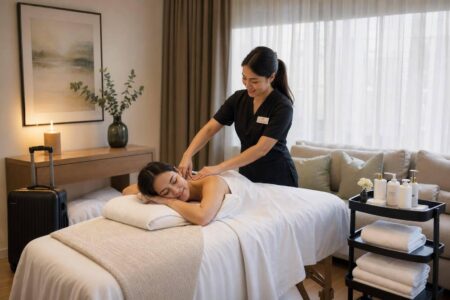
If your venue allows, consider offering in-home massage services. For example, concierge services like those provided by Essentialyfe can be integrated into the afternoon rest period, giving guests a restorative option without needing to leave the property.
How to Host a Wellness Retreat
Step 4: Handle Logistics and Guest Support
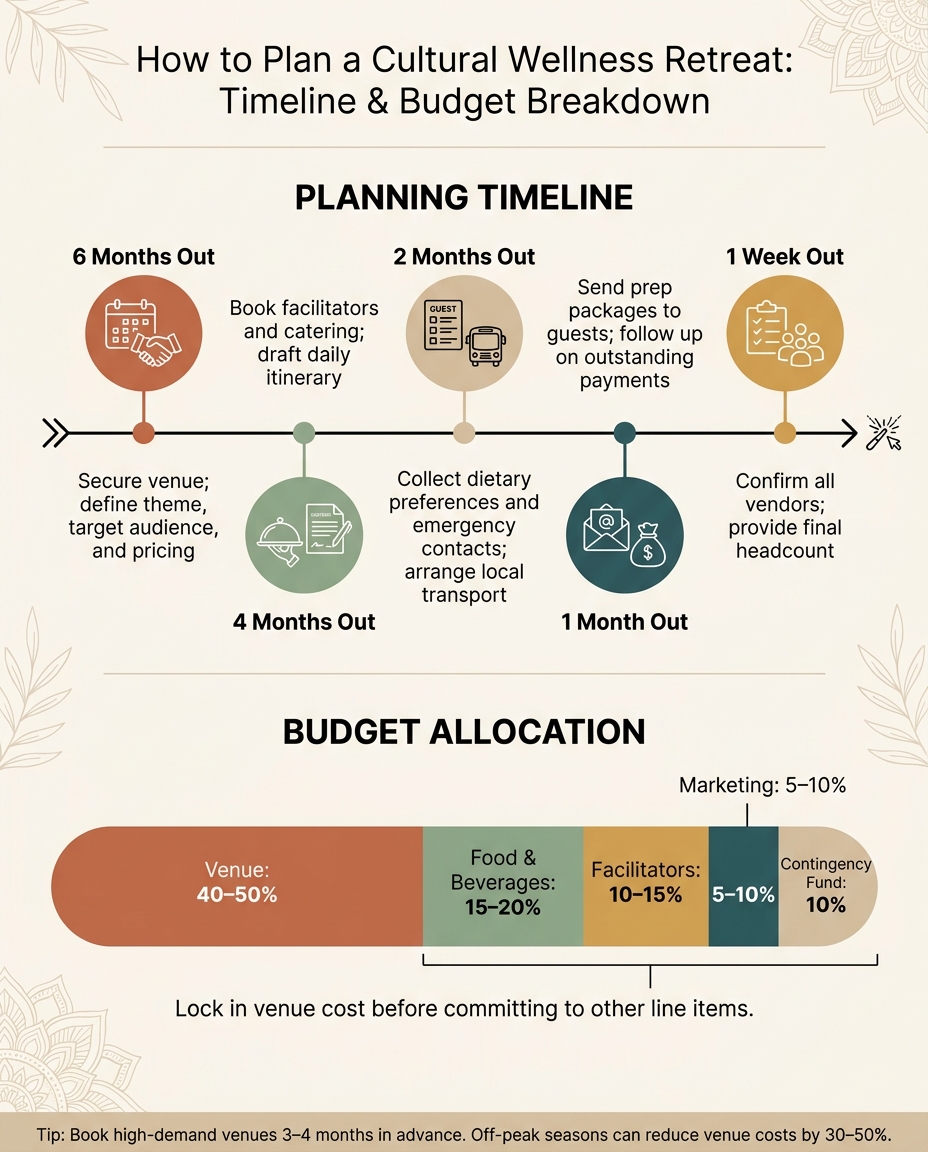
Cultural Wellness Retreat Planning Timeline & Budget Breakdown
Build a Timeline and Budget
Start planning at least six months in advance. This gives you enough breathing room to secure a venue, build a solid marketing plan, and avoid any last-minute chaos. Here’s a straightforward timeline to keep things on track:
| Timeline | Actions |
|---|---|
| 6 months out | Secure the venue; define the theme, target audience, and pricing |
| 4 months out | Book facilitators and catering; create a draft of the daily itinerary |
| 2 months out | Gather dietary preferences and emergency contacts; arrange local transport |
| 1 month out | Send prep packages to guests; follow up on any outstanding payments |
| 1 week out | Confirm all vendors; provide a final headcount |
When it comes to budgeting, split your costs wisely: allocate 40–50% to the venue, 15–20% to food and beverages, 10–15% to facilitators, 5–10% to marketing, and set aside 10% as a contingency fund for unexpected expenses. The venue will likely be your biggest expense, so lock in that cost before committing to other items.
Before signing any non-refundable vendor contracts, figure out your break-even point – the minimum number of attendees you need to cover all your costs. To encourage early sign-ups, consider offering tiered pricing options, like early bird discounts or premium room upgrades. Be clear about what’s included in the retreat package (e.g., meals, workshops) and what’s not (e.g., flights, optional excursions). Transparency like this can build trust and minimize last-minute cancellations.
Once your budget and schedule are in place, focus on organizing guest transportation and on-site logistics.
Arrange Transportation and On-Site Logistics
Two months before the retreat, start collecting guests’ arrival and departure details. This information will help you finalize shuttle schedules and avoid the chaos of last-minute travel coordination. Make sure transportation plans not only ensure smooth arrivals but also provide easy access to any planned excursions or local attractions.
One month out, send guests a preparation package that includes the final schedule, a packing list, and clear travel instructions. Include details like directions, parking information, and check-in procedures to make the process as seamless as possible.
On the day of the retreat, arrive at least two hours early to handle final preparations. Check room assignments, set up the welcome area, test any necessary equipment, and brief your staff on the day’s schedule. Greet each guest personally and provide a quick orientation to help them settle in and feel at ease. For those looking to simplify operations, services like Essentialyfe can handle shuttle arrangements, security, and concierge logistics in one package, making your job much easier.
Plan for Safety and Respect Local Practices
With logistics in place, shift your focus to safety and maintaining cultural respect. During the registration process, collect liability waivers, health disclosures, and emergency contact information. Make sure all facilitators are professionally certified and trauma-informed to ensure a safe and supportive environment.
"Cultural well-being also includes avoiding damaging biases and stereotypes, ensuring an inclusive, equitable environment and addressing injustice, as well as respect for, and adherence to, laws and regulations." – University of Waterloo
If your retreat includes Indigenous or traditional healing practices, it’s essential to work directly with community practitioners. These sessions should be led by those who are part of the culture, rather than being adapted or commercialized in ways that strip them of their original meaning.
Additionally, secure any necessary local permits, follow proper food safety guidelines (e.g., poultry cooked to 165°F, fish to 145°F), and train your staff on emergency response procedures. According to Wolfe Inc., having trained staff on hand can reduce emergency response times by up to 60%. This is a crucial step when you’re responsible for a group in an unfamiliar setting.
Strong logistics are the backbone of a retreat that delivers on its promises of cultural and wellness experiences.
Conclusion: Bringing It All Together
By carefully following each step of the planning process – from defining your intentions to handling logistics – you can craft a retreat that feels purposeful and cohesive. Every choice you make, whether it’s selecting a venue with rich cultural significance or designing a balanced schedule, contributes to the retreat’s unique character. Planning a cultural wellness retreat is about more than just logistics; it’s about creating an experience that honors both your guests and the host culture. Each decision, from the facilitators you hire to the activities you plan, should align with a clear and thoughtful intention.
"A wellness retreat without a clear intention often feels scattered. A strong purpose shapes everything from the itinerary to the language on your retreat page." – SquadTrip
It’s important to avoid overloading your schedule. Allow space for rest and unplanned moments that encourage reflection. Heidi Precob, Events Expert at BoomPop, emphasizes this point: "One of the biggest mistakes I see companies make is trying to pack ‘everything’ into a tight itinerary, leaving little down time for rest, spontaneity, and individual exploration." True transformation often happens during those quiet moments of introspection, not in a jam-packed itinerary. Thoughtful planning not only enriches the retreat experience but also fosters lasting engagement after the event.
Your responsibilities don’t end when the retreat concludes. Post-event follow-up is key to reinforcing the retreat’s impact. Sending thank-you messages and gathering feedback helps you understand what resonated most with your guests. Encourage participants to carry one specific practice – like a daily breathing exercise or mindful eating ritual – into their lives for 21 days. This simple step can turn a short-term retreat into a long-lasting influence.
Finally, take the time to review and document lessons learned to improve future retreats. As Kate Holland, Content Writer at IICT, wisely notes, "Clarity, preparation and calm leadership matter just as much as the content you deliver."
FAQs
How do I avoid cultural appropriation in my retreat?
Engaging with other cultures requires respect and mindfulness. Start by collaborating with community leaders and seeking their consent for any activities involving their traditions. Ensure that any profits or benefits are shared with the communities from which the practices originate.
Work with educators or practitioners who are part of the culture to ensure authenticity, and honor the traditions without turning them into mere commodities. Take the time to learn about the culture’s history and actively support its community through meaningful actions.
If you come across instances of cultural appropriation, address them in a considerate way. The goal should be to encourage understanding and mutual respect, rather than creating conflict.
What should I include in the retreat price (and what shouldn’t I)?
When setting the price for your retreat, make sure to account for all essential expenses. These typically include accommodations, meals, activities, facilitators, and any additional services that contribute to the overall experience. A good rule of thumb for budgeting might look like this:
- Venue: 40–50% of your budget
- Food: 15–20%
- Facilitators: 10–15%
- Marketing: 5–10%
- Contingency fund: 10% (to cover unexpected costs)
Be clear about what’s included in the price. For example, personal expenses like flights or optional extras should only be included if explicitly stated. The final price should reflect not just your costs but also the value and experience you’re delivering. It’s not just about breaking even – it’s about offering something worthwhile.
How do I choose the right retreat venue for wellness and culture?
When choosing the perfect venue for your retreat, focus on a few key factors. First, consider the capacity – make sure the space comfortably accommodates your group. Next, think about how well the venue aligns with your retreat’s theme and whether it offers enough privacy for your activities.
Accessibility is another crucial aspect. Is the location easy to reach? Does it suit the local climate, and are there reliable transportation options nearby? Don’t overlook the basics like sleeping arrangements, available facilities, and on-site amenities – these should all support your retreat’s goals.
Ultimately, a venue that enhances the flow of your program and ensures participant comfort will set the stage for a memorable and impactful experience.