Want to create an organic menu for your next event? Partnering with a chef skilled in organic and local sourcing is the key. Here’s how to get started:
- Define your goals: Set clear standards for organic, local, and waste-reduction practices before reaching out to chefs.
- Understand your guests: Collect dietary restrictions and preferences early to ensure inclusive menu planning.
- Choose the right chef: Look for professionals with experience in organic sourcing, seasonal menus, and sustainability practices.
- Plan with precision: Work with your chef to design a flexible, seasonal menu and finalize logistics like kitchen setup and service flow.
- Focus on execution: Ensure food safety, proper ingredient handling, and smooth service with a well-prepared team.
Pro Tip: Build long-term relationships with chefs and local producers to make future events easier and more impactful. Expect per-guest costs for organic menus to range from $85 to $175, or higher for exclusive venues.
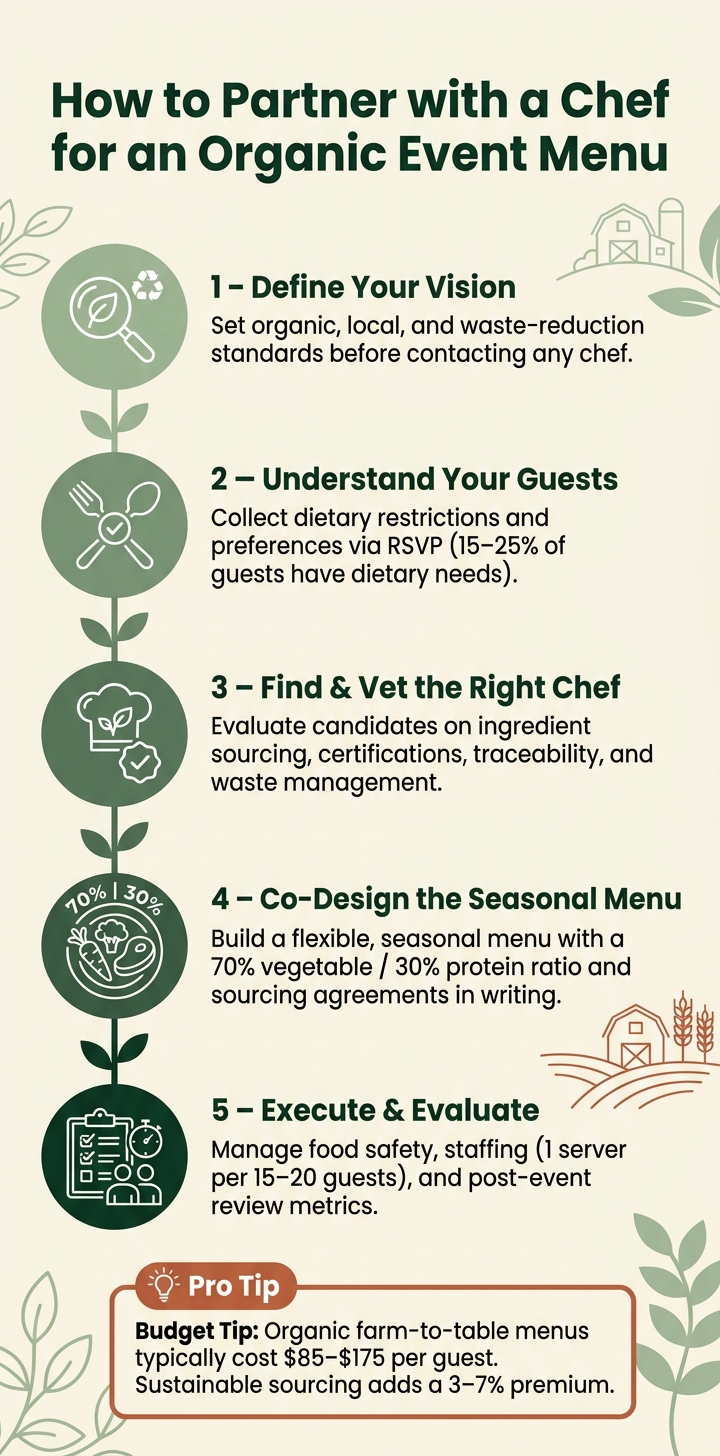
How to Partner with a Chef for an Organic Event Menu
Defining Your Organic Event Vision Before Contacting Chefs
Reaching out to chefs without a clear plan can derail your event preparations. Before making contact, take the time to outline your goals, set boundaries, and establish priorities. Think about your sustainability objectives, your guests’ dietary needs, and how your menu will work with your venue’s setup.
Setting Your Organic and Sustainability Standards
If you’re aiming for an event that prioritizes organic and sustainable practices, it’s crucial to define your standards early. This allows chefs to determine whether they can meet your expectations from the start.
| Goal Level | Sourcing Focus | Waste Strategy | Serveware |
|---|---|---|---|
| Sustainability-Minded | Seasonal, some local | Recycling & portion control | Compostable/Biodegradable |
| Organic-Focused | Certified organic, regional | Composting & food donation | Mix of reusable & compostable |
| Zero-Waste/Fully Organic | 100% Organic & Hyper-local | Zero-landfill & food recovery | 100% Reusable |
Decide what "local" means for your event – whether that’s within 100 miles, your state, or another specific radius. This decision will directly impact sourcing options and costs. On the waste management front, consider whether you prefer simple recycling or a more comprehensive zero-landfill approach, which could include composting and food donations. For example, the Moscone Center in San Francisco donated 24,374 pounds of surplus food to local non-profits in just the first quarter of 2025, showing that large-scale food recovery is absolutely possible.
"Starting the conversation early means a better sustainability strategy, especially when goals like local sourcing, minimizing food waste, or featuring plant-based menus are aligned upfront." – Bhavesh Patel, Executive Chef, Broward County Convention Center
Understanding Guest Dietary Needs and Preferences
Roughly 15–25% of event guests have at least one dietary restriction that needs to be addressed. To prepare, collect this information through your RSVP form before finalizing the menu. Use clear language, such as: "Please list any dietary restrictions, allergies, or preferences (e.g., gluten-free, vegan, nut allergies, dairy-free, diabetic-friendly).”
Once you have the responses, organize them by category and severity. Medical needs, like celiac disease or severe allergies, should take priority, followed by religious requirements (e.g., Halal, Kosher), ethical choices (e.g., vegan, vegetarian), and lifestyle preferences (e.g., keto, GLP-1 friendly portions). This approach ensures that every guest feels considered without compromising the overall elegance of the menu.
"I design every meal with inclusivity in mind, so dietary guests aren’t treated differently. They enjoy food that looks, tastes and feels just as intentional as everyone else’s plate." – Chef Amelia Warfel, Chef de Cuisine Dietary Specialist, Seattle Convention Center
Matching the Menu to Your Event Format and Venue
Your venue’s kitchen setup will play a major role in determining your menu. Before committing to a specific culinary concept, find out what equipment is available. Does the kitchen have induction hobs or gas burners? How much cold storage is there? Can the venue handle composting or recycling on-site? If not, you’ll need to arrange for portable solutions ahead of time.
The service format is equally important. Staffed buffets and action stations are much better at controlling portions and reducing waste than self-serve options. Chef Jesus Cibrian, Director of Culinary at the Long Beach Convention & Entertainment Center, explains: "One of the best ways to reduce food waste is to set up proper production forecasting for the event. Also, try to incorporate action stations, allowing chefs to cook fresh items as needed."
Finally, align your menu with local harvest cycles. For instance, if your event is in late spring in Northern California, you’ll find asparagus and stone fruit are in season. These ingredients will not only be fresher and more affordable but also more sustainable than out-of-state alternatives.
sbb-itb-161ccc1
How to Find and Vet Chefs Who Specialize in Organic Menus
Once you’ve defined your vision for an organic event, the next step is finding a chef whose values and skills align with your sustainability goals. This goes beyond cooking talent – it’s about choosing someone whose sourcing methods and approach to sustainability reflect your event’s priorities.
Choosing the Right Type of Chef for Your Event
The kind of chef you hire should fit the specific needs of your event. For smaller, high-end gatherings – like milestone dinners or intimate corporate retreats – a private chef is a great choice. They can prepare dishes on-site, offering a personalized touch to every plate. If your event prioritizes seasonal ingredients, a farm-to-table specialist is ideal. These chefs tend to have direct relationships with local farms and create menus based on what’s being harvested that week. For larger events, full-service caterers are better equipped to handle logistics while still adhering to sustainable practices.
"Farm to table catering in Corona, CA only works if the menu reflects what’s actually being harvested the week of your celebration." – Chef Bill Blackburn
After identifying the type of chef you need, the next step is evaluating their background to ensure they meet your organic sourcing standards.
How to Research and Compare Chef Candidates
Start your search at local farmers markets, where chefs often connect with local producers. You can also use the USDA Local Food Directory to locate certified organic suppliers and ask them for chef recommendations. When evaluating candidates, don’t rely solely on portfolio photos. Dive deeper by asking them to name the farms they source from and verify those relationships. Professional recognition can also be a useful indicator – credentials like membership in the James Beard Legacy Cohort or experience at luxury wellness retreats show a chef’s ability to meet high-quality standards.
With over 70% of event planners listing sustainability as a top priority when selecting suppliers, competition for chefs who specialize in organic menus can be stiff. Start reaching out early and make sure to check references from similar events.
To make your comparisons more straightforward, consider using a standardized evaluation process.
A Chef Evaluation Checklist
When comparing chefs, use this checklist to ensure they meet your standards. An ideal candidate should be able to answer "yes" to each criterion or provide supporting documentation where necessary.
| Evaluation Criteria | What to Look For |
|---|---|
| Ingredient Origin | Can name specific farms, ranches, or regional collectives |
| Season Alignment | Menus reflect seasonal harvests, with flexibility for crop variations |
| Backup Sourcing | Has backup organic farms or substitute crops pre-identified |
| Certifications | Familiar with USDA Organic, GlobalG.A.P., or Regenerative certifications |
| Traceability | Provides farm-to-table traceability for key ingredients |
| Waste Management | Implements composting, donation, or zero-landfill plans for surplus food |
| Licensing & Insurance | Fully licensed and insured for the venue and event type |
| Supplier Transparency | Asks suppliers about herbicide residues, synthetic treatments, and growth regulators |
One way to identify serious candidates is by requesting a sourcing matrix. This document outlines ingredient origins, seasonal availability, volume capacity, and backup sources. Chefs who already maintain this kind of documentation are typically better prepared to handle the complexities of organic sourcing.
Working with Your Chef to Build the Final Menu
Once you’ve chosen a chef who aligns with your organic sourcing goals, the real work begins. Success lies in thorough preparation, adaptability, and clear communication well in advance of your event.
What to Prepare Before the First Chef Consultation
When you meet your chef for the first time, come prepared with all the essentials. They’ll need details like the number of guests, the kitchen setup at your venue, the event timeline, and the overall vibe you’re envisioning – whether it’s a refined multi-course meal or a casual family-style spread. Beyond logistics, make your sustainability goals clear from the outset. Whether you’re aiming for plant-forward dishes, hyper-local ingredients, or a zero-waste approach, transparency is key.
It’s also crucial to provide a detailed list of guest dietary needs, covering allergies, intolerances, and religious restrictions. The more precise your RSVP data, the easier it will be for the chef to craft thoughtful, modular dishes that feel intentional rather than like last-minute adjustments.
How to Co-Design a Seasonal Organic Menu
Once the groundwork is laid, work with your chef to create a menu that reflects the season’s freshest offerings. Organic menus naturally follow seasonal availability, so use flexible terms like "seasonal vegetables" or "local grains" in your brief. This allows your chef to source the best ingredients closer to the event rather than committing to specific items months ahead.
"The menu reflects what’s peaking the week of your dinner, not what’s available year-round from a distributor. That’s the difference between a dinner that tastes like a season and a dinner that tastes like a chain restaurant." – Partum Events
Consider making vegetables the star of the show, with proteins serving as an accent. A 70% vegetable to 30% animal protein ratio is becoming a popular standard for reducing environmental impact while keeping costs manageable. Additionally, plan for seasonal substitutions for each course in case of unforeseen issues like crop shortages or weather-related disruptions. This backup plan can save you from last-minute headaches.
Agreeing on Sourcing, Pricing, and Contract Terms
Discuss sourcing specifics with your chef to ensure they’re working with local farms or food hubs rather than relying on broadline distributors. Direct relationships with producers help maintain the integrity of organic ingredients.
When it comes to pricing, establish a clear model early. Flat-rate pricing, which includes food, labor, and travel costs in one package, helps avoid surprises. On the other hand, a "chef fee plus ingredients" model can sometimes result in unexpected overages.
"Flat-rate pricing eliminates that failure mode at the structural level… The guest’s review reads ‘great trip but the dining was overpriced’ [when caterers nickel-and-dime]." – Steve Ingber, Executive Chef & Founder, MileHighCook
For organic, farm-to-table events, expect per-guest costs to range from $85 to $175 for most occasions, while more exclusive settings, like vineyards or destination events, can climb to $185 to $275+ per person. Keep in mind that sustainable sourcing typically adds a 3–7% premium to the overall budget. Once you’ve finalized the pricing, make sure the written contract includes the following:
| Contract Category | Key Items to Include |
|---|---|
| Scope & Schedule | Event date, location, guest count, setup/cleanup times, and service hours |
| Costs & Payment | Chef fee, ingredient costs, rentals, travel expenses, and deposit deadlines |
| Sourcing & Menu | Confirmed courses, seasonal substitutions, and organic/local certifications |
| Legal & Safety | Liability insurance, food handling permits, and cancellation/rescheduling terms |
For events with high-profile guests, consider adding an NDA (Non-Disclosure Agreement) to your contract. Many independent chefs don’t include these by default, so it’s worth bringing up early.
Managing Event Day Logistics for an Organic Menu
With the contract signed and the menu finalized, the spotlight shifts to execution. Even the best-planned organic menu can falter without careful management of event day logistics.
Food Safety and Ingredient Handling Standards
Organic ingredients require special attention to ensure their certified status remains intact. According to the USDA’s National Organic Program (NOP), mislabeling a product as "organic" can result in civil penalties of up to $11,000 per violation.
To prevent cross-contamination, keep organic and non-organic ingredients separate during storage and preparation. Store organic items above conventional ones in both cold and dry storage areas, clearly label these sections, and sanitize prep surfaces, knives, and utensils before switching between organic and non-organic ingredients.
"Organic unwrapped prepared foods should not be displayed below non-organic prepared foods. Segregating organic from non-organic greatly reduces the risk of commingling or contamination." – Organic Trade Association
When receiving deliveries, assign a staff member to confirm that each container has the organic seal and the certifying agent’s name before it enters the kitchen. Use visual aids – like highlighted recipe cards or color-coded labels – to help kitchen staff easily identify organic ingredients.
Staffing, Service Flow, and Timing
Once safety protocols are in place, shift your focus to ensuring smooth service. A good rule of thumb is to have one server for every 15–20 guests to maintain attentive service. But numbers alone aren’t enough – team alignment is essential. Conduct a pre-event briefing to synchronize the chef, servers, and event coordinator on course timing, dietary needs, and the story behind the organic menu.
Assign one team member to handle dietary and organic-related questions. This person acts as the go-between for the kitchen and guests, keeping the chef focused on food preparation. Provide the team with quick-reference training sheets covering details like featured farms, key allergens, and harvest notes. This equips servers to confidently answer questions and engage guests without hesitation.
"The difference between a menu that feels assembled and one that feels intentional comes down to alignment. When each element supports the next, the experience carries forward without friction." – YOLO Restaurant
For high-profile events, use discreet communication tools between kitchen and floor staff. Map out service routes in advance to avoid bottlenecks or disruptions during critical moments.
Making the Most of Your Venue’s Kitchen and Concierge Support
To maintain the integrity of your organic vision, take full advantage of your venue’s resources. Work with your chef to inspect the kitchen, ensuring it has separate prep areas, sufficient refrigeration, and compatible equipment.
Luxury venues often come with concierge teams that can be invaluable. A well-prepared concierge can manage delivery schedules, coordinate vendor access, and address last-minute sourcing needs through their supplier network. For instance, Essentialyfe offers integrated private chef and concierge services, ensuring seamless collaboration between the venue, chef, and event team.
"By aligning your caterer and venue from the outset, you lay the groundwork for a seamless guest experience." – DINE Catering And Events
Provide the concierge team with a detailed briefing well in advance. Include the guest count, meal structure, dietary requirements, and any privacy considerations. In high-end settings, chefs and venue staff are often expected to sign NDAs as standard practice, so address this early. This level of coordination helps uphold your organic vision while delivering a polished experience for your guests.
Building Long-Term Relationships with Chefs and Local Producers
Once event-day logistics are running smoothly, the next step is fostering strong, lasting partnerships with chefs and local producers.
A successful event isn’t just about what happens on the day – it’s about building relationships that improve future events and create a distinctive culinary identity.
How Repeat Chef Partnerships Improve Future Events
Working with the same chef repeatedly can make planning more efficient. A chef familiar with your standards, guest preferences, and sourcing philosophy eliminates much of the initial back-and-forth. For example, research shows that 63% of diners are more likely to return for seasonal collaborations, and chef partnerships can drive 40–60% higher social media engagement compared to standard event posts. Over time, these collaborations become a signature feature of your events, something guests look forward to. Plus, a strong chef relationship refines everything from menu development to ingredient sourcing.
Connecting Chefs with Local Farms for Consistent Sourcing
High-quality, organic ingredients are easier to secure when chefs and local producers build direct relationships – ideally with farms located within 60 miles of your venue. This proximity reduces food miles by up to 80%, leading to less spoilage, better ingredient quality, and longer shelf life. Start small by sourcing one or two key items, like pasture-raised eggs or seasonal vegetables, from a single local farm. To ensure access to the best harvests, consider paying farmers 10–20% above standard market rates.
A shared six-month harvest calendar can help chefs and producers coordinate planting and harvesting schedules. By planning ahead, menu development becomes more predictable. For added security, establish a tiered sourcing system with primary, backup, and emergency suppliers to handle any disruptions caused by crop failures.
"The direct connection between restaurants and producers can take different forms… The most successful programs find a balance that works for their restaurant setup." – OpenTable
Reviewing Event Outcomes to Improve Future Collaborations
After the event, meet with your chef and key producers to review what worked and what didn’t while the event is still fresh in everyone’s minds. Use a feedback loop to refine your approach for future events. Go beyond tracking basic costs – evaluate other metrics to get a full picture. Here’s a breakdown of useful evaluation categories:
| Evaluation Category | Metrics | Measurement |
|---|---|---|
| Financial | Sales velocity, landed cost (including freight and yield loss) | POS reports, invoice audits |
| Sustainability | Food miles, waste diversion rate | Transport logs, kitchen waste records |
| Guest Impact | Net Promoter Score (NPS), social engagement | Digital comment cards, social analytics |
| Supplier Performance | Fill rate, quality consistency, responsiveness | Standardized supplier scorecard |
| Operational | Ingredient yield, prep labor, spoilage rates | Kitchen waste logs, staff feedback |
One key metric to consider is cost per usable pound – the yield of an ingredient after trimming and prep compared to its purchase cost. A producer who charges slightly more but delivers consistently high-quality ingredients may actually save you money in the long run.
"A producer who is slightly more expensive but vastly more reliable may actually lower your total operating cost." – Regional Organic Supply Chain Playbook
Finally, document your successes. A simple one-page summary highlighting ingredient sourcing, estimated CO₂ savings per guest, and guest feedback can serve as a blueprint for future events. It’s also a great story to share with clients. These reviews and adjustments not only improve efficiency but also elevate the overall experience for guests at your next event.
Conclusion: Key Steps for Partnering with Chefs on Organic Menus
Ensuring your event’s organic menu leaves a lasting impression requires careful attention to detail and thoughtful collaboration with your chef. Success starts long before the event itself, with a clear vision, well-defined sourcing standards, and open conversations about the experience you want to create – not just the dishes you’ll serve.
"A personalized menu private chef builds the dinner around your guests, not a fixed list. The first thing I ask isn’t what you want to eat. It’s what the night actually means to you." – Partum Events
To set the stage for a seamless partnership, begin by vetting chefs using a scoring system, work together to design a seasonal menu with a balanced 70/30 plant-to-protein ratio, and put sourcing agreements in writing. Finalizing logistics 48–72 hours in advance ensures everything runs smoothly. These steps not only support your sustainability goals but also bring your culinary vision to life.
What truly elevates an event is the story behind the food. When guests understand the origins of their meal and the thought behind each choice, it leaves a deeper impact. Studies reveal that consumers are willing to pay 30–40% more for food that is transparently and sustainably sourced. This highlights how much people value knowing the journey from farm to table.
For a fully integrated experience – from venue selection to private chefs and on-site concierge services – Essentialyfe provides comprehensive event planning solutions. Their expertise ensures every detail comes together effortlessly, allowing you to focus on creating memorable moments rather than managing logistics.
FAQs
How do I prove the menu is truly organic?
To make sure a menu is genuinely organic, ask your catering partner for official certifications or labels that verify the organic status of their ingredients. You can also request details about the farms they work with. If feasible, consider visiting those farms to see their practices firsthand. A trustworthy catering partner should be transparent about their producers, sourcing methods, and how their ingredients are grown and handled.
What should I ask a chef before hiring them?
When you’re hiring a chef for an event focused on organic and sustainable dining, it’s important to dig into the details of their sourcing practices. Ask if they prioritize local, organic, and seasonal ingredients – this not only supports sustainability but also ensures fresh, high-quality dishes.
You’ll also want to check their experience with accommodating dietary restrictions, as well as confirm they hold the necessary food safety certifications and liability insurance. These are non-negotiables for a safe and inclusive dining experience.
Beyond the menu, discuss logistics. Clarify details like setup and cleanup responsibilities, required equipment, staffing needs, and their cancellation policies. These conversations will help avoid any surprises on the day of the event.
Finally, ask for references from past events similar to yours. This will give you confidence in their ability to deliver the expertise and professionalism your event requires.
How can I keep an organic menu on budget?
Keeping an organic menu affordable doesn’t have to be a challenge. Start by focusing on seasonal and locally sourced ingredients. These are often fresher and tend to cost less since they don’t require extensive shipping or storage.
Another smart move is adopting a plant-forward approach. Make vegetables, grains, and legumes the star of your dishes, while using meat sparingly as an accent rather than the centerpiece. This not only cuts costs but also caters to a growing demand for plant-based options.
Collaborate with your chef early in the planning process to design flexible menus. Building menus around what’s available in the market ensures you can adapt to price fluctuations and seasonal shifts. Finally, reduce food waste by tracking headcounts accurately and portioning carefully – every bit saved contributes to your bottom line.