Event menus often fall into the trap of being generic, leaving guests unimpressed and missing an opportunity to create a memorable experience. To fix this, focus on creating menus that reflect the heritage, regional context, and stories behind the dishes. Here’s how you can do it:
- Understand Your Guests: Gather dietary preferences, religious considerations, and cultural traditions early in planning.
- Align with Event Goals: Design menus that match the theme and purpose of the event, creating a cohesive dining narrative.
- Focus on Specific Cuisine: Work with chefs and advisors who have deep knowledge of the cuisine to ensure authentic dishes.
- Presentation Matters: Serve food in ways that reflect its origins, using appropriate plating and service styles.
- Gather Feedback: Use guest reactions to refine future menus and improve the overall dining experience.
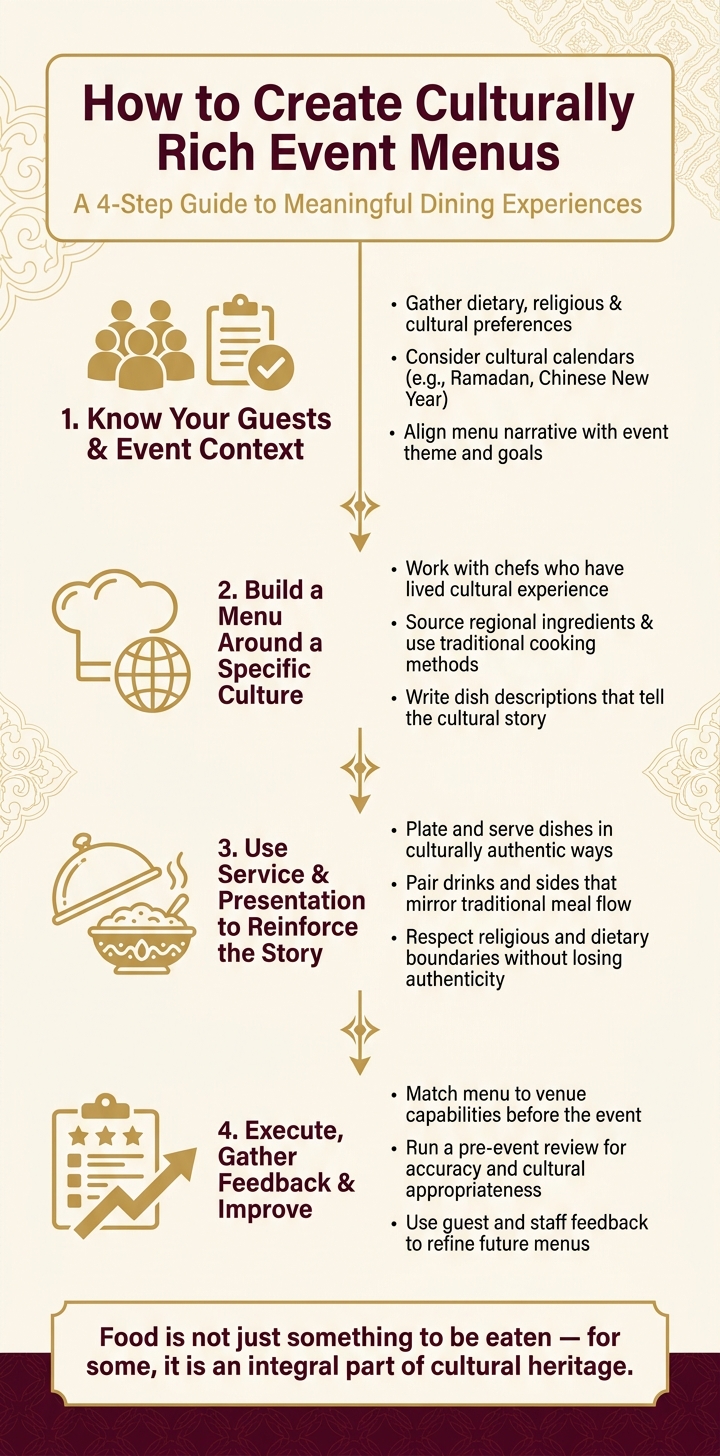
How to Create Culturally Rich Event Menus: A 4-Step Process
Step 1: Know Your Guests and the Event Context
Creating a menu that resonates with your guests starts with understanding who they are and the purpose of the event. This insight lays the foundation for a dining experience that feels inclusive and meaningful.
Identifying Guest Profiles and Dietary Needs
Early in the planning process, gather detailed dietary information. Don’t stop at basic restrictions – dig deeper to understand religious practices, philosophical diets, and cultural food traditions. These elements are crucial in shaping a menu that tells a story.
"When a guest requires a specific diet, we see it as an opportunity to create an even more personalized moment." – Chef Christian Rumpler, Executive Chef, Disney’s Catering Event Operations
For example, consider cultural calendars and observances like Ramadan or Chinese New Year, which may influence how and what guests eat. Even specific ingredients can carry cultural significance. In China, pears are seen as symbols of bad luck, while black-colored foods or the number 4 can have negative associations.
In early 2026, Chef Christian Rumpler managed an international leadership summit with guests requiring Halal, vegan, Kosher-style, and gluten-free options. His team designed an inclusive dining experience from the outset, ensuring that every guest felt acknowledged and valued.
Once you’ve identified guest needs, the next step is to align the menu with the event’s overarching theme and purpose.
Aligning the Menu with the Event’s Theme and Goals
With guest profiles in hand, focus on connecting the menu to the event’s goals. A corporate gala celebrating global growth will demand a different culinary approach than a wedding steeped in regional traditions. The menu should reflect the event’s purpose and enhance its story.
Think of the menu as a narrative journey: the appetizer sets the stage, the main course develops the story, and the dessert delivers a satisfying conclusion that aligns with the event’s emotional tone. Every dish should not only cater to the guests but also contribute to the narrative being shared.
"I design every meal with inclusivity in mind, so dietary guests aren’t treated differently. They enjoy food that looks, tastes, and feels just as intentional as everyone else’s plate." – Chef Amelia Warfel, Chef de Cuisine Dietary Specialist, Seattle Convention Center
Sharing the proposed menu with guests ahead of time is another way to build confidence and address any potential concerns – whether dietary or cultural – before the big day.
sbb-itb-161ccc1
Step 2: Build a Menu Around a Specific Culture
Once you’ve identified your guests and the purpose of the event, it’s time to start shaping the menu. The goal here is to create a menu that genuinely reflects a specific culture, steering clear of surface-level representations. This means diving deeper than just offering well-known dishes – it’s about crafting a menu rooted in authenticity.
Working with Chefs and Advisors Who Truly Understand the Cuisine
To achieve authenticity, it’s essential to work with chefs and advisors who have personal, lived experience with the culture you’re representing. These experts bring an understanding that goes beyond what research can offer – they know the nuances, like how to balance spices, the correct way to present a dish, or which ingredients carry cultural or symbolic importance.
"It’s crucial to honor the traditions behind each dish we serve. Our chefs put a lot of effort into researching and respecting the cultural traditions behind each menu item." – Peter Johnson, Hogs and BBQs
In addition to chefs, cultural liaisons can play a vital role in avoiding missteps, such as misusing ingredients that hold ceremonial or sacred significance. Involving the entire team – kitchen and service staff alike – in the process is equally important. Training them on the history and significance of each dish turns them into storytellers, enriching the dining experience for guests. A mandatory tasting session is a great way to ensure the dishes are both authentic and aligned with the event’s vision. Once the team is aligned, the next step is to focus on sourcing genuine ingredients and mastering traditional techniques.
Using Regional Ingredients and Cooking Methods
Authenticity isn’t just about using the right ingredients – it’s also about how those ingredients are prepared. Traditional cooking methods like using a tandoor, slow-braising, smoking, or pickling often bring out flavors that simply can’t be replicated with shortcuts.
"Authenticity is what elevates our international buffet menus from good to extraordinary. Our clients appreciate the fact that we go the extra mile to source authentic ingredients and replicate traditional cooking techniques." – Emma Thompson, Head Chef at Quick Buffet
If a specific ingredient isn’t available locally, substitutions can be made, but transparency is key. Acknowledge the original ingredient and explain why an alternative was used. Sourcing from specialty suppliers who focus on ethnic or regional products can also make a big difference. These partnerships not only provide access to authentic ingredients but also come with the expertise to use them properly.
Writing Dish Descriptions That Tell the Story
A dish’s description should do more than just list its ingredients – it should offer a glimpse into its cultural roots. A good description highlights the season, region, and techniques that define the dish.
"Each dish has a story to tell, from the spices used to the techniques passed down through generations." – Jean J. White
For example, instead of broadly labeling something as "Indian cuisine", specify its origin, such as Rajasthani cooking, to give it more depth. Mentioning traditional preparation methods and the historical or communal significance of the dish adds another layer of connection. If the menu is served family-style, noting that this mirrors how the dish was traditionally shared can further enhance the storytelling. These thoughtful details give guests a richer experience – one that goes beyond taste and connects them to the culture behind the food.
Step 3: Use Service and Presentation to Reinforce the Story
Once the menu is built around authentic ingredients and honest descriptions, the next step is ensuring the way the food is served aligns with the story you’re telling. Both presentation and service play a crucial role in bringing the cultural narrative to life. With a menu steeped in cultural details, every aspect of service should echo that narrative.
Plating and Serving in Ways That Reflect the Culture
To stay true to the cultural essence of your menu, the presentation must align with the traditions you’re representing. For example, a South Indian Thali traditionally features a carefully balanced assortment of small dishes served on a single large platter. Similarly, a Mediterranean Mezze is all about sharing – small plates passed around the table to spark conversation. Serving these dishes in a formal, individually plated Western style would dilute their cultural significance.
"Serving dishes family-style, for instance, encourages a communal dining experience, reflecting the essence of traditional meals." – Jean J. White
The choice of serving vessels is equally important. For a Mediterranean spread, terracotta dishes or olive wood boards add an earthy, authentic touch. Korean dishes like Bibimbap are traditionally served in earthenware bowls, which help retain heat and enhance the dining experience. For West African festive meals, large communal bowls emphasize abundance and togetherness, central to the culture.
Once the presentation is authentic, you can further enhance the story with thoughtful drink and side pairings.
Pairing Drinks and Sides That Fit the Menu’s Story
Drinks and sides should feel like natural extensions of the main dishes, reinforcing the cultural theme. Think flatbreads served with Indian curries, antipasti before an Italian meal, or a spiced digestif to close a Mediterranean dinner. These pairings mirror how meals traditionally unfold in their cultures of origin.
Multi-sensory dining has been shown to heighten flavor perception. Ending the meal with a traditional after-dinner ritual – like serving regional herbal tea, coffee, or amaro – leaves guests with a sense of closure, even if they can’t pinpoint why. Offering non-alcoholic options such as shrubs, herbal tonics, or spiced sodas ensures the cultural narrative is inclusive and accessible.
Respecting Religious and Dietary Boundaries
Adapting dishes for dietary restrictions doesn’t mean straying from the cultural theme. The focus should remain on preserving the cuisine’s spice profiles, cooking methods, and overall flavor logic while swapping out ingredients. For instance, a vegetarian version of a West African groundnut stew can maintain the same spices and techniques, ensuring it remains true to its roots.
"Present a one-paragraph origin note for each dish on your menu card. A short provenance note (who, where, when) honors tradition and educates guests." – Mariana Cortez, Senior Food Editor & Cultural Culinary Advisor
Interactive dining stations can also respect dietary needs while staying culturally immersive. For example, offering stations for rice, grilled items, and condiments allows guests to customize their meals without straying from the story. This works particularly well for dishes like Korean Bibimbap, where mixing components is part of the traditional experience rather than an adaptation.
Step 4: Execute the Menu and Improve Over Time
Once you’ve designed an engaging and culturally rich menu, the next step is putting it into action and continuously refining it. This phase ensures that the cultural story woven into your menu remains intact and resonates with your audience.
Matching the Menu to the Venue and Its Capabilities
Even the most thoughtfully crafted menu can fall flat if the venue isn’t equipped to handle it. Before the event, confirm that the kitchen can accommodate the necessary cooking methods – whether that’s a tandoor, wok, or open-flame grill. A mismatch here often leads to last-minute compromises, which can dilute the authenticity of your dishes.
The event’s layout also plays a crucial role. If guests are encouraged to mingle rather than sit at assigned tables, a plated multi-course menu may not be practical. In such cases, creating bite-sized or hand-held versions of your dishes – sometimes called "menus on the move" – keeps the food accessible without disrupting the event’s flow. Many teams now use tools like 3D visualization to anticipate and resolve potential kitchen or service bottlenecks before they arise.
Running a Pre-Event Review for Accuracy and Appropriateness
A pre-event review is a must, especially if your menu includes new recipes or unfamiliar cuisines. This process goes beyond a simple tasting – it’s a full evaluation of your menu’s execution. Each dish should reflect a specific regional tradition, avoiding generic interpretations. For instance, there’s a big difference between presenting a Tuscan ribollita and labeling it as "Italian vegetable soup." The distinction should be evident not only in the dish itself but also in how your staff describes it to guests.
During this review, check that every detail – plating, serving vessels, and even staff training – aligns with the cultural context of the menu. Studies show that multi-sensory dining experiences can enhance flavor perception by up to 60%. Elements like background music, table textures, and even the weight of the utensils can significantly influence how guests experience the meal.
Once the review is complete, the focus shifts to gathering feedback and using it to fine-tune future menus.
Using Guest Feedback to Improve Future Menus
Guest feedback is a powerful tool for refining your menu and deepening its cultural narrative. The most effective strategies combine real-time digital ratings – embedded in the event program for immediate reactions – with open-ended questions that encourage guests to share detailed thoughts. Placing feedback forms at food stations or near exits can also capture impressions while they’re still fresh.
"Feedback is your post-event compass. It tells you what to celebrate, what to refine, and how to keep both clients and attendees coming back." – Qondor
When analyzing feedback, focus on recurring themes rather than isolated comments. For example, if multiple guests mention that a dish felt inauthentic or that a description was unclear, that’s a clear area for improvement. Don’t forget to gather insights from your staff as well – chefs and servers often notice details like which dishes guests leave unfinished or which stations generate the most questions. These observations can be just as insightful as guest surveys.
| Feedback Method | Best For | Limitations |
|---|---|---|
| Real-Time Digital Ratings | Dish-by-dish reactions | May lack depth |
| Post-Event Surveys | Overall experience assessment | Lower response rates over time |
| Open-Ended Questions | Understanding cultural nuances | Harder to analyze at scale |
| Staff Debrief | Kitchen and service insights | Internal perspective only |
Conclusion: How to Move Beyond Generic Event Menus
Generic menus leave no lasting impact. To break away from that, focus on a few key steps: start by understanding your guests, design the menu around a specific cultural identity, let the presentation reinforce the narrative, and use feedback to improve future events. By following these steps, every part of the dining experience can resonate with cultural depth.
The difference between a forgettable buffet and a meaningful dining experience often boils down to intention. As Caterboss explains, "Food is not just something to be eaten – for some, it is an integral part of cultural heritage." This perspective reshapes every choice, from selecting the centerpiece dish to how servers introduce it at the table.
For those seeking expert help to bring these ideas to life, Essentialyfe (https://essentialyfe.com) provides private chef services and full event planning. Their team of culinary professionals transforms cultural storytelling into dining experiences that feel genuine and immersive.
With each event, the process becomes more refined, creating menus that are sharper, more authentic, and truly unforgettable.
FAQs
How do I choose one culture to feature without stereotyping it?
To steer clear of stereotypes, prioritize genuine and respectful storytelling. Dive into the culture’s history, traditions, and values, and whenever possible, collaborate with people from that culture. Share stories, foods, and customs that hold real significance, offering a glimpse into the culture’s richness. Use local ingredients with care and avoid over-the-top or shallow portrayals. This thoughtful approach helps ensure cultural representation remains respectful and meaningful.
What can I do if my venue kitchen can’t support traditional cooking methods?
If your venue’s kitchen isn’t equipped for traditional cooking, there are still plenty of ways to create memorable dining experiences. One idea is to focus on sensory dining, which emphasizes engaging multiple senses during a meal. You can also weave in cultural storytelling by using inventive food presentations, pre-prepared dishes, or unique serving techniques. These methods let you craft a rich and immersive dining experience without the need for extensive on-site cooking.
How do I make dietary-friendly dishes feel authentic to the cuisine?
To create dishes that align with specific dietary needs while still feeling true to their origins, it’s important to incorporate traditional ingredients, use authentic preparation techniques, and stick to presentation styles that reflect the cuisine’s heritage. By doing so, you’re not just making food; you’re telling a story through its flavors and methods. Even with necessary dietary tweaks, these elements help preserve the essence and depth of the culture behind the dish.