Lighting can transform any event by setting the mood, highlighting key areas, and creating a memorable atmosphere. Whether you’re hosting a small dinner or a large-scale product launch, here’s what you need to know:
- Match lighting to your theme: Choose colors and techniques that reflect your event’s mood. Warm tones (like amber) create intimacy, while bold colors add energy. Stick to 2-3 main colors for a clean look.
- Plan for your luxury venue: Consider ceiling heights, power limits, and natural light. Use uplighting to enhance architectural features and avoid reflective surfaces.
- Set a budget: Account for fixtures, labor, and extras like wireless uplights or scenic projections. Save costs by bundling services or scheduling during off-peak times.
- Use lighting techniques: Uplighting adds depth, string lights create ambiance, and pin spotting highlights focal points like centerpieces or signage.
- Test and coordinate: Use dimmers to adjust intensity, match lighting to activities, and rehearse with cameras to ensure everything looks great in person and on screen.
Smart planning ensures your lighting enhances the event without exceeding your budget. Ready to elevate your next event? Dive into the details to make your vision a reality.
How To Light Your Event Design
sbb-itb-161ccc1
Planning Your Event Lighting Setup
Before you dive into setting up fixtures, take the time to create a clear plan. The success of your event’s lighting hinges on three key factors: aligning the design with your event’s purpose, understanding the venue’s limitations, and staying within your budget.
Match Lighting to Your Event Theme
Your lighting should reflect and enhance the theme of your event. Think about the mood you want to create and adjust the colors and intensity accordingly. For example, high-energy product launches thrive on bold, saturated brand colors paired with fast-moving lighting effects. In contrast, music events often benefit from moody indigo and amber tones, paired with haze to highlight dramatic beams.
Color selection is crucial. Warm hues like amber, gold, and red evoke intimacy and romance, while cool shades like blue, green, and purple suggest professionalism and sophistication. Vibrant colors such as magenta or cyan bring energy to celebratory settings. To maintain a polished look, stick to two or three main colors – too many can overwhelm the space. Layer your lighting by combining different elements: ambient lighting for overall visibility, accent lighting to highlight focal points, task lighting for functional areas, and dynamic effects to create movement and drama. Every choice should reinforce the atmosphere you’re aiming for.
Evaluate Your Venue Space
Visit the venue before finalizing your lighting design. Pay close attention to ceiling heights, rigging points, and load limits to ensure safe fixture placement. Check that power circuits won’t exceed 80% capacity, which helps avoid power interruptions during the event. Consider natural light sources, like windows, which could wash out your setup during daytime events, and focus on surfaces that work well with lighting, such as brick, drapery, or greenery. Avoid reflective materials like glass or areas with sensitive artwork.
Look for architectural features – columns, arches, or textured walls – that can be enhanced with uplighting. For consistent coverage, space uplighting fixtures about 8–12 feet apart. Identify paths for cables and ensure egress routes remain clear. Also, confirm the venue’s policies on effects like haze or lasers, as these may be restricted. Once you’ve identified the venue’s capabilities and limitations, you can adjust your design and budget accordingly.
Determine Your Lighting Budget
Unlike catering or seating, lighting costs don’t change based on the number of guests. Your budget should cover everything: fixtures, power distribution, control systems, rigging, labor, transportation, and permits. Don’t forget about service charges and taxes, which can add an extra 20% to 25%. To prepare for unexpected expenses, set aside a 10% to 15% contingency in your budget.
Gather at least two or three quotes from lighting providers to compare prices and negotiate where possible. Use a "base" and "plus" approach: outline a basic lighting plan and include optional upgrades – like wireless uplights or scenic projections – as extras. This helps you stay within your budget while giving you room for enhancements. Bundling lighting with other AV or production services can also save money. Finally, consider scheduling your event on off-peak days or during less busy seasons to get better rates. With careful planning, you can create a lighting design that complements your venue without overspending.
Lighting Techniques to Improve Your Event
Use these lighting techniques to add layers, warmth, and draw attention to key areas.
Add Depth with LED Uplighting
Uplighting involves placing LED fixtures on the ground and directing them upward to "paint" walls, columns, or draped backdrops with light. This method enhances depth by softening architectural lines and adding a glow to otherwise plain surfaces. Modern LED uplights can produce millions of colors (RGB, RGBA, or RGBAW+UV), giving you full control over the atmosphere.
Adapt to the venue’s surfaces. Darker walls, brick, or wood absorb more light than lighter walls, so you may need to increase brightness or use more fixtures. Here’s a quick guide for spacing uplights based on the desired effect:
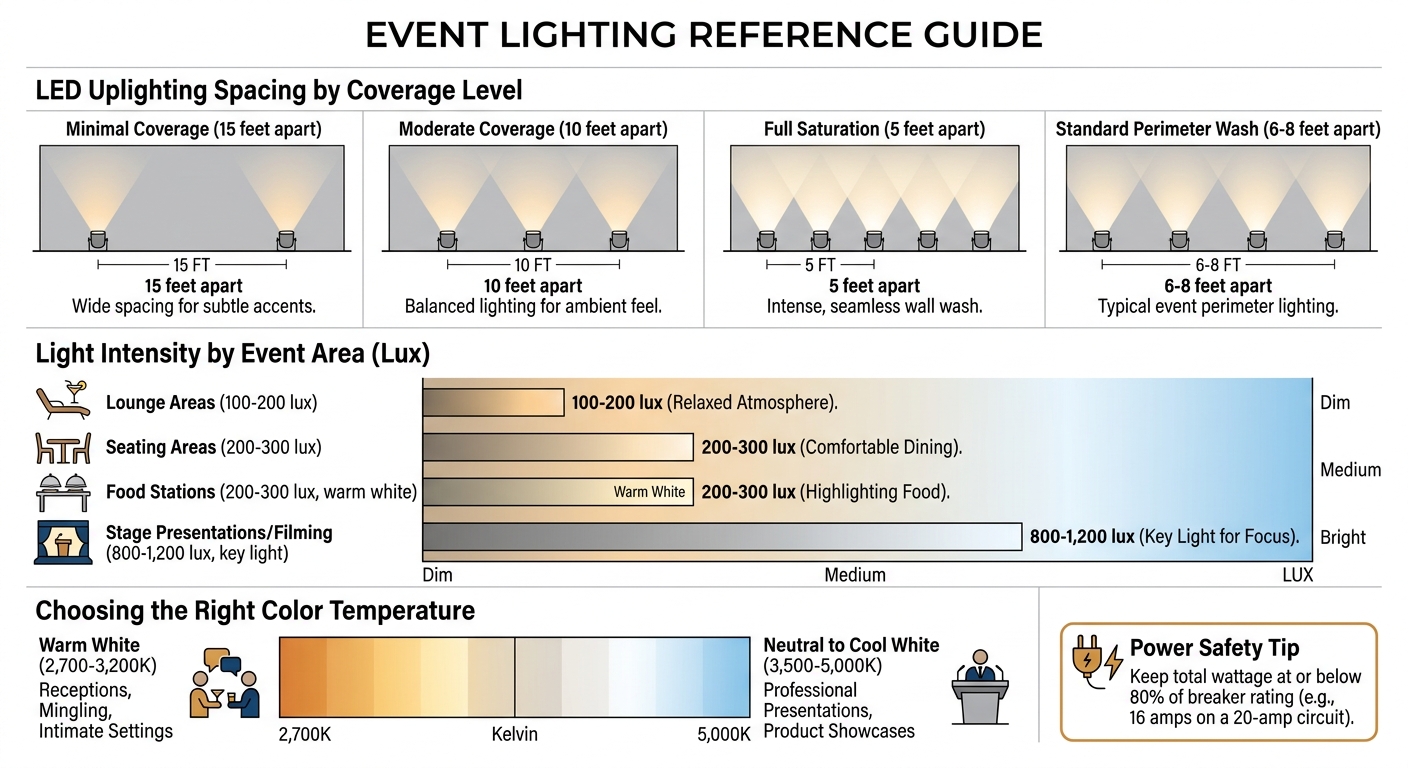
- Minimal coverage: 15 feet apart
- Moderate coverage: 10 feet apart
- Full saturation: 5 feet apart
For a standard perimeter wash, spacing every 6 to 8 feet works well. Focus on features like archways, alcoves, or columns to create striking effects. Start with neutral tones – such as warm white or amber – when guests arrive, then gradually shift to bold brand or theme colors as the event progresses. For professional events, uplighting packages typically range from $500 to $2,500, depending on the size of the venue and the number of fixtures required.
Next, enhance the venue’s atmosphere with softer lighting elements.
Create Ambiance with String Lights and Chandeliers
String lights and chandeliers bring a warm, inviting touch to any event. Opt for warm white (2700K–3200K) lighting to create a cozy, romantic setting. Use string lights above banquet tables for a chic, restaurant-like vibe, or layer them in tented spaces to mimic stars in the night sky. For a 100-square-foot area, plan to use 200–300 lights.
Chandeliers add elegance while also serving as functional lighting that enhances the overall texture and warmth of the space. For outdoor events, wrap LED string or rope lights around trees, shrubs, or pillars to highlight natural or architectural features. You can also create a "light curtain" behind altars or focal areas for a charming effect during ceremonies. Dimmer switches are a must – they let you adjust the lighting intensity throughout the event, transitioning from bright during arrivals to softer tones for dinner or dancing. For open spaces, hang string lights in a zigzag pattern to maximize coverage and visual impact. Always choose weatherproof and waterproof-rated lights for outdoor setups.
With ambiance set, you can turn your attention to targeted lighting techniques like pin spotting.
Highlight Focal Points with Pin Spotting
Pin spotting uses narrow, focused beams to draw attention to specific elements, ensuring they stand out in a larger, dimly lit space. This technique is ideal for showcasing details that might otherwise fade into the background.
Use pin spots to highlight centerpieces and floral arrangements during formal dinners, making them stand out while keeping the room’s overall lighting subdued. Shine focused beams on event signage, logos, or custom gobos to ensure branding elements are crisp and prominent. For product launches, pin spotting can create dramatic "hero moments" during reveals, while ellipsoidal fixtures can spotlight keynote speakers, performers, or award trophies during ceremonies. To avoid light spilling onto unintended areas, choose fixtures with shutters that let you precisely control the beam.
| Feature Category | Specific Targets for Pin Spotting |
|---|---|
| Decor | Centerpieces, floral arrangements, ice sculptures, architectural details |
| Branding | Event signage, sponsor boards, product displays, logos |
| Functional | Food stations, buffet lines, guest books, award trophies |
| Performance | Keynote speakers, podiums, live performers, auctioneers |
These targeted lighting techniques ensure your event’s key elements shine – literally and figuratively.
Technical Setup and Execution
Event Lighting Quick Reference Guide: Spacing, Brightness Levels, and Color Temperatures
Once you’ve chosen your lighting techniques, it’s time to ensure everything runs smoothly.
Control Light Intensity with Dimmers
Dimmers are an essential tool for shifting the mood throughout your event. Start with bright, lively lighting for the cocktail hour, then lower the intensity for a more intimate dinner setting. Modern LED fixtures are particularly effective, offering smooth dimming and precise color control, which makes them perfect for custom setups.
"Incorporating dimmers and advanced control systems offers versatility throughout the event. This allows for seamless transitions between different settings, effortlessly shifting from vibrant and lively to soft and intimate, adapting to the changing dynamics of the occasion." – Mahaffey Event & Tent Rentals
Tailor brightness to each activity. Different areas and activities require varying light levels. For example:
- Lounge areas: 100–200 lux
- Seating areas: 200–300 lux
- Stage presentations or filming: 800–1,200 lux of key light to ensure speakers look sharp
- Food stations: 200–300 lux with warm white light to make the food look appealing
To manage these adjustments, most setups rely on DMX universes or networked sACN plans. Collaborate with your lighting operator to create a "Look Book" – a collection of presets that define specific intensity levels for each cue. This ensures smooth and consistent transitions throughout the event. For dinner, keep downlighting subtle and let accent lighting, like pinspots on centerpieces, take center stage for a polished and sophisticated look. Always test your setup on camera, as lighting that looks perfect to the eye might not translate well on a digital screen.
Next, ensure your lighting transitions align seamlessly with the event’s schedule.
Coordinate Lighting with Event Activities
Your lighting design should complement the event’s flow. Build a detailed cue list that links specific lighting "looks" to each phase of the event – such as walk-ins, speeches, dining, and walk-outs. Tying these cues to the run-of-show ensures perfectly timed transitions.
Match color temperature to the mood. Use warm whites (2,700–3,200K) for receptions and mingling to create a welcoming vibe. Switch to neutral or cool whites (3,500–5,000K) for professional presentations or product showcases. For speeches, position key lights at a 45-degree angle to minimize shadows and make presenters clearly visible to both the audience and cameras. During performances, combine wash lights for broad stage coverage with moving-head profiles to track performers dynamically.
Synchronize lighting changes with music or key moments in the program to enhance emotional impact and highlight narrative beats. For outdoor events, account for changing natural light. Warmer tones work well during the "golden hour", while cooler tones are better after sunset.
Test Your Lighting Before the Event
Once your lighting cues are synchronized with the event’s schedule, conduct thorough testing to catch any issues before the big day. Testing ensures that your vision translates into reality and helps identify potential problems like flickering, power interruptions, or equipment failures.
Run a full camera rehearsal with actual presenters on stage to see how skin tones and brand colors appear on screen. This also lets you confirm that cue timing matches the event’s flow, ensuring smooth transitions during speeches, awards, or performances. For broadcast-quality results, focus on accurate color rendering to achieve natural and lifelike tones.
Double-check your power load to avoid overloading circuits. Keep total wattage at or below 80% of the breaker rating – for example, 16 amps on a 20-amp circuit. For outdoor setups, use IP-rated equipment for water resistance and secure rigging against wind. Ensure dimmers provide smooth, flicker-free transitions, and include backup power and control systems to avoid disruptions.
Using Essentialyfe Event Services for Custom Lighting
Design Lighting for Premium Venues
Essentialyfe’s premium venues are designed to maximize the impact of custom lighting. Features like high ceilings, exposed brick or stone walls, and professional draping create the perfect canvas for uplighting. These venues also come equipped with essential infrastructure, such as overhead rigging and strong power systems, which support intricate lighting setups. Plus, they often have established protocols for using haze and lasers, ensuring a polished and professional ambiance.
When touring a venue, pay close attention to details like ceiling height and rigging capacities to confirm they can accommodate moving heads or overhead profiles. It’s also a good idea to coordinate with venue staff on setup schedules. This allows the lighting team enough time to test and fine-tune the design before guests arrive. Essentialyfe’s expert planners can further simplify this process by seamlessly integrating lighting into the overall event plan.
Simplify Setup with Event Planning Services
Essentialyfe’s event planning services take the stress out of managing the technical aspects of custom lighting. Their professional planners handle everything from creating power distribution diagrams to ensure safe electrical loads, to coordinating deliveries and addressing venue-specific lighting challenges. They even prepare detailed cue lists that align lighting changes with key moments of the event, such as guest arrivals, award ceremonies, or live auctions.
This meticulous planning ensures that the lighting design complements your event’s run-of-show. For example, planners provide the lighting operator with a comprehensive Look Book of presets tailored to different activities – like 100–200 lux for lounge areas or 800–1,200 lux for stage lighting. On-site staff oversee the setup and resolve any issues, freeing you to focus on your guests. This efficient approach also makes it easier to incorporate luxury elements available through Essentialyfe’s concierge services.
Add Concierge Services to Complete Your Event
Essentialyfe’s concierge services – ranging from private chefs to exotic car rentals and even in-home massages – add an extra layer of sophistication to your event. Strategic lighting can enhance these experiences. For instance, warm white lighting (3,000–3,200K) can make a private chef’s culinary creations look even more enticing, while pinspotting highlights dishes or centerpieces without overpowering the room. For exotic car displays, cool spotlights and projection mapping can dynamically showcase the vehicles’ standout features.
To ensure everything looks flawless, consider a camera rehearsal to test how the lighting interacts with these luxury elements. By blending expert lighting design with high-end concierge services, Essentialyfe creates a cohesive and unforgettable visual experience that will leave a lasting impression on your guests.
Conclusion
Custom lighting has the power to transform events into unforgettable experiences. By using lighting as a storytelling tool, you can set the tone, guide attention, and establish a mood even before a single word is spoken. Whether it’s creating a cozy atmosphere with warm amber tones at 200–300 lux for an intimate dinner or illuminating a stage with crisp lighting at 800–1,200 lux, the right technical settings bring your vision to life.
"Strategic lighting is the lever that elevates an experience from functional to unforgettable." – Loopyah Content Team
From uplighting and pin spotting to textured projections, event lighting combines artistry with precision. Proper execution ensures that every design choice enhances the overall experience.
Essentialyfe’s premium venues and event planning services make this intricate process seamless. Their team handles everything from power distribution diagrams to coordinating lighting cues with your schedule, ensuring every detail is tested and perfected before guests arrive. Pairing expert lighting design with luxury services – like private chefs or exotic car rentals – creates a sophisticated, memorable event.
Ready to transform your event? Check out Essentialyfe’s event planning services to see how professional lighting and luxury amenities can bring your vision to life.
FAQs
How many uplights do I need for my venue?
The number of uplights you’ll need largely depends on the size and layout of your venue, as well as the mood you’re aiming to set. For the most accurate advice, it’s a good idea to work with a lighting professional who can provide recommendations tailored to your venue’s dimensions and your unique vision.
What lighting works best for photos and video?
Soft, diffused lighting is your best friend when it comes to capturing great photos and videos. It helps reduce harsh shadows and provides an even, flattering illumination for your subjects. Natural light – especially on overcast days – offers a beautiful, soft glow that’s perfect for this purpose.
If you’re working with artificial light, tools like softboxes, umbrella lights, or diffused LED panels can help you achieve that professional, polished look. On the flip side, steer clear of direct flash or bare bulbs. These can create unflattering shadows and glare, which can detract from the clarity and quality of your visuals.
How can I cut lighting costs without sacrificing quality?
To cut down on lighting expenses without sacrificing quality, switch to energy-efficient LED fixtures and incorporate reusable lighting components to reduce energy use. Thoughtfully design your lighting setup by choosing the appropriate style, power sources, and strategic placement to enhance efficiency. Invest in durable, commercial-grade equipment to achieve lasting results and keep long-term costs in check. These approaches provide cost-effective lighting solutions while preserving a high-quality ambiance.