Luxury brands are shifting away from outdated ads to focus on sponsorships that deliver exclusive, trust-driven experiences. Why? Traditional ads are less effective with wealthy consumers, who now prioritize personalized engagement and exclusivity. Sponsorships at elite events and partnerships in luxury sports are proving to yield higher returns, with some brands reporting ROIs of up to 10:1. Here’s how top players like Polo Hamptons, Louis Vuitton, and Essentialyfe are leading the charge:
- Polo Hamptons: Offers tiered sponsorship packages ($12K–$150K) with exclusivity and direct access to ultra-wealthy attendees.
- Louis Vuitton: Invests in global sports partnerships, like its $1 billion Formula 1 deal, to align with affluent audiences and younger generations.
- Essentialyfe: Focuses on intimate, high-quality events to build direct relationships with high-net-worth individuals.
These strategies prioritize meaningful connections and measurable results over broad visibility, making sponsorships a better fit for today’s luxury market.
1. Polo Hamptons
Sponsorship Strategy
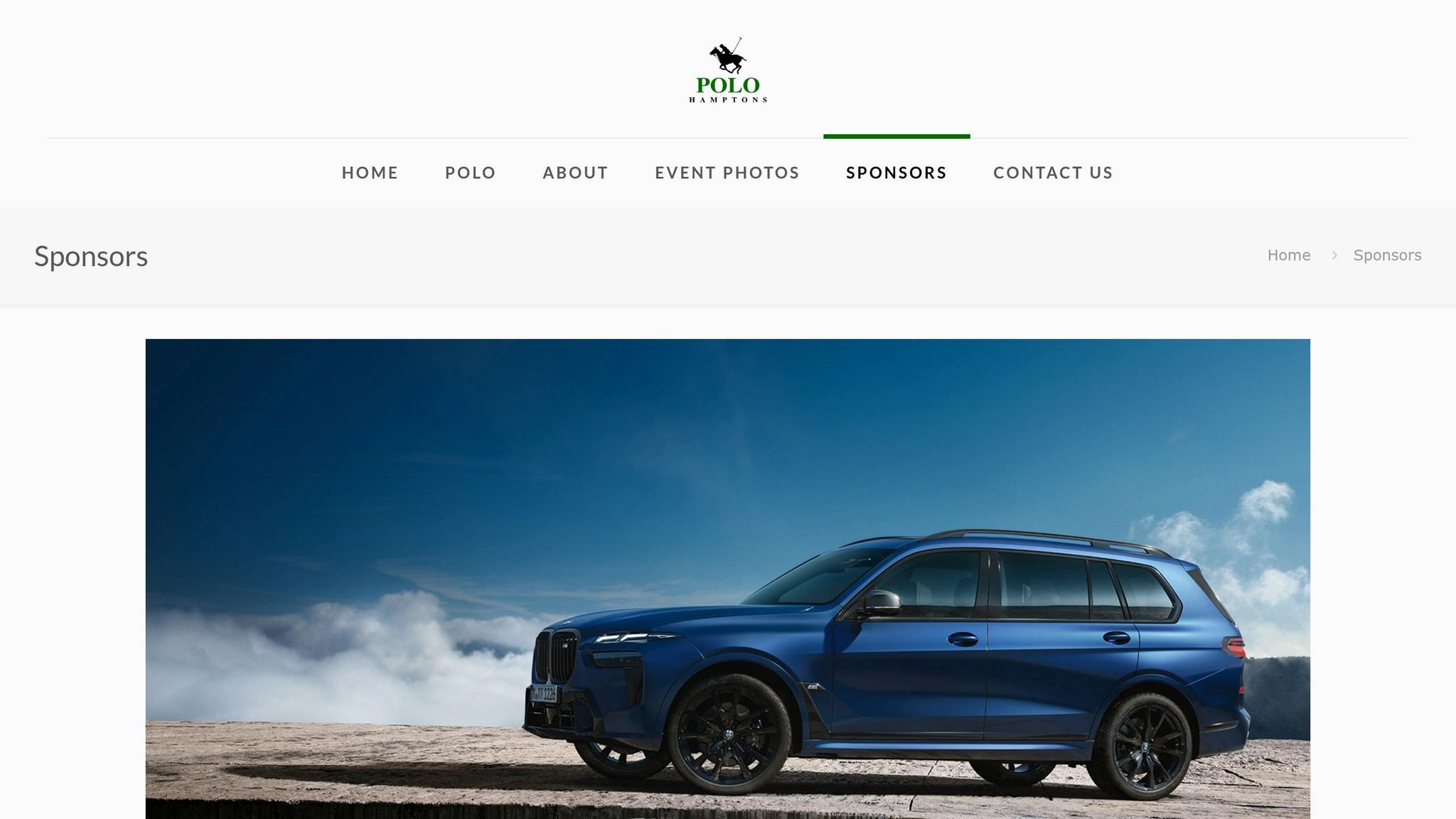
Polo Hamptons takes a unique approach to sponsorships with tiered packages that go beyond basic logo placement. They offer four levels: Platinum Plus ($150,000 for both July 18 and July 25, 2026), Platinum ($50,000), Gold ($22,000), and Corporate Cabana ($12,000). Each package is tailored to meet specific brand goals and includes integrated media exposure. For example, sponsors receive print ads in Social Life Magazine (with a monthly readership of 370,000) and email campaigns targeting 82,000 affluent consumers.
One standout feature is category exclusivity at the Platinum and Platinum Plus tiers, which ensures that no direct competitors can share the same platform. This exclusivity adds a premium layer to the sponsorship. As Cass Almendral from Social Life Magazine puts it:
"Polo Hamptons positions your brand within that experience, not as an advertisement interrupting it".
The event also emphasizes creating immersive luxury experiences. Instead of merely displaying logos, brands can host curated guest lists in 400-square-foot Sperry tents and private hospitality areas, offering a more personal and memorable interaction.
Brand Alignment
Polo Hamptons sets itself apart with a strict focus on brand alignment, using what organizers call a "curated room" strategy. They only accept brands with well-defined identities and consistent pricing, ensuring the event aligns with companies that are already established in their market. This isn’t a platform for experimentation; it’s for brands looking to amplify their existing success.
The audience at Polo Hamptons is another crucial factor. Attendees are pre-qualified high-net-worth individuals – active buyers, not just window shoppers. Almendral sums it up:
"Precision is not a strategy. It is a room".
This meticulous audience selection ensures a highly targeted environment, setting the stage for strong ROI outcomes.
Return on Investment (ROI)
Polo Hamptons measures success through several ROI metrics, starting with media value. The print ads, email campaigns, and editorial features included in the sponsorship packages typically recoup 40–60% of the investment. For luxury B2B services like wealth management or high-end real estate, just 2–3 client conversions from the 36 VIP invitations in the Platinum Plus package can more than cover the $150,000 cost.
Industry data supports this approach, with luxury sports sponsorships delivering an average ROI of 286%. Nearly half of brands report returns between 3:1 and 5:1, while 29% see returns over 10:1. Additional perks, like professional photography from Getty Images and Patrick McMullan, further enhance value by providing branded content for digital marketing.
sbb-itb-161ccc1
How To Secure Brand Partnerships
2. Louis Vuitton Sports Partnerships
Louis Vuitton doesn’t just dabble in sports sponsorships – it establishes long-term alliances that seamlessly tie its brand to high-profile moments in the world of sports.
Sponsorship Strategy
Louis Vuitton focuses on enduring partnerships with elite sports organizations, ensuring its presence at major events. In October 2024, LVMH announced a $1 billion, 10-year partnership with Formula 1, stepping in as the official sponsor after Rolex. The brand’s “Victory Travels in Vuitton” campaign highlights its craftsmanship by designing custom trophy trunks for prestigious events like the FIFA World Cup and the Monaco Grand Prix. For perspective, over 1 billion people witnessed the 2022 World Cup trophy being presented from a Louis Vuitton case.
In June 2025, Louis Vuitton further expanded its sports presence by signing its first direct team partnership with Real Madrid. This deal includes providing formalwear and travel accessories for the club’s men’s and women’s soccer teams, as well as its men’s basketball team.
Brand Alignment
Louis Vuitton carefully chooses sports organizations and athletes that align with its storied legacy. The partnership with Real Madrid is a prime example. Journalist Daniel-Yaw Miller captures this synergy perfectly:
"There’s so much synergy between iconic fashion brands and football clubs. They’re huge cultural entities with so much history and heritage."
The brand also collaborates with individual athletes who embody its forward-thinking ethos. Notable names include NBA star Victor Wembanyama, tennis champion Carlos Alcaraz, and Olympic gold medalist figure skater Alysa Liu. Nicolas Ghesquière, Artistic Director of Women’s Collections, highlighted Liu’s appeal:
"Alysa Liu embodies the modern Louis Vuitton woman – confident, creative, and utterly fearless. Her dynamic energy and individuality resonate with the house’s spirit."
These partnerships bring massive exposure. For instance, Real Madrid’s Instagram account boasts 176 million followers, dwarfing Louis Vuitton’s 56 million. Add to that the 40 million followers of soccer star Jude Bellingham, and the brand’s potential audience grows exponentially. This calculated alignment enhances its cultural relevance and creates a unique ROI framework.
Return on Investment (ROI)
LVMH spends approximately $300 million annually on sports sponsorships. A standout example is its €150 million ($166 million) investment in the 2024 Paris Olympics, which earned an 8/10 reputation score among luxury buyers. Frederic Arnault, CEO of LVMH Watches, emphasized the importance of these partnerships:
"We want to further grow this experiential dimension that Formula 1 provides all over the world."
The brand evaluates success by its ability to expand its audience and cultural influence. By collaborating with Gen Z and Millennial athletes – who now account for about 50% of the global luxury market spend as of late 2025 – Louis Vuitton ensures it remains relevant to younger, affluent consumers. These efforts not only strengthen its luxury-sports-celebrity connection but also build a pipeline of future ultra-high-net-worth clients.
3. Essentialyfe
Sponsorship Strategy
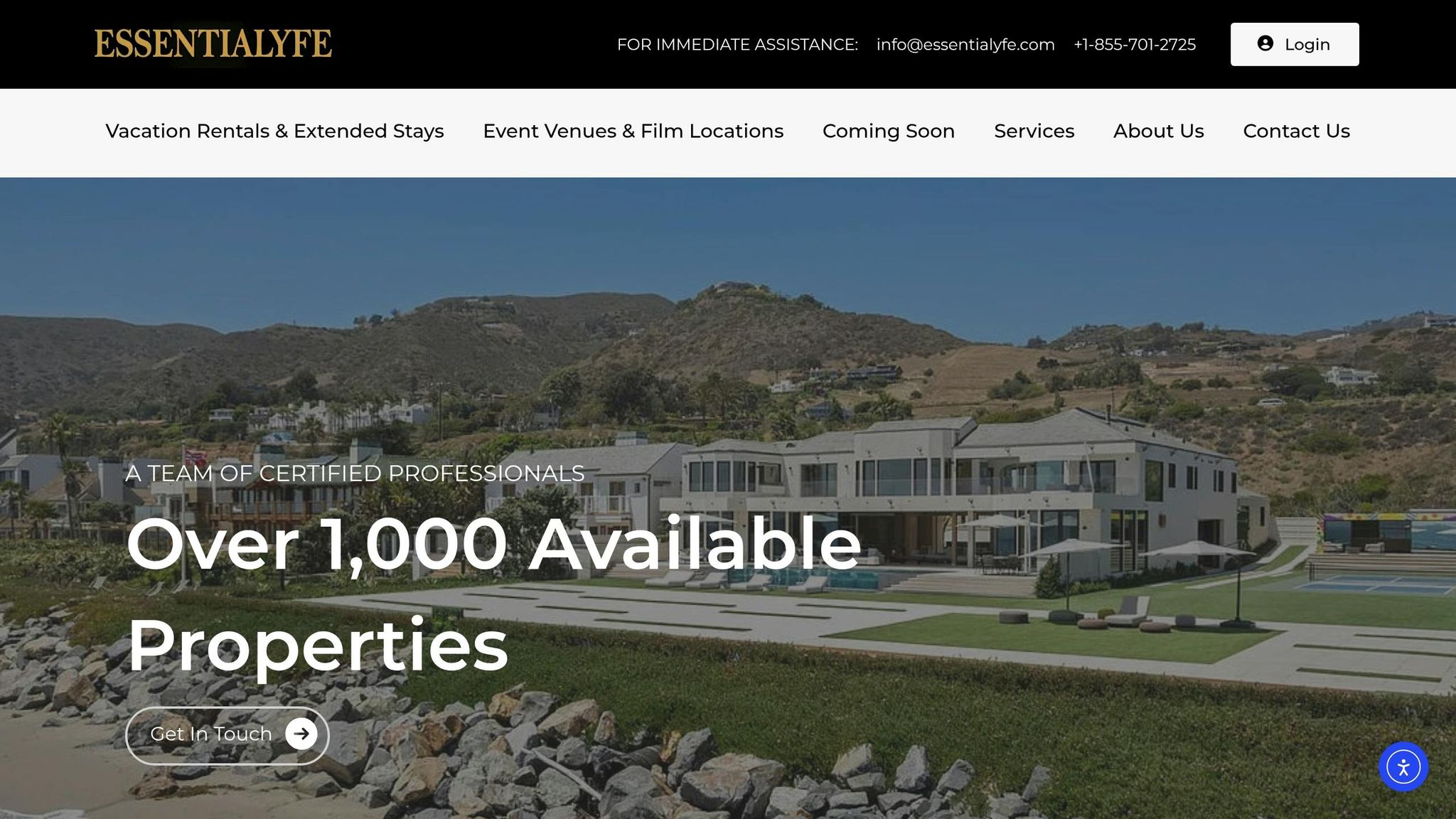
Essentialyfe takes a different path compared to brands like Polo Hamptons and Louis Vuitton. Rather than focusing on tiered sponsorship packages or long-term alliances, it prioritizes intimate, high-quality experiences. The company connects luxury brands with high-net-worth individuals through exclusive, carefully curated events. From day one, Essentialyfe tracks key metrics such as attendee demographics, decision-making influence, and direct interactions with C-suite executives. This approach allows the brand to position itself not just as a service provider but as a relationship builder, creating meaningful connections that deliver lasting value for sponsors. By combining luxury property rentals, event planning, sponsorship brokerage, and concierge services, Essentialyfe offers brands direct access to affluent audiences in settings where connections naturally flourish.
Brand Alignment
Essentialyfe’s approach reflects the changing dynamics of luxury sponsorships. It embraces what industry experts call "invisible sponsorship", seamlessly integrating a brand’s presence into the event without disrupting the guest experience. This strategy aligns perfectly with the values of luxury brands, which prioritize exclusivity, status, and audience quality over broad visibility. Essentialyfe’s curated vacation homes, event venues, and film locations serve as ideal backdrops, allowing luxury products to blend effortlessly into the event’s atmosphere. These partnerships exude wealth and sophistication while reinforcing key luxury principles like precision, craftsmanship, and excellence.
Return on Investment (ROI)
Essentialyfe’s strategy stands apart from high-volume sponsorship models by focusing on intimacy rather than visibility. The company measures success through meaningful engagement with select high-value individuals. Metrics such as private meeting requests, in-depth conversations with decision-makers, and the strength of relationships built take precedence over superficial brand impressions. This allows luxury brands to clearly identify which investments yield real results. For instance, instead of focusing on how many people saw their logo, brands can track how many ultra-high-net-worth individuals experienced their products in an exclusive, personal setting. This targeted approach helps brands differentiate between impactful sponsorships and unnecessary expenditures.
Pros and Cons
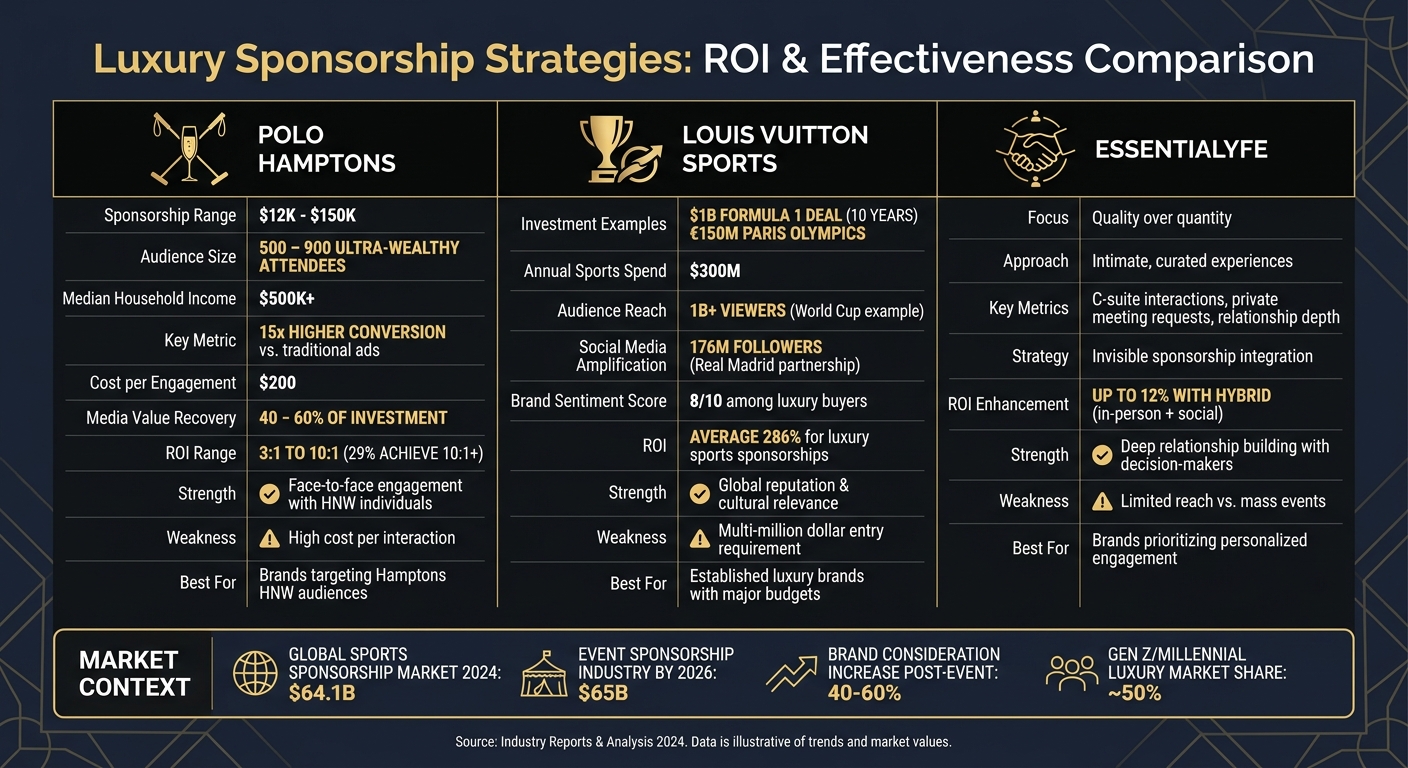
Luxury Brand Sponsorship Strategies: ROI Comparison of Polo Hamptons, Louis Vuitton, and Essentialyfe
Each sponsorship model comes with its own set of benefits and challenges. Polo Hamptons focuses on creating a concentrated impact by connecting brands with 500–900 ultra-wealthy attendees, each with a median household income exceeding $500,000. These exclusive events foster face-to-face engagement, which boasts conversion rates 15 times higher than traditional advertising. However, this comes at a steep cost – $200 per face-to-face interaction compared to $50 per thousand impressions for premium TV ads.
On the other hand, Louis Vuitton’s global sports partnerships are all about building a worldwide reputation and achieving high brand sentiment. Luxury buyers rate these efforts an impressive 8/10, thanks to carefully curated interactions rather than mere logo placements. Their strategy aligns with high-intent digital campaigns by focusing on tier-one cities and premium locations like luxury airports, ensuring visibility among affluent customers. However, the multi-million-dollar entry fees make this approach viable only for well-established luxury brands.
For a more intimate approach, Essentialyfe prioritizes quality over quantity. Their strategy focuses on personalized, high-impact interactions in exclusive settings, fostering genuine relationships with key decision-makers. While this model excels at creating meaningful connections, its reach is far more limited compared to large-scale events.
Here’s a quick breakdown of the strengths and weaknesses of each approach:
| Approach | Strength | Weakness | Ideal For |
|---|---|---|---|
| Polo Hamptons | 15x higher conversion vs. ads | $200 per engagement | Brands targeting high-net-worth (HNW) audiences in the Hamptons |
| Louis Vuitton Sports | Global reputation (8/10 score) | Multi-million-dollar investment | Established luxury brands with significant budgets |
| Essentialyfe | Deep relationship building | Limited reach vs. mass events | Brands prioritizing personalized, high-impact engagement |
The global sports sponsorship market hit $64.1 billion in 2024, highlighting the growing importance of sponsorships. Luxury brands are increasingly shifting their focus from sheer audience numbers to high-quality connections. A hybrid strategy – combining in-person events with social media amplification – can enhance ROI by up to 12%.
Conclusion
Sponsorship today is about creating meaningful partnerships rather than just slapping logos on banners. Leading luxury brands – whether it’s Polo Hamptons’ tailored packages or Louis Vuitton’s carefully chosen sports collaborations – realize that affluent audiences value alignment with their ideals more than broad visibility.
For luxury event organizers aiming to apply these strategies, success hinges on three key priorities:
- Tailor every proposal: Sponsors are far more likely to invest significantly when they feel the offer was crafted specifically for them. A personalized pitch can drive investments up to 10 times higher compared to generic offerings.
- Focus on relationships, not just numbers: Metrics like brand consideration (which often increases by 40–60% after events) and cost-per-qualified-lead are more meaningful than raw attendance figures.
- Build enduring sponsorship models: Despite the event sponsorship industry hitting $65 billion by 2026, sponsors often don’t renew due to a lack of measurable results.
"Luxury and premium sports sponsorship goes beyond prestige. It serves as a strategic tool to engage hard-to-reach target audiences through the experiences that resonate the most." – Henry Farr, Valuation Director, Brand Finance
To stand out, organizers should combine intimate, in-person experiences with digital strategies to amplify impact. Delivering detailed post-event reports within two weeks of the event and ensuring contracts address key elements like intellectual property rights, exclusivity, and sustainability are essential for building trust and long-term partnerships. Essentialyfe’s success demonstrates that in the luxury world, quality always outshines quantity when forging authentic connections with decision-makers.
Ultimately, the goal is to offer more than just an event – it’s about creating cultural relevance. Whether through high-end sports, arts sponsorships, or exclusive gatherings, the path to success lies in precision targeting, immersive experiences, and clear, measurable outcomes.
FAQs
What makes a luxury sponsorship worth paying for?
A luxury sponsorship pays off when it builds brand equity by offering exclusive experiences, fostering genuine connections, and opening doors to long-term partnerships. The goal should be to create enduring value rather than solely chasing short-term sales.
How can I measure sponsorship ROI beyond impressions?
To gauge sponsorship ROI beyond just impressions, it’s essential to prioritize long-term brand equity and nurturing strong relationships. Metrics like brand positioning, consumer perception, and exclusivity play a crucial role in this evaluation. Start by setting clear goals – whether it’s boosting social interactions or driving lead generation – and monitor specific KPIs tied to those objectives. Attribution tools can help link sponsorships to measurable outcomes, such as increased engagement or customer loyalty. Keep in mind that luxury sponsorships often require 18–24 months to deliver noticeable results.
How do I choose the right event for my luxury brand?
When deciding on an event to represent your luxury brand, it’s all about finding the right fit between the event’s audience, level of exclusivity, and shared values. Events like polo matches or golf tournaments often attract affluent attendees, making them ideal for reaching high-net-worth individuals.
Instead of focusing purely on impressions or visibility, consider what the event offers in terms of relationship-building and exclusivity. The best events provide opportunities for meaningful networking, elevate your brand’s reputation, and deliver memorable, high-end experiences. By prioritizing these factors, you can ensure your sponsorship not only maximizes ROI but also strengthens connections with your target audience.