Protecting your luxury vacation home from winter damage is essential to avoid costly repairs and maintain its value. From freezing pipes to damaged outdoor features, winter can wreak havoc on properties if not properly prepared. Here’s a quick guide to safeguard your investment:
- HVAC Maintenance: Schedule professional inspections twice a year to prevent heating failures. Keep thermostats set to at least 55°F to avoid frozen pipes.
- Plumbing Protection: Drain water lines, add antifreeze to toilets, and insulate exposed pipes to prevent freezing and bursting.
- Insulation & Weatherproofing: Seal windows, doors, and gaps, and add attic insulation to prevent heat loss and ice dam formation.
- Outdoor Feature Care: Winterize pools, hot tubs, irrigation systems, and outdoor kitchens to avoid expensive repairs.
- Smart Monitoring & Security: Install smart thermostats, leak detectors, and security systems to monitor and protect your property remotely.
- Regular Inspections: Schedule monthly walkthroughs to catch issues early, like storm damage or system failures.
Why act now? Winterization costs, typically $3,500–$8,500, are a fraction of potential repair bills, which can range from $10,000 to $50,000 for problems like frozen pipes or damaged pool equipment. Early preparation ensures your home is ready before the first freeze, which can arrive with little warning.
Whether you’re a homeowner or renting out your property, these steps help you avoid emergencies, maintain guest readiness, and protect your home’s value year-round.
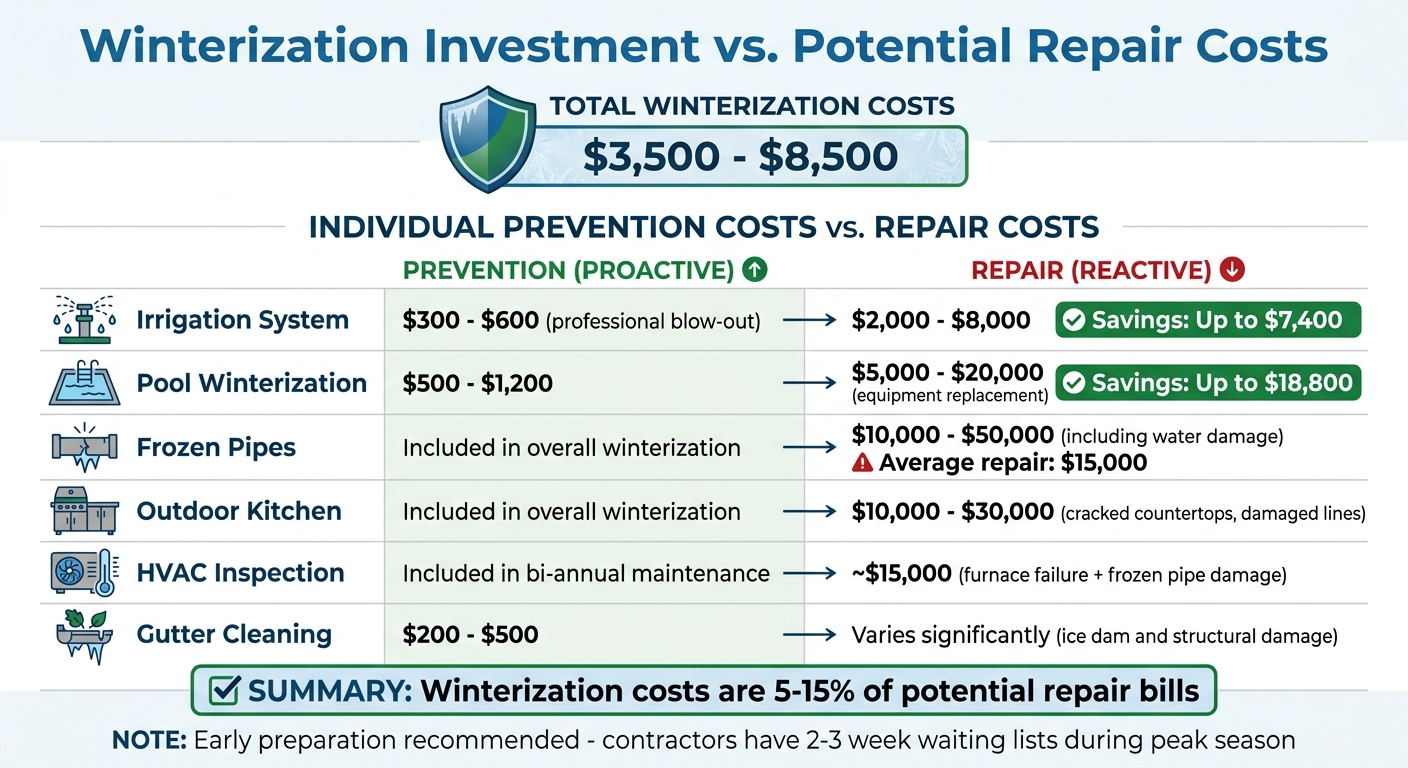
Winterization Costs vs Potential Repair Costs for Luxury Vacation Homes
The RIGHT Way To Winterize Your Home when leaving for the Winter Season
sbb-itb-161ccc1
Inspect and Service Your HVAC System
Your heating system plays a crucial role in protecting a luxury vacation home during winter. A furnace failure in an unoccupied home can lead to frozen pipes and water damage that may cost around $15,000 to repair. The good news? Most of these issues can be avoided with regular maintenance.
Plan for professional HVAC inspections twice a year – once in the spring and again in the fall. These inspections are essential for catching potential problems early. A proper checkup should involve testing the furnace or boiler, cleaning out ducts, vacuuming vents, and replacing filters. If your home has a fireplace or wood-burning stove, schedule an annual chimney inspection to clear out creosote buildup. For properties that rely on heating oil or propane, make sure tanks are filled before winter and arrange for regular deliveries throughout the season.
Schedule a Professional HVAC Inspection
Before the first freeze, bring in a licensed contractor to inspect and test all components of your heating system. For homes with multiple climate zones, it’s important to run each zone briefly during the off-season to identify any issues early. Test each thermostat individually to confirm even heating across the property. Additionally, have a licensed electrician examine your main electrical panel and wiring, as heating systems need consistent power to function properly.
Once your system is fully serviced, make sure to adjust the thermostat to prevent freezing temperatures inside your home.
Set Thermostats to Prevent Freezing
Keep your thermostat set to at least 55°F during the winter months. This helps protect pipes located in floors and walls from freezing. Smart thermostats like Nest or Ecobee allow you to monitor indoor temperatures remotely and can send alerts if the system malfunctions. For added protection, consider low-temperature sensors connected to a monitored alarm system, which can notify you immediately if temperatures drop to dangerous levels. Don’t forget to open interior and cabinet doors to help circulate warm air around pipes that are more exposed.
Protect Plumbing Systems from Freezing
Frozen pipes are a frequent and costly problem for luxury vacation homes during winter. A burst pipe can cause extensive damage – ruining hardwood floors, custom cabinetry, and high-end furnishings – especially if the issue goes unnoticed for days or weeks. Taking a few preventive measures can help you avoid these disasters. Here’s how to drain your plumbing system and insulate at-risk pipes.
Shut Off and Drain Water Lines
Start by safeguarding your plumbing system. If your vacation home will be unoccupied for an extended time, turn off the main water supply – this is your best defense against burst pipes. After shutting off the water, open all faucets and flush toilets to empty water from tanks and bowls. Don’t forget to shut off water lines connected to appliances like washing machines and dishwashers, as their hoses are particularly vulnerable to bursting under pressure.
For added peace of mind, consider hiring a licensed plumber to blow compressed air through the plumbing lines. This step ensures no water is left in low spots where it could freeze. Once drained, add non-toxic, plumbing-safe antifreeze to toilet tanks and bowls to protect against freezing and cracking. Note: Never turn off the water supply for fire sprinkler systems, and if your home uses an older steam heating system, consult a professional before shutting off any water.
Insulate Exposed Pipes
Even after draining your plumbing, exposed pipes still need protection. Pipes in unheated spaces like basements, attics, crawl spaces, and garages are especially at risk. Wrap these pipes with foam insulation sleeves or UL-listed heat tape. Foam sleeves, which cost between $0.20 and $2 per linear foot, are affordable and easy to install. Simply measure, cut to size, fit them over the pipes, and seal the seams with adhesive strips or insulation tape.
Pay extra attention to valves and fittings. Use specialized tape or custom-cut foam pieces, overlapping insulation tape by 50% of its width for a secure seal. If you’re unsure about hard-to-reach areas in complex luxury homes, a $200 inspection can identify vulnerable spots, while professional insulation installation typically costs around $600. Finally, seal any exterior gaps where pipes exit the house using spray foam to block cold air from entering utility spaces.
Insulate and Weatherproof the Home
After addressing HVAC and plumbing concerns, the next step in preparing your vacation home for winter is insulation and weatherproofing.
Proper insulation and weatherproofing keep your home warmer, lower heating expenses, and protect against costly damage caused by moisture and drafts. Even high-end homes can lose heat through gaps and insufficient insulation. By tackling these issues, you can safeguard your property and reduce energy costs by anywhere from 5% to 30%.
Seal Windows and Doors
Windows and doors are the main culprits when it comes to heat loss. Start by sealing drafts around these areas. Use weatherstripping around door frames to block air leaks at moving parts and apply caulk to seal stationary cracks around window frames and trim. Always ensure windows are securely closed and locked, as this tightens the sash against the frame.
For homes with expansive glass features, like floor-to-ceiling windows, consider adding insulation film or thermal curtains. This helps retain heat without compromising your view. If you have window-mounted air conditioning units, remove them for the season to ensure a proper seal and block cold air from entering. In areas prone to high winds or storms, install storm shutters or use 5/8" marine plywood for added protection. Don’t forget the chimney – sealing it with a weatherproof system prevents both heat loss and water damage from rain or melting snow.
Add Insulation to High-Risk Areas
The attic should be your top priority when it comes to insulation. Since heat rises, an inadequately insulated attic allows warmth to escape through the roof. This not only wastes energy but can also lead to ice dams – when heat escaping through the roof melts snow, which then refreezes at the eaves. Ice dams can cause significant water damage or even lead to roof collapse. Adding more insulation to your attic creates a barrier that keeps heat where it belongs.
Next, focus on crawl spaces, basements, and other unheated zones that are prone to drafts. Inspect for gaps around pipe exits and where walls meet the foundation, sealing any openings to block cold air. In unheated areas, keep the thermostat set to at least 55°F to prevent pipes and wall cavities from freezing.
Vacation homes managed by Essentialyfe benefit from these proven weatherproofing strategies, ensuring they remain warm, secure, and ready to face winter’s challenges.
Prepare Outdoor Features for Cold Weather
After securing your home’s interior, it’s time to focus on the exterior. Cold weather can wreak havoc on outdoor features like pools, hot tubs, irrigation systems, and landscaping. Taking the right precautions now can help you avoid expensive repairs down the line.
Winterize Pools, Hot Tubs, and Irrigation Systems
Freezing temperatures can cause serious damage to pool and irrigation systems, so it’s crucial to prepare them before the first frost. For pools and hot tubs, drain all equipment thoroughly. Even a single night of freezing temperatures can destroy motors and rupture heater cores. Lower the water level below the skimmers and return jets, and use winterization chemicals to prevent algae growth and protect surfaces while the system is offline.
Irrigation systems require professional attention. A commercial-grade air compressor is necessary to blow out all remaining water from underground pipes and valves. Even a small amount of leftover water can freeze and cause pipes to shatter if temperatures dip below 20°F for six hours or more. DIY compressors often lack the power to fully clear the lines, leaving your system vulnerable to costly spring repairs, which can range from $2,000 to $8,000.
Outdoor kitchens also need attention. Drain water lines for sinks, ice makers, and refrigerators. Seal granite or concrete countertops to prevent cracks caused by moisture freezing and thawing. Repairs for these features can cost anywhere from $10,000 to $30,000. Finally, cover pools and spas to block sunlight and keep debris out during the winter months.
Protect Outdoor Faucets and Landscaping
Water systems aren’t the only outdoor features at risk. Start by disconnecting garden hoses and shutting off the water supply from the interior valve. Open exterior faucets to drain any remaining water, and install insulated faucet covers to protect them from freezing.
Landscaping also needs some care. Prune dead branches from trees to prevent them from snapping under heavy snow or ice. Sensitive trees should be wrapped, and evergreens can benefit from anti-desiccant sprays to protect against "winter burn" caused by dry winds. Adding a fresh layer of mulch around plant bases can insulate roots, while burlap screens can shield delicate plants from wind and salt damage.
Don’t forget your gutters. Clear them out and make sure downspouts direct water several feet away from your home’s foundation to prevent ice dams and structural issues. For larger homes with complex rooflines, professional gutter cleaning may cost between $200 and $500 but can save you from much bigger problems later.
Monitor and Secure the Property During Winter
Once your vacation home is winterized, the next step is keeping it protected and functional while you’re away. Vacant luxury homes face risks like frozen pipes and break-ins during the colder months. Combining modern technology with regular inspections can help prevent small problems from turning into expensive disasters.
Install Smart Home and Security Systems
Smart technology can be a game-changer for monitoring your home remotely. For example, using smart thermostats like Nest, you can maintain temperatures at a minimum of 55°F to avoid frozen pipes. Leak detectors placed near critical areas like water heaters, sump pumps, and filtration tanks can automatically shut off the water supply if a leak is detected – even a small leak of just 1 GPM can waste over 1,400 gallons a day. This is crucial since repairs from frozen pipes in high-end homes can easily climb into five figures.
Security is another essential layer. Vacant homes are about 50% more likely to attract intruders. Smart locks allow you to assign unique access codes to inspectors and maintenance staff, eliminating the hassle of physical keys. Smart timers for interior lights and motion-activated exterior lighting can mimic occupancy, making your home less appealing to would-be burglars. Monitored alarm systems that include smoke, fire, and carbon monoxide detectors ensure emergency services are notified even when no one is home.
To bring it all together, consider integrating smart sensors and a centralized dashboard. This setup can monitor HVAC systems, door sensors, and leaks, and might even qualify you for insurance discounts.
While these systems provide excellent remote oversight, they work best when paired with regular in-person inspections.
Arrange Regular Property Inspections
Technology is powerful, but it can’t replace the human touch. Schedule professional property managers to perform monthly walkthroughs to spot issues that sensors might miss, such as a failing sump pump, storm damage, or pest problems. For larger or hard-to-access roofs, drone inspections can efficiently check for winter damage.
"Even the smartest tech can’t replace a human walking through the house." – Dr. Elena Brooks, Certified Water Quality Specialist and Smart Home Wellness Advocate
During inspections, ensure sensors are functioning properly, run water at all faucets to prevent stagnation, and clear gutters and downspouts at least twice a year to avoid overflow and foundation damage. After snowstorms, remove accumulated snow, and arrange for mail holds to avoid signaling that the home is vacant.
Notify local law enforcement about the vacancy and provide emergency contact details. Additionally, check with your insurance agent about any requirements for maintaining full coverage, as policies often change when homes are unoccupied for more than 30 to 60 days. Some may require features like automatic water shut-off valves.
Conclusion
Preparing your luxury vacation home for winter is more than a checklist – it’s a crucial step in protecting a multi-million dollar asset. From HVAC inspections to weatherproofing and safeguarding outdoor features, each measure helps prevent costly winter damage. Typically, a thorough winterization process costs between $3,500 and $8,500, a small price compared to the potential fallout from issues like frozen pipes, damaged pool equipment, or ice dam failures.
The cost-benefit analysis is hard to ignore. Spending $300–$600 on professional irrigation blow-outs can save you from $2,000–$8,000 in spring repairs. Similarly, allocating $500–$1,200 for pool winterization could prevent equipment replacements costing anywhere from $5,000 to $20,000. These proactive steps ensure you’re prepared when the unexpected strikes.
"Seasonal upkeep isn’t about reacting to problems. It’s about making sure those problems never show up".
Denver’s first hard freeze can arrive with just 24–48 hours’ notice, leaving little time to act. During peak season, contractors often have waiting lists of 2–3 weeks. Scheduling services as early as September ensures that your property is ready before temperatures drop below 28°F for extended periods.
Beyond avoiding repair bills, winterization plays a key role in maintaining your home’s resale value. Features like resort-style pools, outdoor kitchens, and advanced HVAC systems are better preserved with proper care. It also protects interior elements like wood floors, fine furniture, and artwork from damage caused by winter humidity fluctuations.
Combining professional winterization services, smart home monitoring, and routine inspections creates a solid defense against winter’s harsh conditions, keeping your luxury vacation home in pristine condition year-round.
FAQs
What should I do if my home loses heat during a freeze?
If your home loses heat during a freeze, it’s important to take steps to protect your pipes from freezing. Start by keeping your thermostat set to at least 55°F – this can help reduce the risk of frozen pipes.
Here are a few additional tips:
- Keep the heat running: Ensure your heating system stays on continuously, even if you’re not home.
- Insulate exposed pipes: Focus on areas like crawl spaces or exterior walls where pipes are more vulnerable.
- Install a leak detection system: This can provide an extra layer of protection and alert you to potential issues.
If your heating system stops working entirely, don’t wait – reach out to a professional plumber or HVAC technician right away to minimize the risk of damage.
Do I need to fully drain the plumbing if I keep the heat on?
If you maintain indoor temperatures at 55°F or above, fully draining your plumbing system is typically not needed. However, to safeguard your pipes, make sure to insulate any exposed ones and drain outdoor hoses and irrigation lines. For added peace of mind – especially if the home will be empty for a long time – you might want to drain indoor pipes, flush toilets, and add antifreeze to toilet tanks and bowls.
How can I winterize a pool or irrigation system if I’m not local?
To prepare your property for winter remotely, start by shutting off the water supply. Then, open all valves to drain the pipes and use compressed air to blow out any leftover water. For swimming pools, make sure to drain them and securely cover them to shield against winter damage.
If this process feels overwhelming or you’re unable to do it yourself, consider hiring a professional service. They can ensure everything is winterized correctly. These precautions can help safeguard your property from freezing temperatures and avoid expensive repairs during the colder months.