Hydrotherapy pools are transforming luxury rentals by combining relaxation, wellness, and modern technology. These high-end amenities not only attract health-conscious travelers but also boost property value and rental income. Here’s a quick rundown of what makes them stand out:
- Temperature Control: Precise settings (90°F–99°F) for comfort, recovery, or therapy.
- Customizable Jets: Directional, air, and reflexology jets tailored for specific needs.
- Luxury Seating: Ergonomic designs like bubble loungers for full-body support.
- Sensory Features: LED chromotherapy, aromatherapy, and integrated audio systems.
- Energy Efficiency: Solar heating, advanced insulation, and eco-friendly filtration systems.
Hydrotherapy pools are not just about aesthetics – they offer tangible benefits like pain relief, stress reduction, and improved guest satisfaction. Modern features like smart controls and energy-saving systems make them a practical choice for rental properties looking to stand out in a competitive market.
How to Pick the Best Hydrotherapy Spa
sbb-itb-161ccc1
Water Temperature Control for Comfort and Wellness
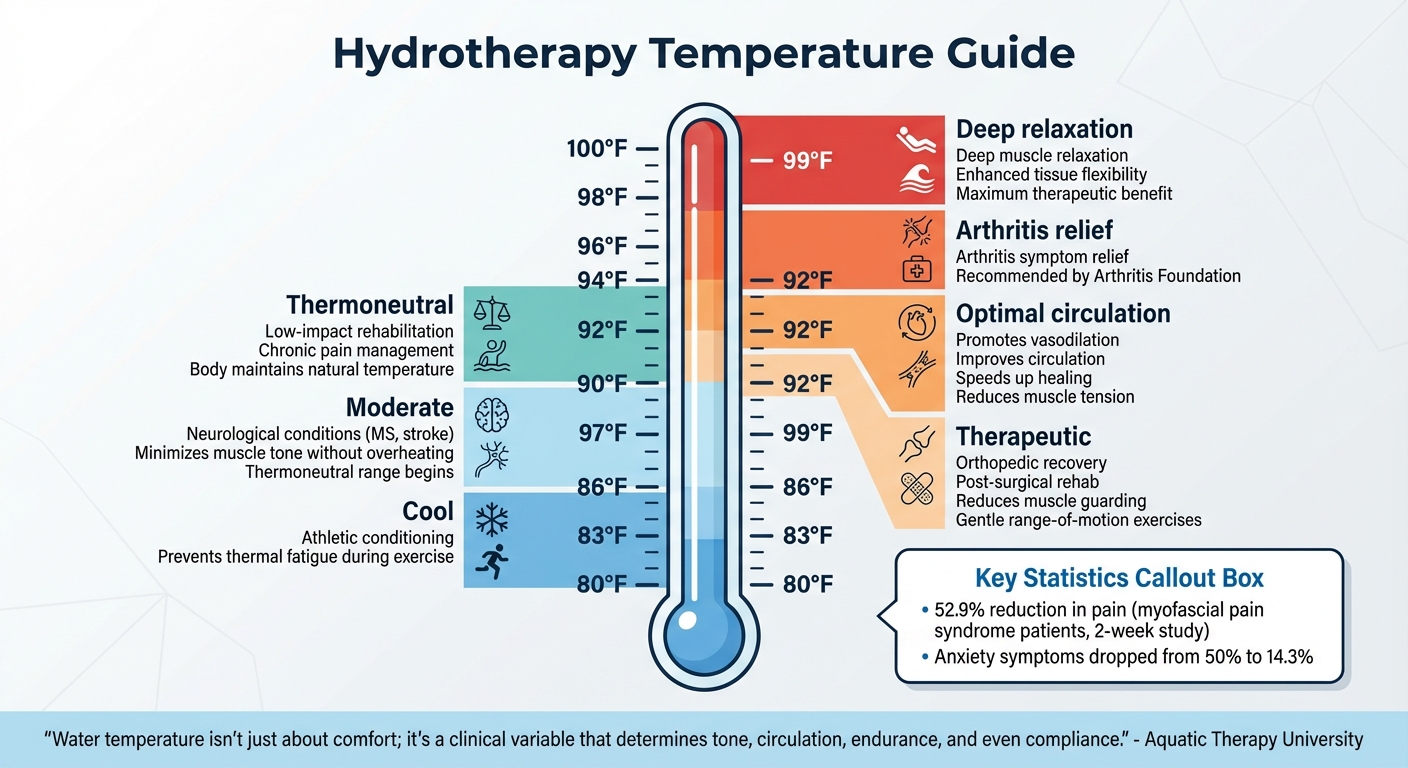
Hydrotherapy Water Temperature Guide for Different Therapeutic Goals
Getting the water temperature just right is key to effective hydrotherapy. The thermoneutral range of 90°F to 94°F is particularly important because it allows your body to maintain its natural temperature, making it ideal for low-impact rehabilitation and managing chronic pain. This range creates a calming environment where muscles can relax, joints decompress, and the cardiovascular system remains unaffected.
How Temperature Affects Hydrotherapy Benefits
Water temperature plays a big role in shaping the benefits of hydrotherapy. When the water is between 92°F and 95°F, it promotes vasodilation, which improves circulation and speeds up healing. At the same time, it reduces muscle spindle activity, easing muscle tension, stiffness, and guarding.
"Water temperature isn’t just about comfort; it’s a clinical variable that determines tone, circulation, endurance, and even compliance." – Aquatic Therapy University
For individuals managing arthritis, the Arthritis Foundation suggests water temperatures between 92°F and 100°F to help alleviate symptoms. Supporting this, a 2013 study in the Annals of Rehabilitation Medicine found that patients with myofascial pain syndrome who underwent whole-body whirlpool hydrotherapy at therapeutic temperatures experienced a 52.9% reduction in pain within two weeks. Anxiety symptoms also dropped significantly, from 50% to 14.3%.
Different therapeutic goals call for specific temperature settings. For example:
- Orthopedic recovery or post-surgical rehab: 92°F to 94°F helps reduce muscle guarding and promotes gentle range-of-motion exercises.
- Neurological conditions (like multiple sclerosis or stroke): Cooler water, between 90°F and 92°F, minimizes muscle tone without overheating.
- Athletic conditioning: Cooler temperatures, around 83°F to 86°F, prevent thermal fatigue during exercise.
Smart Temperature Control Systems
Modern hydrotherapy pools now come equipped with advanced digital controls and smartphone apps, making it easier than ever to maintain the perfect water temperature. Systems like SmartTub let users adjust the temperature remotely, ensuring the pool is ready and comfortable before anyone even steps in.
High-end options, such as the MP Momentum D, take it a step further with dual-temperature zones. One section can stay between 82°F and 88°F for aquatic exercise, while another heats up to 99°F for deep relaxation. Features like "CoolZone" allow these systems to shift between temperatures within hours, adapting to weather changes or user preferences during the same session.
"With control of your spa at your fingertips, you can ready your hot tub for an after-work soak while you’re still at the office." – Watkins Wellness
These smart systems also monitor water quality and temperature in real time, sending alerts when maintenance is needed. This is especially important for luxury rentals, where downtime can lead to lost income. Additionally, pre-programmed "wellness profiles" let users select settings like "Athletic Recovery" or "Relaxation" with a single touch.
Next, we’ll dive into how massage jet systems can further personalize your hydrotherapy experience.
Customizable Massage Jet Systems for Personalized Relaxation
Once you’ve got the water temperature dialed in, customizable massage jets take your hydrotherapy experience to the next level. These jets turn a simple soak into a tailored recovery session, offering a level of personalization that makes all the difference.
Today’s luxury systems come equipped with digital controls and even apps, making it easy to adjust jet intensity with a few taps. Some advanced pools include pre-set therapy programs designed for specific needs, like "Athletic Recovery", "Chronic Pain Relief", or "Deep Relaxation". High-end systems also allow for interchangeable jet modules, letting users rearrange configurations to focus on preferred seating areas. This flexibility ensures that every session feels uniquely suited to the user’s needs.
Types of Jet Configurations
Different jet types offer distinct massage sensations, each designed to address specific therapeutic goals:
- Directional jets: These provide focused, intense pressure, perfect for working out knots in the back or neck.
- Rotational or spinning jets: Mimicking the circular kneading motion of a masseuse, these jets are ideal for larger muscle groups like the shoulders and lats.
- Air jets: For those who prefer a gentler experience, air jets release bubbles that create a soothing, full-body massage.
- Volcano jets: Located at the bottom of the pool, these high-capacity jets deliver a powerful upward flow, targeting the feet, glutes, and lower back.
- Cervical jets: Positioned above the waterline, these focus on relieving tension in the shoulders and neck.
- Footwell or reflexology jets: Designed to stimulate circulation, these jets target the arches and soles of the feet.
For optimal performance, it’s recommended to have one dedicated massage pump for every 20 to 30 jets. Without sufficient pump capacity, a high number of jets can result in weak pressure, so this is an important consideration when choosing a pool for a premium experience.
Programmable Jet Features
Programmable features take customization even further, giving users precise control over massage intensity and focus areas. These systems allow guests to adjust everything from gentle, soft-tissue massages to deep, high-pressure therapy for targeted relief.
"By adjusting water flow and volume through the jets, you can design a purely individual massage." – Caldera Spas
Manual diverters or digital touchpads let users direct pressure to specific zones, so one person can enjoy a vigorous massage while another opts for a more relaxing soak. Some systems even allow for physical swapping of jet types – like replacing a directional jet with a spinning one – to further refine the experience. Studies indicate that warm water therapy can reduce post-workout muscle soreness by up to 40%, making these customizable systems especially appealing for those prioritizing recovery.
Luxury Seating Options for Comfort
Premium seating options, paired with advanced massage jet systems, elevate the hydrotherapy experience to another level. The right seating transforms a hydrotherapy pool into a full-body wellness retreat, offering not just aesthetic appeal but also real therapeutic benefits. Ergonomic designs promote proper posture while targeting specific muscle groups, and when combined with thoughtfully placed jets, they create a recovery experience guests won’t forget.
Underwater Bubble Loungers
Bubble loungers provide a unique way to enjoy full-body immersion while adding a touch of elegance. These submerged recliners allow guests to relax completely, as gentle air jets deliver a calming massage. Unlike traditional seating, these loungers enhance aqua-acupressure and leverage buoyancy for deep relaxation.
Beyond their therapeutic benefits, bubble loungers double as striking architectural features, boosting the visual appeal of luxury rentals and increasing their social media shareability. Some models even include individually divided seats with dedicated foot spas, offering both privacy and focused relief.
Therapeutic Seating Designs
Therapeutic seating is designed to deliver more than just comfort – it’s tailored for targeted muscle relief. Strategically positioned aqua-jet nozzles address common areas of tension, such as the lower back, shoulders, and legs. Many designs allow users to adjust jet pressure and direction, ensuring a customized experience.
"A well-designed jet system can turn a simple soak into a true recovery experience, helping you move and feel better every day." – Michael Phelps Swim Spas
For maximum effectiveness, therapeutic seating zones are typically maintained at 99°F, a temperature that promotes deep muscle relaxation and enhances tissue flexibility. By contrast, exercise areas are kept cooler, between 90°F and 92°F. Safety is a key consideration too, with features like anti-slip surfaces, handrails, and built-in steps ensuring easy access. Some designs even incorporate cool-down benches, letting guests take breaks without leaving the warm water environment.
Smart Entertainment and Sensory Features
Once hydrotherapy pools are customized to meet individual needs, the experience is elevated further with smart sensory features. These pools now offer more than physical therapy – they engage your senses with sight, sound, and smell, turning an ordinary soak into a truly immersive wellness retreat.
Integrated Audio and LED Lighting
Many modern hydrotherapy pools come equipped with Bluetooth-enabled audio systems like the BlueWave® Sound System or MyMusic™ 2.1. These systems allow users to wirelessly stream their favorite music, audiobooks, or podcasts through waterproof speakers built into the pool. With a range of up to 30 feet, users can enjoy full control remotely. For luxury setups, the InTouch 2 smartphone app makes adjusting settings even more convenient, letting guests manage their experience directly from their phones.
LED lighting, especially when used for chromotherapy, adds another layer of relaxation or stimulation. Colors like blue and green are known to calm the nervous system and reduce blood pressure, while yellow sharpens focus, and red boosts circulation. LED lights are not only customizable but are also energy-efficient and long-lasting, making them a popular choice for hydrotherapy pools.
"Chromotherapy is a therapeutic technique based on the influence of colors on the body and mind. Each color emits a distinct light frequency that can stimulate, balance, or relax different body systems." – GodoPools
To maximize the benefits, lighting can be programmed to suit different times of the day – soft blues and greens for evening relaxation or warmer yellows and oranges for a morning energy boost. High-end systems like the Pentair Color LV Lighting System, costing around $1,500, set the bar for luxury spa installations. These visual and auditory features seamlessly complement the olfactory enhancements discussed next.
Aromatherapy Integration
Adding aromatherapy to the mix brings the wellness experience full circle. Built-in essential oil diffusers can release calming scents like lavender and eucalyptus to reduce stress, or energizing citrus aromas to uplift the mood. In medical settings, aromatherapy has even been shown to alleviate chemotherapy-induced nausea by up to 80% when used consistently.
"Aromatherapy and chromotherapy add a sensory dimension to outdoor spa experiences, with scents and colors that promote relaxation." – FJV Construction
When combined, aromatherapy, chromotherapy, and audio create a harmonious environment that soothes the nervous system. For example, guests might choose a "morning energy" cycle with citrus scents and yellow lighting or an "evening relaxation" mode featuring lavender and calming blue tones. Positioning diffusers near seating areas ensures that the scents are most effective where guests tend to linger.
Energy Efficiency and Environmental Responsibility
Modern hydrotherapy pools are redefining wellness by incorporating systems that are both cost-effective and environmentally mindful. By using energy-efficient technologies, these pools not only cut operational expenses but also appeal to eco-conscious guests and property owners. The result? Lower monthly bills without sacrificing comfort or quality.
Beyond reducing costs, these eco-friendly solutions enhance the overall guest experience, especially in high-end accommodations.
Eco-Friendly Heating Solutions
Traditional heating systems can run anywhere from $120 to $300 per month. Enter solar heating systems, which provide a greener alternative. Using flat-plate collectors in warmer climates or evacuated tube collectors in colder regions, these systems can slash energy usage by 50–80% compared to electric resistance heaters. Notably, evacuated tube collectors maintain 70–80% efficiency even in less-than-ideal weather conditions, thanks to vacuum insulation.
Take the example of a 50-room hotel in Portland, Oregon, which installed 40 flat-plate solar collectors in November 2025. This $85,000 system managed to cover 70% of the property’s heating needs while saving $8,500 annually in energy costs. With an estimated payback period of eight years, it’s a smart investment.
Another efficient option is air-source heat pumps with inverter technology, which use 1 kW of electricity to produce approximately 4 kW of heat. These pumps draw warmth from the air and adjust their output based on real-time temperature needs, avoiding wasteful full-power operation. For even greater efficiency, geothermal systems tap into stable underground temperatures. While they come with a higher upfront cost – ranging from $10,000 to $25,000 – they boast some of the lowest ongoing operating expenses.
Hybrid systems combine technologies like solar panels and heat pumps, switching energy sources depending on weather conditions. This ensures consistent water temperatures of 99–104°F, ideal for therapeutic use, while keeping energy consumption in check.
"Hotels show a 92% penetration rate for energy-optimized spa systems, signaling that solar and efficiency features are now baseline expectations rather than luxury add-ons." – Mordor Intelligence
Heating systems also benefit from advanced insulation materials. FiberCor and triple thermal shields with reflective foil achieve R-values of R14–R16, compared to just R5.5 for standard closed-cell foam. Since most heat loss – around 80% – occurs at the water’s surface, investing in a tapered locking hardcover is crucial. Adding a floating thermal blanket can further cut overnight heat loss by 70–90%.
Efficient Filtration and Insulation
Energy efficiency doesn’t stop at heating – modern filtration and insulation systems also play a key role.
Microfiltration systems are a game-changer, capturing particles as small as 5 microns (compared to 50 microns in conventional filters). This keeps the water cleaner for longer and reduces the need for energy-intensive heating and pumping cycles. Self-cleaning systems, which filter 100% of the water in just 15–40 minutes, also cut down on maintenance energy use.
Variable-speed pumps further enhance efficiency by adjusting their speed based on demand, using up to 80% less energy than single-speed models. For properties with dedicated circulation pumps, energy consumption can drop to the equivalent of a 40-watt light bulb. Running these systems during off-peak electricity hours can lead to additional savings.
Alternative sanitization methods like UV-C sterilization, ozone purification, and copper/silver ionization offer a more sustainable approach. UV systems, for instance, eliminate 99% of viruses and bacteria, including chlorine-resistant strains like Cryptosporidium. This reduces the environmental impact of chemical runoff and lowers overall consumable costs.
"Running your swimming pool or hot tub on an ionisation system can get you up to 2.00% on the Sustonica criteria… it is safe for humans and poses no harm to the environment." – Sustonica
Thermal shield insulation adds another layer of efficiency by creating a barrier against heat loss and recycling waste heat from motors and pumps back into the water. These systems can capture up to 1.5 kW per pump, reducing energy costs by up to 30% compared to standard designs. Maintaining steady water temperatures is also more energy-efficient than allowing the pool to cool completely and reheating it later. Smart thermostats can further optimize this process by preventing energy spikes during heating cycles.
Conclusion
Hydrotherapy pools have transitioned from being simple recreational features to becoming key tools for improving mobility, recovery, and overall wellness. With adjustable water temperatures and customizable jet settings, these pools allow users to create therapy sessions tailored to their individual needs.
Beyond functionality, these pools now offer a complete sensory experience. Features like LED chromotherapy, aromatherapy, and integrated audio systems transform a basic soak into a multi-dimensional wellness activity. Water becomes more than just a medium – it’s a way to achieve physical, emotional, and sensory harmony. Additionally, energy-efficient heating and advanced filtration systems ensure these pools remain appealing throughout the year while keeping operational costs under control.
These amenities also provide a competitive edge in the rental market. With Millennials and younger Generation X making up over half of U.S. renters and placing a high value on sustainable, wellness-oriented amenities, hydrotherapy pools can significantly enhance a property’s appeal and rental value. They cater to the growing demand from health-conscious travelers who seek more than just a place to stay.
"The right amenities make a property more desirable, increase its value, and turn first-time guests into repeat visitors." – Garth Yettick, Luxart Property Management
At Essentialyfe, we specialize in luxury rental properties that offer unmatched wellness experiences, including these sought-after hydrotherapy features.
FAQs
What hydrotherapy pool features boost luxury rental bookings most?
When it comes to boosting bookings for luxury rentals, certain hydrotherapy pool features can make all the difference. Heated saltwater pools and private heated pools are standout options, offering both comfort and exclusivity. Pair these with amenities like hot tubs and saunas, and you create a wellness retreat that appeals to renters looking for a truly relaxing and indulgent experience.
How can owners keep hydrotherapy pools safe and low-maintenance?
To keep hydrotherapy pools in top condition and easy to manage, routine maintenance is key. Start by regularly sanitizing and balancing the water to keep bacteria and algae at bay. Don’t forget to clean filters, perform backwashing, and frequently check water quality to ensure everything stays in balance. It’s also essential to inspect and maintain equipment like jets and heaters to keep them running smoothly. With consistent care, you can maintain a clean and safe environment while minimizing health risks and maintenance hassles.
What’s the best way to cut hydrotherapy pool energy costs year-round?
To keep hydrotherapy pool energy costs in check throughout the year, focus on using energy-efficient equipment. This includes insulated covers to retain heat, energy-efficient pumps, and heat pumps. Additionally, performing regular maintenance helps reduce heat loss and keeps the system operating smoothly.