The wellness economy is projected to hit $8.5 trillion by 2027, and luxury rentals are evolving to meet this demand by integrating advanced health-focused technologies. Four key innovations are reshaping guest experiences and property value:
- AI personalization systems predict guest needs, boosting revenue and rental premiums by 10–30%.
- Wearable tech integrations create intuitive environments by syncing health data with home systems.
- Biohacking devices like oxygen chambers and red-light therapy offer cutting-edge recovery solutions.
- Smart sleep systems improve rest using AI-driven mattresses and circadian lighting.
These features attract health-conscious travelers, with 70% willing to spend more on wellness services. Properties with these upgrades see higher occupancy, resale value, and guest satisfaction. While initial costs can be high, the financial and experiential returns make these investments worthwhile.
Wellness tech is shaping the future of luxury rentals by blending health optimization with convenience, creating spaces that deliver measurable benefits for guests and property owners alike.
1. AI-Powered Personalization Systems
AI personalization has come a long way, moving past simple automation to systems that can predict guest needs with impressive precision. These platforms, which integrate seamlessly with Property Management Systems (PMS) like Guesty and Hostaway, use real-time booking data to tailor experiences. From adjusting room temperatures to refining the tone of communication, these systems are reshaping how properties cater to guests’ preferences.
The adoption of these systems is growing rapidly. Among operators managing 20 or more properties, usage has jumped from 11% in 2024 to 34% in 2026. For luxury wellness rentals, this means creating spaces that align with guests’ profiles, such as setting optimal lighting and temperature for better sleep and recovery.
Take Desert Sol Real Estate as an example. By implementing Dimora AI across 130+ properties, they were able to handle 1,800 guest calls, draft 6,300 inbox messages, and send 470 upsell offers. The result? An additional $12,600 in revenue over just six months. This kind of operational efficiency highlights how these systems can directly impact profitability.
To achieve accuracy rates of 85–92%, systems typically require 200–300 guest interactions over a 3–6 month period. The return on investment (ROI) is equally compelling, with messaging AI breaking even in 4.2 months and voice systems in 5.8 months. Monthly costs range from $150–$600 for inbox AI and $300–$800 for voice systems that manage 200–500 calls.
"The shift happening in 2026 is from ‘should we try AI?’ to ‘which AI operations layer do we run?’"
– Dimora AI Team
Smart properties are also proving to be a lucrative investment. They can command rental premiums of 10–30%, with millennials willing to pay up to 20% more for rentals featuring advanced personalization. At Essentialyfe, these systems enhance guest wellness by mapping preferences before arrival and making real-time adjustments during their stay. The result? Higher property values and happier guests.
sbb-itb-161ccc1
2. Wearable Tech Integrations
Wearable technology is reshaping the luxury rental experience, offering real-time health insights that enhance guest wellness. These devices – like rings, patches, or biosensors – are now part of advanced Wearable-Integrated Smart Home (WISH) systems. By feeding biological data into a centralized AI, properties can automatically adapt features like lighting, temperature, and security to meet individual guest needs. This level of integration takes personalization to a new level, creating an environment that feels almost intuitive.
For instance, wearables can monitor drops in core temperature or heart rate variability (HRV). In response, the property’s lighting system can adjust to reduce blue light wavelengths (450–480 nm) that suppress melatonin, improving sleep quality and boosting morning alertness by as much as 30%. Meanwhile, smart mattresses use REM sleep data to adjust their temperature throughout the night, further enhancing rest and overall wellness.
These wearable-driven systems go beyond standard smart home features, offering continuous health monitoring and automated responses that elevate the guest experience. Luxury properties with such biometric capabilities are setting themselves apart in the market, commanding higher premiums due to their focus on proactive wellness.
"The home is no longer just a shelter; it is a sophisticated medical device."
– The Omni Brief Editor
As these technologies advance, privacy has become a top priority. Many high-end properties are adopting Local-Edge AI systems that process data on-site, addressing privacy concerns for the 60% of consumers wary of how their personal information is used. Companies like Essentialyfe are also implementing quantum-resistant encryption to securely store guest biometrics, ensuring peace of mind for their clientele.
Wearables are also revolutionizing personalized nutrition. Continuous Glucose Monitors (CGMs) can connect to smart kitchens that prepare nutrient-rich tonics when they detect a glucose drop. In luxury rentals, this integration showcases a commitment to guest health, reinforcing the property’s image as a wellness-focused retreat. Research shows that personalized diets based on glycemic data can reduce systemic inflammation markers by nearly 18% over six months. With 74% of luxury travelers prioritizing environments that optimize health without requiring active effort, this shift toward passive wellness is becoming a must-have feature.
3. Biohacking Devices
Luxury rentals are stepping up their game by offering biohacking devices that transform guest rooms into cutting-edge recovery hubs. Think Hyperbaric Oxygen Therapy (HBOT) chambers, red light therapy panels, cryotherapy units, and Pulsed Electromagnetic Field (PEMF) beds. These aren’t just about indulgence – they focus on delivering measurable health benefits. This shift aligns with the preferences of the 60–70% of luxury travelers who now prioritize wellness when choosing where to stay.
Take HBOT chambers, for instance. These high-tech setups can deliver oxygen levels up to 15 times higher than normal, helping speed up recovery and enhance overall well-being. Plus, they’re not just functional – they’re designed with luxury in mind, featuring premium finishes and built-in entertainment options. The price tag? Expect to spend anywhere from $50,000 to $250,000 to install one of these advanced chambers. Other wellness features, like infrared saunas and cold plunges, come in at a more modest $7,000 to $10,000 each. While these installations require upfront investment, they can increase a property’s resale value by about 2–5%, translating to an extra $10,000 to $20,000 in markets focused on wellness.
What makes these devices particularly appealing is their convenience. They’re part of a "wellness infrastructure" that operates 24/7, allowing guests to use them whenever they like – no staff required. High-profile properties like Palazzo Fiuggi have integrated HBOT into their longevity programs, while Six Senses Ibiza offers circadian recalibration experiences designed around biometric data. For property owners, testing demand with modular or portable units before committing to full installations is a smart move. Maintenance packages with automated safety monitoring are also essential to keep everything running smoothly.
Guests are beginning to expect these kinds of recovery tools in luxury rentals, especially as they encounter them at top-tier destinations. Companies like Essentialyfe are leveraging this trend by marketing properties with these features as premium wellness retreats. This focus on recovery and vitality ties into the broader rise of longevity tourism, setting the stage for even more advanced sleep and recovery technologies in the future.
4. Smart Sleep and Recovery Tech
Luxury rentals are stepping up their game when it comes to sleep, using advanced, AI-driven solutions to create a more restful experience. AI-powered mattresses like Bryte are a prime example, featuring 90 intelligent cushions that automatically adjust firmness and tilt based on a guest’s unique sleep patterns. Meanwhile, systems like Eight Sleep offer dual-zone climate control, allowing couples to customize their side of the bed to their preferred temperature. The Bryte Balance Signature model starts at $3,999, with premium versions priced as high as $5,999. These innovations show how technology is being seamlessly woven into wellness-focused hospitality.
Circadian lighting is another big leap forward. By mimicking natural biological rhythms, this lighting technology helps align guests’ internal clocks with their environment. The Light System (TLS), for instance, uses a method called "Photonic Collision", which can recalibrate the nervous system and boost cellular conductivity by 80% in just one hour. This blend of lighting and sleep technology is part of a broader push toward comprehensive wellness solutions. In 2022, Park Hyatt New York introduced "Sleep Suites" featuring king-size Bryte mattresses. Guests staying in these suites even receive personalized sleep reports, tracking metrics like heart rate and REM cycles. Patricia Galas, Senior Director of Marketing Communications at Park Hyatt New York, shared:
"It’s taken off. We upsell the experience to guests when they’re checking in, and we have guests who only want to stay in that suite from now on."
These enhancements go beyond just comfort – they make financial sense, too. Properties with smart features can command about 4.4% higher rents, while smart climate systems can reduce cooling energy costs by 10–30%, equating to potential savings of up to $100 per month in warmer areas. These systems often pay for themselves within one to two years, thanks to rent increases of $30–$50 per month. For example, Hotel Figueroa in Los Angeles has embraced these technologies with its "Rest & Recovery Suite", tapping into the growing demand for better sleep and overall well-being.
One of the standout benefits of smart sleep technology is its passive nature. Unlike spa treatments that require scheduling and staff, these systems work automatically. Travelers arriving after a long flight can walk into a room already optimized for temperature and air quality, ensuring immediate comfort. Companies like Essentialyfe are leading the charge, positioning their properties as high-end wellness retreats. With 65% of renters willing to pay extra for smart home features and wellness tourism expected to hit $1.3 trillion by 2025, investing in smart sleep tech not only boosts guest satisfaction but also increases property value over time. This seamless blend of sleep optimization and wellness technology is shaping the future of luxury rentals.
Advantages and Drawbacks
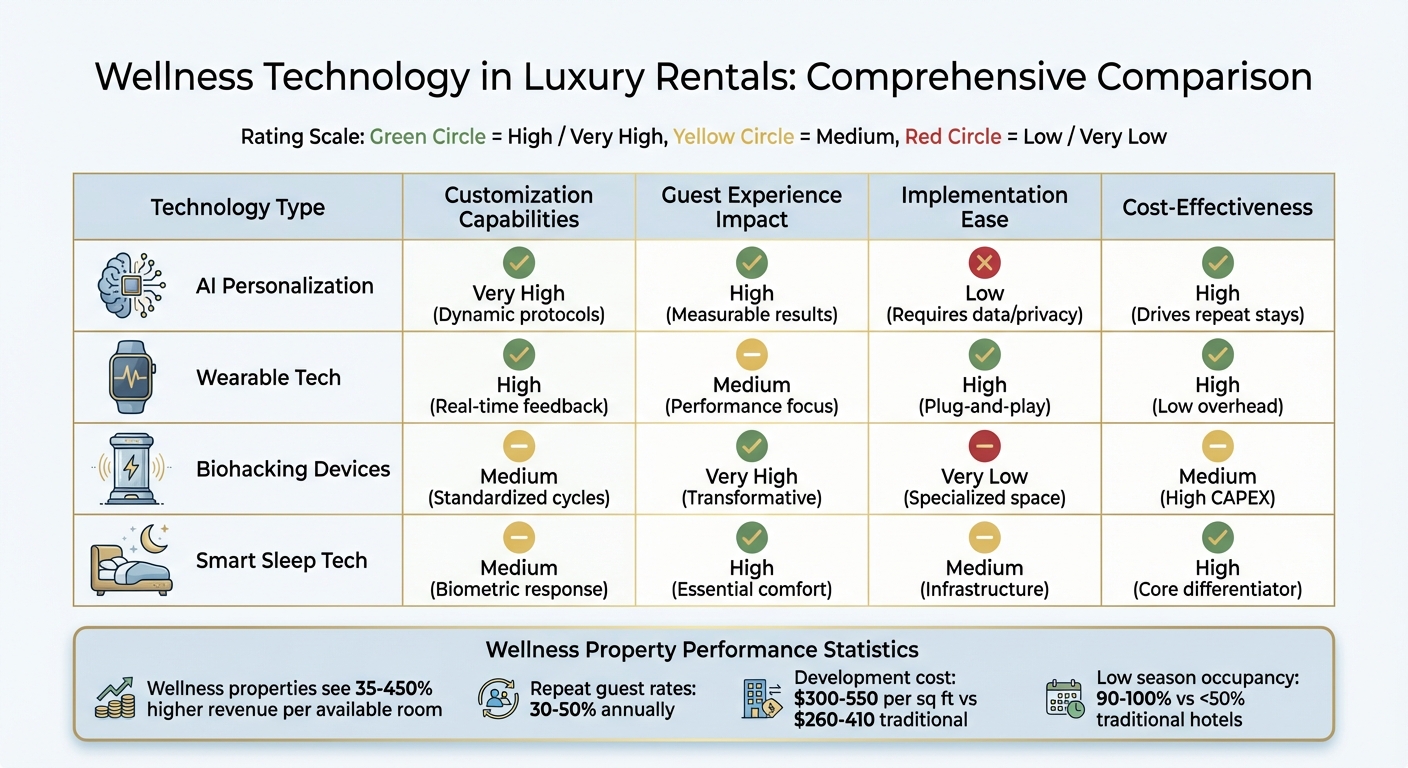
Wellness Technology Comparison for Luxury Rentals: Features, Impact and ROI
Wellness technology offers incredible potential, but it comes with its own set of challenges. For property owners, balancing these pros and cons is key to making informed decisions. Take AI-powered personalization, for example. This tech can analyze blood biomarkers and genetic data to craft health protocols tailored to each guest – and even adapt those protocols over time. But there’s a catch: these systems are expensive and can feel overly clinical if not seamlessly blended into the guest experience. As Luxe Wellness Spaces aptly put it:
"Equipment quickly becomes an expensive coat rack if it isn’t part of a cohesive, expert-led journey".
Wearable technology is another standout. Devices like Continuous Glucose Monitors provide real-time biometric feedback, helping guests regulate their energy levels throughout their stay. Yet, integrating data from multiple devices can be a technical headache. Plus, for guests craving a break from screens, constant monitoring may lead to "digital fatigue".
Then there are biohacking devices like hyperbaric oxygen chambers and red-light therapy. These tools can promote cellular repair and mental clarity. However, they require hefty upfront investments and often need skilled staff or medical oversight to ensure safe use.
Smart sleep and recovery technology, such as circadian lighting and biometric-responsive mattresses, works quietly behind the scenes. These systems adjust temperature, airflow, and lighting to enhance rest without requiring guest input. But installing this tech demands significant infrastructure, like soundproofing and advanced air purification, which can drive up costs. Despite these hurdles, the payoff is hard to ignore: wellness-focused properties see 35% to 450% higher revenue per available room compared to traditional luxury rentals, with repeat guest rates between 30% and 50% annually.
Here’s a quick comparison of how these technologies measure up:
| Technology Type | Customization Capabilities | Guest Experience Impact | Implementation Ease | Cost-Effectiveness |
|---|---|---|---|---|
| AI Personalization | Very High (Dynamic protocols) | High (Measurable results) | Low (Requires data/privacy) | High (Drives repeat stays) |
| Wearable Tech | High (Real-time feedback) | Medium (Performance focus) | High (Plug-and-play) | High (Low overhead) |
| Biohacking Devices | Medium (Standardized cycles) | Very High (Transformative) | Very Low (Specialized space) | Medium (High CAPEX) |
| Smart Sleep Tech | Medium (Biometric response) | High (Essential comfort) | Medium (Infrastructure) | High (Core differentiator) |
These innovations, while not without their obstacles, clearly elevate guest satisfaction and drive strong financial results.
Developing a luxury wellness property involves a significant upfront investment, costing between $300 and $550 per square foot, compared to $260 to $410 for traditional luxury hotels. However, the numbers speak for themselves: wellness resorts maintain occupancy rates of 90–100% during low seasons, while traditional hotels often fall below 50%. By aligning capital investments with smart operational strategies and skilled staff, property owners can deliver exceptional guest experiences while maximizing returns.
Conclusion
The trends shaping wellness technology in luxury rentals point to an exciting future. From now through 2026, AI-powered personalization and smart sleep technology are leading the way. AI personalization takes the top spot because it offers an "invisible" service that intuitively meets guest needs without them even realizing it. Meanwhile, smart sleep systems – featuring biometric mattresses and circadian lighting – are quickly shifting from being luxury perks to standard offerings.
Wearable tech integration also shows strong potential, delivering real-time health insights with minimal infrastructure demands. This makes it a more accessible option compared to biohacking devices, which require significant investment and specialized staff. While biohacking tools can create exceptional guest experiences, their adoption is slower due to these higher barriers. Together, these technologies form a cohesive ecosystem that not only enhances guest wellness but also boosts property value.
Luxury rental providers, such as Essentialyfe, can take actionable steps to stay ahead. This includes adding AI layers to simplify guest communication, leveraging pre-arrival wellness data to automate room settings, and upgrading amenities to include advanced wellness tools like red-light therapy panels and IV vitamin stations. These upgrades cater directly to the growing demand from the 70% of travelers willing to spend more on longevity-focused services.
The numbers speak for themselves: advanced AI and smart pricing have already increased occupancy rates by 12% and annual revenue by 15%. As Daryn Berriman of Luxe Wellness Spaces aptly said:
"The counter-intuitive truth for 2026 is that high tech enables high touch".
With the wellness economy projected to reach $8.5 trillion by 2027, adopting these technologies now positions luxury rentals to capture significant growth. The opportunity is clear – those who embrace wellness tech today will set the standard for tomorrow’s luxury hospitality.
FAQs
Which wellness tech upgrades deliver the fastest ROI in luxury rentals?
Smart home features such as voice-controlled lighting, smart locks, and occupancy sensors can deliver a quick return on investment (ROI) in luxury rental properties. These modern upgrades not only boost rental rates by 10-30% but also tend to pay for themselves within two to three years. The reason? They enhance guest satisfaction and drive up demand, making the property more appealing to renters.
How can rentals use wearables and AI without compromising guest privacy?
Rentals can elevate guest experiences by integrating wearables and AI, but maintaining a strong focus on data privacy and transparency is essential. For example, wearables like fitness trackers can help personalize services, such as tailored massages or fitness routines. However, this is only effective when guests give explicit consent and their data is stored securely and anonymously.
When using AI for personalization, measures like encrypted data storage, restricted access, and clear communication about how the data will be used are crucial. These steps not only ensure privacy but also foster trust, allowing luxury rentals to embrace wellness technology responsibly.
What are the key risks and requirements for adding biohacking devices on-site?
Adding biohacking devices to luxury rentals comes with its own set of challenges, especially when it comes to managing risks like cybersecurity issues from IoT devices (think smart locks or cameras) and ensuring the tech aligns with health standards. To tackle these concerns, it’s crucial to focus on a few key areas:
- Strong IoT Security: Safeguard devices against potential breaches with robust security protocols.
- Professional Installation: Work with experts to ensure everything is set up correctly and safely.
- Clear Usage Guidelines: Provide guests with straightforward instructions to minimize confusion or misuse.
Beyond these, regular maintenance, careful guest screening, and thoughtful integration of the devices into the rental’s design can help maintain safety, protect privacy, and ensure these technologies blend seamlessly into the space without disrupting its aesthetic appeal.