Catering is more than just feeding guests – it sets the tone for networking and sparks connections. The right menu and service style can transform your event into a space where relationships thrive. Here’s what you need to know:
- Food as a Social Tool: Bite-sized, easy-to-eat options like sliders and skewers encourage mingling. Avoid messy or overly strong-flavored items.
- Dietary Considerations: Offer a balanced mix of protein, vegetarian, vegan, gluten-free, and dessert options. Clear labeling (e.g., GF, V, DF) ensures inclusivity.
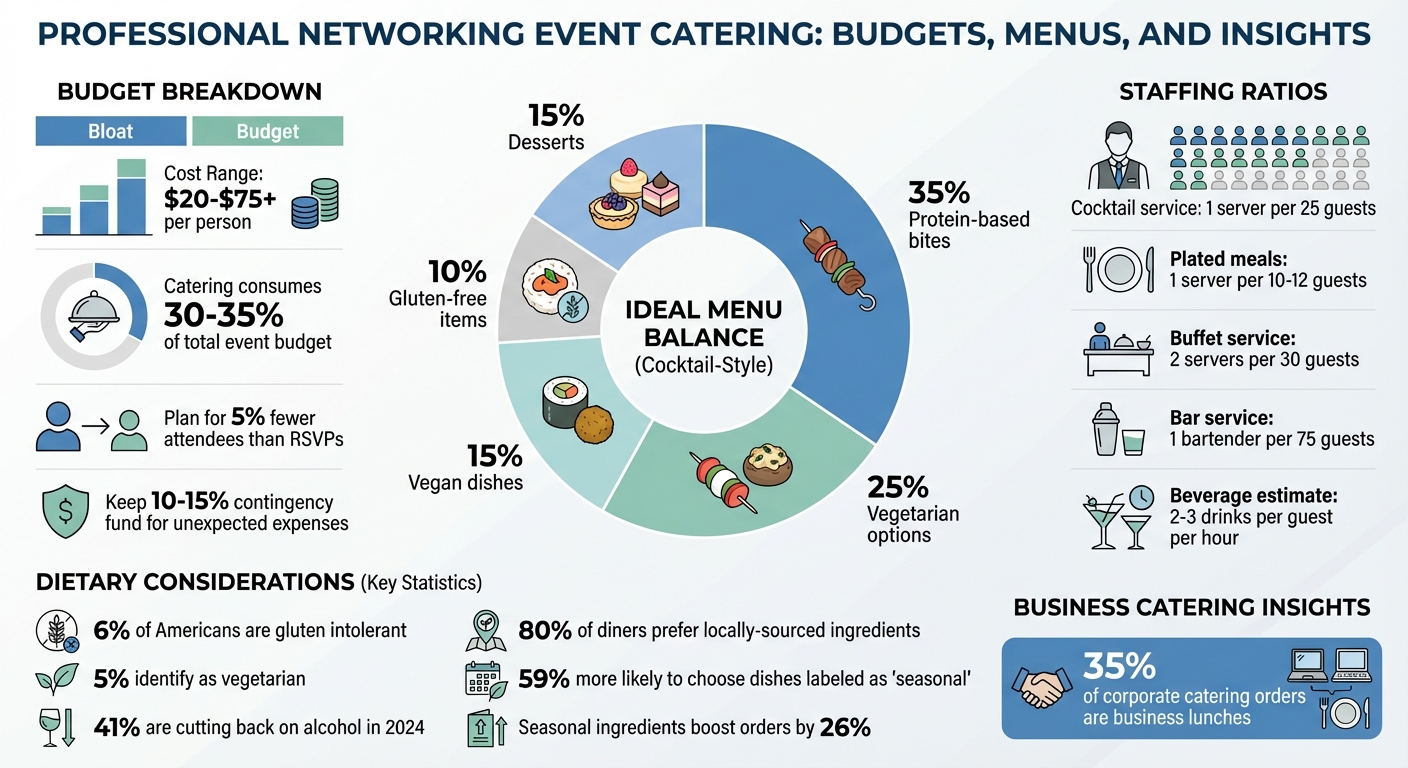
- Budgeting: Catering costs typically range from $20 to $75+ per person. Plan for 5% fewer attendees than RSVPs and keep a 10–15% contingency fund for unexpected expenses.
- Timing and Themes: Match your menu to the time of day and event theme. Morning events call for light breakfasts, while evening receptions benefit from hors d’oeuvres and grazing boards.
- Service Styles: Cocktail-style service promotes movement and networking, while plated meals suit formal settings. Buffets and food stations offer flexibility but require careful planning to avoid bottlenecks.
- Beverage Service: Pre-poured drinks or grab-and-go stations can reduce bar congestion. Include non-alcoholic options to cater to everyone.
- Local and Seasonal Ingredients: Using in-season and locally sourced produce enhances flavors and supports community vendors.
Networking Event Catering Menu Balance and Budget Guide
11 Creative Catering Ideas To Make Your Event Memorable
sbb-itb-161ccc1
Assessing Your Catering Requirements
Start by understanding your audience and the goal of your event. For example, a casual industry mixer might benefit from interactive food stations that encourage conversation, while a more formal business development event could call for plated courses with scheduled breaks. The event’s purpose will shape your catering choices, ensuring every decision aligns with the atmosphere you want to create.
Guest demographics play a big role. Food preferences tied to regional or cultural backgrounds can greatly impact how comfortable your attendees feel. Think about tailoring the menu: casual finger foods might suit a startup crowd, while more sophisticated options could work better for formal gatherings. Use registration forms to collect dietary preferences with simple checkboxes for common needs like Vegetarian, Vegan, Gluten-Free, or Nut Allergy. These considerations are no longer niche – 6% of Americans are gluten intolerant, 5% identify as vegetarian, and 41% are cutting back on alcohol in 2024.
For networking events, prioritize one-handed dining. Guests need to juggle a drink, shake hands, and exchange business cards – all while eating. Focus on bite-sized options such as sliders, skewers, or tartlets that are easy to handle and won’t create a mess. Avoid items like saucy ribs, spaghetti, or anything overly garlicky, as these can lead to awkward moments in professional settings.
A well-balanced menu for cocktail-style networking could include 35% protein-based bites, 25% vegetarian options, 15% vegan dishes, 10% gluten-free items, and 15% desserts. Make sure vegan and gluten-free selections are just as appealing as the rest, so no one feels like an afterthought. Use clear signage to label items with markers like GF (Gluten-Free), V (Vegetarian), or DF (Dairy-Free).
When budgeting, rely on accurate guest data to meet dietary needs without overspending. Plan for about 5% fewer attendees than your RSVP count to account for no-shows, and ensure all specific dietary requests are covered. It’s smart to set aside a 10–15% contingency fund for unexpected changes or last-minute fees. To estimate costs, use this formula: format × portion size × service level = total catering expense.
Once you’ve nailed down your requirements, you’re ready to build a menu that hits all the right notes for your event.
Building Your Event Menu
Menu Planning by Time of Day
The time of day plays a big role in shaping your menu. For morning networking events, go with a continental spread featuring pastries, fresh fruit, and plenty of coffee. If the breakfast runs longer, consider a hot buffet with classics like eggs and bacon to keep guests satisfied. Business lunches, which make up 35% of corporate catering orders, are perfect for sandwich platters or build-your-own salad bars. These options keep things light and let attendees customize their meals. Evening receptions, on the other hand, benefit from cocktail-style catering. Think passed hors d’oeuvres and grazing boards that encourage mingling and conversation.
Timing also helps maintain energy levels. Start with welcome drinks and small cold bites, then transition to a mix of warm and cold hors d’oeuvres during the main portion of the event. Wrap things up with bite-sized desserts. Avoid heavy foods – like those rich in tryptophan – that could make people sluggish. Instead, lighter options keep everyone alert and engaged. For mid-afternoon meetings (around 3:00 PM to 4:00 PM), charcuterie boards or petite dessert platters are a great fit. Once you’ve nailed down your timing, consider using fresh, locally-sourced ingredients to add an extra touch to your event.
Using Seasonal and Local Ingredients
Seasonal and local ingredients not only taste better but can also help you save money. Produce harvested in season is fresher, more flavorful, and packed with nutrients compared to out-of-season imports. For example, spring menus could include asparagus and pea salads, summer dishes might showcase watermelon and grilled corn, fall menus can highlight butternut squash soup and cranberry dishes, and winter options might feature roasted root vegetables and citrus salads. Using seasonal ingredients can even boost orders by 26%, with 59% of diners more likely to choose dishes labeled as "seasonal".
Local sourcing is another win for both flavor and cost. Ingredients in peak season are often more abundant and less expensive, making it easier to create high-quality menus without overspending. Partnering with local vendors – like bakeries for bread, apiaries for honey, and creameries for artisanal cheeses – can enhance your offerings. Highlighting these local connections on menu signage, such as naming the farms where ingredients come from, can create a stronger bond with attendees. In fact, 80% of diners prefer locally-sourced ingredients when eating out. As Matt Haggerty from DSquared Catering explains:
Typically, seasonal ingredients are more available so they can be cheaper or easier to find.
Matching Food to Your Event Theme
Your menu should echo the theme and branding of your event. Match food and drink choices to your branding by incorporating company-colored garnishes, logo-shaped skewers, or signature cocktails inspired by your products. For example, a tech startup mixer might feature interactive stations like build-your-own tacos or gourmet toast bars, while a formal corporate gala could call for plated multi-course meals. The level of formality in your food should naturally reflect the overall atmosphere.
Interactive food stations are a great way to tie into your theme and engage guests. A build-your-own food station or a honey-tasting setup with products from local hives can leave a memorable impression. To take things up a notch, consider offering signature cocktails or mocktails that align with your event’s branding or seasonal focus. With 41% of Americans aiming to drink less alcohol in 2024, high-quality zero-proof options are becoming a must-have. These thoughtful details ensure your catering strategy supports the event’s networking and engagement goals.
Selecting a Service Style
Available Service Options
Picking the right service style is a crucial step in aligning with your event’s menu and overall design. The way food is served can shape the entire flow of the event. For instance, cocktail-style service involves servers circulating with bite-sized appetizers, allowing guests to mingle freely throughout the space. Food stations, such as taco bars or carving stations, create opportunities for guests to interact with chefs while exploring different options.
If you’re looking for a more traditional approach, buffet service lets guests serve themselves from a variety of dishes laid out on long tables. While this can be budget-friendly and offers plenty of choices, it may lead to bottlenecks unless carefully planned. Plated service, on the other hand, provides a sophisticated, multi-course dining experience with assigned seating, making it ideal for formal events. For a more communal vibe, family-style service places large platters at each table for sharing, though it naturally limits interaction to those seated nearby. Lastly, pre-set service, where food is already on the tables when guests arrive, is perfect for events with tight schedules, such as working lunches.
Each style brings its own dynamic, so consider how they impact guest mobility and interaction when making your choice.
Comparing Service Style Benefits and Drawbacks
Different service styles can significantly influence your budget, setup, and the networking opportunities at your event. As Swoogo aptly puts it:
Choosing the right food service style can make or break your event.
For example, cocktail-style service is ideal for fostering movement. According to Two Chicks and a Pot:
Cocktail‑style events are built for movement. With food served in small, easy‑to‑handle portions, guests can eat while networking, hold a drink, and move from one conversation to another with ease.
On the other hand, plated service creates a refined atmosphere, perfect for galas or award ceremonies, but it tends to limit networking opportunities since guests remain seated. It also requires higher staffing levels and more intricate coordination, which can increase costs. Buffet service offers a middle ground with its cost-effectiveness and variety, but long lines can disrupt the flow of conversation unless multiple stations are provided. Meanwhile, food stations are excellent for encouraging movement and interaction, though they come with higher costs due to the need for specialized setups and equipment.
Considering that catering often consumes 30% to 35% of an event’s total budget, it’s essential to weigh these trade-offs carefully. For networking-focused events, prioritize styles that promote guest movement and engagement. Even small touches can make a big difference – think clear dietary labels (like GF, V, or DF) to help guests make choices without interrupting conversations. Adding a mix of high-top tables and cozy lounge areas can also elevate the overall experience.
Managing Catering Operations
Creating a Planning Timeline
A well-organized timeline is the backbone of any successful event. Begin planning 2–6 months in advance by locking in the basics: event type, date, location, and budget. This is also the time to decide on your service style, whether it’s plated, buffet, or cocktail-style. Around 6–8 weeks before the event, focus on finalizing your menu and beverage options. Use this period to gather RSVPs, ensuring you can accommodate dietary preferences and finalize drink selections.
As the event approaches, timing becomes even more critical. Most caterers require a final headcount 10–14 days prior, so set your RSVP deadline at least three weeks before the event to stay on track. One week out, double-check setup times with your caterer and rental vendors. Then, 24 hours before the event, make a final confirmation call to review load-in times and address any last-minute adjustments. Always include a 10–15% contingency buffer in your budget for unexpected expenses or last-minute upgrades.
Organizing Setup, Service, and Cleanup
Once your timeline is set, it’s time to focus on execution. Allow 2–3 hours before the event for unloading, equipment testing, and setting up stations. Confirm venue logistics ahead of time, including loading zones, service corridors, and electrical needs. To keep things running smoothly during the event, assign a catering coordinator – someone other than the host – to handle service timing and resolve any issues that arise.
Staffing is another key consideration. For a cocktail-style event with passed appetizers, plan for one server per 25 guests. For plated meals, aim for one server per 10–12 guests. Schedule a team meeting 30 minutes before guests arrive to review the event plan and emergency protocols. When it comes to cleanup, confirm whether your catering package includes teardown services or if the venue has specific requirements for waste disposal.
With food service organized, it’s time to ensure your beverage service is just as efficient.
Arranging Beverage Service
A well-thought-out beverage service does more than quench thirst – it keeps guests engaged and the event flowing. Jordan Strande of Make it a Double LLC sums it up perfectly:
A strong networking bar setup gives guests a drink quickly, then gets them back into the room.
The arrival period can create bottlenecks, so plan ahead. Offering pre-poured signature cocktails or champagne upon arrival helps ease congestion. For larger gatherings of 100 or more, consider adding a grab-and-go station for beer and non-alcoholic drinks to keep the main bar line moving.
As a general rule, estimate 2–3 drinks per guest per hour and staff one bartender for every 75 guests. Simplify the menu by featuring a few signature drinks to speed up decision-making and keep bartenders focused. Don’t forget premium non-alcoholic options like mocktails, infused waters, or sparkling lemonades to cater to all guests. Finally, place bars in locations that encourage movement and avoid blocking key networking areas. A solid ice replenishment plan is also essential to keep bartenders at their stations without interruptions.
Selecting Vendors and Personalizing Your Catering
Finding the Right Caterer
Choosing the right caterer can make or break your event. As Billy’s Badges aptly puts it:
The right vendors can elevate your event – or derail it.
Look for caterers experienced in handling business events and offering timely, interactive menus with sophisticated small bites. Vendors familiar with your venue are a bonus – they’ll already know the ins and outs of load-in logistics, power setups, and kitchen constraints.
Don’t just rely on photos; always request a tasting. This is your chance to evaluate the quality and presentation of the food firsthand. When narrowing down your options, ensure the caterer is certified by the local health department and carries both liability insurance and workers’ compensation. Reach out to at least three recent clients to get a sense of their punctuality, problem-solving abilities, and pricing transparency.
Dietary restrictions are a must to address. Make sure your caterer provides clearly labeled options for various needs. As for staffing, the general rule of thumb is: two servers for every 30 guests at buffets, one server for every two tables at sit-down dinners, and one bartender plus one bar-back for every 50 guests at the bar. Document every detail – delivery, setup, staffing, and cleanup – to avoid last-minute surprises.
Custom Menu Development with Essentialyfe‘s Private Chefs
Once you’ve secured a reliable caterer, it’s time to craft a menu that aligns with your event’s networking goals. Essentialyfe’s private chefs specialize in creating custom menus tailored specifically to your event. Whether you envision a Mediterranean spread with locally sourced ingredients or globally inspired small bites designed to spark conversation, working directly with a private chef ensures your menu supports your event’s vibe.
Define the mood you want to set, and let the chef design a balanced menu that complements your theme. This approach not only reinforces the event’s atmosphere but also ensures inclusivity. By collecting dietary preferences and allergy information during RSVPs, the chef can create options that make every guest feel considered. A well-thought-out menu can tie the event together, making the food feel like a natural extension of the overall experience.
Adding Interactive Food Stations
Interactive food stations are a fantastic way to add energy and engagement to your event. As Destination Catering & Events explains:
These setups encourage mingling, spark creativity, and make networking way less awkward.
Options like taco bars with fresh salsas, gourmet sliders, or poke bowls can serve as icebreakers, encouraging guests to move around and chat. Live action stations – where chefs prepare or finish dishes on the spot – add an extra layer of excitement and create memorable moments.
To keep everything flowing smoothly, strategically place stations throughout the venue to avoid crowding. Each station should be staffed by experts who can explain the ingredients, and clear ingredient cards should outline allergens and dietary details to ensure guest safety. Tailor the stations to your theme – for example, a beignet bar for a New Orleans-inspired event or a global street food market for an international flair. These thoughtful touches can turn dining into an experience that guests will talk about long after the event ends.
Conclusion
Networking event catering plays a crucial role in creating an atmosphere where connections flourish. By aligning your menu with the event’s purpose, opting for service styles that promote mingling, and addressing diverse dietary needs, you’re laying the groundwork for meaningful professional interactions. As Enzo Carletti from Eventbrite aptly states:
Food is likely what your attendees will remember most.
Every detail of your catering plan contributes to the overall experience. Offering convenient one-handed foods, strategically positioning food stations, and using clear dietary labels make it easier for guests to engage with one another. These thoughtful choices directly influence how comfortable and connected attendees feel during the event.
Experienced professionals know how to turn catering into a strategic advantage. Whether you’re working with a seasoned caterer familiar with your venue or collaborating with Essentialyfe’s private chefs to craft a menu that aligns with your brand, the right team can transform catering into an experience. Interactive food stations, well-executed beverage service, and precise timing ensure energy stays high and conversations remain effortless.
Catering isn’t just about food – it’s about building relationships and reinforcing your brand’s identity. When done right, it showcases professionalism, reflects your values, and leaves guests excited for your next event. Investing in quality catering leaves a lasting impression and fosters connections that matter.
FAQs
How much food should I order if RSVPs change?
Catering professionals suggest ordering 10-15% extra food beyond your confirmed guest count. This small buffer ensures you’re prepared for any last-minute attendees or surprise guests, keeping everyone satisfied without creating excessive waste.
What are the best foods for one-handed networking?
When it comes to one-handed networking, the ideal foods are elegant, bite-sized appetizers that are easy to manage while holding a drink and chatting. Think of options like mini quiches, Caprese skewers, or shrimp cocktails. These choices are not only convenient but also add a touch of sophistication to the occasion.
How do I prevent lines at buffets and bars?
Long lines at buffets and bars can dampen the mood of any networking event. To keep things running smoothly, focus on the setup and flow of your space.
One effective approach is to use a main bar paired with a speed-assist station. This could include a grab-and-go option or an arrival drink station to serve guests quickly as they enter. Additionally, organizing the layout to promote movement and minimize bottlenecks helps reduce crowding.
By prioritizing these strategies, you can ensure faster service, improve the guest experience, and maintain a steady flow throughout the event.