Luxury events can be grand without harming the planet. With rising expectations for eco-consciousness, especially from Gen Z, brands must deliver opulent experiences while reducing emissions. Here’s how you can plan carbon-neutral luxury events:
- Start with Emission Calculations: Use tools like the Climate Vault Event Emissions Calculator to measure your event’s carbon footprint.
- Choose Eco-Conscious Locations and Vendors: Opt for venues with certifications like LEED and partner with vendors prioritizing green practices.
- Reduce Emissions: Use energy-efficient materials, local catering, and low-emission transportation.
- Offset Unavoidable Carbon: Invest in verified carbon offset programs like Climate Action Reserve or Gold Standard.
- Add Sustainable Luxury Touches: Incorporate plant-based menus, reusable décor, and green transportation options.
- Measure Results Post-Event: Conduct audits, share outcomes transparently, and aim for certifications like ISO 14064.
Luxury doesn’t have to come at an environmental cost. By following these steps, you can create memorable events that align with modern values while maintaining high standards.
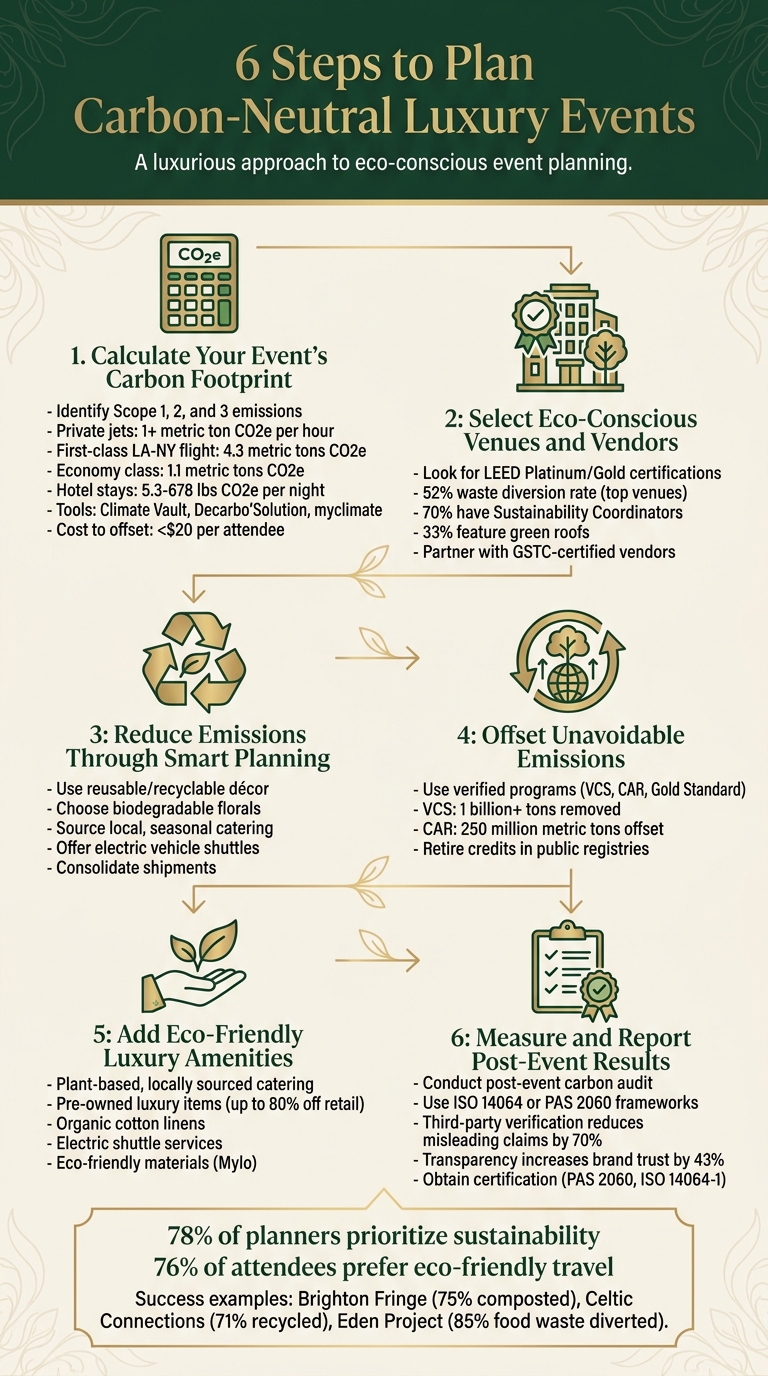
6 Steps to Plan Carbon-Neutral Luxury Events
What Are Carbon-Neutral Luxury Events?
Luxury events are evolving to align with modern environmental expectations, and understanding carbon neutrality is a key part of this transformation.
Defining Carbon Neutrality
Carbon neutrality means balancing greenhouse gas emissions to achieve net zero output. While events inevitably generate some emissions, this balance is achieved by measuring, reducing, and offsetting those emissions. Common sources of carbon emissions include travel for attendees and staff, energy use at venues (like heating, cooling, and lighting), catering (from food production to disposal), and physical materials such as signage and promotional items. In luxury events, these impacts can be even greater due to factors like international travel for VIP guests, elaborate catering with imported ingredients, and energy-intensive productions.
To address this, carbon-neutral luxury events focus on refined, eco-conscious choices rather than excess. This could mean selecting energy-efficient venues powered by renewable energy, offering zero-waste catering with locally sourced ingredients, and replacing physical materials with digital alternatives. For emissions that can’t be avoided – such as international flights – carbon credits from verified programs (like reforestation or renewable energy projects) can be purchased to offset the impact.
Benefits of Carbon-Neutral Luxury Events
The advantages of carbon-neutral luxury events go beyond just helping the environment. For event hosts, these efforts create a distinctive edge in the growing "conscious luxury" market and help avoid risks like falling behind environmental regulations or being accused of greenwashing. Attendees gain the satisfaction of enjoying high-end experiences without the usual carbon footprint guilt.
Additionally, organizations that adopt broader sustainability strategies often find cost savings through efficient resource use and waste reduction. Openly sharing sustainability goals and achievements can also boost an event’s prestige, making environmental responsibility a central part of its identity. By understanding these benefits, organizers can take meaningful steps toward creating truly carbon-neutral luxury events.
sbb-itb-161ccc1
Step 1: Calculate Your Event’s Carbon Footprint
Understanding your event’s emissions is the first step toward creating a carbon-neutral plan. This process sets a clear baseline and identifies the areas where emissions are highest, helping you target your efforts effectively.
Identify Emission Sources
Emissions are categorized into three groups: Scope 1 (direct emissions like on-site generators or company vehicles), Scope 2 (indirect emissions from purchased electricity or heating/cooling), and Scope 3 (everything else in the value chain, which often accounts for the largest share).
For many events, air travel dominates emissions. For instance, private jets emit at least 1 metric ton of CO2e per hour of flight, while a round-trip first-class flight from Los Angeles to New York produces 4.3 metric tons of CO2e – significantly more than the 1.1 metric tons of CO2e generated in economy class. Hotel stays also contribute, with emissions ranging from 5.3 pounds to 678 pounds of CO2e per room per night, depending on the hotel’s location and star rating.
"Our carbon footprints show that the biggest impacts of our events are linked to spectator and participant travel, as we organize popular ‘off-stadium’ competitions." – Gaëtan Coureul, CSR Project Manager, Amaury Sport Organisation
Travel aside, other significant contributors include catering (from food sourcing to waste management), venue energy use (covering lighting, sound systems, and HVAC), logistics (transporting equipment and décor), and temporary infrastructure like stages or custom installations. Waste disposal methods, such as incineration or landfill, also generate emissions that need to be factored in.
By mapping out these sources, you can measure emissions more effectively using specialized tools.
Use Carbon Footprint Measurement Tools
Once you’ve identified sources, the next step is to convert this data into actionable insights. The formula is simple: Emissions = Activity Data × Emission Factor. To ensure accuracy, collect detailed data from energy bills, travel logs, catering menus, vendor logistics, and waste totals. Instead of relying on estimates, distribute Excel questionnaires to vendors and partners to gather precise information.
A variety of tools can help simplify this process. For example:
- Climate Vault Event Emissions Calculator: Quickly measures venue, travel, lodging, and meal emissions, with free calculations available for first-time users.
- Decarbo’Solution: Uses event-specific questionnaires to automate calculations.
- myclimate Event Calculator: Provides certified footprints and sustainability labels.
- Sustainable Travel International: Offers calculators tailored to luxury travel, including private jets and yachts.
The cost to offset an attendee’s footprint, including air travel, often falls below $20 per person. This modest expense, especially for high-budget events, provides a solid foundation for reducing carbon emissions meaningfully.
Step 2: Select Eco-Conscious Venues and Vendors
After determining your baseline emissions, the next move is to team up with venues and vendors that prioritize sustainability. Today, environmental responsibility is more than just a buzzword – it’s becoming a key factor in the competitive edge of luxury event spaces. With your emissions data in hand, choosing eco-conscious partners becomes a critical part of your strategy.
Venue Selection Criteria
When picking a venue, look for those with LEED Platinum or Gold certifications. These typically feature renewable energy sources, LED lighting, and automated HVAC systems.
To ensure their sustainability claims are genuine, request audited proof of their carbon-neutral initiatives and transparent ESG (Environmental, Social, and Governance) data. Examples of key metrics to look for include:
- Waste diversion rates (top sustainable venues average about 52%)
- On-staff Sustainability Coordinators (around 70% of major event centers employ one)
- Green initiatives, like green roofs, which are present in about 33% of sustainable venues
Additionally, prioritize venues close to public transportation or those offering eco-friendly amenities like bike racks. These options help cut down on travel-related emissions.
"ESG criteria for events are not a vibe. They are a set of measurable expectations… that can be evidenced with policies, data, and operational controls." – B Greenly
Partner with Eco-Conscious Vendors
For vendors, seek certifications from organizations recognized by the Global Sustainable Tourism Council (GSTC), which sets global standards for sustainable travel and tourism. A great example is TUI Group, which in 2019 offered 10.3 million "greener and fairer" holidays through 1,688 GSTC-certified hotels. Similarly, Marina Bay Sands in Singapore stands out as the city’s largest GSTC-certified hotel.
When it comes to catering, opt for providers offering 100% vegan, carbon-neutral menus and using eco-friendly packaging with strong waste management practices. For instance, The Barbican operates on 100% renewable electricity, serves carbon-neutral coffee, and uses biodegradable Vegware packaging. They also ensure all waste is either reused, recycled, or composted.
If you’re looking for a streamlined way to connect with eco-conscious vendors, Essentialyfe‘s event planning services (https://essentialyfe.com) can help. They offer access to private chefs who source local ingredients, as well as security and shuttle providers committed to minimizing emissions. This ensures every detail of your luxury event aligns with your carbon-neutral objectives.
To solidify your commitment to sustainability, include ESG requirements in vendor contracts. Specify expectations like waste diversion goals, guidelines for eco-friendly packaging, and post-event audits to verify energy usage and the incorporation of biodegradable or upcycled materials.
Step 3: Reduce Emissions Through Smart Planning
After securing environmentally conscious partners, the next step is to cut emissions by making thoughtful choices for décor, catering, and transportation – all while maintaining a sense of luxury.
Choose Reusable and Recyclable Materials
Luxury events don’t have to rely on single-use items. Renting décor instead of buying it helps avoid unnecessary production waste and gives you access to high-end props without the environmental cost of manufacturing new ones. Lightweight, reusable options like tension fabric displays and recycled banners are not only eco-friendly but also save on transportation fuel since they take up less space in delivery trucks.
When it comes to floral arrangements, go for biodegradable options such as orchids, lavender, tulips, eucalyptus, or rosemary. These living plants add elegance and a sensory touch to your event and can be replanted or gifted to guests afterward. Collaborating with local artisans and florists also reduces transportation emissions and supports nearby businesses.
"Compared to traditional, large solid structures, these smaller, lightweight items require less muscle to move and set up, saving both time and transportation costs for a smaller carbon footprint." – Christian Rainwater, Vice President, Creatable Inflatables
Look for vendors that use renewable energy in their production processes and recycle old materials into new decorative pieces. This approach goes beyond simply reducing harm – it actively contributes to a more sustainable future.
With these choices for décor in place, you can shift your focus to catering and transportation to further minimize your event’s environmental impact.
Plan Low-Emission Catering and Transportation
Using on-site catering through your venue’s kitchen can significantly cut down on emissions tied to transporting food, equipment, and staff. Partner with caterers to design menus that feature seasonal, locally sourced ingredients. This "Slow Food" approach not only elevates the dining experience but also reduces the carbon footprint associated with long-distance shipping.
For guest transportation, consider swapping traditional luxury car services for premium electric vehicle shuttles. Reducing travel distances is another key strategy – Food Huggers, for example, lowered their carbon footprint by storing inventory at regional hubs, such as in Southern California and Chicago, and shipping from the nearest location rather than across the country. Whenever possible, consolidate shipments and choose ground transport over air freight.
"By shortening the transit distance, we get to shorten transit time and reduce the amount of pollution produced in the shipping process." – Juliana Brasil, Director of Operations, Food Huggers
Companies like Essentialyfe (https://essentialyfe.com) offer luxury low-emission shuttle services for guests, along with a network of private chefs who emphasize local, seasonal ingredients. These thoughtful logistical choices ensure every detail of your event aligns with your carbon-neutral goals.
Step 4: Offset Unavoidable Emissions
Even with careful planning, some emissions are simply unavoidable. Things like guest air travel, energy use at venues, and specialized equipment often leave a residual carbon footprint that can’t be eliminated through reduction efforts alone. This is where verified carbon offset programs step in, offering a way to balance out these emissions and achieve genuine carbon neutrality. By combining these offsets with earlier reduction strategies, your event can truly reach net zero emissions.
Select Verified Carbon Offset Programs
Not all carbon offset programs are equal, and choosing the right one is essential for ensuring your luxury event achieves its environmental goals. Programs that meet strict verification standards, such as the Verified Carbon Standard (VCS), are particularly reliable. VCS projects have removed or reduced more than 1 billion tons of carbon from the atmosphere, with each Verified Carbon Unit (VCU) representing one metric ton of CO₂ reduced or removed.
In the U.S., the Climate Action Reserve (CAR) is another trusted option. By January 12, 2026, CAR had issued its 250 millionth carbon credit, representing 250 million metric tons of greenhouse gas reductions. These credits, known as Climate Reserve Tonnes (CRTs), have been used to offset emissions for major events like the 2012 Summer Olympics, the 2014 Winter Olympics, SXSW, and the Espy Awards.
"The Reserve’s carbon credits have been used by small businesses, international corporations, high-profile events, universities, and professional sports teams to balance their emissions." – Climate Action Reserve
The United Nations Carbon Offset Platform also provides credible options, offering Certified Emission Reductions (CERs) from UNFCCC-certified projects. It even features a "Green Events Tool" to help organizers calculate their event’s carbon footprint before purchasing offsets. Other reputable programs include the Gold Standard, which emphasizes renewable energy projects with added social benefits, and Green-e® Climate, which ensures transparency and prevents double-counting of credits.
When selecting a program, ensure the credits you purchase are retired in a public registry, such as the Verra Registry or CAR system. This ensures the credits are removed from circulation and can’t be resold. For luxury events, you might also explore projects with added social impact, like those certified by the Climate, Community & Biodiversity (CCB) Standards or the W+ Standard, which supports women in developing communities.
Involve Guests in Offset Efforts
Making offsetting a shared effort can amplify its impact. Transparency is critical – when guests see that offsets are accurately measured and verified, they’re more likely to participate. Share details about the projects their contributions support, such as peatland restoration in Indonesia’s Katingan project, mangrove protection in Colombia’s Gulf of Morrosquillo, or soil enrichment initiatives that have collectively generated over two million credits since February 2026.
High-profile attendees can also encourage broader participation by setting positive examples. For instance, during her 2023 Eras Tour, Taylor Swift’s team purchased double the carbon credits required to offset her 8,293.54 tonnes of CO₂ emissions from 2022. This move not only offset her emissions but also brought attention to the voluntary carbon market, showing how celebrities can inspire action.
"Even if people do not identify with celebrities, these celebrities can influence their behavior by activating bundles of social norms." – Social Psychology Quarterly
For seamless integration, consider including offset costs in ticket pricing or offering optional contributions during registration. Companies like Essentialyfe (https://essentialyfe.com) can also help coordinate offset programs as part of their event planning services. By aligning every aspect of your event – from venue selection to guest transportation – with your carbon-neutral goals, you can simplify emissions tracking and engage attendees in meaningful climate action.
Step 5: Add Eco-Friendly Luxury Amenities
Once you’ve tackled emissions and partnered with environmentally conscious vendors, it’s time to focus on luxury touches that highlight sustainability. High-end events can absolutely blend sophistication with eco-friendly practices. By incorporating thoughtful, sustainable amenities, you not only elevate the guest experience but also reinforce your dedication to a greener future. People value premium experiences that align with responsible choices, and this step helps you deliver just that.
Offer Premium Eco-Conscious Services
Consider offering plant-based, locally sourced catering designed by a private chef. Pair this with indulgent yet sustainable options, like in-home massages using organic oils or eco-friendly car rentals through services like Essentialyfe (https://essentialyfe.com).
For decor, explore pre-owned luxury items or innovative materials like Mylo, which support a circular economy and cut down on waste. Pre-owned luxury accessories, for instance, can be sourced at up to 80% off retail prices while promoting sustainability. Brands such as Stella McCartney and Balenciaga are leading the charge, with Stella McCartney focusing on vegan, cruelty-free materials and Balenciaga working to lower greenhouse gas emissions in their production processes. You can also collaborate with local artisans to create custom decor pieces that double as keepsakes, ensuring they don’t end up as disposable waste.
Elevate the ambiance with organic cotton linens and robes, which not only feel luxurious but also help reduce microplastic pollution. For transportation, offer low-carbon options like electric shuttles to emphasize your commitment to sustainability. If your event has a wellness angle, incorporate mindfulness activities or holistic health elements to leave guests feeling refreshed, all while staying aligned with your eco-friendly goals.
Step 6: Measure and Report Post-Event Results
A post-event carbon audit is essential to verify whether you met your carbon-neutral goals and to identify areas for improvement. This process not only confirms your event’s environmental performance but also strengthens trust with attendees and stakeholders as you refine your approach for future events.
Conduct a Post-Event Carbon Audit
Focus on collecting actual data rather than relying on estimates. Request metered electricity usage (in kWh) from the venue and gather fuel purchase records if generators were part of the setup. For catering, document meal types served – beef-based dishes generally have a much higher carbon footprint compared to vegan options. When it comes to travel emissions, the most accurate data comes from asking attendees about their city or state of origin and their planned mode of transport during registration.
Ensure your audit includes Scope 1, Scope 2, and Scope 3 emissions. According to PAS 2060 guidelines, any emission source contributing over 5% of total greenhouse gas emissions must be accounted for. To maintain consistency and reliability, use established frameworks like ISO 14064 or PAS 2060 for your calculations.
"The credibility of your number is not determined by how sophisticated your calculator looks. It is determined by whether your event can explain, in plain operational terms, what was counted, what wasn’t, and what will be improved next time." – B Greenly
Document your assumptions clearly, including emission factors and methods for allocating travel emissions. To ensure the integrity of your audit, consider engaging an independent third party to verify your calculations and offsets.
Once your audit is complete, move quickly to obtain certification and share your findings.
Obtain Certification and Share Results
Precise emissions data must be verified through recognized frameworks. Certification options include PAS 2060, ISO 14064-1, or ISO 14068 (2023). Independent verification by organizations like the Carbon Trust, BSI, or SCS Global Services is critical. A 2022 EU study revealed that 42% of corporate climate claims were misleading without third-party audits, while such audits reduced misleading claims by 70%.
Transparency is key. Publishing detailed emissions and offset data on your event website or app can significantly enhance credibility. Research shows that transparency increases brand trust by 43%, and 73% of global consumers are more likely to support brands demonstrating genuine climate action. Share measurable outcomes with attendees – for instance, the total tons of CO₂ offset or the impact of offering plant-based catering.
Certification should be viewed as an ongoing commitment rather than a one-time goal. Update your calculations and reduction targets each year. With the EU Green Claims Directive mandating proof and third-party audits for climate-neutral claims by 2026, staying ahead of these requirements positions your events as leaders in sustainability.
This step ensures your event’s carbon-neutral efforts are thoroughly documented, setting a benchmark for continuous improvement. For venues and services, platforms like Essentialyfe (https://essentialyfe.com) offer access to properties and vendors that meet these rigorous sustainability standards.
Conclusion
Creating carbon-neutral luxury events is achievable by following six key steps: measuring emissions, partnering with eco-conscious vendors, reducing emissions, offsetting residual impacts, incorporating sustainable premium amenities, and auditing results. Each step builds on the previous one, ensuring both environmental responsibility and a high-end guest experience.
With 78% of planners emphasizing sustainability and 76% of attendees preferring eco-friendly travel options, the impact of sustainable event planning is clear. Success stories like Brighton Fringe Festival composting 75% of its waste, Celtic Connections recycling 71%, and Eden Project diverting 85% of food waste demonstrate how attention to detail can drive meaningful change.
Platforms like Essentialyfe (https://essentialyfe.com) simplify the process by offering access to luxury venues and eco-conscious services. From event planning to sustainable concierge options, these tools centralize logistics, making it easier to meet carbon-neutral goals without compromising on quality or elegance.
FAQs
What does “carbon-neutral” mean for a luxury event?
A "carbon-neutral" luxury event involves balancing the greenhouse gas emissions generated by the event by either removing or offsetting an equivalent amount. This approach allows the event to have zero net impact on climate change while still delivering an upscale and lavish experience.
How do I estimate my event’s carbon footprint fast?
To estimate your event’s carbon footprint quickly, tools like ShiftCarbon 3.0 can be incredibly helpful. These tools guide you step-by-step to assess emissions by focusing on critical factors like attendee travel, venue energy consumption, catering, and waste. All you need to do is gather some basic data, input it into the tool, and you’ll receive an instant estimate. This streamlined process makes it easier to plan strategies for achieving carbon neutrality.
How can I avoid greenwashing when using offsets?
To steer clear of greenwashing when using offsets, it’s essential to focus on transparency, credibility, and verification. Start by selecting projects that are backed by certifications from well-known standards. This ensures the initiatives you support are legitimate and impactful.
Before diving into offsets, make sure you’ve measured your entire carbon footprint accurately. Offsets should be used as a complement to actual efforts to reduce emissions, not as a substitute. Clear communication about the scope and impact of these offsets is equally important.
Finally, be upfront about your methodologies and ensure everything is verified. This openness helps build trust and avoids any perception of misleading claims.