- Guest Experience: Deliver top-tier service with consistent standards, clear expectations, and thoughtful touches like personalized welcome notes or curated amenities.
- Online Presence: Maintain accurate, high-quality listings with professional photos, detailed descriptions, and responsive communication. Positive reviews are critical – 48% of travelers trust reviews over personal recommendations.
- Crisis Management: Anticipate risks like maintenance issues or security concerns. Have a clear plan to address problems quickly, including pre-written responses and reliable vendor support.
Why it matters:
- 79% of renters rely on reviews to decide.
- A 1-star rating boost can increase revenue by 5%-9%.
- 71% won’t consider properties with poor reviews.
By focusing on these pillars, you can protect and grow your property’s reputation, ensuring trust and higher revenue.
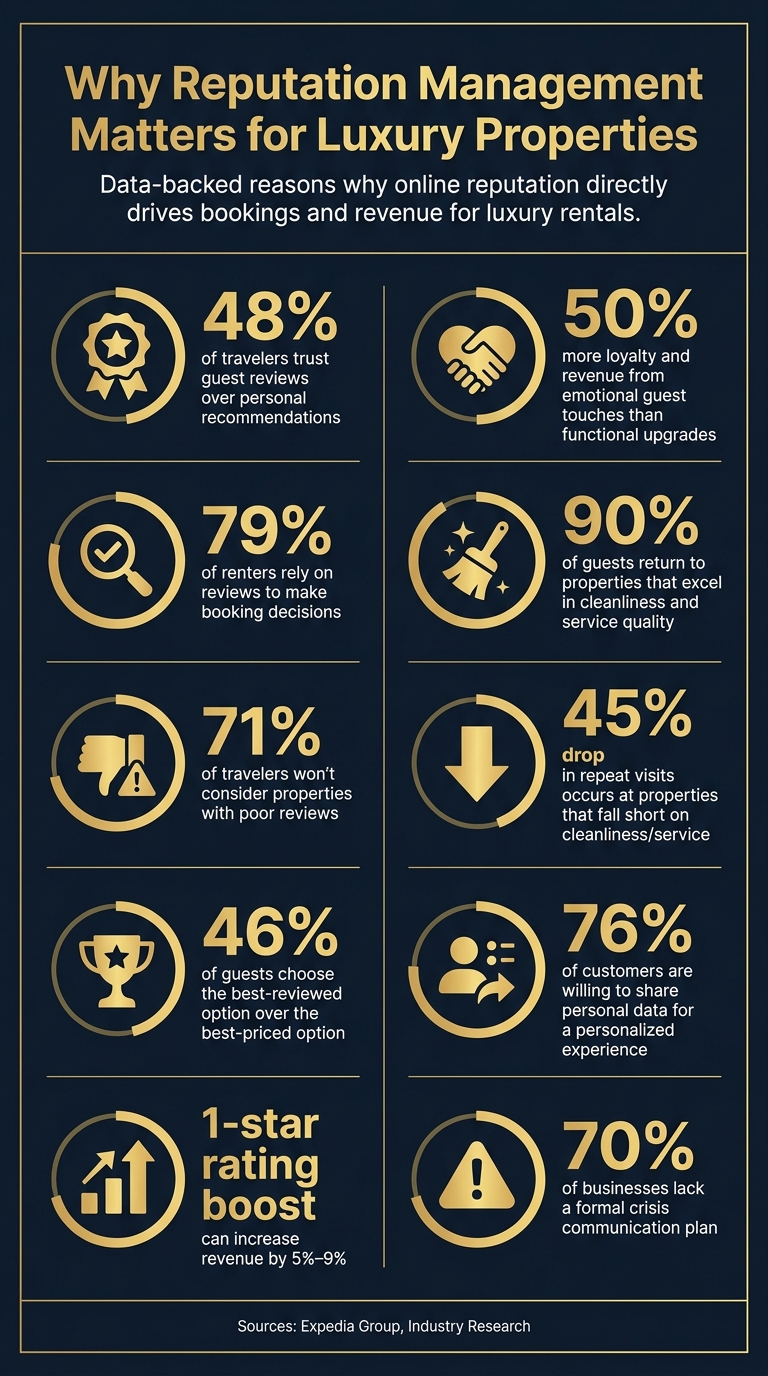
Luxury Property Reputation Management: Key Stats & Impact
Building a Reputation Foundation
Creating a strong reputation doesn’t start when your guests arrive – it begins well before that. The foundation for consistent five-star reviews lies in three key areas: establishing clear brand standards, setting accurate guest expectations, and carefully selecting reliable partners. These pillars help ensure your property delivers on its promises while avoiding missteps that could harm your reputation.
Defining Brand Standards
Your brand standards are essentially the blueprint for your property’s identity. They define the level of service you provide, how you communicate with guests, the overall look and feel of your property, and the rules that guide every stay. These standards should be clearly outlined and consistently applied.
Start with the basics: a cohesive property name, a consistent visual style (think limited color palettes, matching fonts, and professional-grade photography), and a unified tone for all communications. As Conrad O’Connell, Founder of BuildUp Bookings, explains:
"Building a brand is about doing something memorable. If you’re a host, it can be challenging to stand out. But branding is about doing the best you can to make your property memorable, build a relationship with guests, and exceed their expectations."
But branding doesn’t stop at visuals or messaging – it extends to the physical experience. Details like high-thread-count linens, premium glassware, and other thoughtful touches reinforce the sense of luxury. Combine these with repeatable processes, such as thorough cleaning checklists, regular maintenance schedules, and seamless check-in protocols, to deliver a consistent experience for every guest. Once your standards are in place, it’s crucial to align guest expectations with what you actually offer.
Setting Accurate Guest Expectations
Nothing damages a reputation faster than overpromising and underdelivering. Guests booking a luxury stay have specific expectations, and any mismatch between what they anticipate and what they encounter will likely show up in your reviews.
One critical element? Professional photography. High-quality images should do more than document rooms – they should tell a story. Focus on architectural features, natural lighting, and lifestyle shots that help guests imagine themselves enjoying the space. Pair these visuals with precise, honest descriptions. For example, if your property technically sleeps 10 but is more comfortable for 6, say so upfront. Additionally, house rules – like occupancy limits or visitor policies – should be clearly communicated before booking, not buried in a welcome guide guests only see after arrival.
"Reputational value is earned when a residence performs predictably under pressure. The guest experience should feel effortless, while the building experience stays calm." – MILLION Luxury Lifestyle
A pre-arrival technical check is another often overlooked step. Test Wi-Fi, smart home systems, HVAC, and lighting to ensure everything works smoothly before each guest’s stay. Small issues like a non-functioning thermostat can turn an otherwise flawless experience into a disappointing one. Of course, none of this matters without the right people supporting your efforts.
Choosing and Vetting Vendors
Your vendors are an extension of your brand, and their actions directly impact your reputation. Whether it’s a private chef who arrives late, a cleaning crew that misses key details, or a security team that causes friction with neighbors, poor vendor performance can undo all your hard work.
When selecting vendors, don’t just focus on cost or availability. Consider their discretion, ability to meet a "household standard" (which often exceeds typical hotel standards), and experience working within the luxury market. Contracts should include clauses that protect your reputation, such as prohibitions on unauthorized photography, penalties for noise violations, and guidelines for discreet arrivals and departures.
Services like Essentialyfe simplify this process by offering pre-vetted concierge options that align with high-end standards. From private chefs and exotic car rentals to in-home massages and security services, these partnerships reduce variables and help ensure a seamless guest experience from start to finish.
sbb-itb-161ccc1
Improving Guest Experience to Strengthen Reputation
Once your brand standards and vendor partnerships are in place, every interaction with your guests becomes a chance to enhance your property’s reputation.
Mapping the Guest Journey
Think of the guest journey as a series of trust-building moments. Research identifies seven main stages: Dreaming, Planning, Booking, Preparation, Experience, Sharing, and Return. For luxury properties, it’s not just about avoiding hiccups – it’s about anticipating needs before guests even voice them.
The most critical stages often happen before and after the actual stay. For example, during the Preparation stage, sending a personalized pre-arrival email with curated local tips and a short preference form (asking about pillow types, dietary needs, or special occasions) shows attention to detail. After the stay, the Sharing stage becomes crucial. How you handle feedback – whether it’s glowing or critical – can either solidify or weaken your reputation.
"The experiences guests have is so vital to the sector… it is so important for their business that they drive incentives around the guest experience." – Ann Elliott, Strategist and Consultant
Here’s an interesting stat: adding emotional touches to a guest’s stay can deliver 50% more loyalty and revenue than adding functional upgrades. That means a handwritten welcome note or a minibar stocked with their favorite snacks can leave a more lasting impression than a fancy new gadget. These small, thoughtful gestures can transform the guest experience into something unforgettable.
Personalizing Services Through Concierge Offerings
Personalization is what separates luxury properties from the rest. Gathering guest preferences before they arrive allows you to craft an experience tailored to their specific needs.
"Guests who book luxury rentals aren’t looking for convenience. They’re seeking ease. They’re not after bells and whistles. They’re after thoughtfulness." – Garth Yettick, Author/Property Management Expert
For instance, a couple celebrating an anniversary will appreciate a bottle of wine and a romantic dinner recommendation, while a family on vacation might prefer kid-friendly activities and snacks. Personal touches like these – whether it’s a handwritten note or a curated minibar – can increase loyalty and revenue by 50% more than functional upgrades.
Services like Essentialyfe make this personalization easier by offering a range of concierge options, such as private chefs, exotic car rentals, and in-home massages. This ensures property managers can meet guest needs without scrambling to find vendors at the last minute.
"Personalization is what transforms a stay into a memory." – Garth Yettick, Author/Property Management Expert
And here’s the good news: 76% of customers are willing to share their data for a personalized experience. As long as the process feels thoughtful rather than invasive, most guests are happy to provide the information needed to enhance their stay.
While these personal touches create memorable experiences, maintaining high on-site standards ensures those moments are seamless.
Quality Checks and On-Site Standards
When it comes to five-star reviews, cleanliness is king. Properties that excel in cleanliness and service quality see 90% of guests return, while those that fall short face a 45% drop in repeat visits.
A pre-arrival walk-through can catch potential issues – like malfunctioning keyless entry or a flickering light – before guests notice. During longer stays, daily housekeeping and proactive maintenance checks can address problems like noisy HVAC systems or slow drains before they turn into complaints.
Here’s a quick breakdown of key quality check categories:
| Quality Check Category | Standard |
|---|---|
| Arrival Experience | Keyless entry functional, exterior windows spotless, entryway lighting optimal |
| Room Interior | Smart TV and Wi-Fi tested and working, keyless entry verified |
| Hygiene | Hospital-grade disinfection, high-traffic areas sanitized, bathroom amenities restocked |
| Maintenance | Daily checks for HVAC noise, plumbing functionality, and appliance performance |
| Safety | 24/7 surveillance active, secure access controls, and data encryption for guest info |
As Will Guidara, author of Unreasonable Hospitality, says:
"Intention means every decision, from the most obviously significant to the seemingly mundane, matters."
This mindset – applied consistently across every quality check – is what transforms a property from good to unforgettable, ensuring guests leave with stories they’ll share long after their stay.
Managing Online Presence and Guest Reviews
A seamless on-site experience won’t matter much if your online presence tells a different story. For luxury properties, your digital profiles often serve as the first introduction to potential high-net-worth guests. These guests will scrutinize every detail before committing to a booking. A well-maintained digital presence not only influences their decision but also helps safeguard your property’s reputation during unexpected challenges.
Auditing Your Digital Footprint
Start by looking up your property name and address, just as a potential guest might. Review every active listing, social media profile, and third-party mention for accuracy. Outdated photos, inconsistent pricing, conflicting house rules, or vague descriptions can all undermine your property’s appeal.
One of the biggest pitfalls? Inconsistencies across platforms. If one listing shows an outdated photo set or a different check-in policy compared to another, it can create doubt. Tools like Hostaway, Guesty, or Lodgify simplify this process by syncing availability, descriptions, and policies across all platforms from a single dashboard. Ensuring consistency across your digital presence builds trust and credibility.
Also, think about where you’re listed. While mass-market platforms can reach a broad audience, specialized luxury rentals marketplaces attract guests specifically searching for premium experiences.
Building Credible Online Profiles
For luxury travelers, trust is everything. Your online profiles need to do more than impress – they must also convey safety and reliability.
Two critical elements help establish trust quickly: verified guest identity checks and secure payment systems. Platforms offering built-in identity verification protect your property from unqualified bookings while giving guests peace of mind. On the payment side, many luxury rentals require full payment 7 days before check-in, with host payouts released after the guest’s first night. This approach reassures both parties.
Beyond security, your listing content must justify the premium price. Professional photography is a must. Showcase standout features like unique architecture, high-end amenities, or breathtaking surroundings. Pair these visuals with detailed descriptions. Avoid generic phrases like "luxurious interiors" and instead specify features like "a chef’s kitchen with Sub-Zero refrigeration and a 10-seat marble island."
Handling Reviews and Guest Feedback
"In today’s vacation rental landscape, reviews are currency. They build trust, drive bookings, and help you continually improve." – Expedia Group
This statement couldn’t be more accurate. Nearly half of travelers (48%) rank guest reviews above recommendations from family, and 46% choose options with the best reviews over the best price. For luxury properties, where bookings can represent thousands of dollars, a strong review record directly impacts revenue.
One effective way to encourage reviews? Write one for your guest first. Highlight their communication, cleanliness, and adherence to house rules – this often prompts them to return the favor. A follow-up message two to three days after checkout, written in a friendly and personal tone, can also encourage reviews without feeling intrusive.
"Reviewing your guests is just as important as getting guest reviews… it’s a key driver for earning more reviews for your property." – Expedia Group
When responding to reviews, keep your tone professional and concise. For negative feedback, acknowledge the issue, avoid defensiveness, and briefly explain how it’s being addressed. This approach shows future guests that you’re proactive and thoughtful. On platforms like Vrbo, consistently positive reviews can earn you Premier Host status, which boosts visibility and adds a credibility badge to your profile. A strong review strategy not only drives bookings but also strengthens your reputation, helping you navigate challenges with confidence.
Crisis Prevention and Management
When it comes to luxury properties, maintaining a stellar reputation isn’t just about offering exceptional guest experiences or building an engaging online presence. It’s also about being prepared for the unexpected. Even the most well-regarded properties can face crises. The difference between a quick recovery and lasting damage often lies in preparation – anticipating potential issues, having a plan in place, and acting swiftly and clearly when challenges arise.
Identifying High-Risk Scenarios
Luxury property crises generally fall into five key categories: physical, security, social, digital, and operational.
- Physical risks, like water damage or structural failures, can occur without warning.
- Security issues, such as unauthorized guests, proxy bookings, or unsanctioned events, can lead to legal and reputational fallout.
- Operational problems, like malfunctioning smart locks or unreliable Wi-Fi, might seem minor but can quietly harm your reputation through negative reviews.
"Reputational value is earned when a residence performs predictably under pressure." – MILLION Luxury Lifestyle
Social and digital risks are equally significant. For instance, a guest tagging your property on Instagram or naming it in a post can attract unwanted attention. Simple steps like including a no-geotag clause in rental agreements and using only architectural photography (avoiding identifiable features like family photos or artwork) can help mitigate these risks.
| Risk Category | Common Scenarios | Prevention Method |
|---|---|---|
| Physical | Water damage, structural failure | Scheduled assessments and preventative maintenance |
| Security | Unauthorized guests, proxy bookings | Identity verification for all adult occupants |
| Social | Noise complaints, unauthorized parties | Noise standards tied to financial remedies in lease |
| Digital | Geotagging, identifiable property photos | No-geotag lease clauses; architectural-only photography |
| Operational | Tech failure, poor cleanliness | Pre-arrival white-glove inspections and tech audits |
By clearly identifying these risks, you can focus on developing a structured and effective response plan.
Creating a Crisis Response Plan
Shockingly, 70% of businesses lack a formal crisis communication plan. For luxury properties, this is a critical oversight. A poorly handled incident can undo months of glowing reviews and require extensive effort to repair.
A strong crisis plan includes three key components: clear roles, pre-written response templates, and a defined threshold to differentiate between minor inconveniences and actual crises. Assign a spokesperson – whether that’s you, a property manager, or a PR professional. Prepare holding statements in advance that acknowledge the issue, express concern for the guest, and promise a resolution without overcommitting. Social listening tools can also help you detect negative sentiment early, giving you a chance to address it before it gains traction.
"Brands that demonstrate transparency and empathy and place care for victims at the center of the message will do well." – Medill School of Journalism
It’s also crucial to have a team of specialized professionals on standby. This might include a licensed contractor, a cleaning crew capable of same-day service, and an insurance contact familiar with high-value properties. As one industry expert noted, "In the luxury real estate market, even a minor delay can escalate problems and lead to massive financial loss."
Rebuilding Reputation After a Crisis
Once the immediate crisis is under control, the focus should shift to rebuilding trust. Start by reaching out to affected guests personally, acknowledging the issue, and offering a meaningful remedy. This could include a partial refund, a complimentary return stay, or an added luxury experience like a private chef dinner or in-home spa service. These gestures show accountability and care.
"Clear, honest updates can help manage expectations and reduce anxiety. This transparency builds trust and maintains your reputation even as challenges unfold." – Resident Contributor
After addressing the situation, work on creating positive experiences to reshape guest perceptions. For example, properties managed through Essentialyfe can leverage bespoke services to deliver unforgettable post-incident stays. Additionally, listen closely to guest feedback to refine your crisis plan and reassess your insurance coverage to ensure it’s aligned with the property’s current value and risk profile. A quick, thoughtful response can significantly shorten the recovery period and restore your reputation faster.
Long-Term Reputation Governance
Dealing with a crisis is one thing, but maintaining a strong reputation over time requires consistent effort. Success in the long run comes from disciplined practices that not only protect your reputation but also help you attract premium rates and high-quality guests. Achieving stability after a crisis means staying vigilant with monitoring, training, and using data-driven strategies to keep your property performing at its peak.
Monitoring and Reporting Systems
To manage your reputation effectively, you need to know what guests are saying in real time across all platforms. A centralized Property Management System (PMS) – like Guesty, Lodgify, or Hostaway – can help by consolidating guest feedback, booking data, and communications into one dashboard. This eliminates the confusion and inefficiency of juggling multiple platforms.
AI-driven sentiment analysis has also become a game-changer in reputation management. These tools analyze guest feedback to identify recurring issues, such as delays in communication or service quality concerns, allowing you to address potential problems before they escalate into public complaints . Many leading companies now integrate reputation metrics into daily dashboards alongside key performance indicators like net operating income (NOI) and occupancy rates.
"In the intricate ecosystem of our business, Rep Score shines as a beacon, encapsulating all of our digital efforts in one holistic metric. We have integrated it into our business intelligence tool, making it a prominent feature on our daily dashboards, alongside key figures like net operating income, occupancy, and exposure." – Paul Edgeman, SVP of Marketing, Thrive Communities
Another valuable metric to track is the Local Brand Visibility (LBV) score. This score evaluates your property across five key areas: online reviews, social media posts, listings, search results, and how you compare to local competitors . With this kind of monitoring in place, you can identify areas for improvement and use the insights to guide staff training.
Training Staff on Reputation Standards
Your staff plays a huge role in shaping your reputation. High-net-worth guests, in particular, expect personalized, discreet, and consistent service. That means every team member – from the front desk to housekeeping – needs to understand their role in delivering the level of service your brand promises.
Reputation data can guide your training programs. For example, if sentiment analysis reveals repeated complaints about slow communication, that’s a signal to focus on improving staff response times . Training should cover essential areas like privacy protocols, communication tone, and speed of service, ensuring every guest interaction meets your standards. For properties offering concierge-level services – such as those managed by Essentialyfe – this kind of consistency is a key competitive edge. When staff training aligns with operational goals, reputation data can unlock even more strategic opportunities.
Using Reputation Data to Guide Property Strategy
Once monitoring systems and staff training are in place, reputation metrics can inform broader property strategies. For instance, studies show that a one-star increase in a property’s rating can boost revenue by 5% to 9%. This kind of insight can guide investment decisions, whether it’s upgrading amenities, refining pricing strategies, or expanding service offerings.
"Ultimately, we wanted a reputation management solution that wasn’t just about monitoring reviews but one that would help us enhance engagement, improve the resident experience, and refine our overall approach to customer satisfaction." – Sara Perry, Director of Brand, Marketing, and Customer Experience, HILLS Properties
Conclusion
Maintaining a luxury property’s reputation demands consistent effort, rooted in exceptional guest experiences, a strong online presence, and effective crisis management. These elements work together to ensure positive reviews and build trust, which is essential for recovering quickly from setbacks.
Consistency is the key to transforming a stay from ordinary to unforgettable. As Garth Yettick of Luxart Property Management wisely states:
"Reviews influence future bookings more than any marketing spend ever could. And those five stars don’t come from chance. They come from consistency and care."
Every action – whether it’s setting clear brand standards, creating personalized guest experiences, auditing your property’s online profiles, or having a solid crisis plan – contributes to a reliable and trustworthy reputation. This reliability not only attracts new guests but also keeps loyal visitors coming back.
Even the smallest details, like premium linens or quick response times, can make a big difference. Companies like Essentialyfe illustrate this by combining luxury rentals with all-encompassing concierge services, showing how operational excellence can elevate a property’s reputation.
FAQs
What are the fastest ways to raise my rating?
To improve your rating for luxury properties, prioritize elevating the guest experience through personalized amenities and flawless service. Keep the property in top-notch condition by focusing on meticulous maintenance and the finer details. Small, thoughtful gestures combined with proactive care can significantly enhance guest satisfaction, leading to glowing five-star reviews and encouraging repeat stays.
How do I get more 5-star reviews consistently?
To earn more 5-star reviews consistently, focus on creating unforgettable guest experiences. Adding thoughtful, personal touches that go beyond expectations can leave a lasting impression. Simplify the review process by setting up a system that gently prompts happy guests to share their feedback. When you pair top-notch service with a proactive approach to gathering reviews, you strengthen your reputation and boost the chances of repeat bookings.
What should a luxury property crisis plan include?
When it comes to luxury properties, safeguarding reputation and addressing unexpected issues swiftly is crucial. A well-thought-out crisis plan ensures that any challenges are met with efficiency and professionalism. Here are the essentials:
- Defined Protocols: Establish clear guidelines to tackle problems promptly and minimize disruption.
- Strategic Communication: Develop approaches to manage public perception and maintain trust.
- Expert Collaboration: Engage professionals like legal advisors, security teams, and PR specialists to navigate complex situations.
- Scenario Preparation: Be ready for potential events such as natural disasters or system failures within the property.
By focusing on these areas, luxury property owners can maintain both the value and prestige of their investment, even in the face of adversity.