Choosing the right retreat venue is crucial for the success of your corporate event. It’s not just about finding a place to stay – it’s about creating an environment that aligns with your goals and enhances the overall experience. Here’s what you need to focus on:
- Define Goals: Know the purpose of your retreat – team bonding, planning, or celebrating – and choose a venue that supports these objectives.
- Capacity & Accommodations: Ensure the venue fits your group size, offers suitable sleeping arrangements, and meets accessibility needs.
- Meeting Spaces: Check for flexible layouts, breakout areas, and reliable tech like Wi-Fi, projectors, and microphones.
- Catering: Confirm dietary accommodations, meal options, and catering policies (in-house or external vendors).
- Amenities & Activities: Look for on-site features like wellness spaces, outdoor areas, or team-building activities that align with your retreat’s goals.
- Logistics: Consider transportation, parking, and proximity to airports for easy access.
- Contracts & Pricing: Review what’s included, watch for hidden fees, and understand cancellation policies.
- Event Support: Ensure there’s a dedicated coordinator and sufficient staff to handle logistics and emergencies.
Planning ahead and asking the right questions can save time, money, and stress, ensuring your retreat runs smoothly and delivers value for your team.
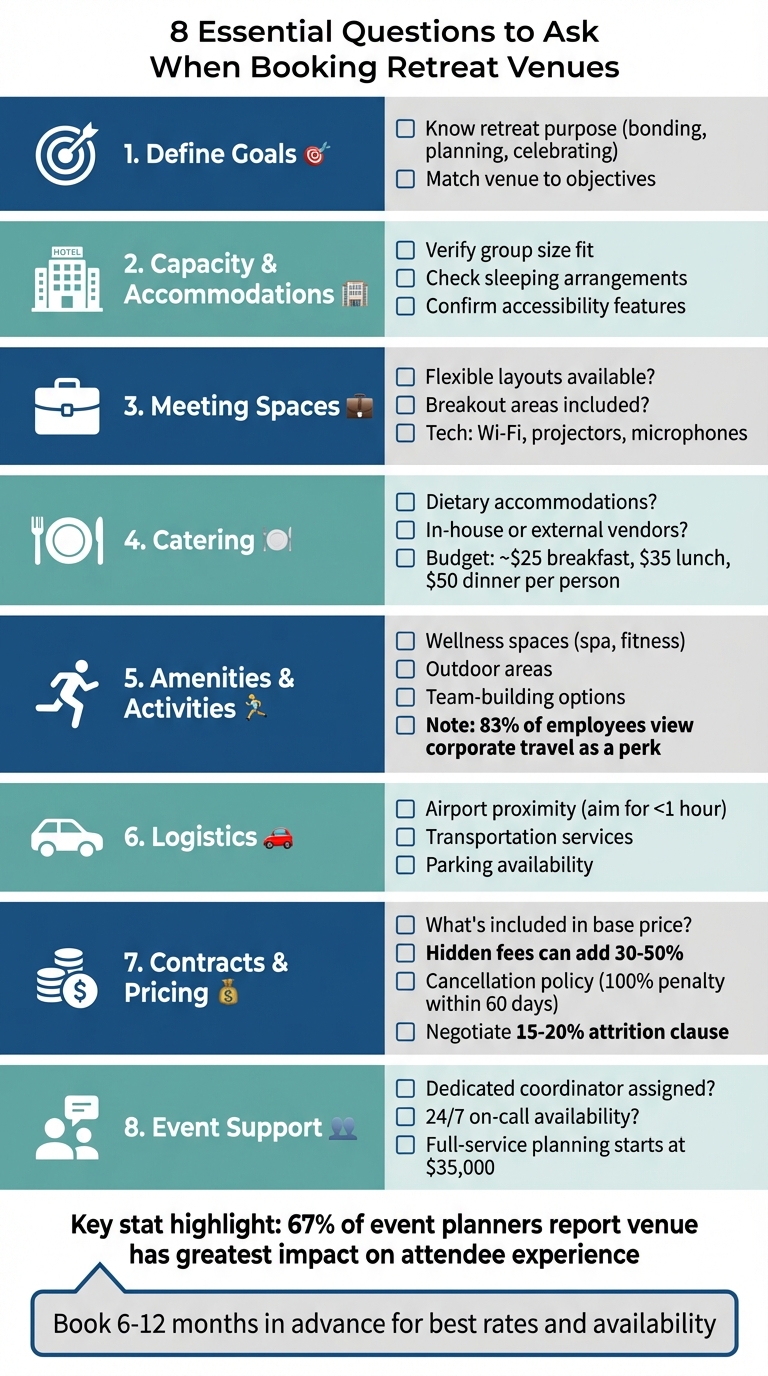
8 Essential Questions to Ask When Booking Retreat Venues Checklist
How to Find The Perfect Team Offsite Venue (What No One Tells You)
sbb-itb-161ccc1
Define Your Retreat Goals and Objectives
Before diving into venue comparisons, take a step back and define the goals of your retreat. Why? Because your retreat’s purpose directly impacts everything – from the type of space you’ll need to the amenities that will matter most. Are you aiming to strengthen team bonds? Plan for the upcoming year? Celebrate a major success? Or perhaps provide a wellness break to combat burnout? Each of these objectives requires a different kind of environment.
"Before diving into the logistics of the retreat, it is crucial to define the primary objectives you want to achieve. Are you aiming to strengthen team bonds, foster innovation, or develop leadership skills?" – Essex Woods
Once you’ve nailed down your retreat’s purpose, you can start identifying how specific venue features can support those goals.
What is the main purpose of the retreat?
Different goals call for different settings. For leadership development, you’ll want activities that encourage collaboration and problem-solving. On the other hand, strategic planning benefits from quiet, distraction-free spaces designed for deep focus. Celebrations or holiday events? Those should emphasize relaxation and recognition. A historic venue might be ideal for a leadership summit, while a serene natural location could better suit strategy sessions.
"Before you start looking at venues, establish your event’s purpose and what you hope to achieve from it." – Jill Vallo, Executive Meeting Manager at The Equinox Golf Resort & Spa
Clearly defining your purpose ensures you can match your venue to your needs.
What results do you want to achieve?
Think about the measurable outcomes you’re aiming for. Are you hoping to improve communication across teams, build stronger trust, or boost morale? These goals will help you evaluate venues with precision. For example, if productivity and innovation are top priorities, look for a venue that inspires creativity while offering comfort – not just a place to meet and sleep.
Ask yourself: "What do you want attendees to take away from this experience?" and "What memories and outcomes should this retreat create?". When your goals are well-defined, the best venue often becomes much easier to identify.
Check Venue Capacity and Accommodations
To make sure your retreat runs smoothly, double-check that the venue’s capacity and accommodations line up with your team’s needs. Once you’ve set clear goals for the retreat, figure out whether the venue can handle your group size, including any last-minute additions.
Start by confirming the number and type of rooms available. Don’t just rely on a vague "sleeps 40" description – dig into the details. As Sheri Rosenthal, Owner of Journeys of the Spirit Travel, points out:
"Most retreat attendees do NOT want to share a king size bed with a stranger – so you better be crystal clear on what the bed situation is!"
Request a detailed bedroom layout or photos of the sleeping arrangements to avoid any awkward surprises. Also, make sure the venue’s overall capacity fits your group size and comfort expectations.
Does the venue fit your group size?
Always plan for the maximum number of attendees. For example, if you’re expecting 25 but might have 30, book for 30 just to be safe. Petra from NextRetreat suggests locking in extra space early to avoid headaches later.
Ask about the venue’s attrition policy, which determines how many rooms you can drop as your headcount changes. Clarify whether pricing is based on the number of people or the number of rooms, which can make a big difference in your budget planning. When negotiating rates, ask for the "group rate" instead of the standard "rack rate" to save money on bulk bookings. Some venues even throw in free accommodations for the retreat leader if you book a certain number of participants or rooms.
Once capacity is squared away, shift your focus to the quality and suitability of luxury accommodations.
Are the accommodations right for everyone?
Pay attention to room details. For instance, are bathrooms private en-suite or shared? This can impact both comfort and cost. If you’re considering rustic or outdoor-focused venues, confirm whether all rooms have climate control, like heating and air conditioning, to keep everyone comfortable.
Accessibility is another critical factor. Check for features like step-free access, ramps, elevators, and wide doorways for attendees with disabilities. Accessible rooms should also include wheelchair-friendly layouts, reachable light switches, and ideally a refrigerator for storing medication. Find out if the venue offers Braille or tactile signage, hearing loop systems, and visual fire alarms. For guests with neurodiversity needs, ask if there are quiet zones or sensory-friendly spaces available.
Lastly, confirm there are enough restrooms and parking spaces for everyone, and make sure your group won’t have to share the venue with other events that could disrupt your retreat.
Review Meeting and Event Spaces
Once you’ve locked in accommodations, it’s time to shift your attention to meeting and event spaces – key elements that can make or break your retreat’s success. The same purpose that guides your accommodation choices should also shape your decisions about meeting spaces. Everything from the layout to the technology available can influence how well your event flows. In fact, 67% of event planners report that the venue itself has the greatest impact on the attendee experience.
What spaces are available for group activities?
Don’t settle for a vague overview – ask the venue for a detailed rundown of every space they offer. Beyond the main conference room, find out about options like breakout rooms, outdoor terraces, cozy nooks, or even quirky spaces such as art studios or renovated barns. Photos are essential to assess lighting, accessibility, and overall suitability.
Flexibility in furniture setup is another critical factor. Whether you need a boardroom layout, a circle for discussions, or a workshop-style setup, the space should adapt to your needs. As PlanRetreat emphasizes:
"Can the meeting rooms be arranged in different configurations to accommodate various group sizes and formats? Flexibility in layout allows you to adapt the space to different activities and maximize engagement throughout the retreat."
Also, check for quieter areas ideal for reflection, journaling, or one-on-one conversations. If outdoor activities are part of your agenda, confirm there are indoor backup options in case of bad weather. For maximum control over your schedule and privacy, consider venues that offer exclusive use of their facilities.
Are technical and audiovisual needs supported?
A seamless event requires reliable tech. Start by confirming that high-speed Wi-Fi can handle multiple devices at once. For critical presentations, ask about wired internet (LAN), which is often more dependable than Wi-Fi.
Next, review the venue’s audiovisual offerings. Do they provide projectors, screens, or wall-mounted TVs (some venues boast screens as large as 72")? What about microphones – handheld, lapel, or lectern-mounted – and speakers? These are must-haves for presentations and discussions.
Don’t forget to ask about power outlets: how many are there, and where are they located? On-site technical support can be a lifesaver, so check if it’s available during your event and whether it’s included in the rental fee or charged separately. Lastly, clarify whether essentials like flipcharts, markers, easels, and power strips are provided or if you’ll need to bring your own.
Ask About Catering and Dietary Options
Food brings people together, especially during retreats. Morgane Oléron of Campfire Company puts it perfectly: "Food is an essential part of your corporate retreat. It is the edible glue that brings and keeps everyone together". Choosing the right catering can make or break your event, so it’s crucial to ask the right questions early on.
What catering options are available?
Start by confirming if the venue offers in-house catering or allows external vendors. In-house catering often simplifies logistics and ensures everything runs smoothly. As Novelty Hill-Januik explains, "In-house catering means seamless service, better food and wine pairings, and fewer moving parts for you to manage".
Explore the available service styles. Options like buffets, plated meals, food stations, cocktail service, or even food trucks might suit your retreat’s vibe. For outdoor activities, see if the venue can provide boxed lunches or picnic-ready meals packed with energy-boosting snacks like granola bars and fresh fruit. If possible, request a tasting session to check the quality firsthand.
When planning your budget, keep in mind that typical costs might start around $25 per person for breakfast, $35 for lunch, and $50 for dinner. Many venues also have food and beverage minimums, which can be met by adding extras like coffee stations, snacks, or late-night treats. Don’t forget to ask about liquor licensing, BYOB policies, and wine pricing to avoid surprises.
Once you’ve nailed down the catering options, shift your focus to dietary accommodations.
Can dietary restrictions be accommodated?
Modern retreats often need to cater to a wide range of dietary needs, including the "Big 9" allergens, as well as vegan, gluten-free, dairy-free, halal, and kosher preferences. It’s a good idea to get written confirmation from the chef rather than relying on verbal promises from the sales team. Request sample menus to ensure the options are robust – vegetarian dishes, for example, should go beyond a simple salad.
For guests with severe allergies, ask how the kitchen handles cross-contamination. Professional luxury venues should have separate prep areas, dedicated staff for special meals, and clearly labeled dishes for specific dietary needs. They should also follow a strict "never guess" policy, confirming any uncertain ingredients with the chef. To give the caterer enough time to prepare, provide a consolidated list of dietary restrictions at least 7–10 days before the event. On the day of the retreat, ensure there’s a system in place – like color-coded cards or stickers – to identify meals and highlight allergy information for each guest.
Explore Amenities and Activity Options
Beyond the venue’s practical features, the right amenities can make a retreat unforgettable. Choosing amenities that fit your retreat’s goals can elevate the entire experience.
What on-site amenities are offered?
Look into the wellness facilities available – think spas, saunas, hot tubs, pools, or fitness centers – perfect for helping your team unwind and recharge. Outdoor spaces can also play a big role. Does the venue provide access to a lake, forest trails, or open decks for fresh air? Quiet areas like meditation rooms, private suites, or peaceful gardens can offer much-needed moments of reflection.
For retreats with a more adventurous vibe, check if the site offers features like climbing walls, zip lines, or ropes courses. These can double as team-building tools while adding a sense of excitement.
To ensure the amenities align with your vision, ask for photos or video walkthroughs. This can help you confirm that the spaces match the atmosphere you’re aiming to create.
Are activities available to support retreat goals?
Activities should be chosen with your retreat’s purpose in mind – whether it’s strategic planning, team bonding, or fostering creativity. Many venues offer options like outdoor adventures, wellness sessions, or creative workshops that can support these objectives.
Some venues take it a step further by providing professional facilitators to guide activities like trust-building exercises, problem-solving challenges, or leadership workshops. According to Unique Venues, 83% of employees see corporate travel as a perk, which highlights how meaningful activities can boost morale and satisfaction.
Additionally, ask about any unique extras that could tie into your retreat’s theme. For instance, venues might offer local experiences such as olive oil tastings or meals with indigenous families. If off-site activities are part of the plan, confirm whether the venue provides shuttle services or if you’ll need to arrange transportation.
Be sure to share your retreat’s theme with the venue manager – they might suggest hidden gems like regional festivals, scenic waterfalls, or even visiting nearby caves. These personalized touches shift the focus from generic activities to authentic experiences that build trust and camaraderie within your team.
Verify Logistics, Accessibility, and Transportation
Getting your team to the venue smoothly and efficiently is a critical part of planning. The location and available transportation options can set the tone for your event before it even begins.
Is the venue easy to reach?
How close is the venue to major airports? This is a question you’ll want to ask early on. Nathalia Bilotti, a Corporate Retreat Manager, highlights the importance of proximity:
"We look for venues just one hour away from those major airports, if not less".
The goal? Minimize travel time and ensure your team arrives refreshed. But don’t stop at airport proximity – think about the entire journey. How straightforward is the route from the airport to the venue? For example, if your event is in a remote or nature-focused location, the logistics can quickly become more complicated than in urban settings.
Another key point: direct flights matter. They help reduce travel fatigue, so use flight forecasting tools to evaluate costs and connections before making a final decision.
And let’s not forget parking. Confirm there’s adequate parking near the venue entrance, especially if your team will be driving in. Ideally, event rooms should also be within 100–150 feet of the main entrance to streamline accessibility.
Does the venue provide transportation services?
Once your team reaches the destination, how will they get around? Many venues offer transportation services, though these often come with additional costs. Sheri Rosenthal, Owner of Wanderlust Entrepreneur, explains:
"Most retreat venues can help with transportation, but sometimes you do need to arrange your own for your group. And you’ll need to know the cost for that so you can include it in your retreat budget".
Start by clarifying what’s included. Does the venue provide shuttles between the airport and property? Do they offer transportation for off-site activities? If not, ask for their list of vetted local providers – many venues partner with shuttle companies to offer discounted rates.
For remote venues, seamless transfers are even more important. Polly from Retreat To The Alps points out:
"A seamless transfer to your retreat is a great selling point, and delivers them to you relaxed".
Make sure shuttle vehicles can accommodate mobility aids if necessary, and check whether staff will be available to assist with luggage during arrivals and departures.
Some venues, like Essentialyfe, go the extra mile by including shuttle and valet services as part of their event support. This can save you the hassle of coordinating multiple transportation vendors and ensure a stress-free experience for your team.
Sorting out these details early will help you avoid unexpected issues and keep your retreat running smoothly.
Understand Contracts, Pricing, and Flexibility
Once you’ve settled on a venue and its amenities, take a close look at the contract to avoid any surprises. Go through every detail to understand what’s included and what might cost extra. This step ensures the venue aligns with both your budget and your event goals.
What is included in the price?
Double-check what the base price covers and what might come as an additional charge. Items like ceiling-mounted projectors, water stations, or even basic catering could show up as separate fees on your invoice.
Hidden fees can quickly inflate your budget by 30%–50%. Rachel Grate from Eventbrite highlights this issue:
"Unquoted government taxes and service charges can also come as a surprise. The fact that they are obligatory does not excuse venues from mentioning them".
Here are some common charges to look out for:
- Resort fees: These often cover pools, fitness centers, and internet access. These fees are sometimes negotiable.
- A/V and tech costs: High-speed Wi-Fi or professional equipment can cost over $5,000 for a single event.
- Logistics fees: This includes luggage handling, shipping event supplies, and parking charges.
Instead of focusing solely on the lowest room rate, ask for a blended rate. This gives you a clearer picture of the total cost, including perks like waived resort fees or discounted meeting spaces. Make sure any discounts or concessions are clearly outlined in the contract.
Negotiate attrition clauses to allow a 15–20% reduction in room commitments by a specific date without penalties. Dr. Sheri Rosenthal, Owner of Journeys of the Spirit Travel, explains:
"The ‘rack’ rate at a venue is the full standard rate for a room… most venues also offer a group rate for a block of rooms that is discounted".
Also, confirm the venue’s Wi-Fi capacity to avoid connectivity issues during group sessions. Clarify which charges – like room service or in-room movies – will be billed to the company versus individual attendees.
What is the cancellation policy?
Cancellation policies often operate on a sliding scale: the closer you are to the event date, the higher the penalty. For example, cancellation fees can hit 100% within 60 days of the event, with averages of 82%, 59%, and 43% for cancellations made 15, 30, and 60 days in advance, respectively. Deposits, which typically range from 25% to 50%, are usually non-refundable.
Negotiate protections upfront. Request a clause that allows deposits to be applied to a future event (usually within 12 months) if you need to cancel. Additionally, include a resale clause: if the venue rebooks your space, you should receive credit for any payments from the new booking.
Make sure the contract includes a Force Majeure clause to protect against unforeseen events. Also, look for a "Cancellation by Venue" clause to clarify what happens – such as securing an alternative location – if the venue cancels on you.
Always submit cancellations or changes in writing to maintain a clear record. Be aware that some venues treat date-change requests as full cancellations unless a rebooking clause is included.
Start conservatively when planning. It’s easier to add rooms or meeting space later than to reduce them. A smaller initial room block helps you avoid costly attrition penalties. For catering, aim to guarantee about 10% fewer meals than your expected attendance to avoid paying for unused portions.
Confirm Staffing and Event Support
Once contracts and pricing are squared away, the next step is to ensure you have the right event staffing in place. Proper support can make all the difference when it comes to achieving a smooth and productive retreat.
Is there a dedicated event coordinator?
Having a dedicated event coordinator is like having your own guide through the entire planning and execution process. This person becomes your go-to for managing timelines, communicating with vendors, and addressing any issues that arise during the retreat. As The Idea Hunter puts it:
"Having a single point of contact for planning and execution is important for smooth operations".
Test their responsiveness early in the planning stages. If replies are slow now, it could spell trouble when you’re on-site. Also, confirm their availability – are they there for the entire retreat, or just during standard hours? For overnight events, having someone on-call 24/7 is crucial. Make sure you have the direct contact information for whoever handles after-hours emergencies.
Another key detail is understanding whether your point of contact is a venue manager (focused on the property) or an independent event coordinator (focused on your specific vision). This distinction can impact how your retreat goals are executed. Full-service corporate retreat planning typically starts at $35,000, while single-day managed packages begin around $25,000.
Clear communication about the coordinator’s role helps ensure everything runs smoothly.
What staff support is available during the retreat?
Beyond the coordinator, you’ll want to know who else will be on hand to manage the day-to-day details. This includes setup and teardown crews, catering staff, audiovisual technicians, and guest services personnel. As NYE Staffing explains:
"Our team stays ready for changes and last-minute needs. Quick problem-solving keeps the event moving without delays".
Check if staff are cross-trained to handle unexpected changes during the event. It’s also worth asking if the venue employs W-2 staff rather than independent contractors, as W-2 employees are typically better trained, more reliable, and come with liability coverage.
For technical needs, confirm whether on-site staff can handle sound systems, Wi-Fi setup, and troubleshooting. If the venue hosts multiple events at once, ask how staff will be allocated and whether your retreat will have a dedicated team or if they’ll be juggling responsibilities with other groups.
Conclusion
Aligning every venue detail with your retreat goals is key to creating a successful experience. The venue isn’t just a backdrop; it’s the foundation for everything your team will experience. As SquadTrip explains:
"Your retreat venue is more than a place to sleep. It becomes the container for everything your guests experience".
That "container" should serve your retreat’s purpose – whether it’s strategic planning, sparking creativity, or building stronger team connections. Taking the time to ask detailed questions upfront can reveal potential challenges, like unexpected noise levels, hidden charges, or restrictive venue policies.
Also, pay attention to how quickly and thoroughly the venue responds during the inquiry process. Their responsiveness can be a good indicator of how smoothly things will run during your actual retreat.
Booking your venue 6 to 12 months in advance is often the best way to secure better rates and a wider range of options, especially for larger groups.
FAQs
How far in advance should I book a corporate retreat venue?
Booking a corporate retreat venue well in advance is key. Aim to reserve your spot 6 to 12 months ahead. If you’re organizing a larger event or scheduling during a busy season, consider extending that timeline to 12 to 18 months. Early planning not only secures your preferred venue but also gives you greater flexibility to arrange extra services or tailor the experience to your needs.
What hidden fees should I look for in venue pricing?
Watch out for hidden fees that can sneak into your retreat budget. These might include service charges, taxes, corkage fees if you bring your own alcohol, overtime fees for going over the scheduled time, vendor fees for hiring suppliers outside the venue’s preferred list, and even costs for event insurance. Taking the time to thoroughly review contracts can help you sidestep these surprises and stay within your planned budget.
What should I ask to confirm Wi-Fi and A/V will work for my group?
When selecting a venue, it’s important to ask about internet speed and the number of wireless access points. This ensures the Wi-Fi can handle your group’s needs, especially if multiple devices will be connected simultaneously.
Don’t forget to confirm the room capacity to make sure it can comfortably accommodate your team. Also, ask about the available A/V equipment – whether it’s projectors, microphones, or sound systems – so you know everything you need is provided.
By addressing these details upfront, you’ll set your team up for a hassle-free and productive experience.