Luxury travel is no longer just about indulgence – it’s about making a difference. High-end destinations are now integrating wildlife conservation and community support into their offerings. Three standout examples include:
- Elephant Hills (Thailand): Ethical elephant interactions, floating luxury tents, and renewable energy systems. Packages start at $630 for 3 days.
- Mashpi Lodge (Ecuador): A cloud forest retreat with cutting-edge biodiversity research, glass-walled rooms, and local hiring initiatives.
- Essentialyfe (USA): Curated luxury rentals with personalized services like private chefs, offering eco-conscious domestic travel options.
Each provides a unique way to combine luxury with conservation, whether through protecting endangered habitats, supporting local communities, or promoting responsible tourism. When planning your next trip, choose properties that align with these values to ensure your vacation leaves a positive impact.
How Luxury Travel Can Protect Wildlife | African Bush Camps
sbb-itb-161ccc1
1. Elephant Hills
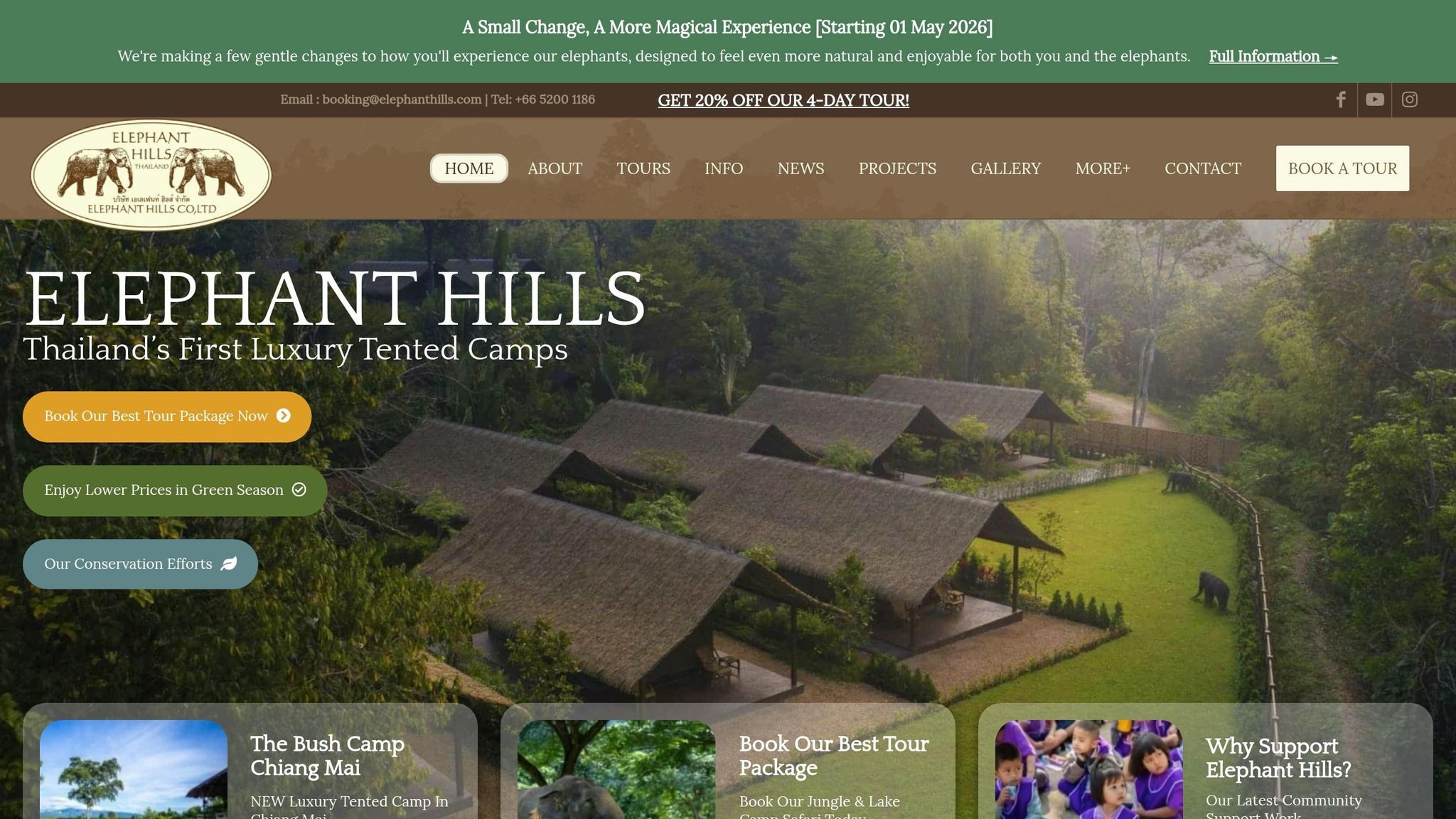
Elephant Hills operates two standout camps in Thailand’s Khao Sok National Park – the Elephant Camp and the Lake Camp – where top-tier comfort meets a deep commitment to conservation. With over two decades of operation, this property has become a leader in ethical wildlife tourism.
Conservation Efforts
Elephant Hills has redefined wildlife interaction by prioritizing ethical practices. Their dedication earned a 100% rating from Global Spirit – Animals in Tourism, making them the first animal attraction worldwide to achieve this score in just two weeks. Hayley Lynagh, Director of Global Spirit Animals in Tourism Ltd., praised their efforts:
They are not only the first elephant camp to achieve this rating but the first worldwide animal attraction to reach 100% within the two week audit period. Global Spirit has been impressed with Elephant Hills engagement in the whole process and their ongoing commitment to continue making positive improvements.
The camp has banned elephant riding altogether. Instead, guests enjoy the "Elephant Experience", where they can feed and interact with the elephants in a respectful and enriching way. Starting May 1, 2026, the camp will introduce subtle changes to make these interactions even more natural for both the animals and visitors. Beyond elephants, the property runs Wildlife Monitoring projects and supports local schools through the Elephant Hills Children’s Project.
Luxury Amenities
The Elephant Camp offers luxury rentals in the form of safari-style tents equipped with en-suite bathrooms, temperature-controlled showers, and premium furnishings. The Lake Camp, launched in 2011, features 20 floating luxury tents on the stunning Cheow Lan Lake. All-inclusive packages start at 22,410 THB (around $630) for three days and 34,000 THB (about $955) for four days. These packages include transfers from Phuket, Krabi, or Koh Samui, meals, and English-speaking, TAT-licensed guides.
Sustainability Practices
The Lake Camp runs on solar and wind energy and employs a cutting-edge waste management system to protect the lake’s pristine ecosystem. Across both camps, recycling and resource conservation are prioritized. Elephant Hills also focuses on hiring locally, ensuring that tourism directly benefits the surrounding community. These efforts seamlessly integrate environmental responsibility with high-end hospitality.
Next, Mashpi Lodge continues the journey of conservation-driven luxury.
2. Mashpi Lodge
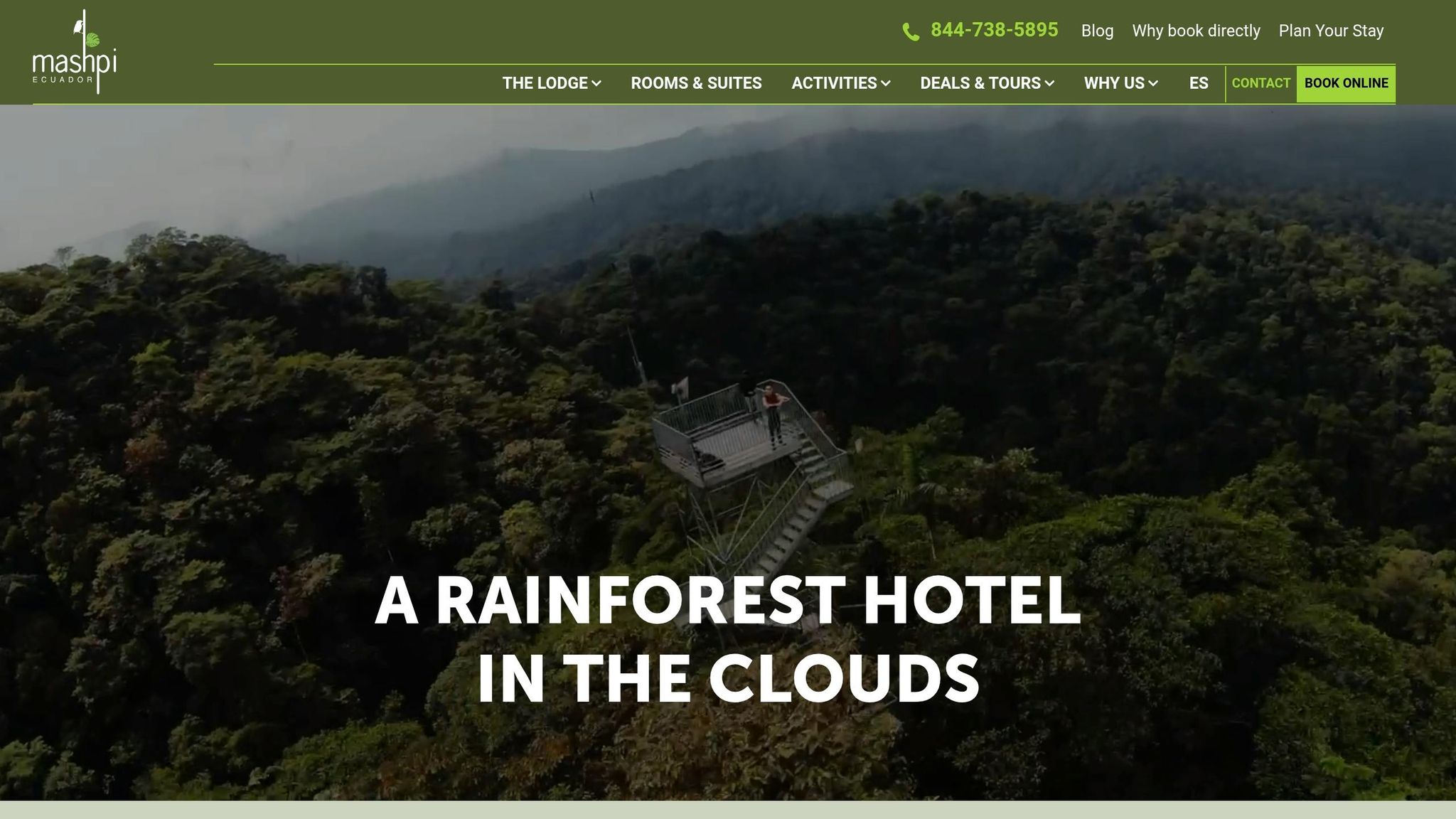
Mashpi Lodge takes ethical luxury travel to new heights by combining conservation with an unforgettable guest experience. Nestled within Ecuador’s Chocó Cloud Forest, this 6,178-acre reserve represents one of the last strongholds of a region where only 2% of the original vegetation remains. Founded by Roque Sevilla, a former Mayor of Quito, the lodge was built on the site of an old sawmill, preserving the forest while offering a luxurious retreat.
Conservation Efforts
Mashpi Lodge has made significant strides in protecting the environment. The lodge employs 10 solar-powered "forest guardians" that detect chainsaws and alert rangers to illegal logging activities. Its on-site Research Center has been pivotal in biodiversity studies, leading to the discovery of 16 new species over the past decade, including the Mashpi magnolia and various silk wasps. Resident Biologist Chiara Correa emphasizes the importance of this work:
This is why it’s so important to have research here as there are so many species waiting to be discovered.
Camera traps track animal movements, while the "Life Center" doubles as a research hub and butterfly breeding space, allowing guests to witness conservation efforts firsthand. These initiatives not only protect the environment but also enrich the overall guest experience.
Luxury Amenities
Mashpi Lodge seamlessly integrates luxury with nature. Guest rooms feature floor-to-ceiling glass walls, inviting the surrounding cloud forest into the living space. For a unique perspective, visitors can ride the Dragonfly Canopy Gondola, a 1.2-mile cable car system that soars 656 feet above the forest floor. Thrill-seekers can opt for a pedal-powered "Sky Bike" or climb an 85-foot observation tower for panoramic views. Dining is equally immersive, with an open-air dining room enclosed by two-story glass walls, serving seasonal Ecuadorian dishes crafted from locally sourced ingredients. Every detail reflects a commitment to blending elegance with eco-consciousness.
Sustainability Practices
Mashpi Lodge also prioritizes community well-being. At least 80% of its staff are hired from nearby villages, offering sustainable jobs as alternatives to logging and mining. The restaurant sources ingredients from within a 31-mile radius, supporting 15 local families. Additionally, the lodge collaborates with female-owned businesses, empowering women like local producer Jazmín Albán, who shares:
[Before], I thought that because we are women, we cannot achieve anything.
Founder Roque Sevilla hopes the lodge inspires guests to champion conservation efforts:
I’d like to see that the Mashpi guests return to their homes as passionate defenders of the conservation of these wonderful forests.
Praised by BBC Travel for its regenerative tourism efforts, Mashpi Lodge demonstrates how advanced conservation techniques, scientific research, and community-focused initiatives can coexist with luxury hospitality.
3. Essentialyfe
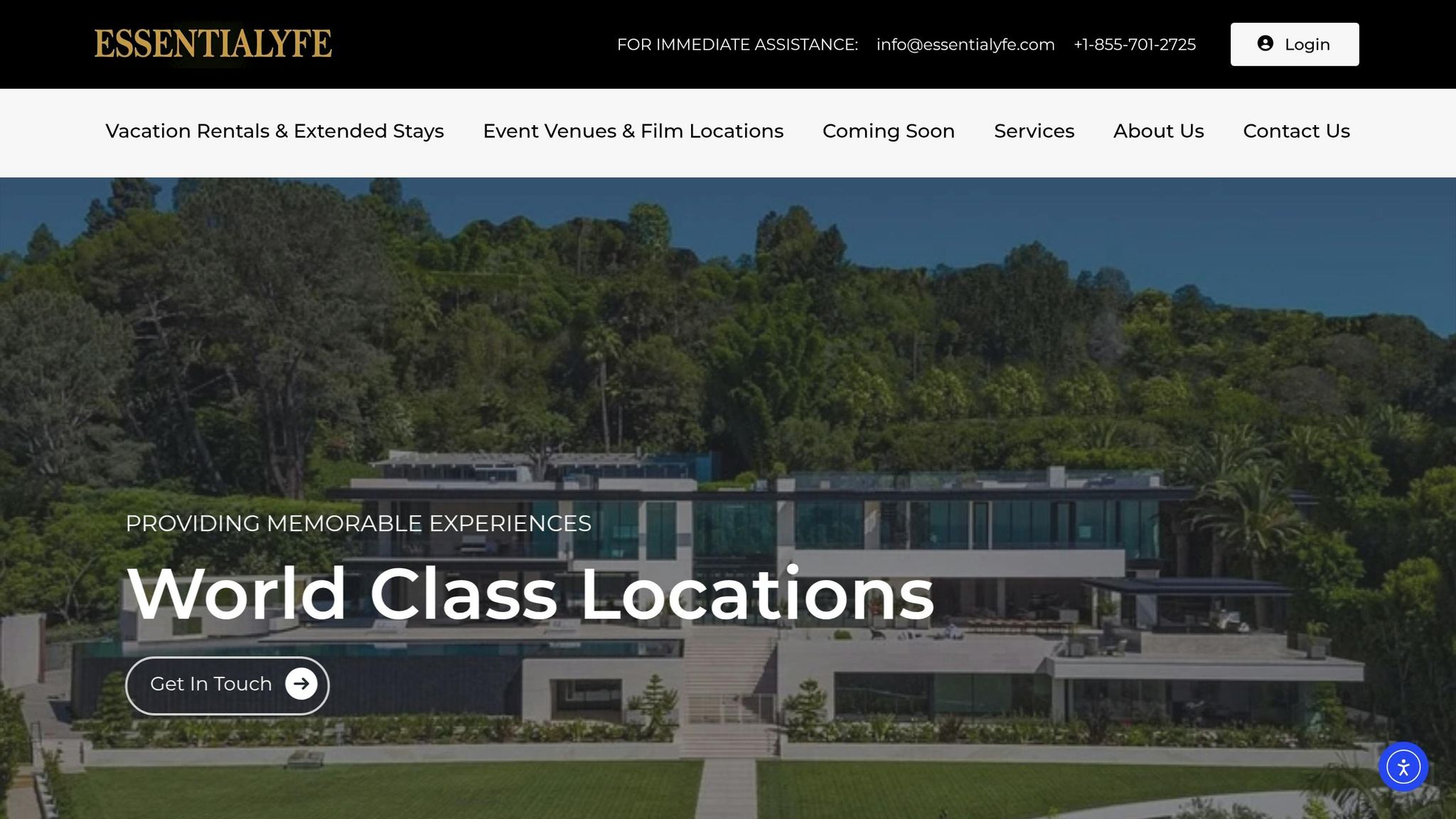
Essentialyfe takes the concept of responsible travel and blends it with high-end luxury by offering curated premium property rentals. Moving away from the traditional eco-lodge model, the company focuses on providing unique vacation homes, event spaces, and film locations throughout the United States. Founded by Avi Shabtai, Essentialyfe aims to redefine luxury travel by combining upscale living with a commitment to responsible tourism. Their offerings are enhanced by comprehensive concierge services designed to deliver a seamless and elevated travel experience.
Luxury Amenities
Essentialyfe’s portfolio is all about sophistication and personalized service. Guests can enjoy tailored amenities like private chefs, exotic car rentals, in-home massages, event planning, security, and shuttle services. This approach allows travelers to choose properties that align perfectly with their preferences and lifestyle. While not eco-lodges in the traditional sense, these rentals provide an elegant option for those seeking upscale accommodations that align with a conservation-conscious mindset.
Strengths and Weaknesses
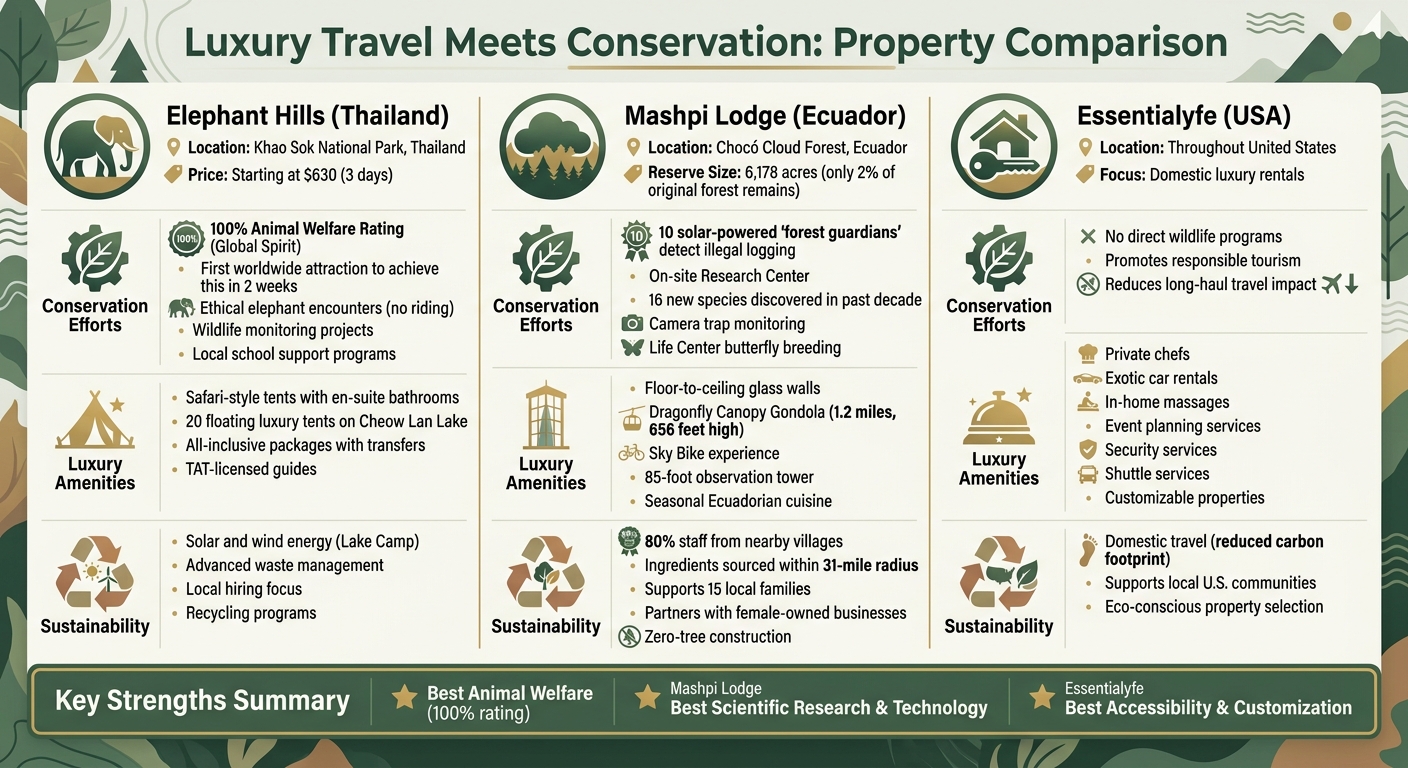
Luxury Conservation Travel: Comparing Elephant Hills, Mashpi Lodge, and Essentialyfe
The three properties showcase different approaches to combining luxury travel with wildlife conservation. Here’s a breakdown of their key strengths and weaknesses.
Mashpi Lodge is a standout in scientific research. Nestled within the 6,178-acre Mashpi Reserve, it safeguards a vital part of the Chocó Cloud Forest, of which only 2% still exists. The lodge uses "forest guardians" – 10 solar-powered audio recorders that detect chainsaw noises to combat illegal logging. This innovative system alerts rangers in real time, ensuring swift action. However, its location in Ecuador might make it less accessible for travelers from the U.S.
Elephant Hills shines with its perfect animal welfare rating from Global Spirit, offering ethical elephant encounters. While it excels in animal welfare, its technological advancements aren’t on par with Mashpi Lodge’s cutting-edge monitoring systems.
Essentialyfe takes a different route, focusing on curated luxury properties across the U.S. and offering extensive concierge services. Its strengths lie in accessibility, customization, and convenience, providing high-end travel experiences without the need for international flights. However, these properties don’t operate within conservation reserves or directly contribute to wildlife protection efforts.
The table below highlights how each property balances luxury and conservation in its own way:
| Property | Conservation Efforts | Luxury Amenities | Sustainability Practices |
|---|---|---|---|
| Elephant Hills | Ethical elephant encounters; 100% animal welfare rating from Global Spirit | Traditional luxury accommodations with wildlife experiences | Strict adherence to animal welfare standards |
| Mashpi Lodge | Protects 6,178-acre Chocó Cloud Forest reserve; on-site research lab; real-time logging detection via solar-powered tech | Glass architecture; Dragonfly Canopy Gondola; Sky Bike | Zero-tree construction; solar-powered forest monitoring |
| Essentialyfe | No direct wildlife conservation programs | Private chefs, exotic car rentals, in-home massages, event planning, security services | Promotes responsible tourism through domestic luxury rentals |
Conclusion
Luxury travel and wildlife conservation are becoming a forceful duo. The transition from sustainable tourism to a more regenerative approach marks a pivotal moment, with high-end travel experiences now directly funding impactful conservation initiatives. International examples like Mashpi Lodge and Elephant Hills highlight this approach, while domestic options offer eco-conscious luxury closer to home, cutting down on long-haul travel.
For those looking for a sophisticated getaway within the U.S., Essentialyfe offers a selection of luxury vacation homes tailored to meet high expectations. These properties feature perks like private chefs and concierge services, all while encouraging local travel and keeping your spending within American communities. Whether abroad or stateside, the focus on real, actionable conservation efforts is redefining what luxury travel can achieve.
Verified practices like renewable energy use, local sourcing, and community hiring showcase the practical benefits of this shift. When planning your next luxury trip, ensure the property you choose takes conservation seriously. Look for tangible commitments such as renewable energy implementation, local hiring, and support for community programs to make sure your vacation contributes to meaningful environmental and social change.
"When you choose a Singita luxury safari, you’re not just a guest, you’re a conservation partner." – Luxury Safari Company
This conservation-driven luxury tourism model delivers real results, from increasing wildlife populations to safeguarding endangered species. Your travel choices have the power to drive positive change. Whether you’re venturing into cloud forests abroad or relaxing in a high-end U.S. vacation home through Essentialyfe, make it a priority to select properties that actively benefit the environment and local communities.
FAQs
How can I tell if a luxury trip truly helps conservation?
When planning a luxury trip, consider whether the property actively supports conservation efforts. Opt for eco-friendly lodges or hotels that focus on reducing their environmental footprint and helping local ecosystems thrive. For example, some eco-luxury destinations are designed to aid wildlife and preserve habitats, such as those involved in rainforest protection. Choosing such experiences ensures your travel aligns with these values and contributes to a positive impact.
What makes an elephant encounter ethical for travelers?
An ethical elephant encounter gives travelers the chance to watch and appreciate elephants in a way that doesn’t involve riding, performances, or any kind of forced interaction. These experiences prioritize the well-being of the animals, ensuring they are either rescued or rehabilitated. When choosing a sanctuary, focus on those that emphasize conservation efforts and treat the elephants with respect – places that provide a natural habitat and put their care above entertainment.
How does staying in a U.S. luxury rental support sustainability?
Staying in a U.S. luxury rental can contribute to eco-friendly practices by promoting responsible tourism, protecting natural habitats, and reducing environmental impact. Take Vermejo, for example – a property that seamlessly combines luxury with conservation efforts. It’s a great example of how high-end travel can go hand-in-hand with sustainability. Many similar eco-focused luxury retreats offer guests the chance to immerse themselves in nature while actively supporting efforts to preserve it for future generations.