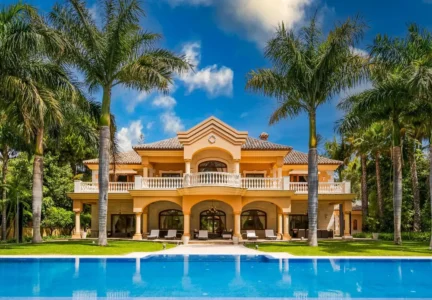
Maintaining a vacation home’s yard can be challenging, especially when you’re not around. Overgrown grass, water leaks, and pest issues can quickly escalate, impacting property value and rental potential. The solution? Low-maintenance landscaping. Here’s what you need to know:
- Xeriscaping: Use drought-resistant plants and smart irrigation to cut water use by up to 70% and reduce upkeep by 60%.
- Drought-Resistant Plants: Options like lavender, agave, and ornamental grasses thrive with minimal care.
- Hardscaping: Materials like gravel, decomposed granite, and pavers lower maintenance while adding visual appeal.
- Automated Systems: Smart irrigation tech optimizes water use and reduces manual effort.
- Fire-Safe Landscaping: Essential for dry climates, using non-flammable materials and spacing plants properly.
15 Coastal Landscaping Ideas| Low-Maintenance Beach Backyard Designs
sbb-itb-161ccc1
Xeriscaping: Water-Efficient Landscaping
Xeriscaping offers vacation homeowners a smart way to cut down on water use and yard upkeep. This landscaping method revolves around seven key principles designed to create outdoor spaces that thrive with minimal intervention. By using plants suited to the local climate, xeriscaping creates a yard that’s both resilient and self-sustaining.
Core Principles of Xeriscaping
The success of xeriscaping starts with thoughtful planning. Before planting, it’s crucial to evaluate your property’s sun exposure, shade patterns, drainage, and microclimates. Enhancing soil quality with compost helps improve both moisture retention and drainage. Plants are then grouped based on their water needs to ensure efficient watering without overdoing it.
Watering systems are another essential component. Drip systems, soaker hoses, or bubbler emitters deliver water directly to plant roots, cutting down on waste. In fact, combining these systems with a 2- to 4-inch layer of mulch can reduce water loss by as much as 70%. Reducing turf areas is another game-changer, as traditional grass lawns are some of the biggest water guzzlers. Maintenance also becomes simpler – think seasonal pruning and occasional weeding instead of constant mowing.
"The goal is to train your plants to seek out water deep in the soil, making them more drought-tolerant over time." – John Murgel, Horticulture Expert, CSU Extension
Adding smart irrigation technology, like the Rachio controller, can optimize water use even further. These devices adjust watering schedules based on real-time weather data, cutting water consumption by over 20%. While professional xeriscaping installation costs range from $5 to $20 per square foot, homeowners often recover these expenses within 3 to 5 years through lower water bills.
With these principles in place, xeriscaping offers solutions tailored to the unique challenges of maintaining a vacation home.
How Xeriscaping Benefits Vacation Homes
For vacation homes that aren’t occupied year-round, xeriscaping provides peace of mind. Once established – typically within the first year – xeric plants often rely solely on natural rainfall, reducing the risk of irrigation system failures or missed watering schedules. This approach can replace about 91 hours of annual lawn care with just a few seasonal tasks.
The financial perks are equally compelling. Swapping out 1,000 square feet of traditional grass for xeriscaping can save up to 25,000 gallons of water annually, cutting water usage by as much as 70%. Beyond utility savings, a well-executed xeriscape can boost property value by an average of 15%. For luxury vacation rentals, this added curb appeal can directly influence booking rates.
"The difference with xeriscape is once it is established, it can reduce water consumption and maintenance costs up to 60 percent." – Kelly Fortune, Senior Category Manager, SiteOne Landscape Supply
Drought-Resistant Plants That Require Minimal Care
Best Plant Choices
Selecting drought-resistant plants can transform your garden into a low-maintenance, resilient landscape. Lavender, a Mediterranean favorite, offers fragrant purple flowers and silvery-green foliage throughout its growing season. Once established, it thrives on natural rainfall and attracts pollinators effortlessly. For healthy growth, space Lavender plants 24 to 30 inches apart to ensure good airflow and reduce the risk of fungal problems.
For striking visual impact, Agave varieties are a great choice. The spineless Agave attenuata is perfect for areas near walkways, while the compact Agave victoria-reginae fits smaller spaces beautifully. Aloe Vera, with its thick, water-storing leaves, is another hardy option that thrives with minimal attention. Torch Aloe (Aloe arborescens) doubles as an evergreen hedge and produces vibrant blooms in late fall and winter.
Sedum, known for its moisture-retaining, fleshy leaves, comes in a variety of colors and textures. The ‘Autumn Joy’ variety features rosy-purple blooms in late summer and fall, while ‘Angelina’ creates a bright, ground-covering display. Impressively, these succulents boast a 98% survival rate by their third year without additional watering. Russian Sage, with its silvery stems, feathery leaves, and lavender-blue flowers, thrives in poor soil and full sunlight, adding movement and texture to your garden.
Ornamental grasses like Blue Fescue, Feather Reed Grass, and Little Bluestem provide vertical interest and require little more than an annual trim. Switching to drought-resistant shrubs can significantly lower water usage – by as much as 60% to 70%. For example, shrubs like Red Chokeberry need almost no supplemental watering once established.
"Ninebarks survived two major droughts without any irrigation while still producing beautiful white flowers." – William Hamilton, Owner and Founder, Nature’s Own Landscapes
With these plant options, you can create a garden that looks stunning year-round while requiring minimal effort.
Creating a Plant Selection for All Seasons
To keep your garden visually appealing throughout the year, plan for a mix of plants that shine in different seasons. This approach aligns with water-saving practices and ensures your garden remains vibrant with minimal care.
- Spring: Brighten up the season with Rosemary, Oregon Grape, and Western Redbud.
- Summer: Enjoy the heat-tolerant blooms of Lavender, Coneflower (Echinacea), Blanket Flower, and Salvia.
- Fall: Add color and texture with Autumn Joy Stonecrop, Little Bluestem, and late-blooming Asters.
- Winter: Highlight structural plants like evergreen Yucca, the red berries of Heavenly Bamboo, and the surprising winter blooms of Torch Aloe.
This thoughtful mix ensures your garden remains attractive year-round while keeping maintenance to a minimum. Most drought-resistant plants thrive in well-draining, sandy, or rocky soil, which helps prevent root rot – an issue common to succulents like Agave and Aloe. Grouping plants with similar water and sunlight needs can streamline care, and adding a 1- to 3-inch layer of mulch helps retain soil moisture during dry spells.
Hardscaping and Ground Cover Alternatives
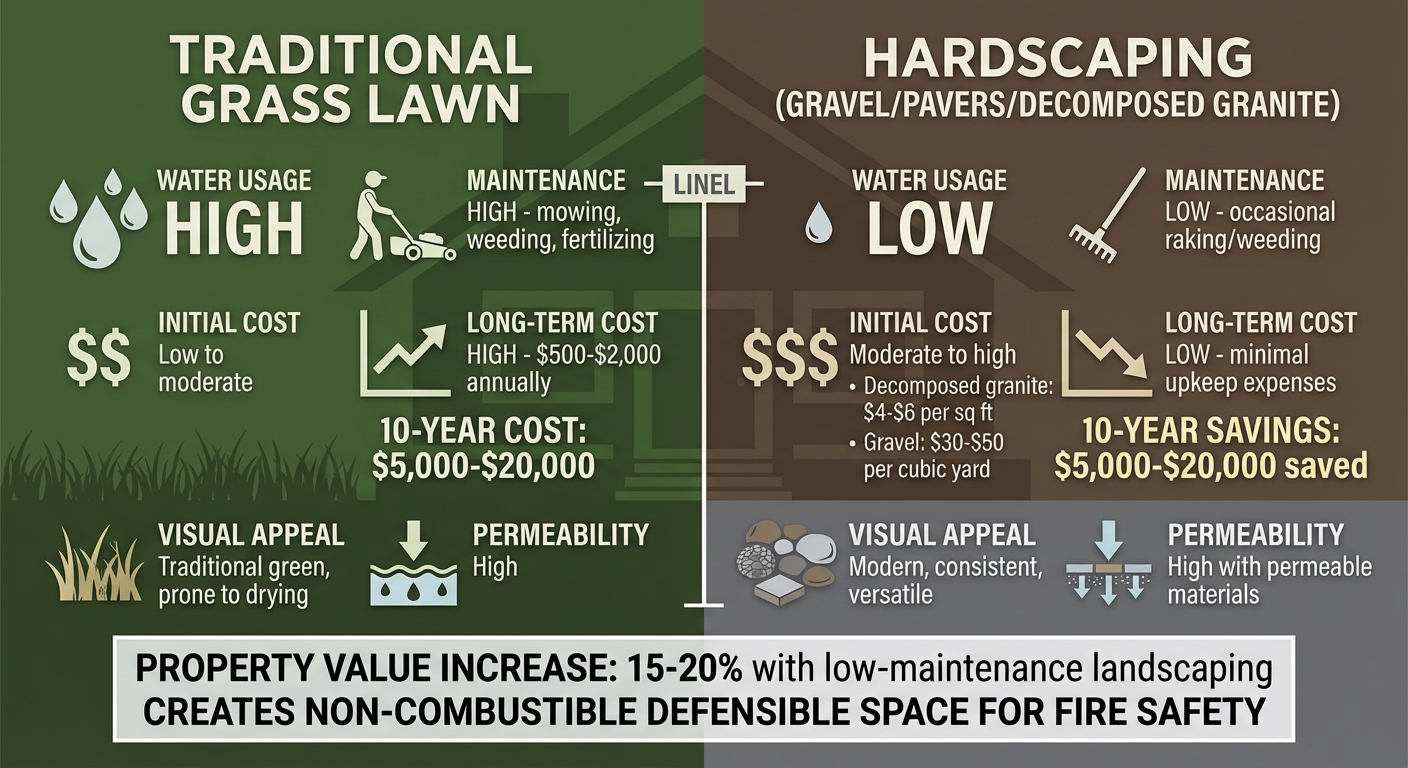
Traditional Lawn vs Low-Maintenance Hardscaping Comparison for Vacation Homes
Hardscaping and ground cover options work hand-in-hand with xeriscaping and drought-resistant plants, creating a low-maintenance, attractive landscape – perfect for vacation properties.
Hardscaping Materials for Vacation Properties
Decomposed granite is a standout material for vacation homes. Priced at about $40–$50 per cubic yard, it costs $4–$6 per square foot to install with stabilizers. This natural material creates firm, permeable surfaces, allowing rainwater to soak through while offering excellent drainage for paths and patios.
"Decomposed granite is the ideal hardscape material: natural, permeable, aesthetically versatile, and wonderfully inexpensive." – Gardenista
For a more budget-conscious choice, gravel and decorative rocks are available at roughly $30–$50 per cubic yard. These materials help control erosion, suppress weeds, and require almost no water. For walkways or entertainment areas, permeable pavers and flagstone offer a durable solution while still letting water seep into the soil. To reduce future upkeep, use weed barrier fabric underneath these materials.
However, keep in mind that decomposed granite can stick to shoes, potentially scratching indoor floors. To avoid this, consider using pavers or a sturdy doormat near entry points.
In addition to these hardscaping options, low-maintenance ground covers can elevate the functionality and charm of vacation properties.
Ground Covers That Need Little Attention
Creeping thyme thrives as a "living hardscape" in USDA Zones 4–9. It tolerates light foot traffic, produces fragrant blooms that attract pollinators, and needs minimal water once established. For warmer areas (Zones 9–11), Dymondia forms a silver-green carpet with cheerful yellow flowers.
For filling gaps between pavers or lining pathways, sedum varieties spread naturally and require little care after planting. Another simple option is mulch – whether wood chips, bark, or crushed lava rock. A 2- to 3-inch layer of mulch helps retain soil moisture and blocks sunlight from reaching weed seeds. Some municipalities even offer free mulch through composting programs, making it an affordable choice.
"Gravel or mulch is great for cutting down on yard work and creating a space to spend time in." – Camille Cimino, Landscape Architect
Hardscaping vs. Traditional Lawns: A Comparison
When comparing hardscaping to traditional grass lawns, the financial and environmental advantages become clear – especially for vacation homeowners looking to minimize upkeep.
| Feature | Traditional Grass Lawn | Hardscaping (Gravel/Pavers/DG) |
|---|---|---|
| Water Usage | High | Low |
| Maintenance | High (mowing, weeding, fertilizing) | Low (occasional raking/weeding) |
| Initial Cost | Low to moderate | Moderate to high |
| Long-term Cost | High (water bills, equipment, labor) | Low (minimal upkeep expenses) |
| Visual Appeal | Traditional green, prone to drying | Modern, consistent, and versatile |
| Permeability | High | High (if using permeable materials) |
Maintaining a traditional lawn can cost $500 to $2,000 annually, but removing it could save between $5,000 and $20,000 over a decade. Additionally, well-planned low-maintenance landscaping can boost property value by 15% to 20%. Hardscaping with stone or gravel also creates a non-combustible "defensible space", which is especially valuable for fire safety in dry climates.
Steps to Create Low-Maintenance Landscaping
Designing a low-maintenance landscape for a vacation home involves strategies that conserve water and reduce upkeep. One effective approach is dividing your property into hydrozones based on water needs. These zones include High (for edibles and new plantings), Moderate (for most ornamental plants), and Low (for drought-tolerant natives or succulents). Use pathways, edging, or changes in elevation to separate these zones, ensuring that water is distributed efficiently to areas that need it most. This method not only simplifies maintenance but also boosts the resilience of your property.
Grouping Plants by Water and Care Needs
Start by sketching a map of your yard, noting areas of sun, shade, slopes, and soil conditions. This helps you follow the principle of "right plant, right place", which reduces plant stress and the likelihood of disease. Simplify maintenance by limiting the variety of plant species, focusing on a few hardy options that thrive in your conditions. For container plants, group pots together to create a microclimate that retains moisture. To further enhance efficiency, install separate valves for each hydrozone, allowing you to customize watering schedules.
Outdoor water use in U.S. residential areas amounts to about 8 billion gallons daily, with up to 50% wasted due to overwatering or inefficient systems. By adopting water-wise landscaping, you can cut water use by 35–75%. Adding a 3- to 5-inch layer of mulch can reduce soil evaporation by approximately 70%, while increasing soil organic matter by just 1% allows the soil to retain an additional 20,000 gallons of water per acre.
Automated Irrigation Systems
For vacation homes, automated irrigation systems are a game-changer. Drip or micro-irrigation systems deliver water directly to the root zone with 80–85% efficiency, far surpassing traditional overhead sprinklers. Upgrading to a WaterSense-labeled smart controller can save up to 15,000 gallons of water annually by adjusting watering schedules based on real-time weather data. Pairing these controllers with rain and freeze sensors ensures that watering stops during rain or freezing conditions. To avoid clogs and line bursts, install a pressure regulator and filter. Remote monitoring provides extra peace of mind when you’re away, and a seasonal audit of irrigation zones can help identify issues like clogs or misaligned nozzles. Remember, even drought-tolerant plants need consistent watering during their first season to establish strong roots.
"Low maintenance doesn’t mean no maintenance… The key is minimizing the amount of work, not pretending it doesn’t exist." – Andy Sykes, President of Garrett Churchill
In addition to water efficiency, some regions demand attention to fire safety.
Fire-Safe Landscaping in Dry Climates
For areas prone to drought, fire-safe landscaping is a critical addition to water-saving strategies. Divide your property into three defensible space zones:
- Zone 0: The area 0–5 feet from your home should be ember-resistant, free of flammable materials like wood mulch or resinous plants.
- Zone 1: From 5–30 feet, maintain lean, green landscaping with well-spaced plants.
- Zone 2: From 30–100 feet, reduce fuel loads by pruning and spacing plants appropriately.
Since wind-blown embers cause 60–90% of home ignitions and can travel up to 5 miles, keeping Zone 0 clear of combustibles is essential. Prune lower tree branches to create vertical gaps, preventing fire from climbing, and ensure proper horizontal spacing, especially on slopes. Use non-combustible materials like gravel, stone, or concrete to create firebreaks. Additionally, choose plants with high moisture content and low resin levels, and keep them hydrated with drip irrigation to increase their fire resistance.
Conclusion: Improving Vacation Homes with Low-Maintenance Landscaping
Low-maintenance landscaping transforms vacation homes into investments that are easier to manage and more rewarding. Eye-catching landscaping can boost a home’s value by up to 28%, with professional designs increasing resale prices by 15% to 20%. On top of that, well-kept outdoor areas can generate up to 5% more rental income. Thoughtful placement of trees and shrubs can also cut heating and cooling costs by as much as 25%. And when it comes to upkeep, native plants cost roughly $3,000 over 20 years, compared to a hefty $20,000 for non-native species.
Features like automated irrigation systems and drought-tolerant plants significantly reduce the need for regular landscaping services. This is especially beneficial for properties that sit vacant between guest stays, saving both time and money for absentee owners.
With year-round appeal and minimal upkeep, low-maintenance landscaping ensures outdoor spaces remain inviting and functional. Hardscaped patios, native plant gardens, and automated systems eliminate the hassle of frequent maintenance visits. Additions like fire pits, gravel walkways, and wildflower gardens create memorable outdoor spaces that leave a lasting impression on guests.
Whether you’re managing a high-end rental through Essentialyfe or maintaining your personal getaway, investing in water-efficient, low-maintenance landscaping is a smart move. It protects your property, lowers long-term costs, and reduces environmental impact. By embracing these strategies, vacation homeowners across the United States can enjoy higher financial returns, fewer upkeep headaches, and happier guests.
FAQs
How do I start xeriscaping if I’m rarely at my vacation home?
To start xeriscaping, focus on plants that can handle dry conditions, such as succulents, lavender, or agave. These choices thrive with very little water. Add mulch around your plants to help the soil hold moisture and opt for permeable surfaces to cut down on water runoff and make maintenance easier. An automatic irrigation system with timers is a smart addition – it keeps your yard healthy even when you’re not around. By carefully planning and selecting plants suited to your climate, you can enjoy a stunning, low-maintenance yard that practically takes care of itself.
What’s the best smart irrigation setup for monitoring leaks remotely?
The ideal smart irrigation system for remote leak monitoring blends weather data, soil moisture sensors, and leak detection with a Wi-Fi-enabled controller. These systems allow you to manage watering schedules through smartphone apps, ensuring efficient irrigation while delivering leak notifications.
Smart water controllers, which connect to outdoor faucets or hoses, offer real-time updates. Combined with integrated weather and soil moisture sensors, they help prevent overwatering and quickly identify potential problems – perfect for maintaining a low-maintenance landscape with minimal hassle.
How can I make my landscaping fire-safe without sacrificing curb appeal?
Creating a fire-safe landscape doesn’t mean sacrificing your home’s curb appeal. The key lies in combining smart plant choices, defensible zones, and consistent maintenance.
Pick fire-resistant plants: Opt for plants that retain high moisture and have low flammability. Steer clear of resinous species, as they can ignite more easily.
Establish defensible zones: Keep the area within 5 feet of your home clear by using materials like gravel or stone instead of vegetation. Remove any dead plants or debris regularly to reduce fire risks.
Add hardscaping elements: Features like stone borders or pathways can act as barriers, helping to slow or stop the spread of fire.
Routine care, such as pruning and clearing away dry leaves or branches, ties it all together, ensuring your landscape stays both beautiful and fire-safe.