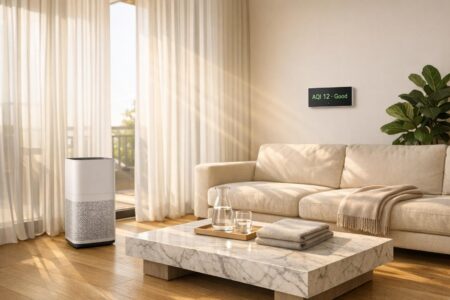
Indoor air quality is now a key factor for luxury rental success. Guests expect more than comfort – they want spaces that promote health and well-being. Poor air quality can lead to health problems, negative reviews, and lost revenue, while clean air boosts guest satisfaction, repeat bookings, and property value.
Key Takeaways:
- Indoor air is 2–5x more polluted than outdoor air. Common pollutants include VOCs, mold, dust mites, and radon.
- 77% of travelers consider air quality when booking. Many are willing to pay more for cleaner, healthier spaces.
- Advanced air systems like HEPA filters, UV-C technology, and MERV-13 filters improve air quality and protect properties.
- Regular maintenance – like changing filters and monitoring CO₂ levels – is critical for sustained results.
Clean air isn’t just about health – it’s a smart business move for luxury property owners.
Stuffy Rooms Cost Hotels Millions in Bad Ratings
sbb-itb-161ccc1
Problems That Affect Indoor Air Quality in Luxury Properties
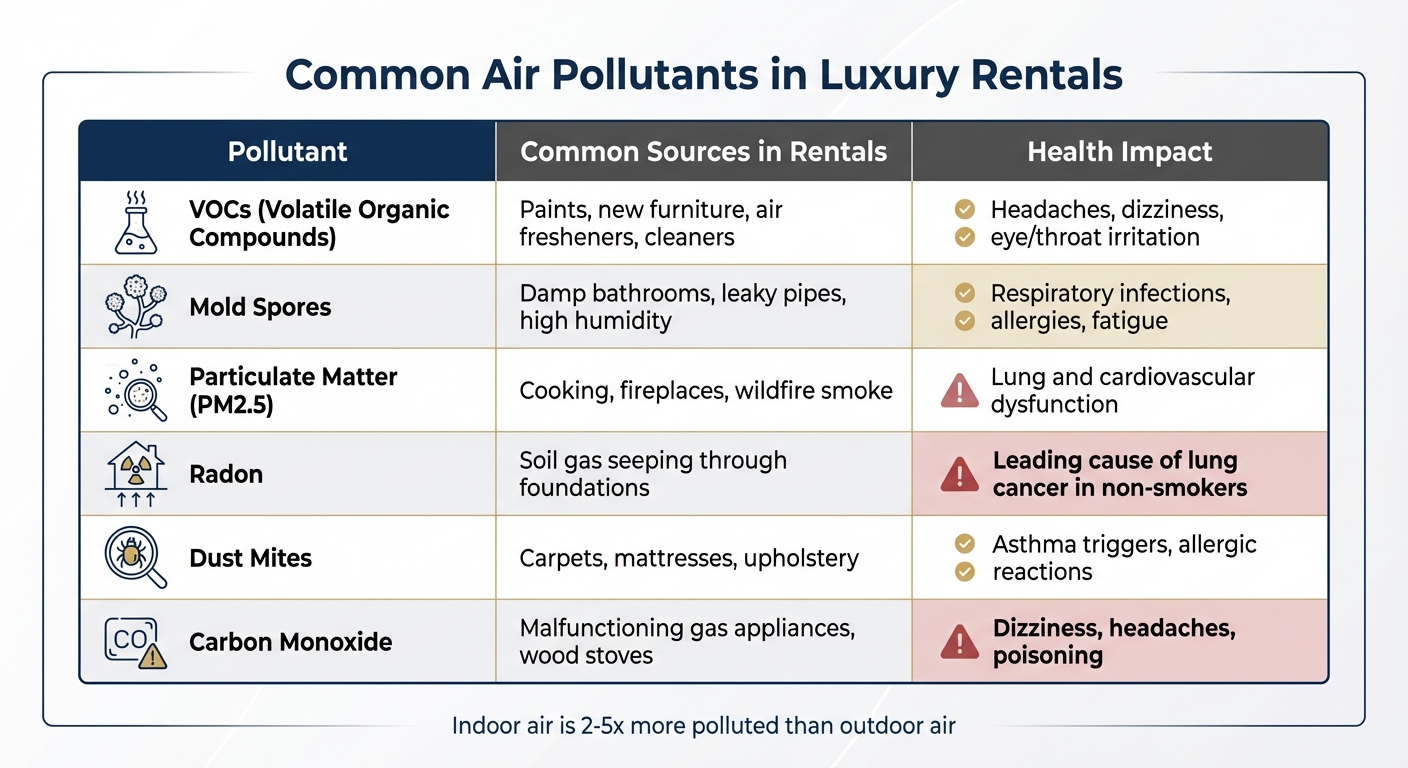
Common Indoor Air Pollutants in Luxury Rentals: Sources and Health Impacts
The quality of indoor air plays a significant role in guest satisfaction, especially in high-end rental properties. Below, we’ll explore the common pollutants and environmental factors that can compromise air quality in luxury rentals and how these issues impact health and guest experiences.
Common Air Pollutants in Rental Properties
Even in luxury rentals, air pollutants are a persistent problem. The very materials and products that exude luxury often contribute to indoor air contamination. For instance, Volatile Organic Compounds (VOCs), found in premium paints, varnishes, adhesives, and new furniture, are common offenders. These compounds are also present in everyday items like household cleaners and personal care products.
Biological contaminants are another concern. Mold and fungal spores thrive in areas with poor ventilation, high humidity, or water leaks, such as bathrooms, basements, and HVAC systems. Dust mites and pet dander accumulate in carpets, upholstery, and air ducts, while combustion byproducts from gas stoves, fireplaces, and wood stoves release fine particulate matter (PM2.5) and carbon monoxide into the air.
Some threats are less visible but equally dangerous. Radon, a naturally occurring radioactive gas, can seep into homes through foundations and basements. Properties in wildfire-prone areas may deal with smoke infiltration, while older buildings might contain lead-based paint or asbestos, depending on their construction era.
Here’s a quick look at these pollutants, their sources, and their potential health effects:
| Pollutant | Common Sources in Rentals | Health Impact |
|---|---|---|
| VOCs | Paints, new furniture, air fresheners, cleaners | Headaches, dizziness, eye/throat irritation |
| Mold Spores | Damp bathrooms, leaky pipes, high humidity | Respiratory infections, allergies, fatigue |
| Particulate Matter (PM2.5) | Cooking, fireplaces, wildfire smoke | Lung and cardiovascular dysfunction |
| Radon | Soil gas seeping through foundations | Leading cause of lung cancer in non-smokers |
| Dust Mites | Carpets, mattresses, upholstery | Asthma triggers, allergic reactions |
| Carbon Monoxide | Malfunctioning gas appliances, wood stoves | Dizziness, headaches, poisoning |
While these pollutants originate indoors, external factors also play a significant role.
Environmental Factors That Reduce Air Quality
Outdoor conditions can exacerbate indoor air quality issues. For instance, properties located near busy urban areas often face pollution from vehicle emissions and industrial activities, including ground-level ozone and particulate matter. Coastal rentals, though scenic, often contend with high humidity levels that encourage mold growth.
Seasonal and climate changes add to the challenges. Wildfire-prone regions experience smoke intrusions that demand airtight buildings and advanced filtration systems. During certain seasons, pollen levels spike, and inadequate ventilation can trap allergens indoors.
Ironically, modern luxury construction can worsen indoor air issues. Energy-efficient, tightly sealed buildings are excellent for climate control but often trap pollutants inside, leading to indoor air that is 2 to 5 times more polluted than outdoor air. Cristal Clarke, a luxury realtor, highlights this growing concern:
"Clean air systems have become the new status symbol in luxury homes, offering peace of mind, health benefits, and a higher quality of life".
How Poor Air Quality Affects Health and Guest Satisfaction
Subpar air quality doesn’t just create discomfort – it has tangible health effects and economic consequences. Guests may experience symptoms like headaches, dizziness, fatigue, and irritation of the eyes, nose, and throat. Those with asthma or allergies are particularly vulnerable, often suffering from coughing, wheezing, and shortness of breath.
The risks are even greater for children, elderly guests, and individuals with pre-existing health conditions. Prolonged exposure to poor air quality can lead to severe health problems such as heart disease and lung cancer. Conrad Bennett, Director of Business Development at EJF Rentals, emphasizes this point:
"A healthier home is a more livable home. That means: Higher tenant retention, positive reviews, less turnover".
Odors from pets, cooking, or previous smokers can also be a major turnoff for high-end guests, who expect a fresh and clean environment. These issues often result in negative reviews, early departures, and lost bookings. As Tier One Real Estate aptly puts it:
"Indoor air quality (IAQ) can make or break a rental experience".
In luxury rentals, where guests pay top dollar for an exceptional experience, poor air quality simply isn’t an option.
Why Clean Air Matters in Luxury Rentals
Clean air has become more than just a basic expectation – it’s now a hallmark of luxury living. High-end travelers today are looking for more than gourmet kitchens and plush linens; they want spaces that actively contribute to their health and comfort. This shift reflects a growing focus on wellness-centered experiences, with air quality emerging as a key priority for discerning guests. Market trends and data strongly support this change, showing that air quality plays a critical role in the decision-making process for luxury travelers.
Market Demand for Better Air Quality
Research shows that the majority of travelers now consider air quality a major factor when choosing where to stay. Many are even willing to pay extra for accommodations that prioritize healthier environments. Richard Peltier, Professor of Environmental Health Sciences at the University of Massachusetts Amherst, puts it succinctly:
"Air is being marketed as a luxury product feature – complete with premium amenities and advanced air filtration."
The numbers back this up. Around 38% of luxury travelers are willing to pay 30% to 50% more for rentals that emphasize environmental health. Properties with green certifications can charge rental premiums of 3% to 13%, while homes equipped with advanced air filtration systems often sell for 20% above the median property value.
But it’s not just about health – air quality also enhances the sensory experience of a stay. Cleaner air reduces odors and dust, creating a fresher, more inviting atmosphere. Developer John Roe highlights this with an example from one of his properties, which exchanges its indoor air completely every hour:
"It smells like you’re camping, because the fresh air is getting pumped in at such a rapid rate."
For property owners, these guest preferences translate into clear financial rewards.
Business Benefits for Property Owners
Investing in superior air quality doesn’t just satisfy guests – it can significantly boost revenue. Robin Craigen, Co-founder and CEO of Moving Mountains, explains how his properties command premium rates:
"Our ADR is 3 – 4X the market. People are paying a premium for our well-stocked, well set up and regularly maintained homes… That is not an accident."
Clean air contributes to better sleep, improved focus, and fewer allergy symptoms, all of which lead to glowing reviews and repeat bookings. For example, during the June 2023 Canadian wildfire smoke crisis in New York City, the Sven luxury high-rise maintained impressively low indoor particulate levels using advanced MERV-15 and MERV-13 filters, even as outdoor air quality reached hazardous levels.
Beyond guest satisfaction, advanced filtration systems also protect properties. High-grade filters and dehumidifiers prevent mold growth and reduce moisture damage, cutting down on long-term maintenance expenses. From a marketing perspective, showcasing features like "advanced filtration" or "air purifiers" can make a property more appealing to high-end guests.
Luxury realtor Cristal Clarke sums up this trend perfectly:
"In today’s real estate market, a healthy home isn’t just a nice-to-have – it’s a must-have. That’s why clean air systems have become the new status symbol in luxury homes."
This focus on air quality is part of a broader commitment to exceptional standards in luxury rentals. Platforms like Essentialyfe are leading the way by curating properties that not only offer top-tier amenities but also create environments that promote health and well-being.
How to Improve Indoor Air Quality in Luxury Rentals
Creating a healthier indoor environment in luxury rentals involves leveraging advanced systems, staying on top of maintenance, and integrating air quality solutions seamlessly into the guest experience. By doing so, property owners can protect their investments while delivering a standout stay for guests. Let’s explore how to make this happen.
Air Purification Systems and Technologies
A combination of whole-home systems and portable units is key to achieving cleaner air. Integrated HVAC systems, like the Air Knight IPG, offer continuous purification by using ionization, photocatalytic oxidation (PCO), and UV-C light to sanitize the air quietly. These systems can handle up to 18 air exchanges per hour in a 1,000 ft³ space, ensuring consistent air circulation and cleanliness.
For high-priority areas like master bedrooms or living rooms, portable air purifiers add another layer of protection. Many of these devices feature multi-stage filtration, including HEPA filters for particles, activated carbon for odors, and advanced technologies like PlasmaWave or HEPASilent. In spaces between 212 and 320 square feet, these purifiers can improve indoor air quality by 92% to 96%. Budget-friendly options like the Levoit Vital 200S and Winix 5300‑2 cost $130 to $190, while premium models such as the Blueair DustMagnet 5240i or Dyson Pure Cool Link range from $300 to $400+. Upgrading HVAC filters to MERV 13 further boosts air quality when used alongside these portable units.
Regular Maintenance and Air Quality Monitoring
Keeping the air clean requires consistent attention. CO₂ sensors can help monitor ventilation by tracking carbon dioxide levels – readings below 600 ppm indicate excellent ventilation, while levels above 1,000 ppm suggest a need for improvement. Automated systems simplify maintenance by signaling when HVAC filters need replacing, typically every 1–3 months. Additionally, professional HVAC inspections and duct cleaning should be scheduled every 3–5 years, or more frequently in properties with pets.
Maintaining proper humidity levels with whole-home systems and conducting regular air quality tests can also prevent mold growth. For added convenience, air purifiers with Auto Mode use laser sensors to detect pollutants and adjust fan speeds automatically, ensuring optimal performance without requiring manual adjustments from guests.
Combining Air Quality Services with Guest Amenities
Incorporating air quality solutions into the overall guest experience can significantly enhance the perceived value of a luxury rental. For instance, running air purifiers during turnover periods ensures guests arrive to fresh, neutral air, free from any lingering odors left by previous occupants. Kelly D., a property manager from PuroAir, emphasizes this point:
"It’s like having an invisible layer of cleanliness that supports all the work we’re already doing."
Allowing a 24-hour buffer between bookings can also provide time for deep cleaning and extended air purification cycles. This practice is especially useful in pet-friendly units, where HEPA and activated carbon filters can eliminate odors without relying on sprays or candles that might irritate sensitive guests. Smart-enabled purifiers allow property managers to monitor and adjust settings remotely before check-in, and including details about these systems in welcome guides can highlight their health benefits and user-friendly features.
This strategy aligns with current traveler preferences: 77% of guests say proof of air quality influences their lodging choices, and over 50 million Americans experience allergies annually.
Steps to Improve Air Quality in Your Luxury Property
Testing Your Current Air Quality
The first step is to understand the current state of your property’s air quality. Start by using CO₂ sensors to monitor ventilation. If readings fall between 400–600 ppm, your air quality mirrors outdoor conditions. However, levels above 1,000 ppm could indicate poor ventilation or even over-occupancy. These sensors also offer a discreet way to track unusual activity in your property, like unauthorized gatherings, by analyzing air quality trends.
For a deeper analysis, bring in professionals to check for pollutants such as mold, bacteria, pollen, and VOCs. Experts use tools like moisture meters and infrared cameras to detect hidden water leaks, which can lead to mold growth. Additionally, inspect your HVAC system’s filters – those rated MERV 10 or higher are better at capturing fine particles. Since indoor air is often 2 to 5 times more polluted than outdoor air, thorough testing is critical. Keep an eye out for patterns, such as CO₂ levels spiking above 1,500 ppm on weekends, which could signal over-occupancy or HVAC inefficiencies.
Choosing and Installing Air Quality Systems
Once you’ve assessed the air quality, it’s time to address the specific issues. Select air purification systems tailored to your property’s needs. For example, True HEPA filters capture 99.97% of airborne particles as small as 0.3 microns, making them ideal for tackling dust, pollen, and smoke. If odors or VOCs are a concern, Activated Carbon filters are a great option.
When choosing a purifier, follow the "2/3 Rule": the Smoke CADR (Clean Air Delivery Rate) should cover at least 67% of the room’s square footage. For luxury spaces or properties catering to allergy-sensitive guests, aim for 4–5 air changes per hour, which is a noticeable improvement over the standard 2–3 changes per hour. Look for systems certified by AHAM Verifide, CARB, or Energy Star – Energy Star models are about 25% more energy-efficient. To optimize airflow, place purifiers away from walls and large furniture.
Maintaining Air Quality Systems Over Time
Proper maintenance keeps your air quality systems running efficiently. Replace HEPA filters every 6–12 months and Activated Carbon filters every 3–6 months. For HVAC systems, change air filters every 1–3 months – or even every 30–60 days in high-traffic properties or wildfire-prone areas. Schedule annual professional HVAC tune-ups (typically costing around $85) and clean your ductwork every 3–5 years.
To stay on top of maintenance, consider buying filters in bulk and setting automated reminders for replacements. Between guest stays, vacuum carpets and upholstery with HEPA-filter vacuums, which capture 99.97% of airborne particles, and maintain consistent humidity levels to prevent mold growth and enhance comfort.
Conclusion
Focusing on indoor air quality does more than just improve the atmosphere – it directly impacts your bottom line. Clean air creates healthier, more satisfied guests who sleep better, stay focused, and feel at ease in your property’s space. As air quality evolves from being a subtle detail to a standout feature in luxury rentals, it’s clear that this investment is worth every penny.
"A healthier home is a more livable home. That means: Higher tenant retention, positive reviews, less turnover, [and] fewer repair requests." – Conrad Bennett, Director of Business Development, EJF Rentals
By acting on these consumer preferences, property owners can protect their assets while enhancing guest experiences. Better air quality not only boosts guest health and comfort but also safeguards the property itself – preventing mold, structural damage, and expensive repairs while extending the life of HVAC systems. With 91% of consumers recognizing the importance of indoor air quality for minimizing airborne viruses, showcasing features like HEPA filters or UV-C technology gives health-conscious travelers a compelling reason to book.
In the competitive world of luxury rentals, properties that prioritize wellness stand out. Treating air quality with the same care as premium linens or high-end appliances shows guests they’re valued from the moment they arrive. This attention to detail leads to glowing reviews, repeat bookings, and a competitive edge that goes beyond visual appeal.
FAQs
Which air quality upgrades deliver the best ROI in a luxury rental?
To boost the appeal of luxury rentals and ensure a healthier living space, investing in air quality upgrades is a smart move. Start with regular HVAC system maintenance, including timely filter replacements. This simple step keeps the system running efficiently and improves indoor air quality.
Another effective upgrade is installing high-quality air purifiers. Opt for durable models with advanced filtration systems that can handle large areas and require minimal maintenance. These features not only improve air quality but also make the property more attractive to discerning renters who prioritize comfort and wellness.
How can I test indoor air quality between guest stays without hiring a pro?
You can check indoor air quality on your own with a few simple tools. Home test kits are available for pollutants like mold – these can be sent to a lab for detailed analysis. For real-time tracking, affordable air quality monitors can measure things like humidity, particulate matter, and volatile organic compounds (VOCs).
Don’t overlook the basics either. Look out for visible signs of mold, moisture buildup, or any strange odors. These can often signal air quality problems, especially between guest stays.
What’s the simplest way to prevent mold and humidity issues year-round?
To keep mold and humidity problems at bay throughout the year, aim to maintain indoor humidity levels between 30% and 50%. Using dehumidifiers and ensuring adequate ventilation can significantly cut down on moisture buildup. These practices not only help in managing humidity but also contribute to a healthier living space while lowering the chances of mold growth.