Plumbing problems can ruin your event. Overflowing restrooms, leaks, or water damage can disrupt the experience for guests and hurt your venue’s reputation. Here’s how to avoid these issues:
- Pre-Event Inspections: Check restrooms, drainage systems, and water heaters for leaks, pressure issues, or blockages. Fix problems early.
- Capacity Planning: Ensure your plumbing can handle the crowd. Plan for 1 restroom per 50-75 guests at a 4-hour event, and adjust for alcohol service.
- Emergency Preparedness: Map out shut-off valves, have a 24/7 plumber on call, and train staff to respond quickly to leaks or backups.
- Smart Tech Integration: Use leak sensors and automated shut-off systems to catch problems before they escalate.
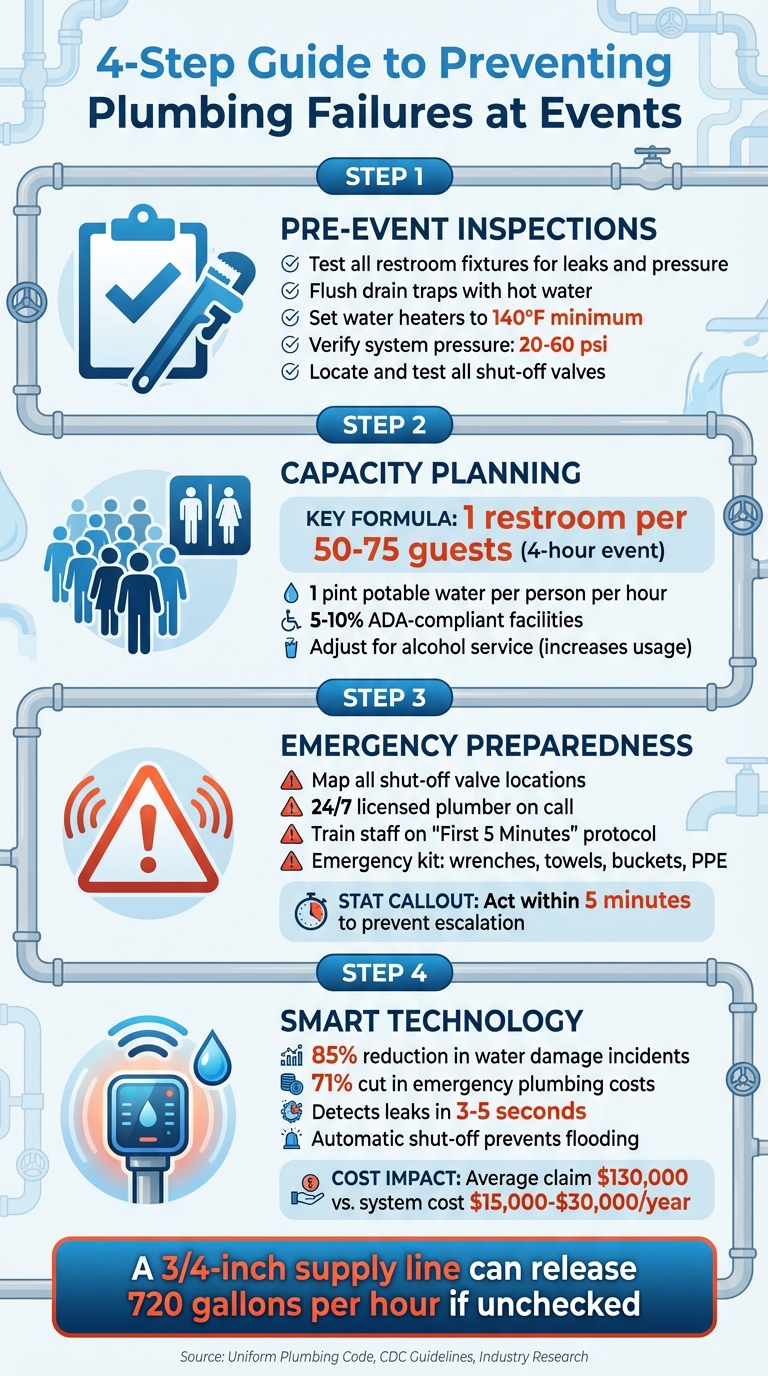
4-Step Guide to Preventing Plumbing Failures at Events
Preventative Maintenance Strategies for Plumbing Systems
sbb-itb-161ccc1
Pre-Event Plumbing Inspections
A thorough plumbing inspection before your event can save you from unexpected failures. Schedule this check early to allow enough time for any necessary repairs. Once you’ve confirmed that all fixtures are functioning properly, move on to assess drainage systems and water heaters.
Inspect Restrooms and High-Traffic Areas
Go through every restroom, testing each fixture individually. Flush all toilets to ensure proper water pressure and drainage. Turn on all faucets simultaneously to simulate heavy usage and check for consistent water flow. Look under sinks and around toilet bases for any signs of moisture or leaks.
Pay attention to water pressure at all fixtures. Weak flow from some faucets might indicate a blockage or supply line issue. For venues serving food or drinks, ensure handwashing stations nearby are fully operational and well-stocked. Clean faucet aerators to remove any debris that could restrict flow.
Test Drainage Systems
Flush drain traps with hot water to clear buildup and prevent odors. To test drainage capacity, run water at full volume for several minutes. Slow drainage could signal a partial blockage that might worsen during the event.
If your venue has outdoor spaces or kitchens, check scupper drains, gutters, and specialized waste lines for debris. Start at the lowest elevation and work your way up to identify leaks. Use a two-person team for these tests: one person operates the water source while the other monitors the drains. Maintain constant communication to stop the test immediately if any backup occurs.
"All tests need to be closely monitored with a second person with two-way communication from the inside so the water test can be stopped immediately once water infiltration is observed."
- Edward Pon, Building Envelope Services Practice Leader, Rimkus
Check Water Heaters and Supply Lines
Set the water heater to at least 140°F to meet sanitation standards. If the venue hasn’t been used recently, flush the system by running both hot and cold water through all faucets until the hot water reaches its maximum temperature. This clears stagnant water that could harbor bacteria or damage pipes. Ensure hot water reaches at least 120°F at the tap.
Use a pressure gauge at a spigot to confirm system pressure is between 20-60 psi. Anything above this range can strain fixtures and increase the risk of failure. Inspect visible supply lines, connections, and valves for corrosion, leaks, or wear. Check the temperature and pressure relief valves on water heaters – they shouldn’t be discharging water unnecessarily, as this could indicate faulty settings or a failing valve. Finally, locate and test all shut-off valves to ensure they’re ready for emergency use.
Capacity Planning for High-Traffic Plumbing Demand
Planning for high-traffic plumbing needs goes beyond regular inspections. Start by calculating the minimum fixture requirements using Table 422.1 in the Uniform Plumbing Code (UPC). For large-scale events, plan for one toilet per 50 people. If the event lasts around four hours, aim for one portable restroom per 50 to 75 attendees. Keep in mind, serving alcohol can significantly increase restroom usage, so adjust accordingly. These calculations help ensure your plumbing setup meets the demands of peak event usage.
Evaluate Plumbing Infrastructure
Start by estimating peak water demand to maintain steady water pressure during busy times, like intermissions or meal breaks. Appendix M of the Uniform Plumbing Code offers tools to assess whether your current water supply lines can handle simultaneous use. Work with your facilities team to review existing public restrooms and determine if they can supplement temporary units. If attendance exceeds approved limits, you’ll need to secure a new variance or permit from your local Health Authority. Lastly, double-check compliance with all relevant plumbing regulations.
Comply with Local Plumbing Regulations
For events lasting longer than four hours, especially those serving food or alcohol, compliance with mass gathering sanitation standards is essential. Provide potable drinking water at a rate of one pint per person per hour during peak attendance. Ensure that 5–10% of restroom facilities are ADA-compliant to accommodate individuals with disabilities. All plumbing fixtures handling liquid waste must connect directly to the sanitary drainage system or use an approved indirect waste system. Portable restrooms should meet standards like PSAI Z4.3 or IAPMO/ISO 30500.
Upgrade Fixtures and Equipment
To maintain hygiene, install handwashing stations near restroom clusters and food service areas. For permanent venues, consider upgrading to flushometer valves and durable commercial fixtures designed to handle heavy usage. Food service events should also include grease interceptors and solids separators to protect the drainage system. Spread out plumbing facilities across high-traffic zones to minimize bottlenecks and reduce wait times. Lastly, for events involving food and alcohol, schedule frequent cleaning and restocking to prevent unsanitary conditions and avoid system failures.
Emergency Preparedness and Response Plans
Emergencies can strike even with the best planning and inspections. A burst pipe, for instance, can dump thousands of gallons of water in mere minutes, leading to major damage and health risks. Acting within the first five minutes can stop small problems from spiraling out of control. When combined with inspections and capacity planning, a strong emergency response plan becomes essential for protecting your plumbing system at luxury event venues.
"Emergency preparedness in plumbing is not just about reacting to crises; it’s about proactively safeguarding your establishment against potential disruptions." – The Commercia Group
A solid emergency plan should focus on three key areas: knowing how to quickly shut off water, having professional help available 24/7, and ensuring staff can identify and respond to plumbing issues before they worsen.
Identify Key Plumbing Shut-Off Points
Planning ahead includes knowing how to stop water flow quickly during an emergency. Before any event, locate and test all shut-off valves. The main water shut-off valve – usually in the basement, utility room, or near the water meter – serves as the primary control to halt water flow. Additionally, individual fixture valves under sinks or behind toilets allow you to isolate leaks without affecting the entire property.
Understanding valve types is crucial. Ball valves require a 90° lever turn, while gate valves need a clockwise wheel rotation to close. For water heaters, you’ll need to shut off both the cold-water inlet and the energy source, whether that’s the gas supply lever or the electrical breaker.
| Fixture/System | Valve Location | Closing Method |
|---|---|---|
| Main Water Line | Basement, garage, or near water meter | Turn lever 90° (Ball) or rotate wheel clockwise (Gate) |
| Toilet | Behind the bowl, near the floor | Rotate small handle clockwise |
| Sinks | Inside the cabinet underneath | Turn knobs clockwise until tight |
| Water Heater | Cold-water inlet pipe (top of tank) | Flip lever or turn knob to "Off" |
Create a detailed map of all shut-off locations, clearly label each valve, and ensure this map is accessible to management staff. Include it in an emergency response kit along with tools like flashlights, wrenches, buckets, towels, rubber patches, hose clamps, and personal protective equipment (PPE).
Establish 24/7 Emergency Plumbing Contact
Having a licensed plumber on call during events is non-negotiable. While after-hours services may cost more, immediate professional assistance can make all the difference. Minor fixture repairs often take 30–90 minutes, while more complex pipe repairs may require one to three hours.
Store emergency contact details in multiple places – both physical and digital – so they’re easy to access. When calling for help, provide key details, such as the age of the plumbing system, the specific location of the issue (e.g., "second-floor women’s restroom"), and whether the main shut-off valve has been engaged. This helps plumbers arrive prepared with the right tools and parts. With professional support in place, ensure all staff are trained to initiate emergency protocols immediately.
Train Staff for Plumbing Emergencies
Your staff plays a critical role in managing plumbing emergencies. Train everyone – from housekeeping to event coordinators – to recognize warning signs like high-pressure water sprays (burst pipes), foul odors from drains (sewage backup), and rotten-egg smells (gas leaks).
"Your staff are your first line of defence in spotting and addressing plumbing issues. Ensure that all employees, from housekeeping to maintenance personnel, are trained in basic plumbing awareness and know how to identify potential problems." – The Commercia Group
Walk staff through shut-off valve locations before each event. Teach them the "First 5 Minutes" protocol: stop the water source at the fixture or main valve, contain the water with towels or buckets, and unplug nearby electrical devices to prevent hazards. Encourage staff to document the scene with photos before and after any temporary fixes to aid insurance claims and plumber assessments.
| Emergency Type | Visual/Sensory Cues | Immediate Staff Action |
|---|---|---|
| Burst Pipe | Gushing water, high-pressure spray | Shut off main water valve immediately |
| Sewage Backup | Foul odors, water from floor drains | Stop water use; avoid contact; call a professional |
| Gas Leak | Rotten-egg smell near appliances | Evacuate area; avoid switches; call 911 |
| Leaking Fixture | Drips under sinks, pooling near toilets | Close the individual fixture shut-off valve |
Foster a culture of vigilance by encouraging staff to report minor issues like slow drains or small leaks immediately. Addressing these problems early can prevent costly disruptions during peak times. Remember, sewage exposure carries health risks – according to the CDC, contact with sewage-contaminated water should always be treated as a serious hazard.
Use Technology for Plumbing Management
Integrating smart technology into your plumbing system is a game-changer, especially during high-traffic events. While manual inspections are helpful, smart tech takes things further by catching leaks early and preventing costly disasters. These systems use sensors to detect issues in seconds and automatically shut off water to stop flooding before it starts.
"The question isn’t whether your hotel will experience a water leak – it’s whether your systems will catch it in 8 seconds or 8 hours." – Christopher Evans, OxMaint
IoT-based water monitoring systems have proven to reduce water damage incidents by 85% and cut emergency plumbing costs by 71%. Considering the average commercial water damage claim exceeds $130,000 per incident, the financial benefits of these systems are clear.
Install Smart Sensors for Leak Detection
Smart sensors are designed to detect moisture anomalies in seconds and activate shut-off valves within 3 to 5 seconds. This quick response can prevent massive flooding, which is crucial during busy periods. For example, a 3/4-inch supply line under 60 PSI can release up to 720 gallons of water per hour if unchecked.
Sensors should be strategically placed in high-risk areas like near dishwashers (6–12 inches away), restrooms, floor drains, grease traps, and behind wall-mounted equipment. This is especially important in older buildings. Advanced systems can even detect flows as small as 0.5 gallons per hour, allowing them to identify tiny leaks before they escalate.
"Detection without intervention is like having a smoke alarm with no fire suppression system." – Plumbing & Drain Professionals
For large-scale venues, cellular-connected (LTE) or LoRaWAN sensors are ideal. Unlike Wi-Fi sensors, these options remain operational during power outages and won’t interfere with guest networks. For a 300-room property, the annual cost of such a system typically ranges between $15,000 and $30,000 – far less than the potential $130,000 water damage claim.
A great example: In October 2025, an Atlantic City casino switched to ProSentry‘s LoRaWAN-based monitoring system after a frozen pipe caused $5 million in damages. This decision not only avoided a projected $5 million insurance premium increase but also demonstrated their commitment to risk management.
| Sensor Type | Best Use Case | Key Advantage |
|---|---|---|
| Point-of-Leak | Under sinks, near water heaters, floors | Pinpoints exact location of moisture |
| Flow Sensors | Main water meters, supply lines | Detects hidden pipe bursts |
| Ultrasonic | Main lines | No pipe cutting required; highly accurate |
| Temp/Humidity | Mechanical rooms, HVAC economizers | Prevents freezing-related pipe bursts |
To further minimize risks, implement zoned shut-off controls in key areas like prep stations, dishwashing zones, and restrooms. This allows you to isolate plumbing issues without cutting water to the entire property. For high-volume kitchens and restrooms, opt for IP67-rated sensors that can withstand heat, humidity, and chemicals.
Implement Remote Monitoring and Predictive Maintenance
Remote monitoring takes plumbing management to the next level. AI-powered platforms analyze water usage patterns, flagging anomalies like a continuously running toilet – something manual checks might miss. This predictive approach can stop small issues from turning into major failures.
"Before IoT sensors, we discovered water leaks when guests called the front desk… After deploying connected moisture sensors, we catch leaks within seconds and automated shutoff valves stop water flow before it ever reaches a guest room." – VP of Engineering, 450-Room Convention Hotel
Between 2023 and 2025, a facility management provider installed Alert Labs solutions across several North American research sites. Over two years, their AlertAQ platform helped avoid over $1,000,000 in water damage repair costs. Since then, Alert Labs has been implemented in over 12,000 buildings and recognized with awards like the FacilitiesNet Vision Award.
By integrating plumbing monitors with existing Building Management Systems (BMS) using protocols like BACnet or Modbus, you can centralize alerts and correlate water data with other facility metrics. Cloud-based platforms also make installation easier, as sensors attach directly to existing water meters without requiring pipe cutting.
Smart water management systems can reduce water consumption by 18% to 30% by identifying hidden waste. For instance, a micro-leak releasing just 50 gallons per day could cost around $500 annually in water bills and lead to mold remediation costs ranging from $15,000 to $40,000. Additionally, properties with these systems often qualify for insurance premium discounts of 15% to 25%.
To ensure smooth operations, train staff to handle false alarms without disabling the system and quickly locate manual overrides. Quarterly thermal imaging can complement sensors by identifying moisture buildup from micro-leaks before they activate. Modern sensors also feature a 10-year battery life, reducing maintenance demands.
For event venues like Essentialyfe, these plumbing management strategies not only protect the property but also ensure a safe and uninterrupted experience for guests.
Conclusion
Avoid plumbing disasters at your events by focusing on four key steps: pre-event inspections, capacity planning, emergency preparedness, and smart technology integration. Each step plays a role in identifying and addressing issues before they escalate into major problems.
Pre-event inspections are essential for spotting potential failures ahead of time, giving you the chance to fix them before they disrupt your event.
"Every successful event planner’s motto: hope for the best – and plan for the worst." – Eventbrite
Capacity planning ensures your plumbing system can handle the crowd. A good rule of thumb? One portable restroom per 50 to 75 guests for a four-hour event. Emergency preparedness involves knowing where your main water shut-off valve is and having a reliable, 24/7 plumbing contact ready to act. Together, these steps create a solid safety net for your event.
Smart technology, like sensors and automated shut-off systems, adds another layer of protection. These tools not only prevent flooding but also help maintain a smooth guest experience – an essential factor for event success.
For venues such as Essentialyfe, where guest satisfaction is a top priority, these strategies ensure events run smoothly without unexpected interruptions. By investing in proactive planning and modern technology, you protect against costly water damage (averaging $14,000 per insurance claim) and guarantee a seamless experience for your guests. These practical measures are your best bet for hosting flawless events.
FAQs
How early should I schedule a pre-event plumbing inspection?
Plan your plumbing inspection a few weeks ahead of your event. This gives you enough time to handle any necessary repairs or adjustments. Hosting an event in winter? January is a great time to tackle issues like leaks or frozen pipes. Addressing these problems early helps avoid weather-related failures and ensures your plumbing can handle the increased use during the event.
What should staff do in the first 5 minutes of a leak or backup?
In the first moments of a water leak or backup, quick action is crucial to limit damage.
- Turn off the water supply: Locate the fixture’s shutoff valve or, if necessary, the main water valve to stop the flow immediately.
- Unplug nearby electronics: Disconnect any electrical devices in the affected area to avoid potential hazards.
These initial steps can help control the situation and minimize harm while waiting for professional help.
Which smart sensors should be installed first in an event venue?
Installing smart water leak detection sensors in areas prone to leaks – like bathrooms, kitchens, mechanical rooms, and plumbing access points – is a smart move. These devices can quickly detect leaks in these high-risk spots, helping you avoid expensive water damage and the hassle that comes with it.