Hotels renovate every 5-7 years, creating high demand for materials. Choosing eco-friendly options can reduce environmental harm while meeting guest expectations for safer, healthier spaces. These materials are designed to minimize impact throughout their lifecycle – from production to disposal. Luxury properties benefit from better air quality, long-term cost savings, and stronger appeal to eco-conscious travelers.
Key Materials:
- Organic Fabrics: Cotton, wool, hemp, and silk improve air quality and biodegrade naturally.
- Bamboo: Grows quickly and is durable for flooring, furniture, and walls.
- FSC-Certified & Reclaimed Wood: Reduces deforestation and adds character.
- Cork: Water-resistant, hypoallergenic, and great for soundproofing.
- Natural Stone & Recycled Metals: Durable, low-maintenance, and energy-efficient.
Benefits:
- Improves guest health with low-VOC and chemical-free options.
- Cuts lifecycle costs by 15-30% despite a 2-5% higher upfront investment.
- Appeals to 87% of millennials who value eco-conscious decisions.
Certifications to Look For:
- FSC: Responsible forestry for wood products.
- LEED: Green building standards.
- WELL: Focuses on human health and wellness.
Using these materials not only reduces carbon footprints but also enhances guest satisfaction, boosts brand reputation, and aligns with the growing demand for sustainability in hospitality.
Sustainable Hotel Practices / Top 10 Best Eco-friendly Hotel Practices / Ecotourism Journey
sbb-itb-161ccc1
Common Eco-Friendly Materials for Hospitality Design
The hospitality industry is increasingly turning to materials that combine environmental responsibility with high performance. As renovations and upgrades become more focused on sustainability, these materials offer a way to enhance both the aesthetics and functionality of luxury properties. In fact, over 60% of American designers now prioritize eco-friendly materials to reduce environmental impact. Below are some of the most popular materials reshaping luxury hospitality design.
Organic Fabrics: Cotton, Wool, Hemp, Linen, and Silk
Natural fabrics provide a biodegradable alternative to synthetic textiles, making them ideal for upholstery, bedding, and window treatments. They also help maintain better indoor air quality by avoiding harmful chemical residues. Among these, hemp stands out for its durability, breathability, and antimicrobial properties. It’s also UV-resistant and moisture-wicking, making it a practical choice for high-use areas. Hemp requires minimal water, no pesticides, and even absorbs more CO2 during its growth than many trees. Other options like organic cotton, wool, linen, and silk offer similar benefits, especially when sourced from certified organic farms.
Bamboo: A Rapidly Renewable Resource
Bamboo grows at an astonishing rate – up to 3 feet per day – and reaches maturity in just 3–5 years. Its tensile strength rivals steel, making it a durable choice for flooring, furniture, and wall panels. Bamboo’s self-regenerating root system prevents soil erosion and eliminates the need for replanting after harvest. Additionally, its natural antimicrobial properties make it particularly well-suited for kitchens, bathrooms, and other high-touch areas where hygiene is a priority.
Responsibly Sourced Wood: FSC-Certified and Reclaimed Timber
FSC-certified wood ensures that forests are managed under strict environmental and social standards, while reclaimed wood salvages material from older structures like barns and industrial sites. Both options reduce reliance on virgin lumber and help combat deforestation. Reclaimed wood, in particular, brings a unique charm with its weathered patina, adding character to accent walls, furniture, and beams. This approach not only prevents wood waste from ending up in landfills but also delivers the sense of warmth and authenticity that luxury travelers appreciate.
Cork: Lightweight and Versatile
Cork is harvested without cutting down trees – only the bark is removed every 9 to 12 years, and a single tree can produce up to 20 harvests over its lifetime, yielding around 300 pounds of bark per harvest. This regenerative process allows the tree to continue absorbing carbon for centuries. Cork is naturally water-resistant, hypoallergenic, and resistant to mold and mildew. Its insulating properties make it an excellent choice for soundproofing and temperature control, creating quieter and more comfortable spaces for guests.
Natural Stone and Recycled Metal
Natural stone is a durable, low-maintenance material that requires minimal processing. It’s biodegradable and offers excellent heat resistance, making it ideal for countertops, bathrooms, and outdoor areas. On the other hand, recycled metals like aluminum and steel can be reused indefinitely without losing strength. Recycling aluminum, for instance, uses 95% less energy than producing it from raw materials. These metals are perfect for fixtures, hardware, and architectural details, providing the sleek look luxury spaces demand while significantly reducing the environmental impact of mining and manufacturing.
Benefits of Eco-Friendly Materials in Hospitality Design
Opting for sustainable materials offers more than just environmental perks. These choices enhance guest experiences, cut long-term expenses, and boost a property’s appeal to eco-conscious travelers.
Better Guest Health and Comfort
Natural materials can significantly improve indoor air quality by reducing harmful chemical emissions. Features like low-VOC or zero-VOC finishes, PVC-free wallcoverings, and organic fabrics create safer and more comfortable spaces for guests. With 73% to 76% of travelers prioritizing environments that support physical and mental well-being, these upgrades are quickly becoming essential. Not only do they enhance guest satisfaction, but they can also increase staff productivity by up to 10%. On top of improving health, these materials reduce the environmental toll of hospitality operations.
Reduced Environmental Footprint
Sustainable materials play a key role in minimizing a property’s ecological impact. Given that tourism contributes approximately 8% of global greenhouse gas emissions, with a projected increase of 25% by 2030, the hospitality industry faces mounting pressure to adopt greener practices. Eco-friendly materials help by lowering energy use and carbon emissions. Although these materials may come with a 2–5% higher upfront cost, they offer 15–30% savings over their lifecycle through greater durability, energy efficiency, and reduced maintenance needs. Additionally, reclaimed materials help divert waste from landfills, while FSC-certified wood promotes responsible forestry practices that protect ecosystems and combat climate change.
Stronger Brand Image and Market Appeal
Modern travelers value wellness, authenticity, and environmental responsibility. A staggering 87% of millennials report making purchase decisions influenced by environmental or social benefits, and almost 66% of Americans are willing to pay more for eco-friendly options. By using sustainable materials like locally sourced stone or reclaimed timber, properties can visibly demonstrate their commitment to the environment. Certifications such as LEED, WELL, and Green Key further validate these efforts, helping brands build trust and avoid accusations of greenwashing.
"Today’s travelers seek luxury through wellness, authenticity, sustainability, and a genuine sense that their health, and the planet’s, are being protected." – Katie Sander Smith, Associate, Cuningham
The Confluence Hotel in Hastings, Minnesota, is a prime example of this approach. This adaptive reuse project incorporated reclaimed steel, locally sourced wood flooring, GREENGUARD Gold certified finishes, PVC-free wallcoverings, and Declare-labeled carpets. The result? A luxurious yet "nurturing" space that honors the building’s industrial roots while minimizing harmful VOCs. By blending sustainability with a compelling story, the hotel delivers unforgettable experiences that appeal to eco-conscious guests and strengthen its market position.
How to Source Eco-Friendly Materials Responsibly
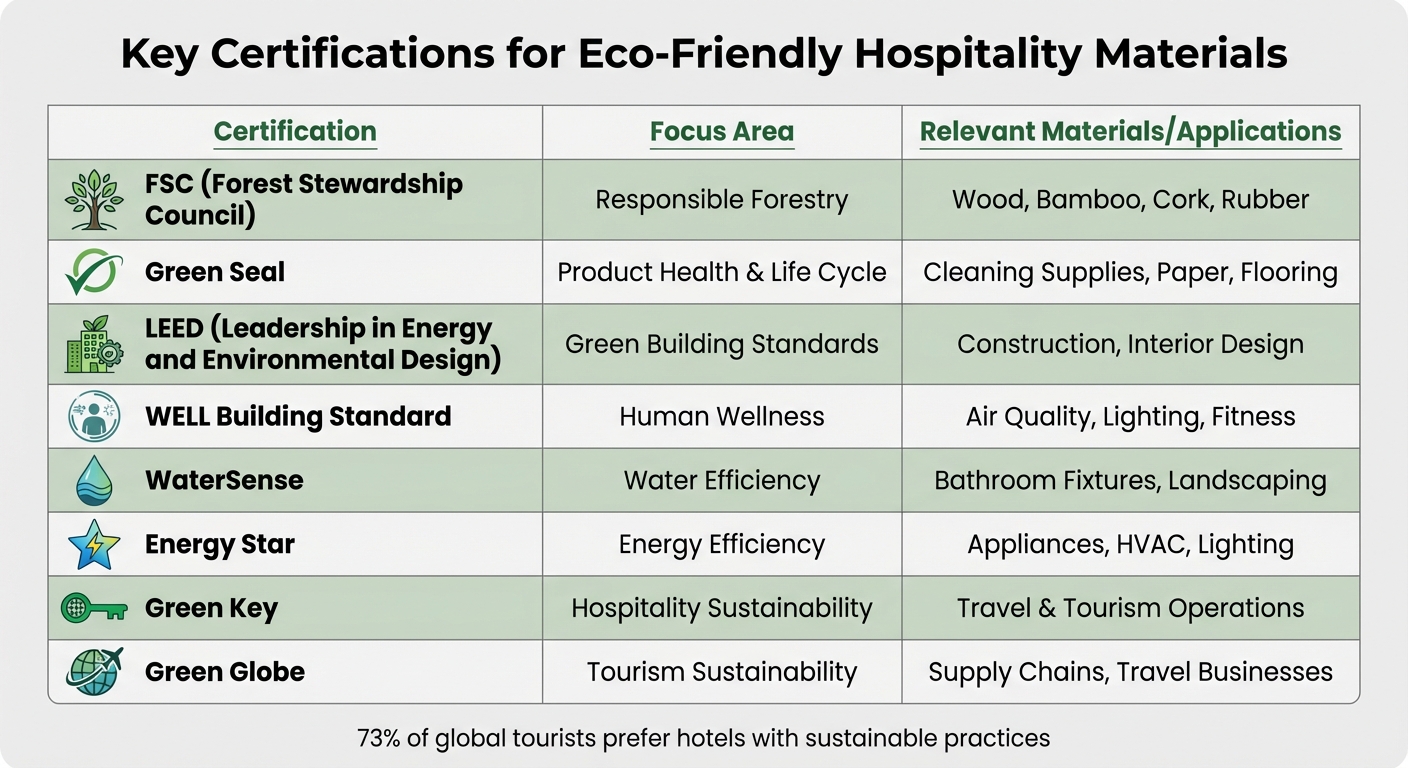
Eco-Friendly Material Certifications for Hospitality Design
Finding sustainable materials that meet luxury standards takes careful planning – knowing which certifications matter, building relationships with trusted suppliers, and balancing budgets. Consider this: 73% of global tourists prefer hotels that implement sustainable practices, and there was a 20% rise in hotels earning sustainability certifications between 2022 and 2023. Clearly, responsible sourcing is no longer optional – it’s expected.
The challenge now is sourcing these materials in a way that aligns with both sustainability goals and the high standards of modern hospitality. Responsible sourcing ensures that eco-friendly choices meet the demands of luxury design while supporting broader environmental goals.
Certifications to Look For
Third-party certifications are key to verifying that materials meet strict environmental and health standards. For wood-based materials like timber, bamboo, cork, or rubber, Forest Stewardship Council (FSC) certification ensures they come from responsibly managed forests that protect biodiversity and indigenous communities. For cleaning supplies, floor care, and sanitary paper, Green Seal is a trusted certification.
When it comes to large-scale projects, LEED (Leadership in Energy and Environmental Design) is the go-to certification for green buildings, while the WELL Building Standard focuses on human health and wellness – an increasingly important factor in luxury hospitality. Additionally, look for the Energy Star label on appliances and systems to ensure energy efficiency, and WaterSense for water-saving fixtures. For hospitality-specific validation, Green Key and Green Globe assess sustainability across travel and tourism businesses, including their supply chains.
| Certification | Focus Area | Relevant Materials/Applications |
|---|---|---|
| FSC | Responsible Forestry | Wood, Bamboo, Cork, Rubber |
| Green Seal | Product Health & Life Cycle | Cleaning Supplies, Paper, Flooring |
| LEED | Green Building Standards | Construction, Interior Design |
| WELL | Human Wellness | Air Quality, Lighting, Fitness |
| WaterSense | Water Efficiency | Bathroom Fixtures, Landscaping |
| Energy Star | Energy Efficiency | Appliances, HVAC, Lighting |
Working with Trusted Suppliers
Before reaching out to suppliers, define clear sustainability goals. For example, focus on reducing carbon emissions, sourcing locally, and eliminating toxic chemicals. Include ESG (Environmental, Social, and Governance) criteria in your Requests for Quotes (RFQs) to ensure vendors disclose supply chain data and labor practices upfront.
"Sustainable procurement works best when it’s built into the process from day one, not treated as a checklist item at the end." – John Keedy, ToTheSource
Collaborating with procurement specialists or sourcing platforms can streamline the process. These experts help vet vendors, manage logistics, and ensure the materials meet both sustainability and luxury standards. For international sourcing, work with partners who consolidate shipments to reduce freight-related carbon emissions. Opt for materials with water-based finishes and low-VOC adhesives to improve indoor air quality without compromising the high-end aesthetic that luxury properties demand.
Managing Costs While Choosing Sustainable Materials
Balancing sustainability with budget constraints is often the trickiest part. While eco-friendly materials may have higher upfront costs, they can save money long-term through durability, energy efficiency, and reduced maintenance. To avoid costly adjustments later, integrate ESG goals at the very start of your project. This prevents the need for "value engineering" (cutting costs at the expense of quality) and ensures that sustainable furniture and materials are designed to last, reducing waste and early replacements.
Establish a sustainability review protocol with your procurement team to evaluate vendors based on transparency, material origins, and energy use. Also, think about the end-of-life impact of materials. Choose items that can be recycled, refurbished, or kept out of landfills to support a circular economy.
Using Eco-Friendly Materials in Luxury Hospitality Properties
Incorporating sustainable materials into luxury hospitality settings not only improves environmental impact but also enhances guest experiences by creating healthier, more comfortable spaces that resonate with modern travelers’ values.
Guest Rooms: Comfortable and Sustainable
Guest rooms are central to a guest’s overall experience, and using eco-friendly materials can elevate comfort while maintaining a sense of luxury. Opt for organic textiles like cotton, linen, hemp, or bamboo for bedding. These materials are free from pesticides, hypoallergenic, and breathable, ensuring a healthier sleep environment. For furniture, FSC-certified wood or reclaimed timber ensures responsible sourcing, while fast-growing species like eucalyptus and poplar offer a lower environmental footprint. Additionally, unfinished wood can improve indoor air quality by eliminating harmful chemical off-gassing.
Modular furniture, fixtures, and equipment (FF&E) are another smart choice – they allow for easy repairs and part replacements, extending the product’s life and reducing waste. Replace single-use plastics with durable alternatives like glass cups, ceramic mugs, and refillable dispensers for toiletries. Energy efficiency is also key: LED lighting can cut energy use by up to 75% compared to traditional bulbs. Smart HVAC systems can balance guest comfort with energy savings by adjusting when rooms are unoccupied.
It’s worth noting that 87% of millennial travelers consider the social or environmental benefits of a product or service when making purchasing decisions. This means sustainability isn’t just a nice-to-have – it’s a factor that influences bookings.
Event Spaces and Common Areas
High-traffic areas like lobbies, event spaces, and communal areas require materials that are both durable and visually appealing. Bamboo is a standout option here.
"Bamboo has tensile strength that’s stronger than steel, making it durable and long lasting." – Artone LLC
Cork is another excellent choice, offering natural heat and sound insulation, which makes it perfect for shared spaces. It works well in seating, wall accents, and other functional design elements. For a high-end look with minimal material use, wood veneers – thin layers of real wood bonded to manufactured wood – are ideal for casegoods and architectural details.
Natural stone options like marble, granite, and limestone provide unmatched durability for lobbies or countertops, while reclaimed metals such as aluminum, steel, and copper add a modern touch to furniture and fixtures. Sustainability efforts in event spaces are already gaining traction: 96% of venues report having formal policies for reducing lighting energy, and the average waste diversion rate in these venues is 52%. Zoned lighting with motion sensors in areas like meeting rooms and restrooms can further cut energy waste.
Outdoor Spaces and Landscaping
Sustainability doesn’t stop at the door – it extends to outdoor areas, where durability and aesthetics must go hand in hand. Outdoor materials need to withstand harsh weather and heavy use. Natural options like raffia, shells, and stone are especially desirable, as they age gracefully and develop character over time, unlike synthetic alternatives that often look dated quickly. For example, large-scale handwoven raffia pendant lights can serve as eye-catching features in beachfront bars or open-air lounges, potentially boosting the perceived value of the space by 15% to 20%.
"Unlike trendy synthetic decor that dates quickly, quality natural materials age beautifully. Raffia, shells, and stone develop character over time, reducing replacement costs while maintaining aesthetic appeal." – Remood furniture living
All outdoor materials should meet commercial-grade standards to handle the rigorous demands of hospitality. Outdoor furniture can be customized with practical features like integrated ice buckets to enhance guest service. Thoughtful layout planning can encourage guest interaction while also offering private retreats. For maximum impact, focus on the most photographed areas – like the lobby, pool, and restaurant – to boost social media engagement. This is especially relevant given that 70% of travelers now consider sustainability when choosing accommodations.
Conclusion
In this guide, we’ve looked at how using sustainable materials in hospitality design blends environmental care with high-end performance. Choosing eco-friendly materials not only creates healthier, more inviting spaces but also helps reduce the environmental footprint of the hospitality sector. With tourism contributing roughly 8% of global greenhouse gas emissions – and expected to increase by 25% by 2030 – the industry has a clear responsibility to embrace smarter material choices.
But the benefits go beyond just helping the planet. Shifting to sustainable design can also boost brand reputation and appeal to socially conscious consumers. For instance, 87% of millennials consider a product or service’s social or environmental impact when making purchasing decisions. Thinking about the entire lifecycle of materials – from sourcing to disposal – makes sense both environmentally and financially. Ecodesign reduces waste disposal costs, improves resource efficiency, and results in longer-lasting products.
To make a meaningful impact, focus on integrating sustainable design principles throughout every phase of your projects instead of opting for isolated “green” products. Use materials like FSC-certified or reclaimed wood, organic textiles, and energy-efficient technologies such as LED lighting. Earning third-party certifications can further boost credibility, while educating guests about your sustainability efforts builds loyalty and encourages their involvement. These steps not only create luxurious spaces that support guest well-being but also promote environmental care. Start implementing these practices now to enhance guest satisfaction and achieve long-term savings.
FAQs
How do I verify materials are truly eco-friendly?
To ensure materials are environmentally friendly, start by checking for trusted certifications such as LEED or EPA DfE. These certifications assess factors like sourcing, manufacturing processes, and overall performance. Request proper documentation from suppliers to back up their claims about sustainability. Additionally, industry-specific certifications can point to products with qualities like energy efficiency, recyclability, or safer chemical compositions. Always double-check that certifications are current and align with widely accepted standards.
Which sustainable materials hold up best in high-traffic areas?
Durable materials suitable for high-traffic areas include cork, bamboo, rubber cork flooring, and recycled or reclaimed materials. These choices are not just environmentally friendly but are also built to handle heavy wear and tear while keeping their appearance intact.
What’s the easiest way to start using greener materials on a budget?
Incorporating eco-friendly materials into your projects doesn’t have to break the bank. Options like organic fabrics, bamboo, cork, reclaimed wood, or recycled materials are not only environmentally conscious but are often budget-friendly and easy to find locally. Simple swaps – like selecting furniture crafted from reclaimed or natural materials – can help you save money while also promoting sustainability and reducing waste.