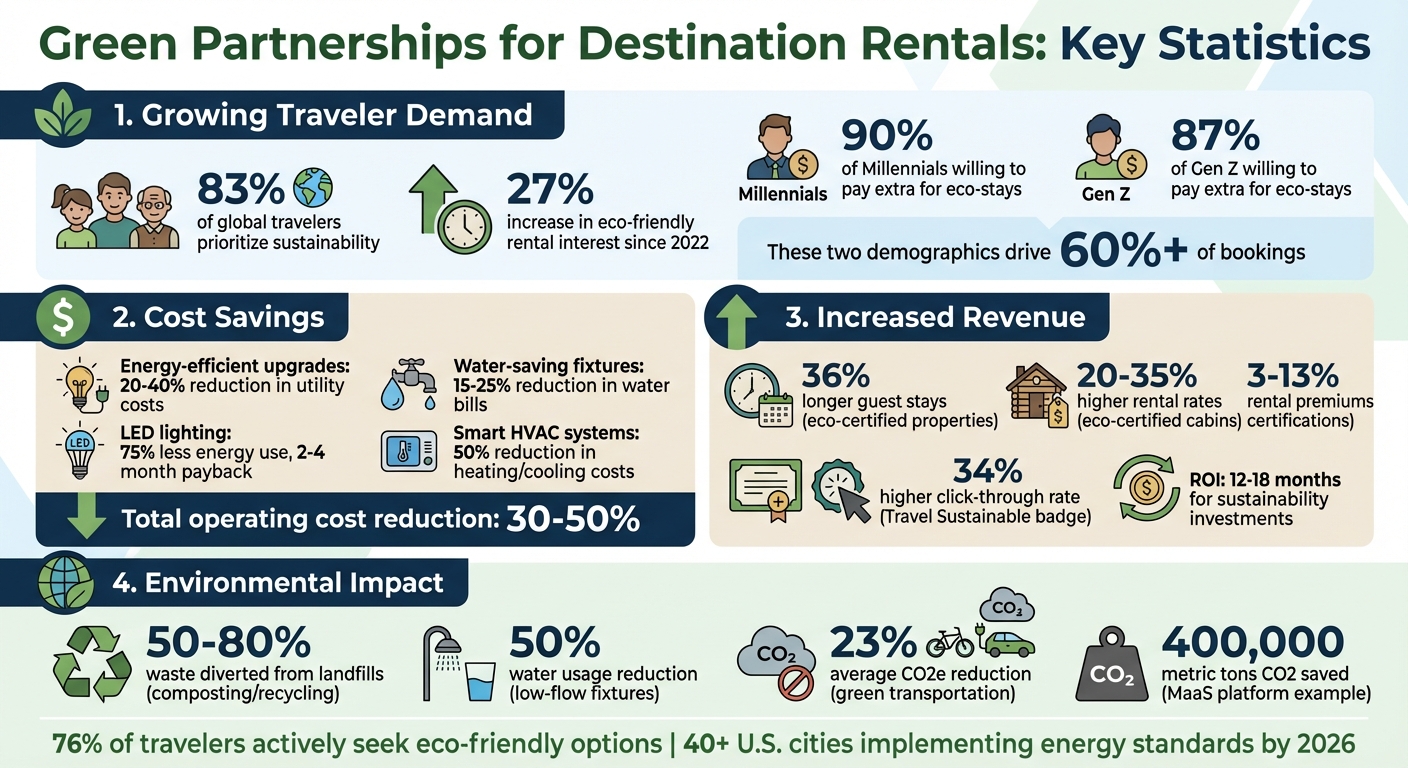
Luxury rentals are evolving to meet the growing demand for eco-conscious travel. With 83% of global travelers prioritizing sustainability and eco-friendly rentals seeing a 27% increase in interest since 2022, properties that integrate green practices are thriving. These partnerships connect rental owners with services like local organic dining, energy-efficient upgrades, and low-emission transportation, offering meaningful benefits for both guests and owners.
Key Takeaways:
- Guest Preferences: 90% of Millennials and 87% of Gen Z travelers are willing to pay extra for eco-friendly stays, driving over 60% of bookings.
- Operational Savings: Energy-efficient upgrades can cut utility costs by 20–40%, while water-saving fixtures reduce bills by 15–25%.
- Improved Bookings: Rentals with green certifications see stays 36% longer and command 20–35% higher rates.
- Eco-Friendly Features: Smart home systems, solar panels, and EV chargers enhance guest experiences while reducing costs.
- Transportation Solutions: Electric vehicles and Mobility-as-a-Service platforms reduce carbon footprints for remote destinations.
Green partnerships not only reduce environmental impact but also boost profitability, attract eco-conscious travelers, and align with emerging regulations. By investing in sustainable practices, luxury rentals can stay competitive while delivering premium experiences.
Green Partnerships Impact on Luxury Rentals: Statistics and Benefits
Environmental Problems in Destination Rentals
Carbon Emissions from Guest Transportation
Traveling to luxury rentals often leaves behind a hefty carbon footprint, especially when it comes to guest transportation. Many of these high-end properties are tucked away in remote, picturesque locations, offering privacy and stunning views – but at an environmental cost. With little to no public transit available, guests usually rely on single-occupancy vehicles or traditional rental cars, which significantly increase local carbon emissions.
The problem is even more pronounced for ground transportation. Guests traveling from airports or transportation hubs to secluded properties often have no eco-friendly alternatives. The lack of sustainable infrastructure means carbon-heavy travel options are the default. And beyond the emissions from transportation, the operational practices of these properties add another layer of environmental strain.
Waste from Events and Property Operations
Luxury rentals and the events they host generate a surprising amount of waste. From single-use plastics to excessive packaging and harmful cleaning products, these properties leave a trail of environmental damage. Marina Ellis, Senior Editor of Sustainable Travel at Resort Villa Escapes, highlights the scale of the issue:
"Resorts concentrate hundreds or thousands of daily resource interactions – energy, water, food, transport and waste. Small changes multiplied across an entire property become major outcomes."
The waste generated doesn’t just disappear – it directly affects local ecosystems and communities, especially in fragile environments. However, there are ways to mitigate this. For instance, on-site composting and recycling programs can redirect 50–80% of organic waste away from landfills. Even small adjustments, like switching from individual plastic bottles to refillable dispensers, can cut costs by $50 to $150 annually while significantly reducing plastic waste.
High Resource Consumption in Property Maintenance
Resource-intensive maintenance practices are another major issue. Large luxury properties consume enormous amounts of energy and water. Inefficient HVAC systems, outdated lighting, and poorly insulated buildings waste 40–60% of their total energy on heating, cooling, and electricity for empty or underused spaces.
Water usage is similarly problematic. For example, older washing machines can use up to 40 liters of water per cycle, compared to just 10 liters for modern, energy-efficient models. These outdated practices not only waste resources but also raise concerns about indoor air and water quality. With every guest stay, event, and maintenance cycle, the environmental toll grows. Tackling these challenges requires customized eco-friendly solutions, which will be discussed in the next sections.
sbb-itb-161ccc1
How Green Concierge Partnerships Address These Problems
Low-Emission Transportation Options
Green concierge partnerships are making strides in eco-friendly transportation by incorporating high-end electric vehicles into their services. Instead of traditional gas-powered cars, travelers can now enjoy luxury options like Tesla and Porsche Taycan models, which combine premium comfort with reduced carbon emissions.
Take the Jatina Group in Miami as an example. Their luxury villa rentals go the extra mile by offering electric car rentals and recommending low-impact transit options such as the Metromover and Brightline trains. Brightline, a regional rail service in Florida, provides an efficient and greener alternative for inter-city travel, helping to reduce the overall carbon footprint of their guests.
Some partnerships are also leveraging Mobility-as-a-Service (MaaS) platforms. These platforms allow guests to plan and pay for trips using shared bikes, metros, and buses, all through a single app. In Beijing, a MaaS pilot program saw 21% of daily car users switch to green travel options. The platform has supported over 30 million users, facilitating 4.5 million daily green transport trips and cutting nearly 400,000 metric tons of carbon emissions.
But transportation is just the beginning. Green concierge services are also tackling waste management in innovative ways.
Zero-Waste Event Planning and Property Features
Green concierge services are reshaping waste management with zero-waste strategies that reduce reliance on disposable items. Guests are provided with reusable essentials like shopping bags, utensils, and refillable water bottles. Many properties also feature filtered water systems and biodegradable toiletries in minimal packaging, helping to curb bathroom waste.
For events and daily operations, these services implement composting and recycling programs to divert organic waste from landfills. Guests are educated on proper waste sorting and encouraged to shop at local farmers’ markets and zero-waste stores for fresh, unpackaged goods. This aligns with a new vision of luxury travel:
"Luxury no longer simply means gold-plated extravagance but experiences that feel thoughtful and impactful."
- Jatina Group
Energy efficiency is another area of focus. Properties often include smart home systems that allow guests to control lighting and climate settings via apps, ensuring energy is used only when needed. Water-saving features like low-flow showerheads and dual-flush toilets can cut water usage by up to 50%.
Beyond waste reduction, green concierge services bring sustainability into every aspect of the guest experience.
Reducing Impact Through Eco-Friendly Concierge Services
These services extend sustainability into dining, cleaning, and even leisure activities. Private chefs source seasonal ingredients from local organic markets, cutting down on emissions from food transport while supporting local farmers. Cleaning services use biodegradable, non-toxic products and microfiber cloths to reduce chemical runoff into water systems.
Even luxury amenities are getting a sustainable makeover. Chlorinated pools are being replaced with saltwater systems, and organic spa treatments are becoming the norm. For excursions, guests can enjoy wind-powered yachts or kayaking instead of motorized watercraft. Cycling paths like Miami’s Underline or the Miami Beach Boardwalk offer a chance to blend outdoor activity with eco-conscious travel.
The financial advantages of these eco-friendly services are also worth noting. In transportation, the most fuel-efficient providers often offer the lowest prices. Green freight marketplaces, for instance, have helped shippers reduce net CO2e emissions by an average of 23% by choosing low-emission carriers. This proves that sustainability can go hand in hand with cost savings, benefiting both property owners and environmentally aware travelers.
Sustainable Vacation Rentals: VITUR Summit & Sustonica | Interview with Vanessa de Souza Lage
Essentialyfe‘s Approach to Green Luxury Rentals
Essentialyfe blends eco-conscious living with high-end experiences by incorporating sustainable technologies and services into its luxury rental properties.
Properties with Energy-Saving Features
Essentialyfe’s rentals are designed with sustainability in mind, featuring advanced green technologies. For instance, properties include solar thermal systems for heating water and solar-powered outdoor lighting, cutting down on traditional energy use. High-performance insulation and triple-glazed windows help maintain indoor temperatures efficiently, reducing energy waste during both summer and winter.
Smart home systems allow guests to manage energy use effortlessly, with automated thermostats and blinds offering tailored comfort. Some properties even leverage geothermal systems, which tap into the earth’s natural temperature for efficient heating and cooling. To conserve water, these homes feature rainwater harvesting and greywater recycling systems, which provide irrigation for native plants that thrive with minimal additional watering. Across all properties, LED lighting and energy-efficient appliances further reduce electricity and water consumption, all while complementing Essentialyfe’s personalized concierge services.
Concierge Services That Embrace Sustainability
Essentialyfe’s concierge services extend its eco-conscious philosophy into every aspect of a guest’s stay. Private chefs prepare meals using locally sourced, organic ingredients, cutting down on the emissions associated with transporting food. This creates a dining experience that is as environmentally friendly as it is personalized.
For transportation, guests can rely on electric shuttles, offering a low-emission way to explore the area. These services are carefully integrated into the overall experience, allowing guests to enjoy sustainable luxury without compromising on comfort or convenience.
Collaborating with Green-Minded Vendors
Essentialyfe strengthens its commitment to sustainability through partnerships with eco-conscious vendors. These collaborations ensure that maintenance and guest services meet rigorous environmental standards. From coordinating zero-waste events to showcasing sustainable property features, Essentialyfe works exclusively with trusted providers who share its green values.
Benefits of Green Partnerships for Owners and Guests
Improved Guest Satisfaction and Repeat Bookings
Green partnerships have a direct impact on guest satisfaction, which often translates into repeat bookings. For example, eco-certified cabins see stays that are, on average, 36% longer compared to standard rentals. This highlights how sustainability appeals to travelers who value meaningful and responsible experiences. Moreover, a significant majority of Millennials (90%) and Gen Z travelers (87%) are willing to spend extra for accommodations that prioritize sustainability. By forming green partnerships, property owners can attract these environmentally conscious guests while still delivering the luxurious and premium experiences that travelers expect.
Lower Operating Costs Through Efficiency
Green partnerships aren’t just about doing good for the planet – they also make financial sense. Energy-efficient upgrades can slash utility bills by 20–40%, and broader sustainability strategies can reduce total operating costs by as much as 30–50%. Simple changes, like switching to LED lighting, can lower energy use by 75% and often pay for themselves within just 2–4 months. Smart HVAC systems take it a step further, cutting heating and cooling expenses by up to 50%, with payback periods of 3–5 years. Water-saving fixtures provide another layer of savings, reducing water usage by up to 50% and lowering water bills by 15–25%. These upgrades typically recover their costs within 3–6 months. Additionally, smart water monitoring systems can detect leaks early, preventing damages that often exceed $10,000. These cost savings are complemented by the added regulatory and branding advantages that come with sustainable practices.
Compliance and Reputation Benefits
Green partnerships also help owners stay ahead of regulatory requirements while improving their brand image. In the U.S., at least 13 major cities already mandate energy performance standards, with 30 more expected to implement similar regulations by 2026. Certifications like LEED or Energy Star provide tangible proof of sustainability efforts, helping properties avoid accusations of greenwashing while meeting corporate ESG benchmarks. Properties with green certifications often see financial benefits as well, commanding 3–13% higher premiums. Eco-certified cabins, in particular, can charge 20–35% more than similar non-certified properties. Many property managers report recouping their sustainability investments within 12–18 months, thanks to a combination of lower utility costs and higher occupancy rates.
How to Build Green Partnerships for Your Property
Step 1: Identify Areas for Improvement
Start by conducting a thorough audit of your property to measure energy, water, and waste usage. Focus on key areas like energy efficiency (checking HVAC systems, lighting, and appliances), water conservation (evaluating fixtures, toilets, and irrigation systems), and waste management (reducing single-use plastics and improving recycling and composting options). For energy, confirm whether your HVAC systems, lighting, and appliances meet modern efficiency standards. On the water side, check for low-flow showerheads and dual-flush toilets. Collect your utility bills to establish a baseline, which will help track improvements over time.
Once you’ve identified areas needing attention, create a phased action plan. Start with quick and affordable upgrades, like replacing traditional bulbs with LEDs or installing low-flow fixtures. Then, move toward larger investments such as adding solar panels or EV charging stations. With your improvement plan in place, you’re ready to find partners who align with your green goals.
Step 2: Partner with Certified Green Service Providers
Now that you know what needs upgrading, it’s time to find the right partners to help implement these changes. Use structured surveys to assess potential vendors’ sustainability practices and their impact on the environment. Ask questions like whether they have a sustainability manager or a formal plan for eco-friendly operations.
Give preference to local businesses – such as farm-to-table restaurants or sustainable tour operators – as they help lower transportation emissions and boost the local economy. Look for suppliers with trusted certifications, such as Energy Star for appliances or Green Key and EarthCheck for hospitality services. Ensure these partners provide eco-friendly products, like biodegradable cleaning supplies or non-toxic toiletries, and confirm they’ve eliminated single-use plastics. Additionally, verify that their labor practices include paying fair wages. Once you’ve partnered with certified vendors, keep track of their contributions to ensure your property stays on the path to sustainability.
Step 3: Monitor and Market Your Green Efforts
Use property management software to track monthly energy and water usage, and gather feedback from guests to assess your progress. Replace vague statements with specific, measurable claims like "100% solar-powered" or "6kW rooftop solar array." Highlight your green features in property listings with high-quality images of solar panels, EV chargers, or composting systems. Optimize listing titles with targeted keywords, such as "Eco-Friendly Cabin with EV Charger", to attract eco-conscious travelers. Properties displaying Booking.com’s "Travel Sustainable" badge, for example, have seen a 34% higher click-through rate.
Encourage guests to mention your green features in their reviews, as word-of-mouth can significantly boost credibility. Additionally, consider pursuing third-party certifications like Green Key, LEED, or EarthCheck to further validate your efforts. By consistently monitoring your progress, you can ensure your property continues to reduce carbon emissions and waste, while maintaining transparency about your commitment to sustainable travel.
Conclusion
Green partnerships are becoming a game-changer for luxury destination rentals. With over 40 U.S. cities planning to enforce strict energy performance standards by 2026, property owners who delay making sustainable upgrades face potential penalties and reduced market appeal. The financial benefits are hard to ignore: energy-efficient upgrades can cut operating costs by 30% to 50%, while properties with eco-friendly features can earn rental premiums of up to 13%.
But the advantages go beyond compliance and savings. These partnerships open doors to new revenue opportunities, especially as corporate clients increasingly prioritize ESG-compliant venues for retreats and events.
"Every dollar you spend on sustainable home upgrades works harder than traditional renovations because it keeps paying you back month after month." – Anna Ellison, Writer, AvantStay
This perspective highlights how sustainable investments are not just ethical but also financially rewarding in the long run.
Adopting green practices also helps safeguard your investment. For instance, smart monitoring systems can prevent water damage that typically costs over $10,000 per incident, while LED retrofits often pay for themselves within 12 to 24 months. Additionally, with 76% of travelers actively seeking eco-friendly options, properties that embrace sustainability now are better positioned to meet market demand. Essentialyfe’s commitment to these practices reflects the kind of forward-thinking approach that resonates with today’s consumers.
To start reaping these benefits, focus on simple upgrades like LED lighting and water-saving fixtures. From there, consider larger initiatives, such as installing solar panels or partnering with certified green vendors. By taking action today, you can access premium markets, reduce risks, and ensure your property remains competitive for years to come.
FAQs
What counts as a “green partnership” for a destination rental?
A “green partnership” for a destination rental means teaming up with organizations or programs that prioritize high environmental standards. This could involve certifications like Green Key, which evaluates eco-friendly practices, or working with local groups dedicated to conservation, responsible resource management, and positively impacting the community. Such partnerships usually adhere to strict guidelines, often verified through audits or established sustainability benchmarks.
Which eco-upgrades pay back the fastest in a luxury rental?
Eco-friendly improvements, such as installing LED lighting and low-flow fixtures, provide some of the fastest returns for luxury rentals – usually within 12 to 24 months. These upgrades help lower utility bills while also making the property more attractive to travelers who prioritize sustainability.
How can I prove my rental is sustainable without greenwashing?
To steer clear of greenwashing, focus on transparency and verifiable actions when addressing sustainability. Use well-known eco-certifications like LEED or Green Key to back up your claims. Share specific, measurable data on efforts like energy conservation, waste reduction, or community initiatives.
It’s also important to be upfront about any challenges you face and the progress you’re making – avoid making vague or overly broad statements. Combining credible certifications with clear, honest communication not only builds trust with eco-conscious travelers but also highlights your genuine efforts toward sustainability.