How do you handle crises in luxury hospitality? A trauma-informed approach focuses on reducing stress and ensuring safety for guests and staff. This method prioritizes understanding, empathy, and proactive measures to manage situations like medical emergencies, guest disputes, and external disruptions effectively.
Key takeaways:
- Guest care: Shift from “What’s wrong?” to “What happened?” to address distress with empathy.
- Staff well-being: Support employees to prevent burnout and secondary trauma.
- Crisis response: Use clear communication, private check-ins, and secure systems to maintain trust.
- Training: Equip teams to recognize distress signals and resolve issues collaboratively.
Luxury properties adopting trauma-informed practices see better guest experiences, improved staff morale, and stronger reputations – all essential in a competitive industry projected to reach $313.87 billion by 2030.
6 Trauma Informed Principles in Organizations
sbb-itb-161ccc1
Crisis Scenarios in Luxury Hospitality
Luxury hospitality comes with its own set of challenges, often pushing staff to navigate high-pressure situations with both operational skill and emotional awareness. While the hospitality industry employs over 300 million people globally, many employees lack the specialized training needed to handle critical incidents effectively. Preparing for these scenarios ensures teams can respond with composure and professionalism when it matters most. Each situation demands a thoughtful, trauma-informed approach to address immediate concerns and prevent further complications.
Guest Medical Emergencies
Medical emergencies can disrupt even the most well-organized luxury properties. Common incidents include cardiac arrests, particularly among older guests or stressed business travelers, as well as choking, asthma attacks, slips and falls, severe allergic reactions, and alcohol-related issues. These situations require quick action, often within the "golden hour" – the first 60 minutes after an injury – when timely care can make the difference between recovery and lasting harm.
Mental health-related crises, such as panic attacks, severe anxiety, or suicidal thoughts, are also becoming more frequent. In these cases, staff must balance offering compassionate care with respecting the guest’s privacy and dignity.
Such emergencies can ripple through operations, leading to room closures, guest relocations, and reassignments of staff duties. On top of logistical challenges, management may face liability concerns and the need to handle media inquiries delicately. A trauma-informed approach is essential to managing these crises effectively while maintaining the guest experience and avoiding further distress.
Conflicts Between Staff and Guests
Interpersonal disputes can create tension that affects not only the individuals involved but also the overall atmosphere of the property. Guests may act out due to personal stress, service complaints, or perceived slights, with factors like alcohol, exhaustion, or mental health challenges escalating the situation.
"Confrontation is bad for business because it upsets the guest experience, damages the hotel’s reputation, potentially breaches operating licenses, and in extremis could lead to rage-induced violence." – Risk Resiliency
When staff lack the authority to resolve minor issues on the spot, small problems can quickly spiral into larger conflicts. These situations not only harm the guest experience but also signal deeper issues within the management structure or service culture. Over time, the emotional strain on employees can lead to burnout, making it even harder to maintain a high level of service. Trauma-informed training enables staff to handle disputes discreetly and effectively, preserving the guest experience and fostering a supportive work environment.
Event Disruptions from External Incidents
External events – like severe weather, security breaches, natural disasters, or technical failures – pose unique challenges, especially during high-profile gatherings. These disruptions demand seamless coordination between teams to ensure guest safety and satisfaction.
Reservation errors or booking mishaps can also derail a guest’s experience, particularly when high-profile attendees or media are involved. In these moments, clear communication, realistic timelines for resolution, and a balance of transparency and discretion are crucial to prevent frustration from escalating.
Post-crisis debriefings are equally important – not just for refining operational strategies but also for supporting staff who may have been affected by the incident. A well-coordinated, trauma-sensitive response not only restores order but also reinforces trust with guests, ensuring the property’s reputation remains intact.
Trauma-Informed Approaches to Crisis Response
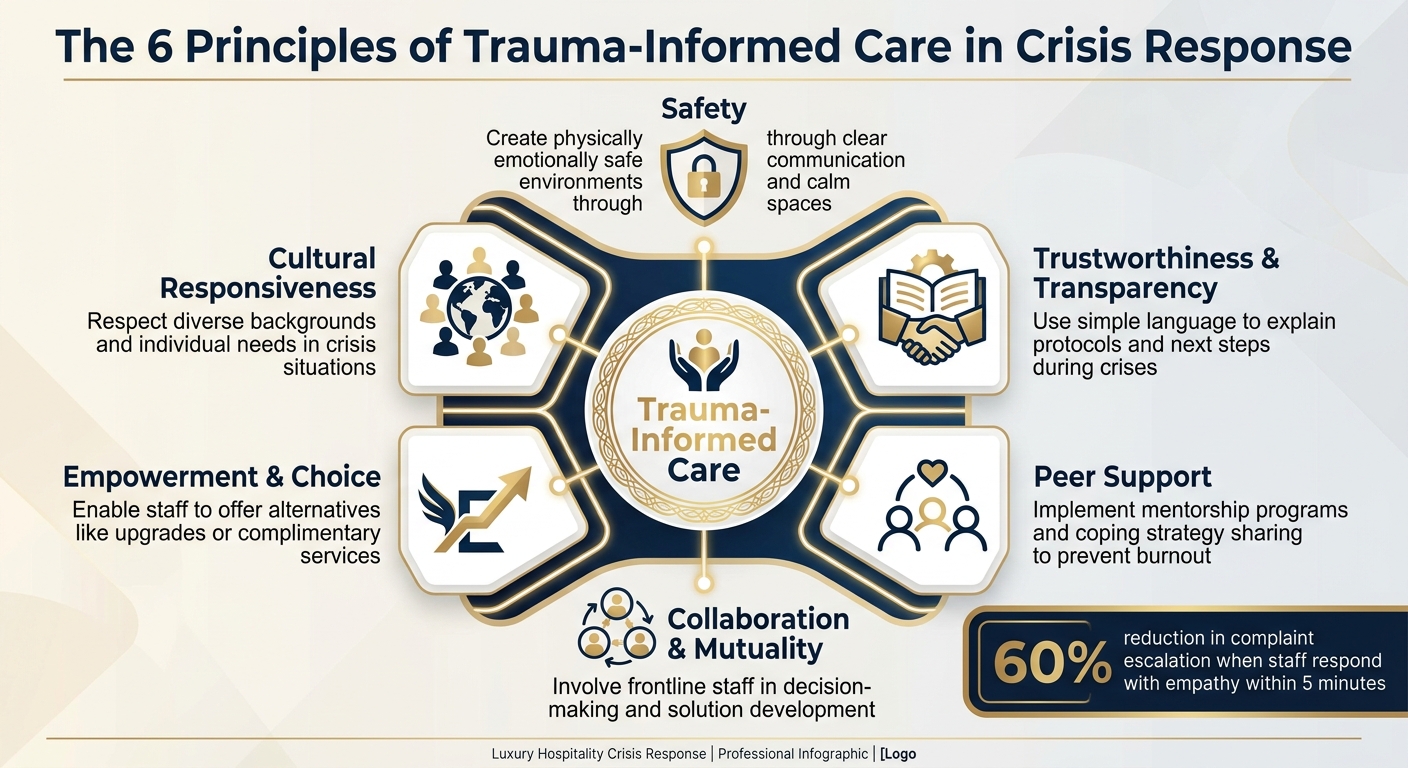
6 Principles of Trauma-Informed Care in Luxury Hospitality Crisis Response
Handling crises effectively requires a framework that prioritizes safety, trust, and empowerment. Trauma-informed care (TIC) operates on six key principles: safety, trustworthiness and transparency, peer support, collaboration and mutuality, empowerment and choice, and cultural responsiveness. These principles shape how staff respond in high-pressure situations, ensuring thoughtful actions that minimize harm.
Creating Emotional Safety During Crises
Emotional safety begins with clear and concise communication. In moments of crisis, both guests and staff need to understand what’s happening and what comes next. Whether it’s explaining confidentiality protocols during a medical emergency or walking someone through the steps to resolve a service issue, simple language ensures that critical information is accessible.
The physical environment also plays a role. A calm, welcoming space – well-lit, comfortable, and with clear signage – can help reduce anxiety. Small gestures, like offering a private area for sensitive discussions or greeting someone with genuine eye contact and a warm smile, make individuals feel valued. Jessica Muñoz, Founder of Trauma-Informed Hospitality™, highlights this beautifully:
"Psychological safety lingers as a memory stored in the body – the antithesis of trauma and the reason guests return again and again".
Staff trained in trauma-informed practices understand that distress is a natural reaction to perceived threats, not a personal failing.
Staff Training in Trauma-Informed Principles
Trust and effective communication hinge on well-prepared staff. For example, in 2023, Marriott International joined forces with the SAFE Center and the Global Fund to End Modern Slavery to launch a nationwide program. This initiative provided trauma-informed hospitality training to survivors of human trafficking, focusing on job readiness while fostering a supportive work environment for recovery.
Training needs to go beyond theory. Staff are taught to recognize patterns – spotting early signs of distress, coercion, or imbalance before situations escalate. Rehearsing scenarios, such as emergencies or service disruptions, builds confidence and ingrains procedures. Organizations like the Council of Hotel and Restaurant Trainers are also placing greater emphasis on training leaders to create psychologically safe environments through empathy and transparent communication.
Peer support systems are another cornerstone of this approach. Structured mentorship programs and regular opportunities to share coping strategies help prevent burnout and secondary trauma. Anonymous feedback channels give employees a way to voice safety concerns or suggest improvements, fostering a culture where everyone feels heard.
Team-Based Crisis Resolution
Once a safe environment and trained staff are in place, the focus shifts to empowering teams to resolve crises collaboratively. Instead of relying solely on top-down directives, trauma-informed approaches involve frontline staff in decision-making. These employees often have valuable, immediate insights into the situation. Allowing them to offer solutions – like upgrades, complimentary services, or alternative vacation rentals – can defuse tension and show genuine care for resolving the issue.
Active listening is another critical component. Reflecting back what guests or colleagues share ensures they feel understood and respected. When immediate solutions aren’t possible, offering thoughtful alternatives helps maintain trust and reinforces the idea that the team is working together toward a resolution. This collaborative effort aligns perfectly with TIC’s principles of empowerment, choice, and collaboration, turning crises into opportunities to strengthen relationships and build resilience.
Long-Term Impact of Trauma-Informed Practices
When applied thoughtfully, trauma-informed principles can create lasting effects that go far beyond managing immediate crises. These practices influence guest loyalty, employee well-being, and a hotel’s position in the market.
Better Guest Experiences
Creating an environment of psychological safety leaves a lasting impression on guests, often encouraging them to return. When staff respond with empathy and coordination during stressful situations, guests remember the care they received – not just the problem they encountered.
For example, addressing guest concerns with empathy within 5 minutes can reduce complaint escalation by 60%. This isn’t about delivering rehearsed apologies; it’s about staff identifying signs of distress early and responding with genuine compassion. By integrating trauma awareness into daily operations, luxury hotels can turn challenging moments into opportunities to strengthen guest relationships. This focus on guest care not only enhances their experience but also builds trust in the brand.
Reduced Staff Burnout
Globally, the hospitality industry employs over 300 million workers, with about 11 million in the United States alone. Unfortunately, up to 70% of behavioral health workers in the U.S. report high levels of burnout, and nearly 50% experience secondary trauma. Without proper support, the emotional demands of the job can take a serious toll on employees.
Trauma-informed practices can help change this. By introducing peer support systems, implementing end-of-shift rituals, and fostering a workplace culture where asking for help is encouraged, employee retention improves. Susie Branagan, RN, BSN, a Healthcare Consultant, emphasizes the importance of this shift:
"The journey from a traditional workplace to a trauma-informed environment is about creating spaces where professionals can thrive, heal, and rediscover their purpose."
When employees feel supported and valued, their overall well-being improves, which directly impacts the quality of service they provide and strengthens the organization’s reputation.
Stronger Brand Reputation
Trust is a key driver of revenue. Trauma-Informed Hotel™ highlights this connection:
"Revenue increases when both guests and staff feel psychologically safe. Trust is an operational asset."
With the luxury hospitality market projected to reach $313.87 billion by 2030, hotels that prioritize trauma-informed care stand out by creating environments where both guests and employees feel secure. This approach not only builds loyalty but also minimizes risks. Jessica Muñoz, LMHC, Founder of Trauma-Informed Hospitality™, explains:
"Most liability is not created by malicious intent. It is created by ordinary decisions made without trauma literacy."
Conclusion
Trauma-informed care transforms luxury hospitality by shifting the focus from merely managing crises to preventing distress before it escalates. By weaving trauma awareness into everyday operations, hotels can spot early signs of discomfort and address them before they become major issues or legal challenges.
When staff are trained to recognize and respond to subtle distress signals with empathy, they can make quick, thoughtful decisions that benefit both guests and employees. Guests perceive this as authentic care rather than a rehearsed performance. As one expert explains:
"Psychological safety lingers as a memory stored in the body – the antithesis of trauma and the reason guests return again and again".
This forward-thinking strategy not only enhances the guest experience but also boosts operational strength.
In a highly competitive market, trauma-informed practices set luxury properties apart while reducing risks. Features like private check-ins, flexible policies, and compassionate communication empower guests and lead to higher-value bookings. As Trauma-Informed Hotel™ aptly states:
"In high-risk environments, awareness without action increases liability".
FAQs
What does “trauma-informed” mean in a luxury hospitality crisis?
In the world of luxury hospitality, adopting a trauma-informed approach means understanding how trauma impacts people and integrating practices that prioritize safety, avoid retraumatization, and support the mental and emotional health of both guests and staff. This method emphasizes creating a compassionate and secure atmosphere, especially during challenging situations, to ensure everyone feels valued and supported.
How can staff spot early distress signs before a situation escalates?
Staff can spot early signs of distress by closely observing body language, facial expressions, and tone of voice. Listening carefully for verbal hints that indicate discomfort or anxiety is another key strategy to prevent situations from escalating. Noticing these subtle shifts enables staff to respond quickly and with compassion.
What should a post-crisis debrief include to protect staff well-being?
A post-crisis debrief should center around a structured and supportive conversation aimed at addressing the emotional and psychological needs of the team. This process involves creating a safe and open environment where individuals feel comfortable sharing their experiences. It’s important to validate emotions, ensuring team members feel heard and understood. Additionally, the debrief should focus on promoting mutual support and strengthening team bonds to help everyone move forward together.