When choosing a desert getaway, you’ll likely face two main options: luxury desert resorts or eco-lodges. Here’s the difference:
- Luxury Desert Resorts focus on comfort and high-end amenities like private pools, gourmet dining, and spa treatments. They also offer exclusive activities such as private safaris, falconry, and starlit dining.
- Eco-Lodges prioritize connecting with nature and reducing environmental impact. Expect solar-powered accommodations, locally sourced meals, and activities like wildlife tracking, stargazing, and conservation efforts.
Each option caters to different priorities, whether you value indulgence or sustainability. Some properties even blend both, offering eco-conscious luxury.
Quick Comparison
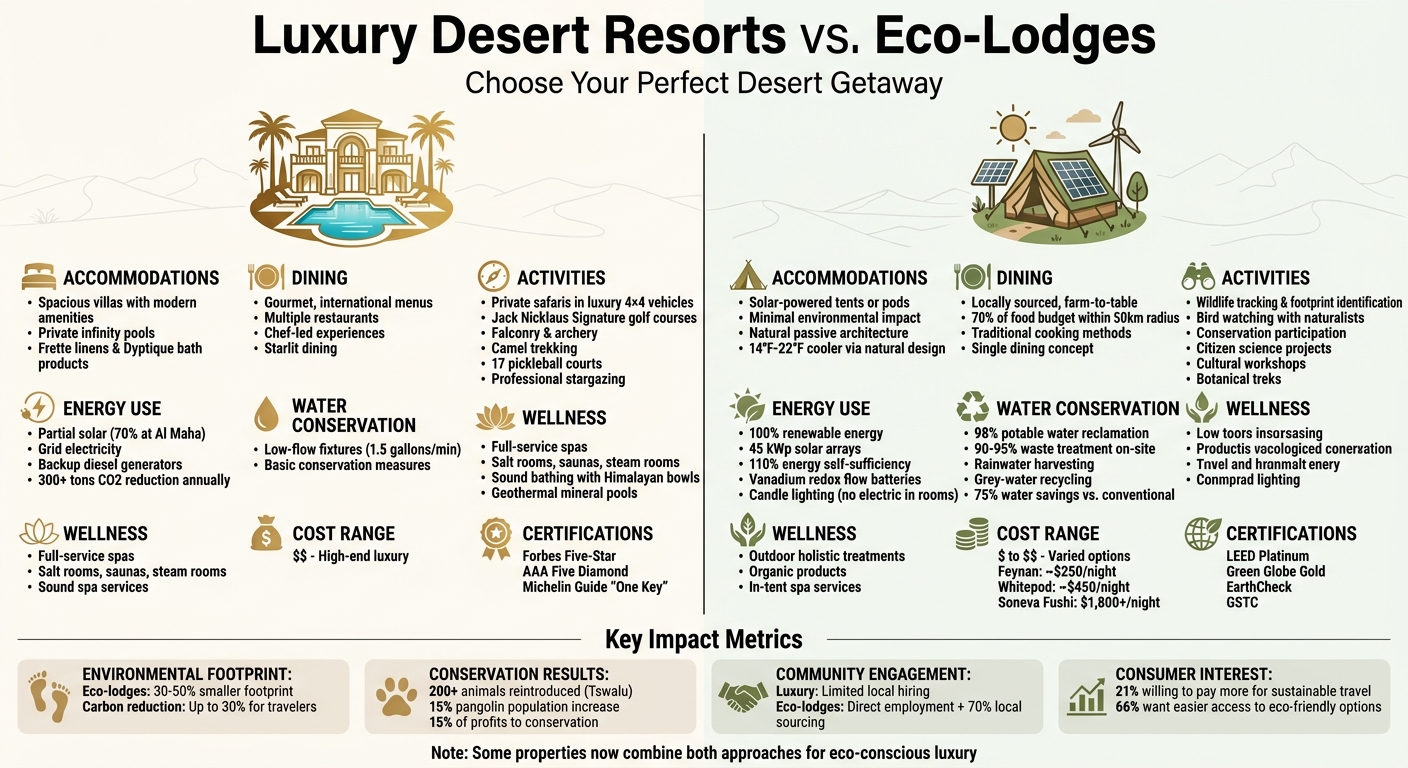
| Feature | Luxury Desert Resorts | Eco-Lodges |
|---|---|---|
| Accommodations | Spacious villas with modern amenities | Solar-powered tents or pods |
| Dining | Gourmet, international menus | Locally sourced, farm-to-table meals |
| Activities | Private safaris, golf, falconry | Wildlife tracking, stargazing, conservation |
| Energy Use | Partial solar use, grid electricity | 100% renewable energy |
| Water Conservation | Basic measures (low-flow fixtures) | Advanced systems (rainwater harvesting) |
| Cost Range | $$$ – High-end luxury | $$ to $$$ – Varied options |
Your choice depends on whether you prioritize luxury amenities or a nature-focused, eco-conscious experience. Some properties now combine both for a balanced stay.
Luxury Desert Resorts vs Eco-Lodges: Complete Comparison Guide
Adrere Amellal Luxury Eco Lodge Siwa Oasis Egypt – Most Expensive and Exclusive Eco Lodge in Egypt!
sbb-itb-161ccc1
Luxury Desert Resorts: High-End Comfort
Luxury desert resorts blend opulence with the rugged charm of desert landscapes, offering an experience that’s as indulgent as it is connected to nature. These destinations provide unmatched comfort and service, all while celebrating the raw beauty of their surroundings. From private pools to unforgettable dining under the stars, every detail is crafted to leave a lasting impression. Here’s a closer look at what makes these resorts so exceptional.
Premium Amenities and Services
The accommodations at these resorts are nothing short of extraordinary. Take The Ritz-Carlton, Dove Mountain, for example, where Presidential Suites come with private libraries and fireplaces. Meanwhile, Al Maha in Dubai offers 42 private villas, each featuring a temperature-controlled infinity plunge pool, ensuring year-round comfort. Guests are treated to luxurious in-room touches like Frette linens and Dyptique bath products, elevating the stay to pure indulgence.
Service at these properties is all about personalization. Dedicated Guest Relations Coordinators handle everything from adjusting pool temperatures to meeting unique dietary needs. At Castle Hot Springs in Arizona, the all-inclusive model even eliminates gratuities, making the service experience seamless and stress-free.
Wellness offerings go far beyond traditional spa treatments. At JW Marriott Phoenix Desert Ridge, guests can rejuvenate in salt rooms, saunas, and steam rooms. For something more distinctive, the "Vasudhara" treatment combines warm water floating with underwater vibrations, while sound bathing sessions use Himalayan singing bowls for deep relaxation. Castle Hot Springs takes wellness to another level with its natural geothermal pools, rich in mood-boosting and pain-relieving minerals like lithium, magnesium, and bicarbonates.
Dining is another highlight, with experiences ranging from intimate chef-led meals to magical dune-side dinners under the stars. Many resorts embrace the farm-to-table philosophy, using fresh ingredients sourced from their own gardens and served within hours of harvest. For those seeking similar luxury in private settings, Essentialyfe (https://essentialyfe.com) offers curated vacation home rentals, complete with concierge services like private chefs, exotic car rentals, and in-home massages.
Exclusive Experiences
What sets these resorts apart is the range of personalized activities they offer, turning a luxurious stay into an unforgettable adventure. At Al Maha, guests can embark on private wildlife safaris in luxury 4×4 vehicles across a vast 225-square-kilometer (about 87-square-mile) conservation reserve, which accounts for 5% of Dubai’s total land area. Guests can also immerse themselves in traditional Bedouin practices like falconry, archery, and camel trekking, all guided by seasoned experts.
For outdoor enthusiasts, the options are just as impressive. Some resorts boast Jack Nicklaus Signature golf courses, while others feature expansive pickleball facilities with up to 17 courts. Adventure seekers can challenge themselves with via ferrata climbing courses or enjoy guided stargazing sessions using professional-grade telescopes and expert astronomers.
The dedication to excellence is evident in accolades like the Forbes Travel Guide Five-Star rating held by The Ritz-Carlton, Dove Mountain, which also boasts AAA Five Diamond status. In the Middle East, Al Maha has earned a "One Key" recognition in the Michelin Guide and a spot in the Condé Nast Traveler Readers’ Choice Awards 2025.
Transportation options add another layer of convenience and exclusivity. Guests can opt for luxury airport transfers in GMC Yukon vehicles, with rates ranging from $447 to $780 one-way, or choose black-car services starting at $225. For the ultimate in privacy, some resorts even offer helicopter transfers, ensuring a seamless journey from the airport to these remote desert retreats.
Eco-Lodges: Nature-Focused Accommodations
Eco-lodges are all about blending with nature. These accommodations are designed to minimize their impact on the environment while giving guests a chance to connect deeply with the surrounding desert landscapes.
Green Building and Operations
The heart of eco-lodge design lies in using natural, passive architecture to cut down on energy use. For example, features like rammed earth walls help regulate indoor temperatures, while large overhanging roofs provide shade, and elevated decks let cooling breezes flow through. Some lodges even take advantage of natural land formations, like building in depressions, which can keep interiors 14°F to 22°F cooler than the surrounding air.
Energy independence is another standout feature. In February 2026, a lodge in the Jordan Rift Valley installed a 45 kWp solar array paired with a vanadium redox flow battery, allowing it to generate 110% of its energy needs. Similarly, Feynan Ecolodge in Jordan operates completely off-grid, relying on solar power and candles handmade by local Bedouin families instead of electric lights in guest rooms. This not only reduces energy use but also preserves the stunning night skies for stargazing.
Water conservation is also a priority. Cutting-edge systems can reclaim up to 98% of potable water and treat 90% to 95% of waste on-site. By diverting almost all waste from landfills, these systems maintain guest comfort without harming the environment.
"Our architectural philosophy is not to compete with nature. Instead, we work with and around the natural features." – James Briscoe, Partner, Savanna Expeditions
Eco-lodges cater to a range of travelers with varying budgets, much like other vacation rentals. For instance, Feynan Ecolodge starts at about $250 per night, Whitepod Original in Switzerland costs around $450 per night, and luxury options like Soneva Fushi in the Maldives can begin at $1,800 per night.
Nature-Based Activities
Eco-lodges go beyond just sustainable design – they also offer activities that bring guests closer to nature. Instead of high-impact adventures like dune bashing, visitors can join guided nature walks to discover animal tracks and native plants, enjoy stargazing under unpolluted skies, or take part in cultural experiences. Some lodges even eliminate cars entirely, requiring guests to arrive via cable car or on foot to reduce noise and emissions.
Wildlife conservation is a key focus. At Tswalu Kalahari Reserve in South Africa, efforts to rehabilitate the environment have led to the reintroduction of over 200 animals, including cheetahs and black rhinos. Conservation initiatives have also boosted the local pangolin population by 15% as of 2023. Many eco-lodges dedicate 15% of their profits to anti-poaching programs, habitat restoration, and research.
Cultural experiences are another highlight. Guests can learn traditional Bedouin practices, join cooking classes with local communities, or even participate in citizen science projects to monitor wildlife populations. These activities not only enrich the guest experience but also provide alternative income sources for locals, helping to reduce dependence on harmful industries like illegal logging or poaching.
Side-by-Side Comparison
Deciding between a luxury desert resort and an eco-lodge depends on your priorities. Both offer distinct experiences, but they differ in how they approach comfort, their interaction with the environment, and the way they connect guests to nature. Here’s a clear breakdown of the key differences.
Amenities and Comfort
Luxury rentals and resorts are all about unwavering comfort and convenience. Picture expansive pools, multiple dining options, and full-service amenities. For example, Al Maha in the UAE features Bedouin-style suites complete with private infinity pools.
Eco-lodges, on the other hand, focus on what some call "re-imagined luxury". These lodges often feature intimate, solar-powered accommodations, like the luxury tents at Amar Luxury Desert Ecolodge. Dining is centered around farm-to-table concepts, with about 70% of the food budget typically spent within a 50-kilometer radius. Wellness offerings lean toward holistic care, with treatments often delivered outdoors or directly in your tent using organic products.
| Aspect | Luxury Desert Resort | Eco-Lodge |
|---|---|---|
| Accommodations | Spacious villas with private pools and modern amenities | Solar-powered tents or pods with minimal environmental impact |
| Dining | International menus served in multiple restaurants | Locally sourced, farm-to-table meals using traditional methods |
| Wellness | Large spas with luxury treatments and fitness centers | Outdoor rituals and organic, holistic care |
| Recreation | Golf courses, tennis courts, and curated entertainment | Nature walks, stargazing, and cultural workshops |
These comparisons highlight the contrasting atmospheres and service styles of each option.
Environmental Practices
Luxury resorts often combine conventional amenities with some eco-friendly measures. For instance, Al Maha generates 70% of its energy from solar panels, cutting carbon emissions by over 300 tons annually. However, eco-lodges take sustainability to the next level, building it into every aspect of their operations. These lodges rely entirely on renewable energy and advanced conservation systems. Opting for such accommodations can reduce your travel-related carbon footprint by up to 30%. Additionally, eco-lodges often achieve a 30% to 50% smaller ecological footprint compared to traditional resorts. Water conservation efforts are particularly impressive, with properties like Amar reporting up to 75% water savings compared to conventional accommodations.
| Category | Luxury Desert Resort | Eco-Lodge |
|---|---|---|
| Energy Sources | Grid electricity with backup diesel generators; partial solar use | 100% renewable energy from solar, wind, or hybrid systems |
| Water Conservation | Basic low-flow fixtures (1.5 gallons per minute) | Rainwater harvesting, grey-water recycling, and advanced systems |
| Community Engagement | Limited local hiring and occasional cultural tours | Direct employment, profit-sharing, and local food sourcing (70%) |
These operational differences make a noticeable impact on sustainability and your overall experience.
"Luxury isn’t sacrificed; it’s re-imagined." – Indusbus
Wildlife and Activities
Both options provide wildlife experiences, but their focus differs. Luxury resorts prioritize tailored and upscale activities, such as private safaris, falconry shows, and exclusive starlit dining.
Eco-lodges lean toward hands-on conservation and education. At Tswalu Kalahari Reserve in South Africa, for instance, guests can actively participate in conservation efforts. Over the past decade, the reserve has reintroduced over 200 animals, including cheetahs and black rhinos, and has increased the pangolin population by 15% with targeted programs. Activities often include tracking animal footprints, bird watching with naturalists, and even simulated anti-poaching patrols.
| Activity Type | Luxury Desert Resort | Eco-Lodge |
|---|---|---|
| Wildlife Viewing | Private safaris, falconry, and gazelle spotting | Tracking footprints, bird watching, and botanical treks |
| Guided Tours | Horseback riding, camel trekking, and 4×4 drives | Educational walks and cultural engagement |
| Night Tours | Starlit dining and evening entertainment | Stargazing with experts and campfire storytelling |
| Educational Programs | Cultural history and traditional archery | Conservation-focused walks and wildlife monitoring |
When evaluating sustainability claims, it’s wise to look for third-party certifications like LEED Platinum, Green Globe Gold, or EarthCheck. These certifications provide assurance that the property goes beyond vague "eco-friendly" labels. Pay attention to tangible infrastructure features, such as solar panels or grey-water recycling systems, to avoid falling for greenwashing. This comparison helps clarify how to choose the desert stay that aligns best with your values and preferences.
How to Choose Your Desert Stay
Decision Criteria
Your choice of desert stay should align with your top priorities. If you’re after a lavish experience, luxury resorts are the way to go. Think private villas with breathtaking views, personalized service, and upscale features like private pools and courtyards. These resorts often blend beautifully with their surroundings, offering unique experiences like spa treatments, private starlit dinners, and even falconry.
On the other hand, if connecting with nature and reducing your environmental impact is more your style, eco-lodges might be a better fit. These lodges focus on conservation and education, providing activities like guided wildlife monitoring, solar energy demonstrations, and opportunities to participate in research programs. For many modern travelers, the appeal lies in stays that foster a deeper connection to the natural world while emphasizing sustainability.
Before making a reservation, it’s wise to confirm the property’s sustainability claims. Look for certifications such as Green Globe, LEED, EarthCheck, or GSTC, or review their latest sustainability reports. Also, inquire about their animal welfare policies – ensure that wildlife encounters adhere to strict no-contact rules and support legitimate research or rescue initiatives.
Transportation is another factor to consider. Does the property offer EV charging stations or electric airport transfers? Such options can help reduce your overall travel footprint. Additionally, resorts that source supplies locally not only cut down on transport emissions but also support the regional economy, adding a meaningful layer to your experience.
By weighing these factors, you can find a desert retreat that blends indulgence with environmental mindfulness.
Combining Luxury with Environmental Responsibility
The concept of eco-luxury proves that you don’t have to choose between comfort and sustainability – they can go hand in hand. In fact, 21% of consumers are willing to pay more for travel experiences with companies that uphold strong environmental and social values, and 66% of travelers want easier access to eco-friendly vacation options.
For those seeking this balance, Essentialyfe offers a curated selection of vacation rentals that merge luxury with eco-conscious living. Their properties provide high-end amenities like private chefs, shuttle services, and in-home massages, all while adhering to environmental standards. Whether your priorities include solar-powered systems, locally sourced meals, or professional event planning and security, Essentialyfe makes it possible to enjoy an indulgent desert stay without compromising your commitment to responsible travel.
Conclusion
Deciding between a luxury desert resort and an eco-lodge ultimately depends on what you value most. Luxury resorts offer top-tier comfort and personalized services – imagine private pools, world-class spa treatments, and gourmet dining. On the other hand, eco-lodges focus on connecting you with nature and prioritizing sustainability, featuring solar-powered facilities, conservation programs, and opportunities to engage with wildlife preservation.
The good news? You don’t have to choose one over the other. The growing trend of eco-luxury allows you to enjoy five-star amenities while staying at properties that embrace sustainability. Many destinations now combine lavish comforts with responsible practices, such as utilizing solar energy or implementing advanced water conservation systems. Whether you’re captivated by the refined architecture of a luxury resort or the environmental mission of an eco-lodge, both can align with a commitment to ethical travel.
To ensure your stay reflects your values, look for certifications like Green Globe, LEED, or GSTC, and confirm that any wildlife activities adhere to ethical, no-contact standards. Think about whether activities like falconry and camel treks or hands-on conservation efforts are more your style.
For those ready to plan a trip that strikes this balance, Essentialyfe offers a curated collection of vacation rentals tailored to your preferences. Their properties feature solar-powered systems, locally sourced meals, and concierge services like private chefs and shuttles. Check out their offerings at essentialyfe.com to find the ideal spot for your next desert escape.
FAQs
How can I tell if an eco-lodge is truly sustainable (not greenwashing)?
To spot an eco-lodge that’s genuinely committed to sustainability, pay attention to tangible efforts like using renewable energy, conserving water, and reducing waste. The best eco-lodges often back up their claims with measurable results, such as cutting down their carbon footprint, and they actively involve local communities in their operations. Look for third-party certifications or eco-labels as a sign of credibility, and steer clear of places making vague or unsupported claims about their practices. Transparency matters – trustworthy lodges openly share detailed information about their environmental initiatives.
Which option is better for ethical wildlife encounters in the desert?
Eco-lodges offer a more ethical way to experience wildlife in the desert. These accommodations prioritize conservation efforts, promote responsible interactions with animals, and operate with sustainability in mind. Many rely on renewable energy and work to minimize their impact on the surrounding environment. On the other hand, luxury desert resorts tend to focus on indulgence and tailored services. While some may incorporate conservation efforts, ethical wildlife experiences aren’t always a primary focus unless explicitly designed for that purpose. For those seeking a more responsible and immersive connection with nature, eco-lodges stand out as the better choice.
Can I get five-star comfort while still staying eco-friendly?
Yes, you can indulge in five-star comfort while staying eco-conscious. Desert eco-lodges, such as Al Maha in Dubai, blend luxury with responsible practices by relying on solar power for much of their energy. These lodges provide top-tier amenities while minimizing their environmental footprint, offering travelers a chance to enjoy high-end living without sacrificing their values.