Farm-to-table wedding catering focuses on using locally sourced, seasonal ingredients to create menus that prioritize quality, flavor, and a connection to the region. This approach not only supports local farmers but also offers a more personalized and seasonal dining experience for guests. Here’s what you need to know:
- What It Is: Menus are crafted around in-season, local produce, avoiding out-of-season ingredients and processed foods.
- Why Choose It: Reduces long-distance food transport, supports small farms, and offers vibrant, nutrient-rich meals.
- Planning Tips:
- Design menus based on seasonal availability.
- Use "Chef’s Choice" clauses for flexibility with vegetables.
- Choose venues that align with the farm-to-table approach, like farms or rustic settings.
- Budget Insights:
- Costs range from $30–$200 per guest, depending on menu and service style.
- Family-style service is generally more affordable than plated meals.
- Be mindful of hidden fees like service charges and rentals.
- Vendor Selection:
- Partner with caterers who source ingredients locally.
- Work with event planners to streamline logistics and vendor coordination.
- Enhancements:
- Incorporate natural decor elements like wood tables and seasonal greenery.
- Offer interactive guest experiences like DIY stations or live entertainment.
Dreamy & Rustic Wedding at Earth to Table The Farm | Jaclyn & David | Lumix S5
sbb-itb-161ccc1
Planning Your Farm-to-Table Wedding Menu
Design your wedding menu around the freshest seasonal ingredients. When finalizing contracts months in advance, secure your main proteins but leave room for chefs to select seasonal vegetable sides closer to the event. Wedding planner Colleen McCarthy suggests this strategy because it allows chefs to source the best produce available during the week of your wedding. This approach not only keeps your menu aligned with the farm-to-table philosophy of celebrating local and seasonal abundance but also ensures peak freshness while avoiding the extra expense of out-of-season ingredients. Each season brings its own unique flavors and dish styles, so let the time of year guide your menu choices.
Seasonal harvests can inspire your selections in creative ways. For a spring wedding, consider fresh ingredients like snap peas, asparagus, and radishes, paired with light proteins such as lemon-herb chicken. Summer menus shine with hydrating options like heirloom tomatoes, sweet corn, and stone fruits. In fall, roasted root vegetables – such as parsnips and beets – pair beautifully with dishes like butternut squash ravioli or pork with apples. Winter calls for hearty, comforting options, including braised short ribs, mushroom risotto, and nutrient-rich dark leafy greens.
Presentation also plays a key role in balancing seasonal flavors. You can elevate the dining experience with thoughtful service styles. For example, Andrea Hayley-Sankaran of Lotuswood Farm developed a "Roots & Embers" autumn menu that features wood-fire roasted root vegetables, creating warm, earthy flavors perfect for rustic venues. If you’re aiming for a more interactive and communal vibe, family-style service – with shared platters – can transform the meal into a lively, connected experience. This approach not only enhances the flavors but also reinforces the farm-to-table concept for your guests.
Dietary restrictions can be addressed creatively with seasonal alternatives. Swap traditional ingredients for seasonal stars to create satisfying meatless entrees. For instance, roasted acorn squash stuffed with autumn grains offers a hearty yet refined option. In March 2025, Shale Hill Events collaborated with Flowering Sun Ecology Center in Albany, NY, to source organic mushrooms for dishes like wild mushroom risotto and cauliflower steak with mushroom ragout – providing earthy and elevated alternatives to conventional wedding fare.
Don’t forget to align your beverages with the season as well. A summer bar menu might feature crisp rosés and cucumber-basil cocktails, while winter calls for spiced ciders and bourbon-based drinks. Pairing your drink options with the season’s flavors ensures a cohesive and memorable dining experience for your guests.
Selecting the Right Vendors for Farm-to-Table Catering
Partnering with Local Farms and Producers
Building direct relationships with local farms is key to ensuring fresh ingredients while supporting the regional food economy. For convenience, regional distributors can connect you to multiple local farms. Take Hudson Harvest in the Hudson Valley, NY, as an example. As of March 2025, they work with over 70 regional farms and artisans, offering everything from organic vegetables to pasture-raised meats and heirloom grains – all through a single partnership.
For a more personal touch, seek out specialized artisans to enhance specific menu elements. For instance, the Flowering Sun Ecology Center in Albany, NY, supplies gourmet mushrooms and herbs grown organically and regeneratively to caterers like Shale Hill Events in the Hudson Valley. Similarly, See and Be Kitchen, an artisanal bakery in the same region, produces slow-fermented sourdough bread using organic, locally grown wheat, free from preservatives. These niche producers bring a level of authenticity that large-scale suppliers often can’t replicate. Choosing a caterer who values these relationships ensures your menu reflects a true farm-to-table experience.
Finding a Farm-to-Table Caterer
When selecting a caterer, prioritize those with direct connections to local farmers, organic butchers, and wild fishmongers instead of those relying on bulk delivery services. Jeffrey Pearson, Chef & Owner of JP Fine Foods LLC, highlights the importance of this approach:
Jeffrey’s belief is that you, the customer, should know where your food comes from. Jeffrey has direct relationships with many of the area’s top farmers and Purveyors in order to deliver on his vision.
Ask potential caterers to detail their ingredient sources and confirm their ability to adapt menus based on seasonal availability. Wedding planner Colleen McCarthy advises including a "Chef’s Choice" clause for seasonal vegetables, giving chefs the flexibility to source the freshest produce during your wedding week.
Don’t skip a tasting to evaluate the food’s flavor and quality. Additionally, verify the caterer’s licensing, insurance, and certifications to ensure they align with your venue’s requirements. Clarify whether quotes include service charges, gratuities, rentals (like linens and plates), cake-cutting fees, and travel costs. Catering costs typically range from $30 to $200 per person, depending on menu choices and service style. If this process feels overwhelming, working with an event planner can simplify things significantly.
Working with Event Planners
Experienced event planners can be invaluable when bringing your farm-to-table vision to life. These professionals often have established relationships with vetted vendors, from organic butchers to local artisans, saving you the hassle of researching each supplier. They also handle logistics, such as rentals, A/V equipment, and specialized kitchen setups.
Planners are skilled at managing contracts, too. For instance, they can help lock in prices for costly proteins like steak or fish months in advance while keeping vegetable selections flexible with "Chef’s Choice" clauses. Event planner Alexandra Maione emphasizes the importance of reliable vendor partnerships:
As an event planner, there is nothing better than to collaborate and work alongside a vendor like Acquolina, that you can trust to deliver the very best in quality and service time and time again.
On your wedding day, the planner acts as the central point of contact, coordinating vendors and ensuring everything runs smoothly. From setup to breakdown, they oversee every detail, ensuring the staff delivers service that meets high-end restaurant standards. For those planning a farm-to-table wedding at a luxury venue, companies like Essentialyfe offer event planning services to manage every aspect – from vendor selection to day-of logistics – so you can enjoy your celebration without the stress of juggling multiple suppliers.
Budgeting for a Farm-to-Table Wedding
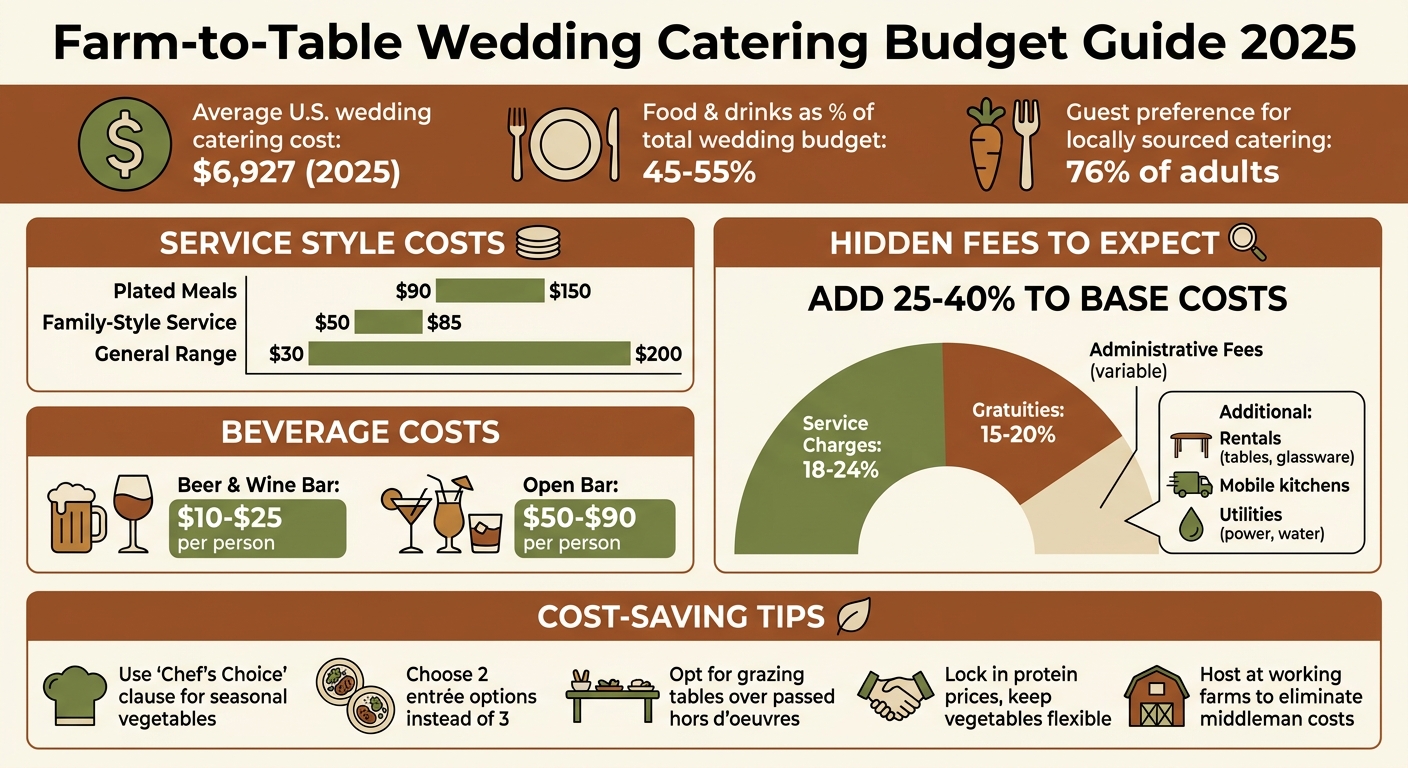
Farm-to-Table Wedding Catering Costs and Budget Breakdown 2025
After choosing your menu and vendors, it’s time to set a clear budget by understanding the key factors that drive costs.
Understanding Cost Drivers
Couples in the U.S. spend an average of $6,927 on wedding catering in 2025, with food and drinks making up 45% to 55% of the total wedding budget. Farm-to-table catering introduces unique expenses that differ from traditional menus. One major factor is seasonality – using ingredients out of their local growing season can lead to higher costs, as caterers may need to pay premiums for air-freighted produce. These added expenses are often passed on to you. Your service style also impacts the budget. Plated meals, for instance, cost $90–$150 per person due to higher staffing needs, while family-style service is more affordable at $50–$85 per person.
Be prepared for hidden fees, which can raise your budget by 25–40%. These include 18–24% for service charges, 15–20% for gratuities, and administrative fees. Hosting at a farm or outdoor venue may also require additional costs for mobile kitchens, rentals (like tables and glassware), and utilities such as power and water. The hallmark of farm-to-table catering – sourcing local, seasonal produce – often involves boutique suppliers rather than bulk deliveries, which can increase the base cost of ingredients.
Knowing these factors can help you create a realistic budget for your farm-to-table wedding.
Setting Realistic Expectations
Understanding how costs are structured allows you to align your vision with what’s feasible. For example, family-style service offers a communal, upscale vibe while saving on staffing costs compared to plated dinners. Opting for two entrée options instead of three can also help reduce labor needs and minimize waste. For appetizers, consider a grazing table or antipasto display, which can be more budget-friendly than passed hors d’oeuvres.
Your beverage choices also play a big role in your budget. A beer and wine bar typically costs $10–$25 per person, while an open bar can range from $50–$90 per person. With the rise of the "sober curious" movement, offering premium mocktails and non-alcoholic craft drinks can reduce costs while still delivering a sophisticated experience. Plus, your farm-to-table commitment resonates with guests – 76% of adults are more likely to hire a caterer that prioritizes locally sourced food.
To make the most of your budget, consider working with local partners and keeping your menu flexible.
Maximizing Value with Local Partnerships
One way to manage costs is by including a "Chef’s Choice" clause for seasonal vegetables. This allows chefs to source the freshest, most affordable ingredients. Wedding planner Colleen McCarthy explains:
When you stick to what is actually growing in the dirt right now in your time zone, the supply is massive, shipping is cheap, and the food actually has flavor.
Lock in pricing for higher-cost proteins like steak or fish in your contract but leave vegetable components open to seasonal availability. Tailor your bar to the season as well – think local ciders or bourbon for winter events and refreshing rosés or herb-infused cocktails for summer. Hosting your wedding at a working farm can eliminate middleman costs, ensuring your money goes toward better ingredients rather than logistics and transportation. For couples planning at high-end venues, services like Essentialyfe can help negotiate local partnerships and manage vendors, ensuring you get the best value while staying true to the farm-to-table experience.
Enhancing the Farm-to-Table Experience
Bring your farm-to-table vision to life by extending it beyond the menu. Incorporate it into your decor, guest activities, and venue to create a seamless and memorable celebration.
Using Farm-to-Table Decor
Rustic, natural elements are at the heart of a farm-to-table wedding. Picture exposed wood tables, locally sourced flowers, and understated linen napkins that let the food shine. Skip overly polished decor and opt for touches like hand-thrown pottery, vintage glassware, and seasonal greenery. This style feels most genuine when it flows consistently throughout the event – whether it’s reflected in the bride’s attire or the dessert table’s setup. By weaving these elements together, you’ll create an atmosphere that feels warm and inviting rather than overly curated. Plus, these thoughtful decor choices set the tone for engaging guest experiences.
Interactive and Immersive Guest Experiences
Make your wedding unforgettable by giving guests moments they can actively enjoy. Consider mobile culinary stations, like an ice cream truck or a coffee cart serving freshly made treats, which add a personal and interactive flair. For a creative touch, set up a DIY succulent station where guests can pot their own plants to take home as living mementos.
Live entertainment adds another layer of charm. Britni Nordine of Legacy Hill Farm highlights the magic of live music at countryside weddings:
There is something extra magical about live music at a countryside wedding venue.
You might also include a live painter to capture the beauty of the day in real time. As Nordine notes:
Your wedding guests will be captivated when they see a live painter at your wedding!
These engaging activities help weave your farm-to-table theme into every corner of the event.
Choosing the Right Venue
Your venue should echo the local charm and authenticity that define your menu. Look for spaces that complement the rustic, farm-to-table aesthetic – historic barns, gardens, and landscapes with natural features like ponds or open fields are ideal.
For example, Shady Elms Farm in Hickory, PA, offers a 130-year-old climate-controlled barn that accommodates up to 230 guests. Its carriage house and vine-covered trellis provide picturesque ceremony backdrops, while all-inclusive packages ensure your decor aligns with the farm theme. Similarly, The Barn at Maple Falls in Pennsylvania’s Laurel Highlands boasts a 3,500-square-foot barn, a covered bridge, and custom 11-foot farm tables. Their exclusive in-house catering ensures the food matches the quality of the setting.
When choosing a venue, prioritize those with climate control for year-round comfort. Properties with multiple spaces – like gardens, courtyards, or open fields – allow guests to explore and enjoy different parts of the countryside. If you’re looking for curated options that simplify planning, platforms like Essentialyfe can connect you with pre-vetted farms, vineyards, or garden venues that offer additional services like vendor coordination and on-site amenities.
Conclusion: Bringing Your Farm-to-Table Wedding Vision to Life
By focusing on thoughtful menu design, careful vendor selection, and smart budgeting, you can make your farm-to-table wedding vision a reality. This wedding style blends a sense of responsibility with a unique and memorable experience for your guests. One key step is partnering with vendors who prioritize local sourcing and steer clear of large-scale corporate suppliers. As wedding planner Colleen McCarthy explains:
Standard wedding caterer is buying their bulk produce from the exact same corporate delivery trucks that supply your local diner.
Planning your menu around seasonal ingredients is another way to stay true to this concept while managing costs. Featuring what’s naturally in season – like snap peas and asparagus in spring, heirloom tomatoes in summer, butternut squash in fall, or braised short ribs in winter – highlights local freshness and keeps your budget in check. Coordinating your food and drink offerings with the season not only enhances your theme but also brings regional flavors to the forefront.
Take it a step further by sharing the story of your sourcing efforts on your wedding website. This adds a personal touch and helps your guests appreciate the sustainability and care behind every dish. As author Oscar Collins points out:
People enjoy fresher taste while the planet benefits from fewer shipping emissions.
Choosing the right venue is just as important. Look for venues that already embrace farm-to-table principles and work with local farms to simplify logistics and deepen your connection to the region. Whether it’s collaborating with distributors that link you to dozens of local farms or working with artisanal bakers and specialty growers, these partnerships create a menu that tells a story unique to your area. Platforms like Essentialyfe make it easier to find pre-vetted farm venues and experienced planners, ensuring every detail aligns with your vision.
The result? A wedding that feels genuine and full of heart, where every element – from the food to the setting – comes together to create an unforgettable experience your guests will cherish long after the celebration ends.
FAQs
How can I verify a caterer is truly sourcing locally?
When discussing sourcing practices with your caterer, don’t hesitate to dive into specifics. Ask for details like supplier lists or evidence of farm visits to back up their claims. Check if they focus on using seasonal ingredients and whether they’ve built relationships with nearby farmers. To ensure they’re genuinely committed to local sourcing, request documentation or references from their local suppliers. Being thorough here can make all the difference!
What should I include in a farm-to-table catering contract?
A farm-to-table catering contract needs to spell out the essentials: services offered, menu specifics, pricing, payment terms, and cancellation policies. It should also cover details like menu adjustments, changes in headcount, deadlines for providing final guest counts, and how cancellations or late payments will be handled. To prevent any confusion, make sure liability terms are clearly defined, and customize the contract to fit the unique requirements of your event.
How do I plan for weather at an outdoor farm venue?
When planning an outdoor farm wedding, being ready for weather changes is key. Start by checking the seasonal trends around your wedding date. For example, spring often brings unpredictable rain and fluctuating temperatures, so it’s smart to prepare for anything.
Set up sturdy tents or pavilions to shield guests from rain or intense sun. Depending on the season, you might also need heaters or fans to keep everyone comfortable. For cooler weather, consider having blankets on hand to keep your guests cozy.
Keep an eye on the weather forecast as your big day approaches, and always have a backup plan in place – like an indoor space – to ensure the celebration can continue smoothly. A little preparation goes a long way in making sure your farm-to-table wedding is enjoyable, no matter what the weather decides to do.