Sustainable luxury sponsorships are reshaping how high-end brands and events collaborate. These partnerships focus on shared goals like environmental responsibility and social impact, catering to the growing demand from affluent consumers who prioritize values-driven purchases. By 2026, 61% of UK luxury buyers and 66% in the U.S. are expected to favor brands with sustainability at their core. However, only 12% of consumers trust brands to follow through on these commitments. This trust gap has pushed luxury brands to provide clear evidence of their efforts through traceable data and ESG (Environmental, Social, and Governance) initiatives.
Key takeaways from the article include:
- Sponsorships with Purpose: These partnerships go beyond financial transactions, focusing on measurable outcomes like supply chain transparency and circular materials (e.g., recycled cashmere, plant-based leathers).
- Consumer Expectations: Millennials and Gen Z, with a projected $9 trillion spending power by 2034, are redefining luxury through "quiet luxury" and sustainability-driven decisions.
- Tracking Impact: Metrics like carbon footprint reduction, waste diversion, and verified ESG indicators are critical for credibility.
- Tailored Sponsorship Tiers: Packages range from $1,000 to $1,000,000+, offering options like zero-waste catering sponsorships or carbon-neutral lounge naming rights.
- Interactive Engagements: Sponsors can connect with audiences through creative activations like VR eco-tours, gamified sustainability quests, or branded hydration hubs.
Luxury sponsorships must deliver measurable results, align with ESG goals, and create meaningful connections with high-value audiences. These efforts not only build trust but also drive higher ROI, with content from these partnerships achieving up to 2.3x higher click-through rates and 40% better conversions.
Ralph Lauren Sponsor Spotlight: The Timelessness of Circular Design
sbb-itb-161ccc1
Core Principles of Sustainable Luxury Sponsorships
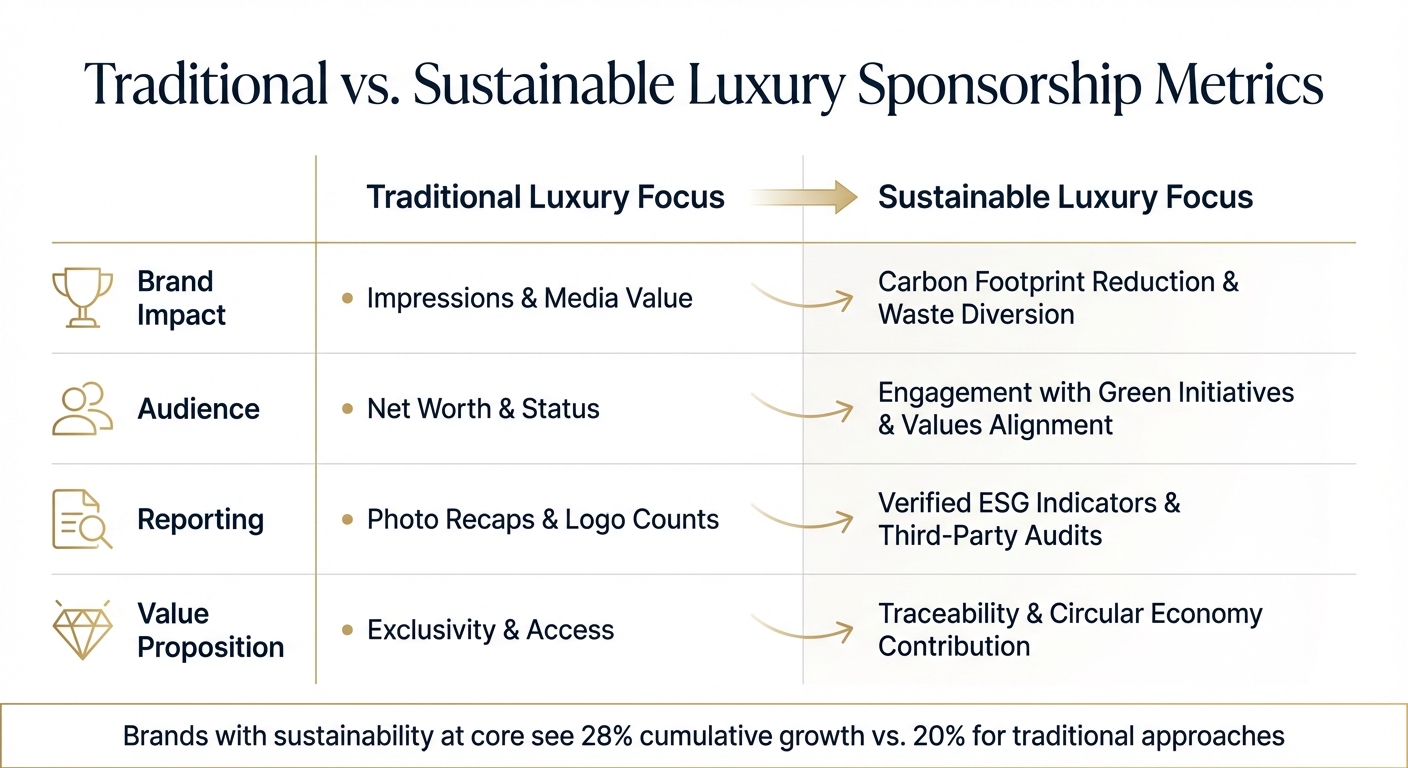
Traditional vs Sustainable Luxury Sponsorship Metrics Comparison
Creating a sustainable luxury sponsorship is about more than just having good intentions. It starts with data-backed authenticity. Claims about sustainability need to be supported by traceable, verifiable metrics. Why? Because affluent consumers are becoming more skeptical, and regulators are cracking down on greenwashing.
When it comes to measuring success, luxury sponsorships should prioritize quality over quantity. Instead of focusing on attendance numbers, brands should track metrics like net worth, influence in decision-making, and Customer Lifetime Value (CLV). This is critical because brand strength drives 60% to 80% of sales for luxury companies, making it essential to protect that prestige.
Another key principle is relationship-focused engagement. High-net-worth individuals value personal connections – think private networking events, face-to-face time with executives, and personal referrals – far more than public social media mentions. With nearly 80% of luxury sales now influenced by digital interactions, sponsorships must blend offline experiences with digital touchpoints to build long-term relationships.
Additionally, circular design practices and Digital Product Passports are becoming essential. These tools help brands prove their commitment to transparent sourcing and recyclability, aligning with evolving regulatory expectations.
Eco-Conscious Branding and Materials
Sustainability in luxury sponsorships must still feel premium. Balancing environmental responsibility with high-quality standards is crucial. Transparency in sourcing is a big part of this – sharing exactly where materials come from and how they’re made builds trust. This resonates with the 66% of global consumers willing to pay more for brands that show genuine environmental commitment.
Digital tools can amplify the impact of eco-conscious materials. Since 80% of luxury consumers expect brands to use technology for personalized interactions, digital platforms are a great way to highlight these innovations.
Aligning with organizations that hold respected certifications – like ISO 14001 or B Corp – adds credibility. Additionally, offering limited-edition sustainable products can excite younger, affluent audiences who are drawn to brands that prioritize social and environmental causes.
Engaging Audiences Through Green Initiatives
Once eco-conscious practices are in place, the next step is creating interactive green initiatives to engage audiences. Instead of static sponsorship logos, brands can create experiences like "Sponsorship Alleys" or sustainability challenges. For example, a cashless payment challenge could showcase both technological innovation and environmental benefits. These types of activations are especially appealing as luxury experiences are now growing faster than luxury goods.
Community involvement is another powerful tool. Recycling drives, environmental awareness campaigns, or nonprofit collaborations can create meaningful connections with local communities. With 73% of consumers seeking partnerships between brands and nonprofits, these efforts can enhance both trust and loyalty.
To strengthen sponsor relationships, assigning dedicated liaisons to oversee sustainability goals can make a big difference. This kind of VIP treatment transforms the relationship from transactional to collaborative – think joint product launches or branded activities. It also boosts sponsor retention and credibility.
"The sponsors who spend the most are the ones who feel the proposal was written specifically for them. Personalization isn’t a nice-to-have – it’s the difference between a $10K package and a $100K partnership."
– Industry veteran, IEG Sponsorship Report
Purpose-driven activations that align with a brand’s story are particularly effective in reaching younger, affluent audiences.
Tracking Environmental Impact
Tracking and verifying sustainability efforts are critical for establishing credibility and avoiding greenwashing. Third-party certifications – like those from B Greenly, ISO 14001, or B Corp – help turn sustainability from a marketing buzzword into a measurable system. These certifications don’t just validate your efforts; they also serve as powerful sales tools, offering clear methodologies that can streamline internal approvals.
Key operational metrics should include carbon emissions, energy efficiency, waste reduction, and water usage. Post-event reports should go beyond attendance numbers and photos, offering detailed, verified sustainability data. This level of transparency meets the expectations of discerning luxury consumers.
| Metric Category | Traditional Luxury Focus | Sustainable Luxury Focus |
|---|---|---|
| Brand Impact | Impressions & Media Value | Carbon Footprint Reduction & Waste Diversion |
| Audience | Net Worth & Status | Engagement with Green Initiatives & Values Alignment |
| Reporting | Photo Recaps & Logo Counts | Verified ESG Indicators & Third-Party Audits |
| Value Prop | Exclusivity & Access | Traceability & Circular Economy Contribution |
Using globally recognized frameworks like the Sustainable Development Goals (SDGs) or WEF metrics adds an extra layer of credibility. Brands that make sustainability a core part of their strategy have seen 28% cumulative growth over five years, compared to 20% for those that don’t.
"Certification is not the story. It is the backbone that lets your sponsorship story hold up under pressure."
– B Greenly
To avoid gaps in measurement, it’s important to define KPIs early and assign responsibility for data collection across all relevant areas – not just carbon. AI-powered analytics can also help monitor execution in real-time, verifying everything from logo placements to sustainability mentions.
Building Sustainable Sponsorship Packages
Luxury sponsorship packages are evolving. Today’s sponsors expect more than just logo placements – they want partnerships that deliver measurable outcomes. High-budget sponsors, in particular, prioritize clear ROI and alignment with corporate social responsibility (CSR) goals. To meet these expectations, sponsorship packages should offer exclusive and customizable benefits. As Chris Baylis, Founder of The Sponsorship Collective, explains:
"Your sponsorship package should be designed more like a menu. If they want a little bit of Column A and a tad more of Column B, that should be their right".
These tailored offerings not only create unique engagement opportunities but also allow sponsors to actively support sustainability initiatives. Let’s break down how tiered pricing and exclusive designations can elevate these sponsorships.
Sponsorship Tiers and Pricing
Tiered sponsorship structures work best when they balance exclusivity with clearly defined value. For luxury events, pricing should reflect the quality of the audience and the depth of engagement – not just the event’s attendance numbers. A high-value audience, such as C-suite executives or affluent decision-makers, can justify charging 2× to 5× the standard rates.
To maintain exclusivity and drive demand, premium tiers should be limited. For luxury B2B events, Platinum sponsorships typically range from $50,000 to $250,000, while Title or Presenting Sponsors can command anywhere from $100,000 to $1,000,000+ depending on the event’s scale and audience.
Using role-based titles like "Official Sustainability Partner" adds a collaborative dimension to the sponsorship and highlights alignment with environmental goals.
| Tier Level | Investment Range | Sustainability Deliverable Example |
|---|---|---|
| Presenting / Title Sponsor | $100,000 – $1,000,000+ | Naming rights to a "Carbon-Neutral Lounge" or sponsoring renewable energy for the venue |
| Platinum / Premier Partner | $50,000 – $250,000 | Exclusive speaking slot + sponsorship of zero-waste catering stations |
| Gold / High-Engagement | $15,000 – $50,000 | Branded sustainability workshops or attendee transit incentives |
| Silver / Mid-Level | $5,000 – $15,000 | Digital-only programs (to reduce paper waste) + branded reusable swag |
| Bronze / Supporting Partner | $1,000 – $5,000 | Shared recognition for local conservation projects or community gardens |
Exclusivity premiums can further enhance value. Charging 30–50% more for category exclusivity ensures sponsors stand out and protects their investment. Additionally, offering early commitment discounts – such as 15–25% off for sponsors who sign six months or more in advance – can help secure predictable revenue for long-term sustainability programs.
Adding Green Deliverables
Incorporating green deliverables transforms sponsorships into partnerships with purpose. Sponsors increasingly seek measurable sustainability initiatives that align with their CSR goals.
One effective option is carbon offset programs, which directly link sponsor investments to reducing the event’s emissions – covering everything from attendee travel to venue energy use. These programs offer measurable environmental outcomes that are essential for post-event ROI reporting.
Other green deliverables include underwriting renewable energy for the event, funding zero-waste stations, and supporting local conservation projects like community gardens or habitat restoration. Sponsors can also provide eco-friendly attendee care packages featuring reusable water bottles or sustainable notebooks, which double as practical items and branding opportunities.
The Tacoma Convention Center highlights this growing trend:
"Many sustainability-focused exhibitors are actively looking for ways to align their brands with meaningful environmental initiatives".
The most effective sponsorship packages include three-phased green deliverables:
- Pre-event: Digital campaigns showcasing the sponsor’s sustainability commitment.
- At-event: Interactive activations and branded green initiatives.
- Post-event: Detailed impact reports with verified metrics, such as tons of CO₂ offset or waste diverted from landfills.
Creative Ideas for Sustainable Luxury Sponsorships
Eco-conscious branding is evolving, and sponsors are stepping up with activations that go beyond just displaying logos. The focus now is on creating meaningful, impactful experiences that connect with audiences while prioritizing environmental responsibility. Here are some standout ideas that combine sustainability with luxury guest experiences.
Eco-Friendly Venue Enhancements
Sponsors can showcase their commitment to sustainability by incorporating green initiatives into event venues. For example:
- Solar-powered infrastructure: Outdoor charging benches with solar panels not only provide a practical service but also demonstrate renewable energy in action.
- Premium hydration hubs: Replace single-use plastic bottles with branded stations offering options like infused water, sparkling water, or electrolytes. Pair these with reusable, high-quality bottles to keep the sponsor’s brand visible even after the event.
- Sustainable materials for essentials: Items like lanyards and badges can be made from bamboo fabric or seeded paper. These alternatives look elegant while reducing waste – plus, attendees can plant the seeded badges to further the eco-friendly message.
- Wellness-focused spaces: "Zen Dens" offer attendees a quiet, tech-free retreat during busy events. Add-ons like oxygen bars with subtle branded scents show that sponsors care about both well-being and sustainability.
Interactive Sustainability Activations
Interactive experiences are a great way to engage attendees while reinforcing a brand’s eco-conscious message.
- Community give-back stations: Set up areas where attendees can assemble hygiene kits, school supplies, or food packages for local charities. These activities create lasting emotional connections and go far beyond typical sponsorship exposure.
- Digital collectibles: Swap out wasteful plastic giveaways for NFTs or "Proof of Attendance Protocols" (POAPs). These digital keepsakes reduce waste while offering exclusive perks.
- Gamified sustainability quests: Event apps can feature green challenges or eco-friendly scavenger hunts, rewarding participants for engaging in sustainable activities. It’s a fun way to educate guests about a sponsor’s initiatives while encouraging participation.
- VR eco-tours: Use virtual reality to transport attendees to sustainable manufacturing sites or conservation areas. This tech-savvy approach ties sponsors to innovation and environmental leadership.
How Essentialyfe Supports Sustainable Luxury Events
Pulling off a luxury event with a focus on sustainability requires more than just good intentions – it takes a partner who can seamlessly combine eco-friendly practices with high-end experiences. Essentialyfe steps in with a range of services that include venue selection, full-scale event planning, and eco-conscious logistics, making it easier for event planners and sponsors to prioritize sustainability without compromising on elegance. This approach mirrors a growing movement to weave sustainability into the fabric of luxury events.
Curated Luxury Event Venues
Essentialyfe offers access to an impressive portfolio of over 5,000 luxury properties across Los Angeles County. These venues include exclusive villas and estates, all chosen based on eco-friendly standards. Opting for a venue equipped with renewable energy systems, water-saving technologies, or green certifications can significantly cut down on environmental impact – all while maintaining the luxurious ambiance that guests expect.
Full-Service Event Planning
Essentialyfe provides end-to-end event management, ensuring that sustainability is embedded into every decision. From the initial venue search to the final execution, their team handles logistics and vendor coordination to integrate eco-friendly practices like waste reduction and carbon-conscious catering. With over $5 million in short-term rentals under their belt, they transform luxury properties into eco-aware event spaces. Additionally, their Event Sponsorship Brokerage department connects planners with sponsors who share a commitment to sustainability, aligning values across all aspects of the event.
Concierge and Green Logistics Support
Transportation and hospitality play a critical role in reducing an event’s environmental footprint, and Essentialyfe excels in this area as well. They arrange professional shuttle and valet services, with options for electric vehicles to further reduce emissions. Their concierge services go a step further, offering private chefs who focus on locally sourced and organic ingredients – a nod to a market that experienced a 12.6% growth in 2020. To simplify guest arrivals, Essentialyfe even includes a price-match guarantee with complimentary airport pickup, cutting down on individual car trips and streamlining the entire experience.
Key Takeaways for Sustainable Luxury Sponsorships
Sustainability has shifted from being a trend to a necessity in luxury sponsorships. Consider this: 75% of Gen Z consumers prioritize environmental responsibility over brand names, and 66% of global consumers are willing to pay more for brands that demonstrate environmental responsibility. For luxury brands – where brand strength accounts for 60% to 80% of overall sales – integrating sustainability into every aspect, from venue choices to transportation, is a powerful way to stand out and connect with high-value audiences.
Sponsorships are a revenue powerhouse, with 88.4% of event marketers ranking them as the top driver of income. Plus, year-round partnerships lead to 89% higher satisfaction rates compared to one-off events. By focusing on measurable sustainability efforts, such as carbon offsets or waste reduction, event planners can attract premium sponsors who value shared commitments. Samantha Stallard from Winmo sums it up perfectly:
"Sustainability is no longer a nice-to-have – it’s table stakes. Whether you’re brand-building cultural relevance… sustainability is now central to the sponsorship conversation."
But it’s not just about the financial returns. Authenticity is key. Wealthy consumers are quick to detect greenwashing, so partnerships must align naturally with both the brand’s mission and the event’s purpose. Collaborations with nonprofits or partnerships rooted in Environmental, Social, and Governance (ESG) values can boost brand sentiment by an average of 22%. This means brands need to carefully vet their partners and work together to create experiences that not only educate but also deliver visible environmental benefits.
On the operational side, sustainable practices can also cut costs. For example, resource-efficient strategies reduce expenses, while hybrid events – which limit travel – generate 35% more qualified leads than fully in-person gatherings. Measuring the impact of green initiatives, such as executive engagement and sustainability outcomes, ensures these efforts deliver real business results. Linking these initiatives to your CRM system can also help track how they influence sales cycles and deal sizes, which is critical given the long consideration periods often associated with luxury purchases.
FAQs
How can I prove a luxury sponsorship is truly sustainable?
To establish that a luxury sponsorship aligns with sustainability goals, it’s essential to prioritize transparent and verifiable practices. Seek out brands that actively work to minimize pesticide use, lower water consumption, and cut CO2 emissions. Certifications such as B Corp can serve as strong indicators of their commitment to sustainability.
Additionally, evaluate their transparency by reviewing public disclosures or audit reports. Long-term factors like the durability and quality of their products also play a significant role. These elements not only support sustainability efforts but also encourage reduced waste and emphasize lasting value.
Which ESG metrics should I include in sponsor ROI reports?
To showcase a sponsor’s dedication to sustainability and responsible practices, it’s essential to highlight key metrics across three areas:
- Environmental metrics: Include data on greenhouse gas emissions, energy usage, and waste management. These figures provide insight into efforts to minimize environmental impact.
- Social factors: Share diversity statistics, such as percentages of underrepresented groups within the organization, and outline initiatives that create positive social impact.
- Governance indicators: Highlight practices like board gender diversity, ethical decision-making frameworks, and transparency in operations.
By presenting these metrics, you create a clear picture of the sponsor’s commitment to meaningful, responsible actions.
How do I price sustainable sponsorship tiers for a high-net-worth audience?
When setting prices for sponsorship tiers, it’s all about creating packages that offer real value. To do this, focus on what sponsors care about most: exclusivity, visibility, and engagement. Highlight outcomes like increased brand exposure or direct interaction with attendees to make your offerings stand out.
Use industry benchmarks as a reference point – top-tier sponsorships often range from $50,000 to several million dollars, depending on the event and audience reach. Each tier should deliver clear, strategic benefits that appeal to high-net-worth sponsors. This could include things like targeted visibility through premium branding opportunities or hands-on engagement with key attendees.