Luxury brand collaboration events are all about creating exclusive, high-end experiences that blend the strengths of two or more premium brands. These events aren’t just about showcasing products – they’re about crafting an immersive, memorable atmosphere that resonates with affluent audiences. To pull this off, you’ll need to:
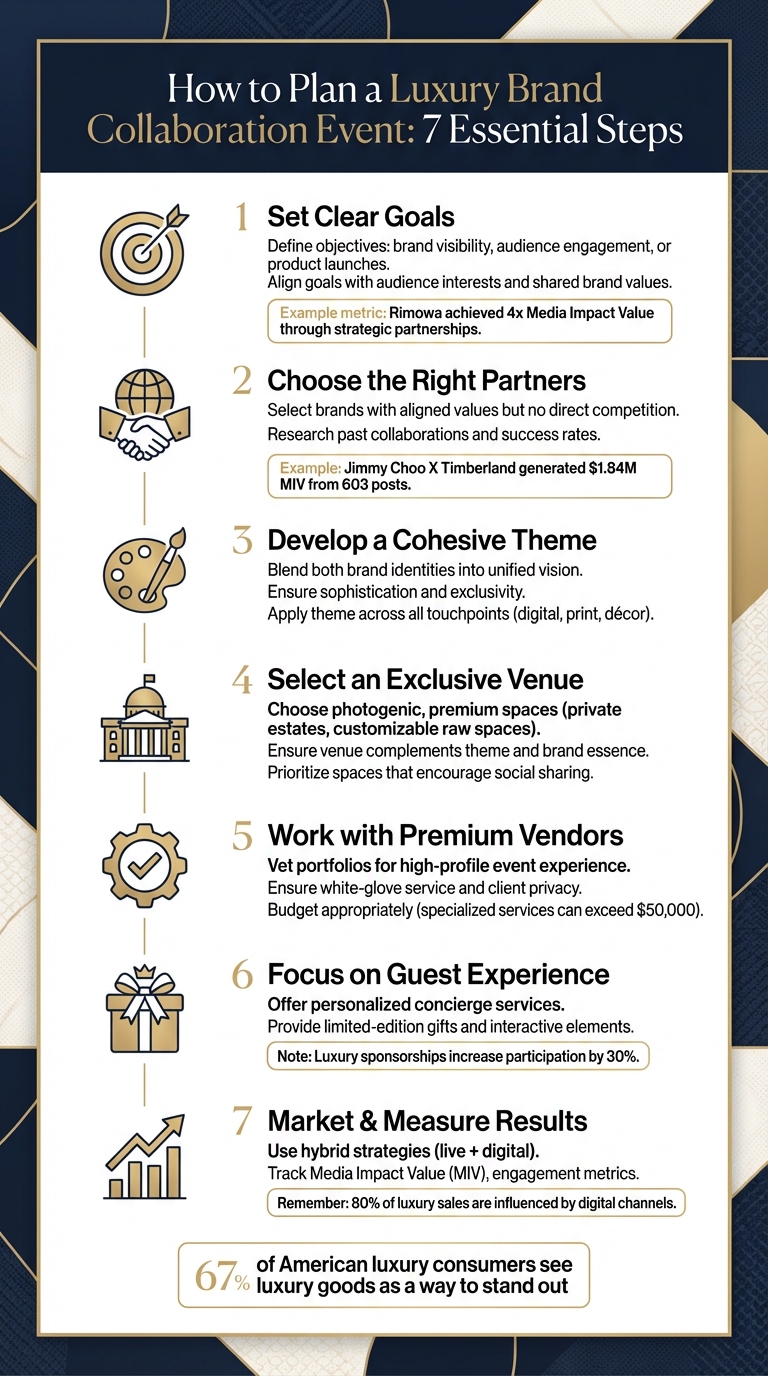
- Set clear goals: Define what you want to achieve – brand visibility, audience engagement, or product launches.
- Choose the right partners: Look for brands whose values align with yours, but that don’t directly compete.
- Develop a cohesive theme: Combine the identities of both brands into a unified vision that reflects sophistication.
- Pick a venue that complements the theme: Opt for photogenic, exclusive spaces like private estates or customizable raw spaces.
- Work with premium vendors: Ensure every detail, from catering to décor, meets luxury standards.
- Focus on guest experience: Offer personalized touches like concierge services, limited-edition gifts, and interactive elements.
- Market effectively and measure results: Use hybrid strategies (live and digital), track metrics like Media Impact Value (MIV), and analyze post-event outcomes.
With careful planning, attention to detail, and a focus on creating unforgettable moments, your collaboration event can elevate both brands and leave a lasting impression.
7-Step Process for Planning a Luxury Brand Collaboration Event
Setting Goals and Choosing Brand Partners
Defining Your Event Goals
Start by pinpointing the goals for your event. Are you launching a new product? Boosting brand visibility? Or perhaps strengthening loyalty among a specific audience? Whatever the objective, it’s key to align these goals with your audience’s interests and shared values between you and your partners. It’s not just about the product – it’s about creating an experience that resonates.
Take a look at some compelling numbers: Rimowa achieved four times the Media Impact Value (MIV) by teaming up with brands like Supreme and Off-White. Similarly, the Jimmy Choo X Timberland partnership in September 2020 brought in $1.84 million MIV from 603 posts. Actor Cole Sprouse alone added $2.62 million MIV with just three posts.
"In luxury, quality is paramount. Collaborative products must meet the same high standards as the core brand."
- David Cross, Real Estate Marketing Consultant & Copywriter, CrossCopywriting.com
To measure success, set specific metrics. Whether it’s Media Impact Value, audience engagement, or reaching a new market segment, clear benchmarks will guide your strategy. Once your goals are in place and you have selected a venue, the next step is finding partners who align with your mission and values.
Finding the Right Brand Partners
Selecting the right partners is all about synergy. Look for brands that complement your own but don’t directly compete. For example, a fashion label might pair beautifully with a luxury jewelry brand, just as a high-end car brand might align with premium watches.
Research is critical. Dive into a potential partner’s past collaborations to understand their style and success rate. For instance, the Supreme X Nike SB Dunk Low release generated $1.55 million MIV and 1,330 placements in just one month. Meanwhile, the Air Max 96 collaboration brought in $1.63 million MIV with 998 placements. These cases show how well-matched partnerships can create authentic engagement.
"The high-end market is far smaller, and major snafus will travel through the Champagne grapevine quickly."
- Sarah Haywood, Luxury Wedding Planner
Privacy is another key consideration. Some luxury clients value discretion over media buzz, so it’s crucial to clarify publicity expectations upfront. Events backed by luxury sponsors have been shown to increase attendee engagement by as much as 30%.
Finally, think about how a partner can add value to your event. A great example is the New Balance X Staud activewear collaboration, which ran from May 11 to June 12, 2020. It earned $855,000 MIV across 273 placements, with major coverage from Cosmopolitan US ($44,500 MIV) and ELLE US ($62,600 MIV). When brands share an aesthetic and target audience, the results can be amplified significantly.
sbb-itb-161ccc1
Developing Your Concept and Selecting a Venue
With clear goals and the right partners in place, the next step is to shape a concept that ties everything together seamlessly.
Building a Unified Event Theme
After securing your brand partners, it’s time to design a theme that blends both identities. Start by exploring the core values and aesthetics of each brand, then decide on the story you want to tell together. The goal is to create a vision that resonates with both brands while delivering a standout experience for your guests.
"Although luxury event planners are often hired for their unique sense of style and creativity, they must be able to apply that style to the client’s vision and sensibility."
Luxury events go beyond standard decorations – they demand elements that exude artistry and elegance. Take, for instance, Revelry Event Designers, who crafted a "rustic barn" theme without using an actual barn. Instead, they installed custom wood beams inside a tent to achieve the desired look. Another example is Colin Cowie, who elevated an event with aerial dancers performing beneath chandeliers made from crystals and champagne bottles.
Let your theme influence every detail, from digital promotions to printed materials. Incorporate immersive touches like rare floral arrangements, premium linens, or live performances that reflect the collaborative identity of the brands involved.
Once your theme is in place, focus on finding a venue that amplifies and complements this vision.
Selecting Your Event Venue
The venue is the foundation of the guest experience, so choose one that aligns with your theme. Konstantina Karas, a writer on luxury brand management, emphasizes:
"The theme needs to appear as a compliment to your brand essence or product launch."
A well-chosen venue should naturally enhance your theme while reinforcing the exclusivity associated with luxury brands. Spaces like private mansions or estates often provide an intimate, "brand home" feel. As Kait Shea from Event Marketer notes:
"Luxury brands are, by nature, a selective breed."
Additionally, opt for venues that can create buzz online. Striking, photogenic locations encourage attendees and influencers to share their experiences, amplifying your event’s reach. Look for spaces that feature hidden details of refinement, much like those found in top-tier hotels, to add an extra layer of sophistication.
If no venue perfectly fits your vision, consider transforming a raw space or using a large tent. This approach allows for custom installations, specialized lighting, or unique performance setups, giving you the flexibility to bring your concept to life.
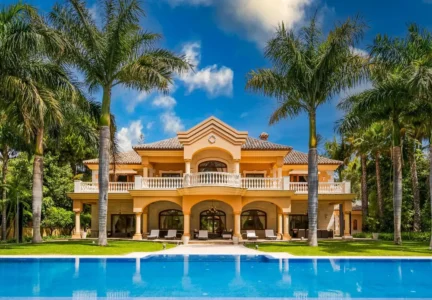
For those seeking curated options, Essentialyfe offers a collection of luxury properties tailored for distinctive events. Their venues come with comprehensive services like event planning, security, and valet support, ensuring a smooth and polished experience. The ideal venue should feel like a natural extension of your collaborative brand identity, setting the stage for an unforgettable luxury event that leaves a lasting impression.
Managing Vendors and Event Logistics
Once you’ve secured the venue, the next step is assembling a team of vendors who align with your luxury standards. Every choice you make should reflect an unwavering commitment to excellence and flawless service.
Finding Premium Vendors
Start by examining vendors’ portfolios, especially their experience with high-profile events. This is a clear indicator of their ability to handle complex, high-stakes situations. As luxury wedding planner Sarah Haywood explains:
"You need experience before you can manage and allocate big budgets."
Networking at exclusive luxury events is another way to identify top-tier vendors. Referrals from established luxury planners can also lead you to trusted professionals who deliver exceptional results.
Choose vendors who are not only prompt and professional but also familiar with the specific logistics of your venue. For significant collaborations, consider testing their services at a smaller event to evaluate their reliability, communication skills, and attention to detail.
Premium vendors should deliver impeccable, white-glove service throughout the event while maintaining client privacy. As David Cross, a real estate marketing consultant, puts it:
"In luxury, quality is paramount. Collaborative products must meet the same high standards as the core brand."
Be prepared to allocate a substantial budget for premium services. For example, fees for specialized services or high-impact placements at national-scale events can exceed $50,000.
Once you’ve confirmed your vendor team, shift your focus to ensuring every operational detail runs smoothly.
Organizing Event Logistics
With your vendors in place, meticulous logistical planning becomes essential to achieve a seamless event. Create detailed timelines and checklists that cover every aspect of the event. For luxury events, technical services such as precise decorations or custom installations are often key to creating a memorable experience.
Assign a dedicated point of contact for each vendor to streamline communication and handle any last-minute adjustments. Coordinate transportation and setup schedules well in advance, making sure all vendors understand venue-specific rules, like restrictions on adhesives, elevator access, or union labor requirements. Always build in extra time for unforeseen delays, and establish clear protocols for guest arrival, registration, and departure.
For events requiring specialized support – such as security, shuttle coordination, or concierge services – companies like Essentialyfe offer integrated solutions to manage these details seamlessly. Their comprehensive services ensure that every logistical element is handled with precision, delivering an event that embodies true luxury.
Creating Elevated Guest Experiences
Once the logistics are set, it’s time to focus on creating experiences that make your event unforgettable. True luxury goes beyond premium materials – it’s about crafting personal, lasting memories. Research shows that 67% of American luxury consumers see luxury goods and services as a way to stand out. This insight should guide every decision you make for your guests. A great way to achieve this is by offering personalized concierge services.
Adding Personalized Concierge Services
White-glove concierge services transform an event from standard to extraordinary by replacing generic solutions with tailored guest care. Imagine offering chilled sparkling water during check-in, arranging on-site assistance for unique requests, or adapting to guest needs in real time.
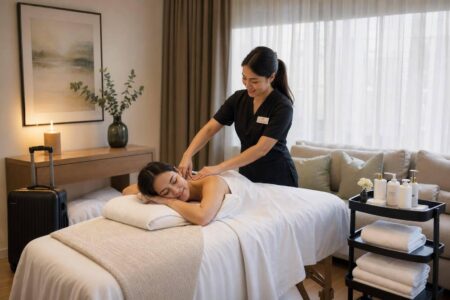
Take Essentialyfe, for example. They provide concierge services designed to impress, including private chefs who cater to specific dietary needs, exotic car rentals for VIP arrivals, shuttle services for smooth transportation, and in-home massages for guests staying on-site. These thoughtful touches ensure every interaction reflects your brand’s elegance and attention to detail.
Luxury events thrive on creating immersive experiences. Think about incorporating exclusive elements like hiring a celebrity chef or featuring rare flowers in breathtaking installations. Using event management tools to track guest preferences – such as favorite drinks, dietary restrictions, or accessibility requirements – empowers your team to deliver proactive, personalized service. But exceptional service is just the beginning; adding interactive elements can take the experience to a whole new level.
Designing Interactive Event Elements
Interactive features should seamlessly align with your event’s theme while offering moments that feel extraordinary. Partner with brands to co-create exclusive products or experiences that guests can’t find anywhere else. Ideas include limited-edition gifts, branded lounges, or immersive floral displays.
Events with luxury brand sponsorships often see a 30% increase in participation when interactive elements are thoughtfully planned. Sensory experiences, like aerial dancers, live performances by acclaimed musicians, or drone videography capturing stunning views, can captivate your audience. The key is ensuring these elements not only enhance the event but also align with both brands’ identities and reinforce the overall message of your collaboration.
Marketing, Execution, and Measuring Results
Promoting Your Event
To promote your event effectively, combine live experiences with fast-paced online engagement. Konstantina Karas, an expert in luxury brand management, highlights the power of this approach:
"Hybrid PR: a live event accompanied by online publicity (live!) is the next big thing in organic promotion of a brand or product launch".
This strategy enhances your organic reach while preserving the exclusivity that luxury audiences expect.
Start with exclusive, invite-only events to create buzz on social media. Every promotional detail should reflect the premium standards of your collaboration. Create a unique event hashtag to unify online conversations and track exposure on platforms like Instagram, TikTok, and YouTube. Engage your audience with behind-the-scenes footage, countdowns, and stories that showcase the craftsmanship and emotional value behind your event.
Choose influencers and brand ambassadors who align perfectly with your brand’s image and target audience. For example, in September 2020, Dunkin’ Donuts teamed up with influencer Charli D’Amelio to launch "The Charli" drink. This partnership led to a 57% increase in app downloads on the launch day and a major boost in cold brew sales. While your luxury event may operate on a different scale, the principle is the same: alignment drives success. Keep in mind that potential attendees may need to encounter your brand message 3 times to notice it, 7 times to remember it, and 27 times to build trust for long-term engagement.
Managing Event Day Operations
Once your marketing is in motion, flawless execution on event day is critical to delivering an exceptional guest experience. Ensure all teams are fully synchronized, from guest check-in to capturing influencer content, to maintain a consistent and polished experience. As Launchmetrics puts it:
"A successful event requires absolute precision & collaboration".
From the moment attendees arrive, prioritize seamless guest flow. Well-coordinated check-in processes and thoughtful seating arrangements help establish the premium feel your audience expects. Treat the entire guest journey as a cohesive experience. Monitor real-time social media coverage and ensure influencer content is captured and shared in the moment. This "Voice Echo" strategy allows your event to become a Hybrid PR moment, where the physical and digital experiences amplify each other.
Following Up and Evaluating Success
After the event, it’s time to measure performance and refine your approach. For luxury events, focus on quality metrics over quantity metrics. Instead of just counting attendees, analyze their demographics, net worth, and decision-making authority. Social Life Magazine underscores this point:
"Affluent consumers buy relationships before they buy products".
To measure success, link CRM data, Media Impact Value (MIV®), and digital analytics. Track key indicators like C-suite engagement, private meeting requests, and follow-up activities. Use MIV® to assign a monetary value to posts, interactions, and media coverage, helping you understand the impact of influencers, celebrities, and press. Integrate event data into your CRM to monitor post-event sales, proposal requests, and deal progression. Track direct revenue using unique promo codes and landing pages, while also evaluating indirect benefits such as executive relationships and trade commitments.
Since around 80% of luxury sales are influenced by digital channels, monitor spikes in website traffic, mobile app activity, and click-through rates on event-related content during and after the event. Compare your brand’s visibility and engagement with competitors, and evaluate which influencers or partners delivered the most impact across regions and platforms. Use these insights to improve future collaborations and enhance guest experiences. This data will be a cornerstone for planning future events and building stronger relationships with partners and attendees.
Conclusion
Planning a luxury brand collaboration event demands careful attention to detail at every stage. Success hinges on selecting partners whose values and aesthetics naturally align, crafting personalized experiences that steer clear of generic approaches, and delivering impeccable service from start to finish.
In this market, the margin for error is razor-thin. A single misstep can quickly become the talk of what insiders call the "Champagne grapevine". Every element – whether it’s the choice of heavy-weight bond paper for invitations or ensuring a seamless guest check-in process – must uphold the premium standards that set your event apart in a highly selective space.
Beyond these fundamentals, modern luxury events are incorporating cutting-edge digital elements. Today’s collaborations often merge high-touch, in-person experiences with digital tools like AR filters and blockchain certificates. With joint marketing budgets typically ranging from 10% to 25% of expected gross sales, financial planning becomes a critical component of the process.
Flawless execution and thorough follow-up are key to building enduring brand relationships and safeguarding your reputation. A comprehensive dashboard can help track metrics like immediate revenue, customer lifetime value, and marketing efficiency. This data-driven approach not only refines future events but also strengthens partnerships with brands and guests alike.
When thoughtful planning meets outstanding service and insightful evaluation, the result is an event that leaves a lasting impression. These efforts elevate partner brands and create meaningful experiences that resonate with even the most discerning guests.
Explore expert event planning services at Essentialyfe (https://essentialyfe.com).
FAQs
How do I pick the right brand partner?
Choosing the right brand partner means finding one whose values and market presence align with the upscale image of your event. Focus on brands that connect with your audience, complement your event’s theme, and elevate the overall experience for your guests. Seek out partners known for their exclusivity and quality, and make sure they’re interested in working together to craft personalized experiences. This approach ensures a smooth collaboration that benefits both parties.
What makes a venue feel truly luxury?
A venue feels luxurious when it radiates elegance, offers a sense of exclusivity, and embodies sophistication. This comes through in features like top-notch amenities, meticulous attention to detail, and tailored experiences that create unforgettable moments for guests.
How do I measure ROI beyond sales?
To gauge ROI for a luxury brand collaboration event beyond just sales, look at engagement metrics like attendee interactions, social media activity, and media coverage. These indicators can reveal how much visibility and prestige the event generated. Additionally, evaluate the relationships formed with high-net-worth individuals and potential partners, as these connections could lead to future opportunities. Prioritize measuring long-term brand benefits, such as enhanced awareness and a stronger positive image, rather than focusing solely on short-term sales outcomes.