Luxury outdoor spaces in 2026 focus on blending style with eco-conscious design. Homeowners prioritize durability, efficiency, and wellness, creating outdoor areas that are functional and long-lasting. Here are the top trends shaping these spaces:
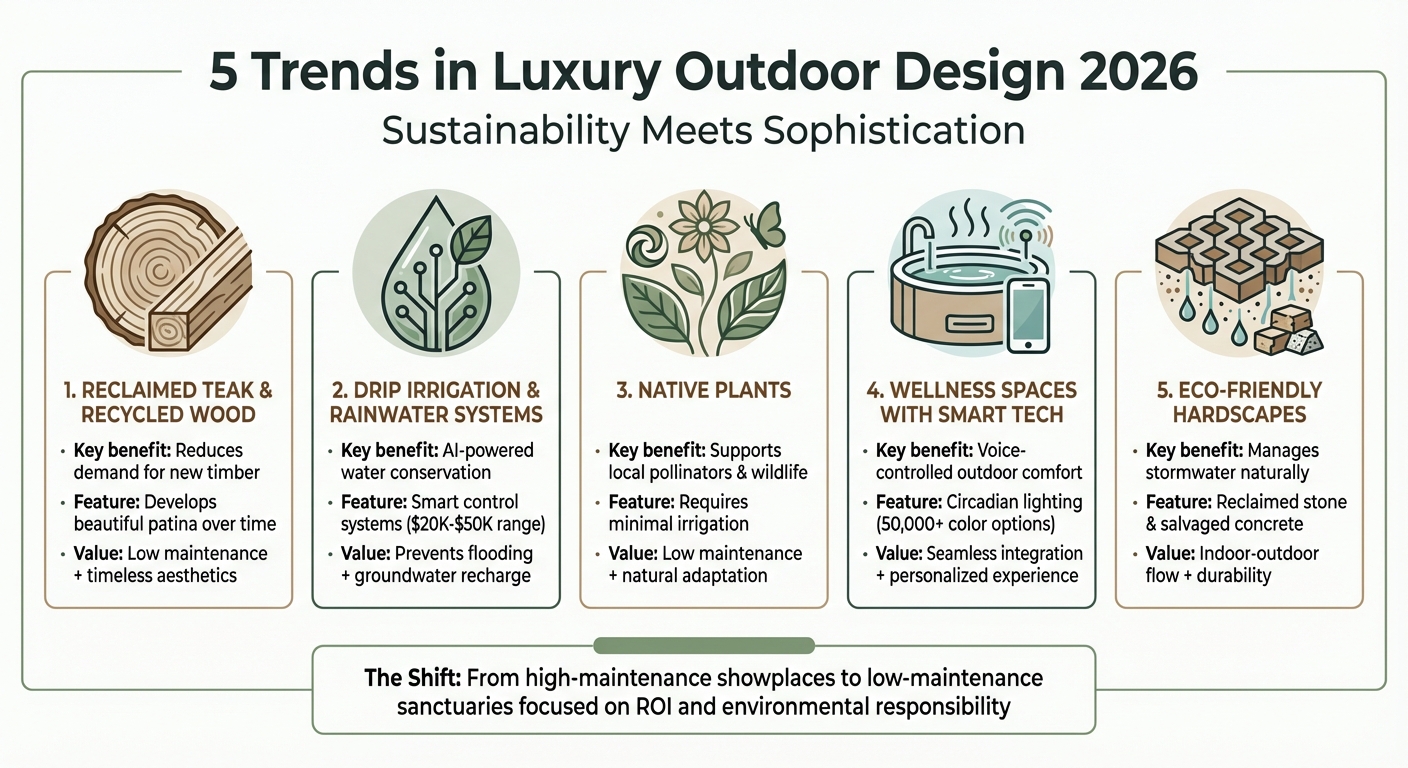
- Reclaimed Teak & Recycled Wood: Reduces demand for new timber while offering timeless aesthetics.
- Drip Irrigation & Rainwater Systems: AI-powered systems conserve water and manage stormwater effectively.
- Native Plants: Support biodiversity, require less maintenance, and thrive naturally.
- Wellness Spaces with Smart Tech: Features like voice-controlled lighting, saunas, and shading systems enhance outdoor comfort.
- Eco-Friendly Hardscapes: Permeable pavers and reclaimed materials create seamless indoor-outdoor transitions.
These trends highlight a shift toward low-maintenance, ROI-focused designs that balance luxury with environmental responsibility.
5 Luxury Outdoor Design Trends 2026: Sustainability Meets Style
1. Reclaimed Teak and Recycled Wood Materials
Environmental Benefits and Material Sourcing
Reclaimed teak and recycled wood have become key materials in luxury outdoor design, reflecting a growing commitment to sustainability. For many luxury clients, eco-consciousness is no longer an optional feature – it’s a fundamental priority influencing every decision. This shift aligns with the concept of "regenerative design", which focuses on creating outdoor spaces that actively improve ecological health rather than just reducing environmental harm.
Choosing reclaimed wood helps reduce the demand for newly harvested timber, which in turn conserves forests and protects the ecosystems they support. Heather Trilling, a Landscape Designer at Trilling Landscape Design & Build, highlights this evolving mindset:
"In 2026, the focus has shifted from ‘drought-tolerant’ to regenerative design: landscapes that actively restore ecological health, harvest water, and support biodiversity".
Local sourcing has also gained traction. Homeowners are increasingly opting for reclaimed wood sourced locally to cut down on transportation-related carbon emissions. This not only reduces the environmental footprint but also supports local economies. For new hardwoods like teak and Ipe, verifying responsible sourcing ensures these materials meet environmental standards while avoiding deforestation.
Beyond their environmental advantages, reclaimed wood offers a natural aesthetic that enhances outdoor spaces.
Integration with Natural Environments
Reclaimed wood’s organic textures and natural variations make it a perfect fit for blending outdoor structures with their surroundings. Unlike synthetic materials that can feel overly uniform or artificial, weathered teak and recycled wood bring a sense of warmth and authenticity, transforming outdoor spaces into inviting retreats. As Heather Trilling explains:
"Authenticity is the new luxury… Clients no longer want ‘showplace’ landscapes. They want sanctuaries – timeless environments that feel deeply personal".
Another advantage of reclaimed wood is how it ages. High-quality hardwoods like teak develop a beautiful patina over time, adding character while remaining durable. Tyler Bigham, Principal Lead Designer at Alterra Landscape Design, underscores this trend:
"Homeowners are focusing on features that provide long-term value and low maintenance, like durable natural materials… They are more focused than ever on ROI".
This makes reclaimed wood an excellent choice for outdoor furniture, decking, and architectural details that not only require minimal upkeep but also grow more visually appealing as the years go by.
sbb-itb-161ccc1
2. Drip Irrigation and Rainwater Harvesting Systems
Water Conservation Features
Drip irrigation systems are designed to deliver water directly to the roots of plants, minimizing evaporation and runoff. Alongside this, rainwater harvesting systems collect runoff from roofs into hidden cisterns, creating what experts call "invisible luxury." This approach combines high-performance infrastructure with seamless integration into the landscape.
What once was an expensive endeavor – smart control systems costing between $20,000 and $50,000 – is now within reach for residential properties. Many homeowners pair these systems with features like permeable pavers and rain gardens to manage stormwater on-site. This not only helps prevent flooding but also supports groundwater recharge naturally. Tyler Bigham from Alterra Landscape Design highlights the growing preference for practical, lasting solutions:
"Homeowners are focusing on features that provide long-term value and low maintenance, like durable natural materials, efficient irrigation, and multi-functional outdoor spaces".
These advancements offer a foundation for even more sophisticated technology in the future.
Functionality and Technological Innovation
Modern water-saving systems have gone beyond basic conservation. Smart irrigation now incorporates AI-driven weather data and soil moisture sensors to fine-tune watering schedules. These systems even provide real-time analytics accessible through smartphones. Additionally, voice-activated controls allow users to manage irrigation, lighting, and water features hands-free.
Before installation, advanced tools analyze specific property conditions, including sunlight exposure, soil pH, and moisture levels. This data-driven approach eliminates guesswork and ensures precision. Heather Trilling from Trilling Landscape Design & Build shares:
"Smart irrigation systems using AI weather data to adjust watering".
These systems help outdoor spaces thrive, whether during heavy rains or droughts, all while maintaining their polished look. By combining efficiency with sustainability, these innovations reflect a commitment to creating luxurious yet environmentally conscious landscapes.
3. Native Plants in Biophilic Garden Design
Environmental Benefits and Material Sourcing
Native plants are redefining luxury landscaping by bringing ecological balance back into focus. These plants play a critical role in supporting local pollinators and wildlife while naturally enriching the soil. Keystone native species, in particular, amplify biodiversity benefits, making them a cornerstone of sustainable garden design.
Heather Trilling of Trilling Landscape Design & Build highlights this shift:
"In 2026, the focus has shifted from ‘drought-tolerant’ to regenerative design: landscapes that actively restore ecological health, harvest water, and support biodiversity."
This regenerative mindset combines native plants with locally sourced stone and reclaimed materials, creating designs that reflect and respect the local environment. Homeowners are increasingly drawn to these choices, viewing them as a smart investment that reduces long-term costs for water, fertilizers, and maintenance.
Water Conservation Features
Native plants, paired with advanced water systems, offer a powerful way to minimize maintenance. Their natural adaptation to local climates means they require far less irrigation. When used in features like rain gardens and bioswales, these plants excel at capturing and filtering stormwater, helping landscapes stay hydrated even during dry spells. From Minnesota’s variable seasons to California’s scorching summers, native plants consistently perform well across diverse climates.
Adding to this, smart technology has made water management even easier. App-based climate sensors now allow real-time monitoring of soil moisture and plant health, ensuring gardens thrive with minimal intervention. This tech-driven approach complements other sustainable strategies, such as smart irrigation and the use of reclaimed materials, to create a fully integrated and efficient outdoor space.
Integration with Natural Environments
Native plants do more than just conserve resources – they seamlessly tie outdoor spaces to their natural surroundings. Luxury gardens in 2026 are designed to blur the boundaries between indoor and outdoor living, using native plants to extend the home’s aesthetic into the landscape. Features like stone walls, sculptural hedges, and layered beds with varied textures create immersive and personalized environments. The rising popularity of foodscaping – adding herbs and fruiting shrubs – brings both visual appeal and practical benefits.
These gardens also include intimate wellness zones. Tyler Bigham of Alterra Landscape Design notes:
"Homeowners are focusing on features that provide long-term value and low maintenance, like durable natural materials, efficient irrigation, and multi-functional outdoor spaces."
4. Wellness Spaces with Smart Technology Integration
Functionality and Technological Innovation
Outdoor wellness spaces are stepping into the future with cutting-edge technology. Imagine adjusting your outdoor sauna’s temperature, controlling a cold-plunge pool, or igniting fire features – all with a simple voice command. These smart systems also let homeowners manage lighting, water features, and climate settings right from their smartphones.
One standout feature is circadian lighting, powered by advanced low-voltage LED networks. These lights mimic the natural progression of daylight, syncing with sunset tones to align with your body’s rhythms. Dan Waters from Creative Environments explains:
"The lighting is becoming smaller and more powerful. Some lighting that has just come out this year is 60% brighter with a range of colors. Instead of 10 colors, probably 50,000 colors".
This level of customization means you can set the perfect mood – whether it’s an energizing morning yoga session or a calming evening retreat.
Smart shading systems are also making waves. Automated louvered pergolas now adapt to the sun’s position, offering comfort no matter the time of day. Add app-based sensors that monitor soil moisture and plant health, and you’ve got a garden that practically takes care of itself. These innovations create a seamless blend of functionality and design, allowing these spaces to integrate harmoniously with their surroundings.
Integration with Natural Environments
While these systems deliver unmatched convenience, they’re designed to stay out of sight, preserving the natural beauty of outdoor spaces. Heather Trilling of Trilling Landscape Design & Build highlights this approach:
"The best systems are invisible and intuitive".
For example, conduits are hidden underground, wireless charging surfaces are cleverly embedded in stone benches, and controls are seamlessly integrated into architectural elements. This subtle design ensures that technology enhances the experience without overpowering the natural environment.
Tim McAuliffe from The Outdoor Living Designer captures this shift perfectly:
"People are dialed into the ease of use and experience for things nowadays, so adding this as an option gives you more opportunity to create options for your clients".
The result? A wellness sanctuary that feels effortlessly organic yet performs at the highest level. Picture automated audio systems blending harmoniously with the sound of trickling water, creating the perfect setting for meditation. These spaces are as functional as they are serene.
5. Indoor-Outdoor Transitions with Eco-Friendly Hardscapes
Environmental Benefits and Material Sourcing
Eco-friendly hardscaping is redefining how luxury homes merge indoor and outdoor spaces. One standout innovation is permeable pavers, which help manage stormwater runoff and protect properties from flooding during periods of heavy rain or snowmelt. These surfaces also assist in hydrating nearby plants during dry spells, reducing the need for additional watering.
When it comes to sustainability, the choice of materials plays a huge role. Reclaimed stone, salvaged concrete, and natural limestone have evolved from being seen as cost-saving options to becoming premium design staples. Eric Gilbey, Landscape Architecture Industry Specialist at Vectorworks, explains:
"Reused materials are no longer seen as a compromise. Cleverly carved reclaimed concrete and salvaged stone are becoming high-end aesthetic choices".
These reworked materials not only bring durability and a unique aesthetic but also reduce the need for frequent replacements, offering both long-term value and a smaller environmental footprint.
Integration with Natural Environments
By 2026, the boundaries between indoor and outdoor spaces are becoming almost invisible. Features like large accordion, pocket, or multi-panel sliding glass doors allow flooring and hardscaping to flow seamlessly between spaces. Tara Piergies-Baker, Landscape Designer at The Addison Group, highlights this trend:
"I’m seeing this continued blurring of the interior to the exterior, as far as architecture to landscape architecture".
This seamless design extends beyond doors. Stone walls, terraced levels, and sculptural hedges echo the architectural lines of a home, creating what are often called "architectural gardens". Warm limestone patios and porcelain pavers further extend the home’s interior aesthetic outdoors. Water features are also stepping up in sustainability, with closed-loop systems that recycle air-conditioning condensate. Together, these elements unify luxury living with environmentally conscious design, reflecting the ongoing shift toward sustainable outdoor spaces.
Luxury Outdoor Living | Best of 2025 Year in Review
Conclusion
The five trends shaping luxury outdoor design in 2026 highlight a growing emphasis on sustainability paired with timeless elegance. From reclaimed teak furniture to AI-powered irrigation systems, these advancements prove that environmental care and sophisticated design can coexist seamlessly.
These trends focus on creating outdoor spaces that last, rather than chasing fleeting fads. As Tyler Bigham, Principal Lead Designer at Alterra Landscape Design, explains, homeowners are increasingly "focusing on features that provide long-term value and low maintenance, like durable natural materials, efficient irrigation, and multi-functional outdoor spaces. They are more focused than ever on ROI". This shift reflects a desire for outdoor areas that are built to endure and perform efficiently for years to come.
A key aspect of this evolution is the concept of invisible luxury, where high-performance systems operate quietly in the background, ensuring functionality without compromising aesthetics. Heather Trilling, Landscape Designer at Trilling Landscape Design & Build, captures this sentiment perfectly:
"The 2026 landscape is not about doing more – it’s about designing better".
These trends not only emphasize sustainability but also enhance long-term value. For luxury property owners and rental venues, the benefits are clear: native plants reduce upkeep costs, permeable hardscapes handle stormwater naturally, and wellness-focused features create serene, sensory-rich environments that appeal to modern travelers. With most homeowners now preferring low-maintenance yards over traditional high-upkeep landscapes, these choices strike a balance between practicality and profitability.
Brands like Essentialyfe exemplify this approach by delivering tailored luxury experiences grounded in environmental stewardship, ensuring that every property showcases the highest standards of sustainable design.
FAQs
How can I verify reclaimed teak is sustainable?
To ensure that reclaimed teak is sourced responsibly, it’s essential to confirm that it originates from certified suppliers who follow responsible forestry practices. Check for documentation that highlights replanting initiatives and ensures transparency throughout the supply chain. Be mindful of potential issues like questionable certifications or vague sourcing details, which could compromise its authenticity.
Are smart irrigation and rainwater systems worth the cost?
Smart irrigation and rainwater systems are absolutely worth considering in 2026. They help create eco-conscious landscapes by minimizing water waste, cutting down on overall water usage, and requiring less maintenance. Plus, they fit perfectly with the growing trend of high-end, sustainable outdoor designs. These systems offer long-term benefits, combining efficiency with the appeal of modern, environmentally friendly outdoor spaces.
Which native plants work best for my region?
Native plants that work best for your region will depend on the local climate and how much water is available. Right now, there’s a growing preference for drought-tolerant, low-maintenance options that naturally thrive in your area and help pollinators. These plants not only save water but also boost biodiversity in your garden or yard.