Booking a chauffeured vehicle isn’t just about reserving a car – it’s about ensuring smooth, stress-free transportation. Follow these key steps to avoid surprises, hidden fees, or service issues:
- Define Your Needs: Know your passenger count, luggage requirements, and trip type (corporate, airport, or event).
- Research Providers: Check licensing, insurance, vehicle options, and safety records.
- Choose the Right Vehicle: Match the car to your trip (e.g., sedans for executives, SUVs for groups).
- Confirm Details: Provide exact locations, times, and any special requests in writing.
- Review Costs and Contracts: Request clear quotes and understand terms like cancellation policies and wait time fees.
- Verify Chauffeur Credentials: Ensure drivers are licensed, trained, and insured.
- Finalize and Reconfirm: Double-check all booking details and prepare for any last-minute changes.
- Prepare Backup Plans: Have alternative options ready in case of unexpected issues.
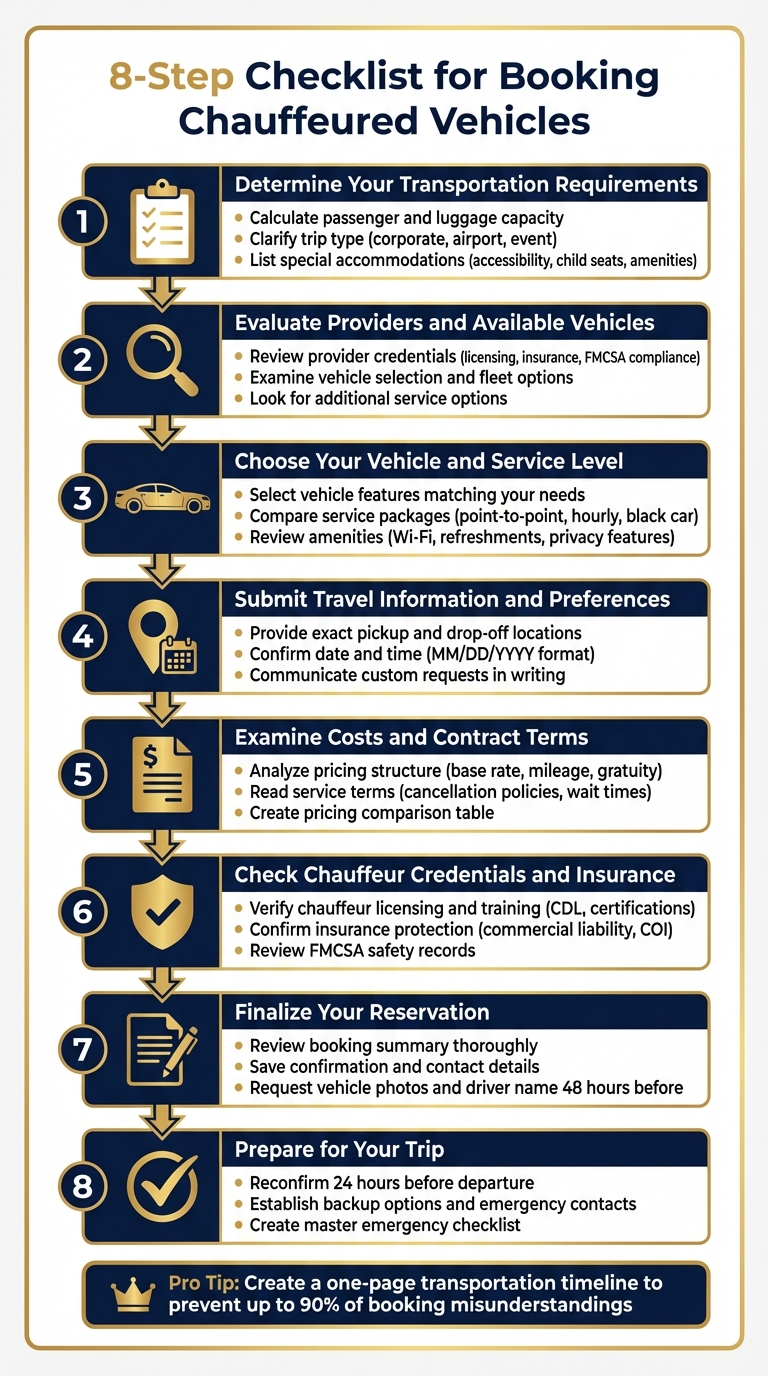
8-Step Checklist for Booking Chauffeured Vehicles
TIPS for finding the BEST Chauffeur Service in Your City
sbb-itb-161ccc1
Step 1: Determine Your Transportation Requirements
Before reaching out to any transportation provider, take the time to clearly outline your specific needs. Being vague can lead to confusion, mismatched vehicles, and scheduling headaches that can throw your plans off track.
Calculate Passenger and Luggage Capacity
Start by figuring out how many passengers need transportation at each stage of your trip. For events with staggered arrivals, note the exact number of people traveling at specific times. For instance, a corporate dinner with 20 attendees might only require two luxury sedans if arrivals are spread over two hours. However, if everyone arrives at once, a coach bus is the better choice.
Don’t overlook luggage! It’s just as important as the passenger count. For example, three VIP executives with only carry-ons can easily fit in a sedan. But if they’re traveling with checked bags and presentation materials, an SUV might be a better fit. Also, consider if chauffeurs will need to assist with heavy or unusual items – this can influence both the vehicle selection and service details.
"Your assessment document becomes the foundation for accurate quotes and service reliability – vague requirements lead to mismatched vehicles and scheduling chaos." – Ridescouts
Once you’ve worked out capacity, focus on the nature of your trip.
Clarify the Trip Type
The purpose of your trip determines the type of vehicle and service you’ll need. For corporate travel, look for vehicles with discreet interiors that ensure privacy. On the other hand, weddings or parties often call for spacious vehicles with festive designs and seating arrangements that encourage mingling.
For airport transfers, punctuality and luggage-friendly options are key. Meanwhile, multi-day tours demand vehicles equipped with comfort features to make extended travel more enjoyable.
Be sure to map out your schedule, including arrival times and transitions between venues. If you’re heading to hotels or restaurants, check if they have loading zones or valet services – this could impact whether your chauffeur can park nearby or needs to keep circling.
List Special Accommodations
If your group has specific accessibility needs, mention them upfront. For example, wheelchair-accessible vans typically reduce the seating capacity, so providers need this information to prepare accurate quotes. Traveling with kids? Confirm that child seats are available and make sure they’re included in your service agreement before the trip begins.
Think about any luxury extras that might make your journey more comfortable. For a three-hour executive transfer, amenities like Wi-Fi and refreshments might be a must. However, these might not be necessary for a quick airport ride. If you have specific chauffeur protocols – like confidentiality or being on-call – be sure to spell those out as well.
Step 2: Evaluate Providers and Available Vehicles
Now it’s time to dig into the details – research providers and evaluate their fleets to ensure they meet your needs.
Review Provider Credentials
Start by verifying the basics: licensing, insurance, and safety compliance. Confirm that drivers hold the proper chauffeur licenses for the vehicle they’ll be operating. The provider should carry commercial liability insurance with clearly defined minimum coverage amounts. Ideally, the contract should name you as an additional insured party for extra peace of mind.
Use the Federal Motor Carrier Safety Administration (FMCSA) database to check safety ratings and ensure the provider follows all regulations. Ask for documentation, including proof of insurance, recent safety inspection reports, and driver qualifications.
"Credentials and service standards aren’t checkboxes – they’re evidence that a provider will represent your organization professionally and keep your guests safe." – Ridescouts.com
Look into the company’s driver training programs. Do they offer courses like defensive driving or executive transport training? Make sure they enforce strict drug and alcohol testing policies and adhere to “hours of service” guidelines to prevent driver fatigue. For formal events, confirm that drivers follow a dress code and grooming standards that align with the occasion.
These steps ensure the provider meets professional standards and sets the groundwork for reviewing their vehicle options.
Examine the Vehicle Selection
Choosing the right vehicle means considering factors like type, fleet size, service area, and availability. To avoid surprises, request images of the assigned vehicle and the driver’s name at least 48 hours before your trip.
Check for essential amenities such as Wi-Fi, refreshments, or sufficient luggage space. To minimize the risk of breakdowns, ask for vehicle safety inspection records and details about their preventive maintenance schedules. Also, confirm that each vehicle is equipped with necessary safety gear.
If you’re traveling with guests who have mobility needs, ensure the provider offers accessible options like vans with ramps, without compromising on safety or comfort.
Thoroughly reviewing vehicle details helps you avoid last-minute hiccups.
Look for Additional Service Options
Some providers go beyond basic transportation, offering extra services that can elevate your experience. Features like in-vehicle intercom systems for private communication or efficient luggage handling can make the journey smoother.
For high-profile events or extended trips, look for providers offering customized options. This could include having the driver stay with the vehicle for immediate departures, confidentiality protocols, or even flexible chauffeur attire to suit the event. If you’re planning something special – like a luxury vacation – services such as Essentialyfe (https://essentialyfe.com) provide concierge-level offerings, including exotic car rentals and tailored amenities.
Finally, confirm that the provider offers real-time booking confirmations, detailed driver assignments, and open communication channels before your trip. These small details ensure everyone stays informed and your trip goes off without a hitch.
Step 3: Choose Your Vehicle and Service Level
Now that you’ve clarified your needs and vetted potential providers, it’s time to find the perfect match between your requirements and the right vehicle and service package.
Select Vehicle Features
The vehicle you choose should align with the occasion, the number of passengers, and the duration of your trip. For professional meetings or transporting VIP executives, consider executive sedans like the BMW 7 Series or Mercedes-Maybach S-Class. These vehicles combine comfort with cutting-edge technology. For medium-sized groups or trips requiring more luggage space, SUVs offer a balance of versatility and privacy – ideal for corporate travel or outdoor excursions.
"Selecting a luxury vehicle involves more than outward style; it focuses on matching comfort, practicality, and experience to the nature of your trip." – Huntersville Limousine Service
For weddings, classic options like the Rolls-Royce Phantom or Bentley Flying Spur add elegance and make for stunning photos, while also offering a peaceful space between venues. Eco-conscious couples might lean toward the Tesla Model S for a more sustainable choice. For larger events or group travel, coach buses are a practical solution, offering both cost efficiency and ample seating.
Don’t overlook the importance of interior features. Premium seating materials, advanced climate control, Wi‑Fi, and ambient lighting can make a big difference. If you’re planning a long journey, prioritize comfort and amenities. For shorter trips, focus on convenience and accessibility. For added privacy – important during sensitive business discussions – look for vehicles equipped with partitions or soundproofing.
Once you’ve identified the right vehicle, it’s time to evaluate the available service packages.
Compare Service Packages
Service packages can vary significantly, so understanding your options ensures you get the best fit for your needs. For straightforward trips, consider point-to-point service. If your itinerary involves multiple stops or requires flexibility, hourly service is a better choice, especially for roadshows or events. Black car service typically involves luxury sedans or SUVs, perfect for business travel, while traditional stretch limousines are better suited for celebrations.
For airport transfers, you’ll often have two options: curbside pickup or meet-and-greet service. Meet-and-greet, where the chauffeur waits inside the terminal with a sign, is a convenient add-on that usually costs around $25 at select locations. Be sure to provide your flight number when booking so the service can track your flight and adjust for delays. Most providers offer grace periods – typically 45 minutes for domestic flights and 75 minutes for international arrivals.
Executive or corporate packages often include perks like centralized billing, live tracking, and integration with travel management systems. If delays are a concern, look for trip protection options that cover wait time fees or rebooking costs. To make an informed decision, create a comparison spreadsheet that includes rates, vehicle capacity, and key features. Finally, request an itemized quote that clearly outlines costs such as mileage, gratuity, and any additional fees.
Step 4: Submit Travel Information and Preferences
Once you’ve picked your vehicle and service package, it’s time to provide detailed trip information. Details matter here – vague or incomplete information can lead to scheduling mishaps. A clear and thorough booking ensures your chauffeur is at the right place, at the right time, fully prepared for your needs.
Provide Exact Pickup and Drop-Off Locations
Be as specific as possible when sharing pickup and drop-off details. Include complete addresses, building names, suite numbers, or terminal information. For airport transfers, always provide your flight number and airline details – this allows the service to track your flight in real-time and adjust for delays automatically. If you’re heading to a business meeting, note whether it’s in an office building with restricted access or a hotel lobby. For events, mention if the venue has a designated loading zone or valet service, as this could affect timing.
Clearly label your stops. For example, mark destinations as "office", "shopping", or "sightseeing" to help the provider estimate travel times and plan the most efficient route. If you’re booking transportation for a wedding, specify whether the pickup is at a private residence, hotel, or the ceremony venue. Each location has unique coordination needs, and clarity here can save time and hassle.
Once locations are set, it’s time to lock in your schedule.
Confirm Date and Time Information
Enter the date in MM/DD/YYYY format and provide exact times, including AM or PM. Chauffeur services operate on pre-arranged schedules, so accurate timing ensures vehicle availability and proper driver assignments. Guesswork or vague timing can lead to operational issues or a mismatch in vehicle selection.
A helpful tip: create a one-page transportation timeline. This should include arrival times, the number of passengers at each stop, and specific pickup and drop-off details. Such a document can prevent up to 90% of booking misunderstandings. Always confirm date and time details via email to create a formal record, which can be invaluable in avoiding disputes. Additionally, schedule a final confirmation call about a week before your trip to verify driver assignments and route details.
With the basics covered, don’t forget to outline any special requests.
Communicate Custom Requests
If you have specific needs, make sure to communicate them clearly. Whether it’s wheelchair access, child car seats, specific refreshments, or help with luggage, use written communication – either email or the provider’s booking platform – to ensure nothing is overlooked. Request written confirmation that your special requirements have been noted and can be accommodated.
For airport pickups, sharing your flight number is crucial so the service can monitor your arrival and adjust accordingly. If you need the driver to stay with the vehicle for immediate departure or require specific attire for a formal event, mention these details upfront. For any changes to your booking, reach out to the provider via phone, email, or WhatsApp at least 12 hours before the scheduled pickup.
Step 5: Examine Costs and Contract Terms
Once your trip details are squared away, it’s time to dig into the financials. Understanding the costs and contract terms upfront can help you avoid unexpected fees and surprises. Many professional chauffeur services offer flat-rate pricing, steering clear of the surge pricing often seen with rideshare apps. Knowing exactly what you’re paying for ensures your budget stays intact and your expectations are met.
Analyze Pricing Structure
With your travel details confirmed, shift your focus to ensuring the pricing is transparent and fair. Always request a written quote that breaks down all cost components. This should include the base rate per vehicle, the number of hours included, and any mileage limits. Many services bundle extras like driver gratuity and amenities such as bottled water – double-check to confirm what’s included.
"At LUXY, there is no need or expectation to tip your chauffeur at the end of your ride because gratuity is built into your fare." – LUXY Ride
Watch out for additional charges that can bump up your total. Hourly rates often start at around $60 per hour, but taxes, gratuity, and trip protection fees can add $50 or more to your bill. If you need extras like child seats, pet accommodations, or specialized equipment, confirm these costs in advance. For airport transfers, find out if flight tracking is included or if there are fees for adjusting pickup times.
Read Service Terms
Don’t skip the fine print – this is where critical details like cancellation policies and refund deadlines are outlined. Check the payment terms to see if a deposit is required, when the final payment is due, and whether deposits are refundable under certain conditions. For corporate bookings, ensure the contract allows your organization to be listed as an additional insured party.
Be especially mindful of policies around wait times, particularly for airport pickups. Some providers include complimentary waiting during flight delays, while others may charge extra after a set period. Look for restrictions on extra stops, overtime fees, or vehicle return policies. Written confirmations are key to protecting yourself, as they clearly document what’s promised and what to expect on the day of service.
Create a Pricing Comparison Table
If you’re considering multiple providers, a comparison table can help you spot differences in pricing and inclusions quickly. For example:
| Route/Service | Rate Range (USD) | What’s Included | Minimum Booking |
|---|---|---|---|
| JFK to Manhattan | $160–$210 | Gratuity, water, flight tracking | One-way |
| LAX to Palm Springs | $460–$680 | Gratuity, water | One-way (3+ hours) |
| Orlando (MCO) to Disney | $120–$170 | Gratuity, water, car seat available | One-way (35–40 mins) |
| Hourly (NYC/Atlanta) | ~$60/hour + fees | Base rate only | 2-hour minimum |
Compare these rates to the industry average for your route, and pay attention to any providers whose pricing seems unusually high or low – both could be red flags. A spreadsheet comparing your top three options, including details like vehicle capacity and unique features, can make your decision process faster and easier.
Step 6: Check Chauffeur Credentials and Insurance
Once you’ve settled on pricing and contract terms, it’s time to dig into the details of your chauffeur’s qualifications and safety measures. These aren’t just formalities – they’re your assurance that the company prioritizes passenger safety. A reliable service will gladly provide documentation proving their drivers are properly trained and insured. This step helps solidify your trust in the provider’s dedication to safety and professionalism.
Verify Chauffeur Licensing and Training
Chauffeurs must meet strict federal requirements, including holding a valid commercial driver’s license (CDL) with the necessary endorsements. They must also be at least 21 years old for interstate travel and carry a Medical Examiner’s Certificate (MEC), issued by a professional listed on the FMCSA’s National Registry of Certified Medical Examiners. These certificates are typically valid for two years, though some health conditions may require more frequent renewals.
It’s also important to verify that chauffeurs have completed comprehensive training programs. For example, new hires often undergo at least 40 hours of training. Look for certifications like Certified Professional Chauffeur (CPC) or Defensive Driving Certification (DDC), which can reduce accident risks by up to 30%. Leading companies often go a step further, using Learning Management Systems (LMS) with detailed modules covering everything from advanced driving techniques to customer service.
"Chauffeur certifications are more than just industry buzzwords – they are essential markers of a driver’s competence, training, and commitment to passenger safety." – Limousine.Live
You can also use the FMCSA’s Safety Measurement System (SMS) to review the provider’s safety ratings, inspection history, and compliance records. This public database allows you to independently verify federal regulatory data, rather than relying solely on the company’s claims.
Confirm Insurance Protection
Another key step is confirming the provider’s insurance coverage. Make sure they hold active commercial liability insurance that covers both passengers and third parties. Before finalizing your booking, ask for a Certificate of Insurance (COI) and check that the policy will remain valid throughout your trip. The certificate should clearly outline the minimum coverage amounts.
For corporate events or high-profile bookings, ensure your organization is listed as an "additional insured party" on the insurance policy. Beyond liability coverage, confirm that the provider maintains up-to-date vehicle inspection records and carries essential emergency equipment, such as fire extinguishers and first aid kits. A quick pre-trip inspection to verify insurance, registration, and vehicle condition can provide additional peace of mind.
Here’s a quick checklist to help you verify the key safety and insurance elements:
| Safety & Insurance Verification Step | What to Check | Purpose |
|---|---|---|
| Insurance Coverage | Valid commercial insurance certificates | Protects passengers, third parties, and the hiring company |
| License Verification | Current chauffeur licenses and medical certificates | Confirms legal eligibility and driver fitness |
| Maintenance Reports | Up-to-date vehicle inspection records | Reduces the risk of mechanical issues |
| Safety Database Record | FMCSA compliance history | Ensures adherence to federal safety standards |
Step 7: Finalize Your Reservation
Once you’ve confirmed the chauffeur’s credentials and insurance, it’s time to officially secure your booking. Think of this step as your final checkpoint to ensure everything is in order – avoiding any last-minute surprises, billing errors, or confusion on the day of your event. With all safety and logistical details squared away, focus on making sure every aspect of the reservation aligns with your expectations.
Review Booking Summary
Double-check all the critical details: the event date, start time, and duration, including any specific pickup and drop-off windows. Confirm that the vehicle’s make, model, and license plate match what you requested. Also, verify the chauffeur’s name, contact information, and a breakdown of charges, such as the base rate, mileage fees, gratuity, deposit, and payment deadlines.
Pay attention to cancellation policies and insurance coverage. If you’ve made special requests – like accessibility accommodations, onboard amenities (Wi-Fi, refreshments), or specific driver protocols – ensure these are documented in writing. For high-profile or sensitive travel, ask about the provider’s privacy policies and how they handle discretion.
"Written confirmations serve as your insurance policy – they document what was promised and what you can expect on event day." – Ridescouts
To avoid miscommunications, consider creating a one-page transportation timeline. Include key details like arrival times, passenger headcounts, and exact locations. Request photos of the assigned vehicle and confirm the driver’s name at least 48 hours before your event. A quick confirmation call one week in advance can help verify driver assignments and route plans.
Once everything checks out, make sure you have all the essential contact details handy for quick access on the day of travel.
Save Confirmation and Contact Details
Keep all confirmation emails and related correspondence in one easily accessible place, like a dedicated folder or a mobile app. Create a master contact list that includes the chauffeur’s name, phone number, vehicle license plate, emergency procedures, and the contact information for a company representative available on the day of your trip. Share this document with your travel group or event team.
Make sure the booking summary clearly outlines who to contact if there are delays or if the vehicle encounters any issues. Provide the chauffeur service with the contact information for the person they’ll meet at the pickup location or an on-site coordinator to streamline communication.
Step 8: Prepare for Your Trip
With all your plans in place, it’s time to make sure your trip goes off without a hitch. This step is all about double-checking details, addressing any last-minute changes, and setting up safeguards to handle the unexpected. A little preparation now can save you a lot of stress later and help ensure everything stays on track.
Reconfirm 24 Hours Before Departure
Touch base with the provider 24 hours before your scheduled pickup. This is your chance to confirm that everything is still set. Verify the driver’s name and get their direct mobile number so you can reach them quickly if needed. Double-check the pickup and drop-off details, and ask how the driver will contact you – whether it’s by text, a phone call, or meeting at a specific location.
Make sure the vehicle has passed its pre-trip safety inspection. Also, get the provider’s 24/7 emergency contact number for any unforeseen issues. If weather might disrupt your plans, confirm how adjustments will be handled. This quick check helps solidify your arrangements and sets you up for a smooth start to your trip.
Establish Backup Options
Even with careful planning, things can go wrong. That’s why it’s smart to have a backup plan. Issues like vehicle breakdowns, driver emergencies, or cancellations can happen, so keep a list of alternative providers and their contact details handy. This way, you can act quickly if your original plan falls through.
Create a master emergency checklist for your team. Include essential details like the driver’s contact info, vehicle specifics (make, model, license plate), and the company’s emergency number. For airport transfers, it’s a good idea to identify local taxi services or rideshare apps as a fallback option. These extra steps give you peace of mind and help keep your travel plans running smoothly, no matter what happens.
Conclusion
Using a structured checklist can turn the process of booking a chauffeured vehicle into a straightforward and stress-free experience. By addressing your transportation needs step by step – identifying requirements, verifying credentials, and finalizing details – you create a solid foundation for a reliable journey.
Including a one-page transportation timeline, with specifics like arrival times, passenger counts, and locations, can resolve most booking miscommunications. As Ridescouts highlights:
"Your assessment document becomes the foundation for accurate quotes and service reliability – vague requirements lead to mismatched vehicles and scheduling chaos".
This approach not only simplifies logistics but also reinforces critical safety measures, such as ensuring FMCSA compliance and verifying proper insurance coverage. Written confirmations act as a safeguard, documenting promises and ensuring accountability. Whether it’s checking chauffeur credentials or confirming travel details, this checklist reflects the high standards discussed earlier.
By following these steps, you can enjoy peace of mind and a smooth experience. Once you’ve assessed your needs, vetted the provider, confirmed every detail in writing, and prepared backup plans, you can relax knowing your trip is in capable hands. This checklist serves as a practical guide to achieving a reliable and professional chauffeured service.
Taking the time to go through each step carefully is an investment in a hassle-free journey tailored to your needs. With this checklist, you’ll ensure everything runs seamlessly, delivering the professionalism and reliability you expect.
FAQs
What hidden fees should I watch for?
When reserving chauffeured luxury vehicles, be mindful of potential hidden fees. These can include charges for services like premium location pickups, airport transfers, extra mileage, late cancellations, or optional add-ons. Such costs might not always be obvious at first glance. To avoid surprises, take the time to thoroughly review the service agreement and ensure you understand all possible charges before finalizing your booking.
What proof of insurance should I request?
Before starting a ride, ask for proof of insurance that includes liability, collision, and personal injury protection. This ensures both the vehicle and passengers are properly covered. Make sure the insurance is valid, up-to-date, and appropriate for the specific vehicle being used. Always double-check these documents beforehand to ensure everything aligns with local laws and regulations.
How do I handle last-minute schedule changes?
Clear communication is key when dealing with last-minute schedule changes for a chauffeured luxury vehicle. Always confirm your arrangements in writing and inform the provider immediately if there are any changes to your timing or location. It’s also smart to check their policies on schedule adjustments during the booking process. Providers that offer real-time communication tools can make updates smoother and help prevent any mix-ups.