Your wedding day transportation can set the tone for the entire event. From selecting the perfect luxury car for a grand entrance to ensuring guests arrive on time, proper planning is key. Here’s what you need to know:
- Choose the Right Vehicle: Opt for a Rolls-Royce, Bentley, or Lamborghini for style and practicality. Spacious interiors protect wedding attire, and chauffeur services handle traffic and timing.
- Plan Guest Transport: Use shuttles or mini-coaches for larger groups. Coordinate pickups from a central location and schedule staggered departures to avoid delays.
- Prepare for Challenges: Account for traffic, route issues, and multiple venue stops. This is especially important when traveling between luxury venues. Add time buffers and scout locations in advance.
- Backup Plans: Work with reliable rental companies offering contingency vehicles and clear contracts. Keep rideshare apps or local taxi numbers as a fallback.
- Communication is Key: Assign a transportation coordinator to manage real-time updates, driver contacts, and schedules.
Booking 6–12 months in advance and inspecting vehicles before the big day ensures everything runs smoothly. Pair your car choice with your wedding theme for a polished look, and don’t forget to budget for tipping drivers (15–20% of service cost). These steps ensure a stress-free and stylish wedding day.
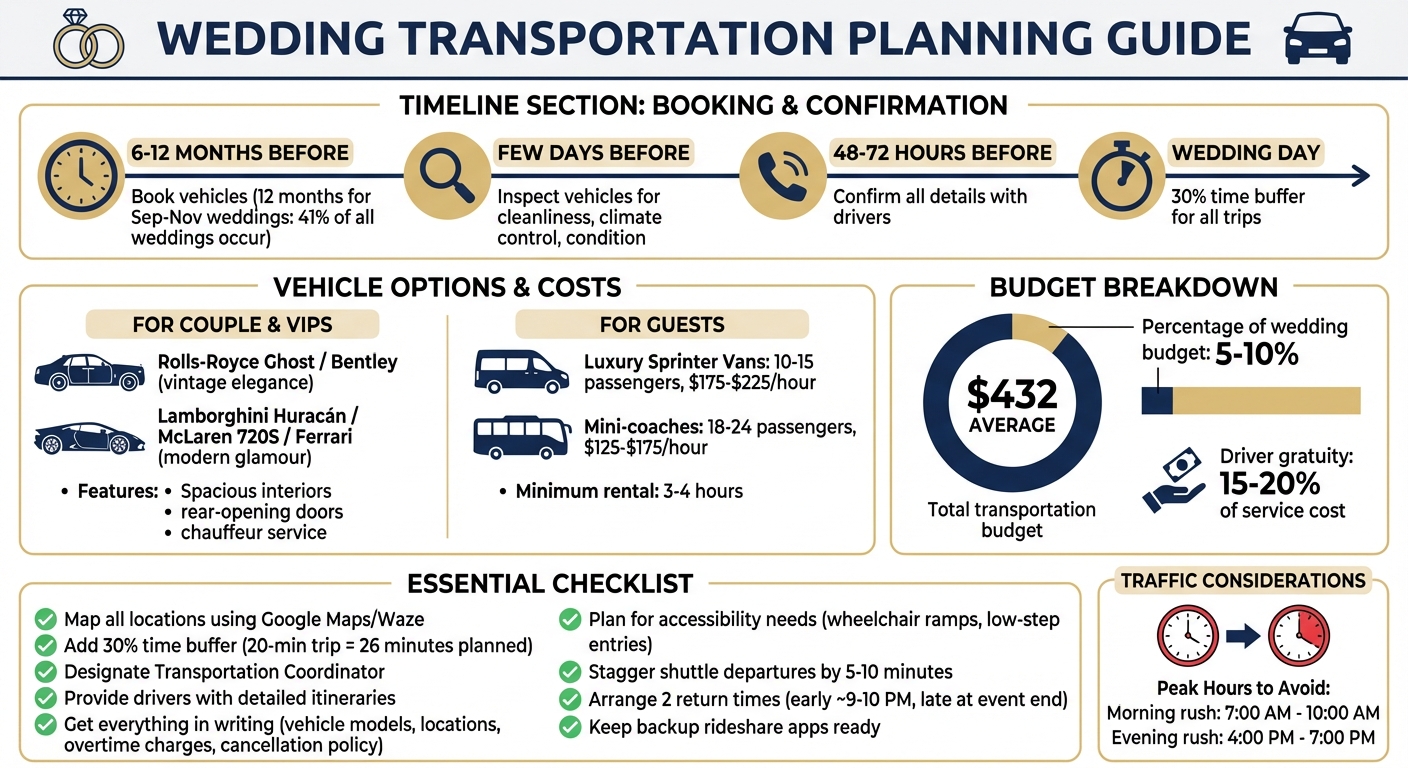
Wedding Transportation Planning Timeline and Checklist
Advice on choosing your wedding car from our fleet, questions and answers
sbb-itb-161ccc1
Common Wedding Transportation Problems
Even the most meticulously planned weddings can run into transportation hiccups. Juggling vehicles across several locations, unexpected traffic delays, and accommodating groups of varying sizes can quickly throw off your timeline. By identifying these common challenges, you can take proactive steps to keep your big day running smoothly.
Managing Multiple Venue Locations
Weddings often involve several stops – like getting-ready spaces, photo session spots, the ceremony site, and the reception venue. Each transition demands careful timing, as delays at one location can snowball into a stressful chain reaction for the rest of the day.
Urban or historic venues can add another layer of complexity. Narrow streets, one-way routes, or limited parking zones can make it tricky for larger vehicles, such as buses or limousines, to navigate. Without scouting these locations beforehand, you might face unpleasant surprises – like a bus stuck in a tight driveway – on the big day. This is why matching the right vehicle to each venue is a crucial part of planning.
Traffic and Route Issues
Traffic doesn’t take a break for weddings. Rush hour (typically 7:00 AM–10:00 AM and 4:00 PM–7:00 PM) often overlaps with key wedding moments, like ceremonies or receptions. Add in construction zones or unexpected accidents, and a short 15-minute drive can easily stretch into an hour-long ordeal.
For example, a bride in NYC was being transported in a vintage Rolls-Royce that broke down on the FDR Drive just 20 minutes before her ceremony at the Central Park Boathouse. Thankfully, the transportation company had a backup sedan nearby, allowing her to arrive only 12 minutes late. This story underscores how traffic and vehicle reliability can collide at the worst times, making contingency plans essential.
Accommodating Different Group Sizes
Getting everyone where they need to be – on time and in style – requires thoughtful planning. Overcrowding vehicles can lead to wrinkled dresses or damaged bouquets, so providing enough space is non-negotiable. For larger groups, multiple vehicles or staggered departures might be necessary, though this can complicate coordination and increase expenses.
Out-of-town guests bring their own challenges. Unfamiliar with local routes or parking, they may arrive late or get lost. Additionally, elderly or disabled guests may need special accommodations, such as vehicles with wheelchair ramps or low-step entries. Addressing these needs well in advance ensures everyone can participate comfortably.
Solutions for Smooth Wedding Transportation
Turn potential transportation headaches into seamless experiences with careful planning, stylish vehicles, and well-organized shuttles.
Pre-Event Planning and Coordination
Avoid last-minute chaos by planning your transportation well in advance. Book your vehicles 6–9 months ahead of time, or even 12 months early if your wedding falls during the busy season (September through November, when 41% of weddings take place). Use tools like Google Maps or Waze to map out all key locations – getting-ready spots, photo stops, the ceremony venue, and the reception. Add a 30% time buffer to each trip; for example, a 20-minute drive should be planned as 26 minutes.
Designate a Transportation Coordinator – this could be a trusted friend or a professional – to manage communication with drivers and oversee guest boarding. This ensures everything runs smoothly without you having to worry. A few days before the big day, inspect the vehicles for cleanliness, climate control, and overall condition. Provide drivers with detailed itineraries and contact information to avoid confusion.
Using Exotic Car Rentals for the Couple and VIP Guests
Once logistics are sorted, make your entrance unforgettable with a luxury or exotic car. Imagine arriving in a Rolls-Royce Ghost or a Lamborghini Huracán – vehicles that not only make a statement but also double as stunning backdrops for your wedding photos. Their sleek designs and polished exteriors add a touch of sophistication to your special day.
Chauffeur services can eliminate the stress of navigating or parking, ensuring you arrive on time and in style. Brides with large gowns should opt for cars with spacious interiors or rear-opening doors to make getting in and out easier. To protect longer dresses, ask for rear wheel covers to prevent grease or dirt stains. Match your car to your wedding theme: go for a vintage Bentley for timeless charm or a modern McLaren 720S for a sleek, contemporary vibe.
Shuttle Services for Guest Groups
For transporting your guests, well-coordinated shuttles are a must. Luxury Sprinter vans, seating 10–15 passengers, cost around $175–$225 per hour and are perfect for smaller groups or urban venues. For larger parties, mini-coaches that seat 18–24 passengers cost about $125–$175 per hour. Be mindful that most companies require a minimum rental period of 3–4 hours.
Simplify logistics by using a central meeting point, like a designated hotel block, instead of coordinating multiple pick-up locations. To avoid traffic jams, stagger vehicle departures by 5–10 minutes. Clear signage at pick-up points (e.g., "Wedding Shuttle – Main Entrance") and detailed schedules on your wedding website will help guests stay on track. Offer at least two return times: an earlier option (around 9:00 PM or 10:00 PM) for older guests and a later one at the end of the event. Lastly, make sure at least one vehicle is wheelchair-accessible or has low steps to accommodate guests with mobility needs.
Planning for Reliability and Backup Options
Even the most well-thought-out plans can hit unexpected snags. That’s why having solid backup strategies is key to maintaining the luxury and precision every wedding deserves.
Backup Vehicles and Quick Response Plans
A dependable luxury rental company will have contingency plans in place, like dispatching replacement vehicles within minutes if something goes wrong. During contract negotiations, ask about their standby vehicle protocols. Some companies keep spare drivers or vehicles on hand for emergencies and may even offer discounted rates for unused backups. Make sure your contract clearly outlines policies for vehicle breakdowns, replacement availability, and refund terms.
"Promises don’t count unless they’re in the contract, whatever was discussed by email or phone"
It’s also a good idea to inspect the vehicle a few days before the event to confirm it’s in top mechanical condition and clean. For extra peace of mind, keep a list of local taxi companies and ensure wedding party members have rideshare apps like Uber or Lyft installed as a last resort.
Having vehicles ready is only part of the equation – keeping everyone informed is just as critical.
Direct Communication Between All Parties
Delays can ripple through your schedule, causing stress and extra costs if vendors are left waiting. To avoid this, your Transportation Coordinator should have a detailed "run sheet" with every driver’s name, phone number, pickup times, and exact addresses.
Set up a group chat that includes all drivers and the coordinator to share real-time updates on route changes or timing adjustments. Confirm all transportation details 48–72 hours before the wedding, including pickup times, locations, and driver contact information. Additionally, ask chauffeurs if they prefer calls or texts for last-minute updates so you can ensure they see messages promptly. This level of direct communication makes it easier to handle any unexpected issues on the spot.
How Essentialyfe Handles Wedding Transportation

Essentialyfe simplifies wedding transportation by offering a one-stop solution that combines exotic car rentals, shuttle services, and event planning. Instead of coordinating with multiple vendors, couples can rely on a single provider to manage everything – from booking vehicles to ensuring smooth operations on the big day.
The service is tailored to fit various needs. Couples can make a grand entrance in high-performance supercars like Ferraris or Lamborghinis, while luxury buses and shuttles ensure guests travel comfortably and on time. This dual approach balances style and practicality, making sure everyone gets where they need to be without stress.
To keep things running smoothly, Essentialyfe assigns dedicated transportation coordinators. These professionals handle everything from mapping key locations to monitoring vehicles in real time. They also assist guests with mobility needs and build in a 30% delay buffer to account for unexpected hiccups.
Backup plans are a cornerstone of their strategy. Standby cars and secondary drivers are always on call, ready to address any vehicle issues quickly. Coordinators also plan alternative routes for every trip to sidestep potential delays caused by construction or local events.
Communication is seamless, thanks to centralized messaging threads that connect drivers, planners, and the bridal party. This allows for instant updates if timelines shift. Essentialyfe also ties logistics to aesthetics – such as pairing a vintage Bentley with a classic wedding theme – ensuring that every detail aligns with the couple’s vision. The result is a seamless VIP experience from start to finish.
Final Tips for Wedding Transportation
To wrap up your wedding transportation plans, make sure to iron out the key details for cost and timing. Book your vehicles 6–12 months in advance, especially if your wedding falls during the busy season (September–November). On average, wedding transportation costs around $432, which typically makes up about 5–10% of your overall wedding budget.
Inspect your selected vehicle a few days before the wedding to ensure it’s in top condition. Check for a clean interior, working air conditioning, and a polished exterior with no flaws.
Go with a provider who has experience handling weddings, holds valid commercial insurance, and has reliable customer reviews. Get every detail in writing – this includes the exact vehicle models, pickup and drop-off locations, overtime charges (usually billed in 15-minute increments), and cancellation policies. Don’t forget to budget for tipping your drivers, which is generally 15–20% of the service cost.
Choose a vehicle that complements your wedding theme. A classic Rolls-Royce or Bentley exudes timeless elegance, while Lamborghinis or Ferraris add a modern, glamorous touch. If your gown has a large train or intricate details, consider vehicles with rear-opening doors or spacious interiors to avoid mishaps like grease stains from tires. Once you’ve picked the perfect ride, shift your attention to being prepared for the unexpected.
Pack an emergency kit with essentials like stain remover, safety pins, breath mints, and phone chargers. These small items can save the day if anything goes awry.
"Transportation logistics might not be the most glamorous part of wedding planning, but they’re absolutely crucial for ensuring your celebration runs smoothly." – Eddie Limo
Lastly, assign a dependable friend or family member who’s not in the main wedding party to act as your transportation coordinator. They can handle communication with drivers, oversee guest boarding, and resolve any last-minute issues, leaving you free to enjoy your big day.
FAQs
How many cars do we really need?
The number of cars you’ll need for your wedding largely depends on the size of your event, the style you’re aiming for, and your specific transportation requirements. For smaller weddings, one or two vehicles might be enough to cover everyone. On the other hand, larger celebrations typically call for multiple luxury or exotic cars to transport guests, the bridal party, and other important attendees. Think about your guest count and the logistics involved to ensure everything runs smoothly.
What’s the best vehicle for a big wedding dress?
A spacious luxury car, such as a Rolls Royce or Bentley, is perfect for transporting a bride in her wedding dress. These vehicles offer ample room to accommodate the gown without wrinkling or discomfort, all while ensuring a grand and stylish entrance.
What should our contract include for breakdowns?
When reviewing your contract, make sure it clearly explains how vehicle breakdowns will be managed. It should specify the company’s responsibilities for repairs, the steps for accessing roadside assistance, and whether any associated costs will be covered by the company or billed to you. Having these details spelled out can help you avoid unexpected issues on your wedding day.