Renting a luxury yacht in the Caribbean is a dream vacation, but understanding the true costs is crucial. Here’s a quick breakdown:
- Pricing Models:
- "All-Inclusive": Common for catamarans and sailing yachts; includes meals, drinks, and fuel.
- "Plus Expenses": Used for motor yachts and superyachts; base rate excludes costs like fuel, food, and gratuities.
- Base Rates:
- Motor Yachts: $20,000–$80,000+ per week (65–80 ft); larger yachts can exceed $120,000.
- Sailing Yachts & Catamarans: $7,500–$60,000+ per week, with all-inclusive options.
- Superyachts: $100,000–$1,000,000+ per week, depending on size and luxury.
- Additional Costs:
- Advanced Provisioning Allowance (APA): 30–40% of the base fee for fuel, food, and dockage.
- Crew Gratuity: 10–20% of the base rate.
- Taxes: Vary by destination (e.g., 14% in the Bahamas).
- Seasonality: High season (Dec–Apr) has the highest rates, while shoulder seasons (May, June, Nov) offer discounts up to 50%.
For families or groups, catamarans offer spacious, stable, all-inclusive options. Motor yachts are ideal for speed and luxury, while superyachts deliver unmatched extravagance. Plan for 50–55% above the base rate to cover extras, and book during shoulder seasons for better value.
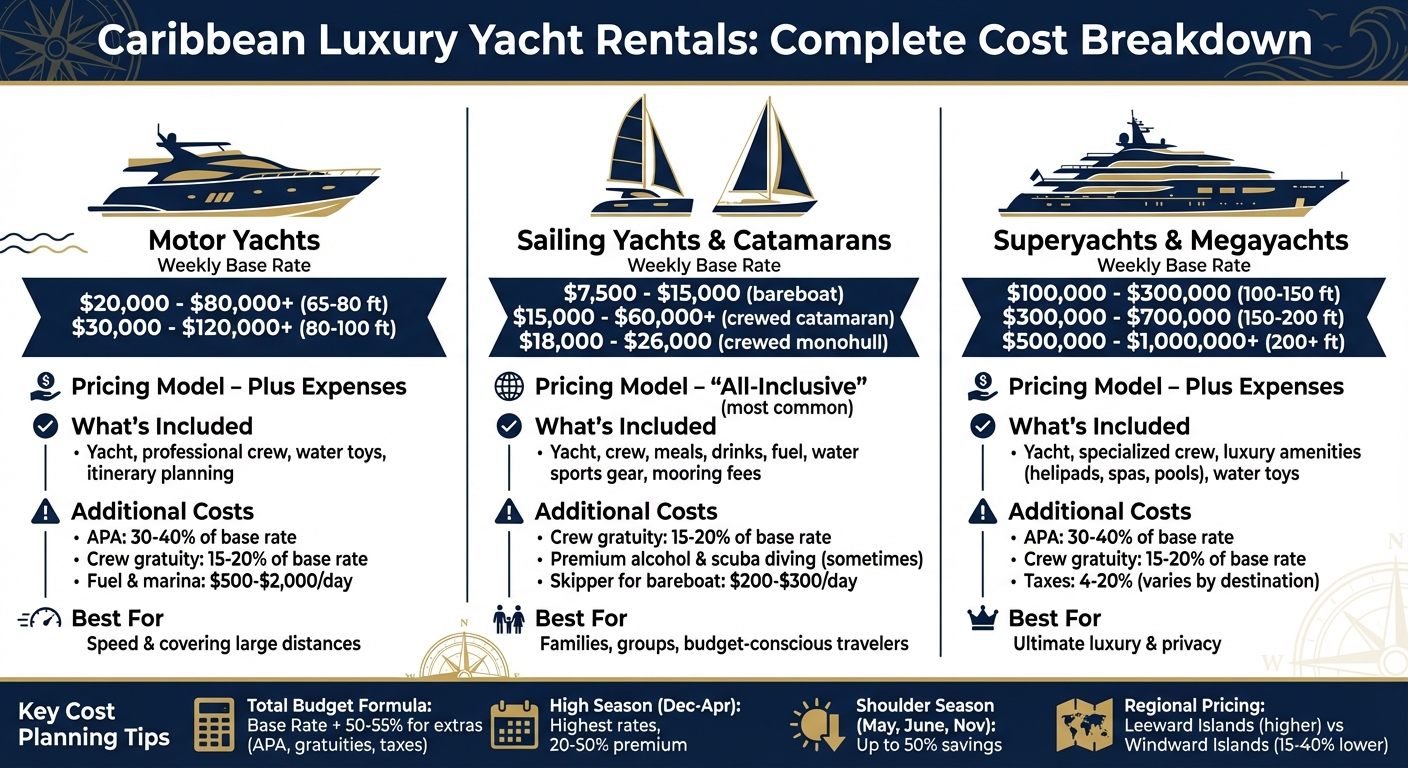
Caribbean Luxury Yacht Charter Cost Comparison Guide
1. Motor Yachts
Price Range
Motor yachts are all about speed, stability, and top-tier luxury. In the Caribbean, weekly base rates vary significantly depending on the size of the vessel. For yachts between 65 and 80 feet, rates typically range from $20,000 to $80,000 per week, while larger yachts in the 80- to 100-foot category can cost anywhere from $30,000 to $120,000 per week.
Location plays a big role in pricing. The Leeward Islands – think St. Barts and Antigua – often come with higher rates. Meanwhile, the Windward Islands, such as St. Lucia and Grenada, tend to be more budget-friendly. Timing your trip can also make a difference. Booking during the shoulder season (around May or June) can save you up to 50% compared to the peak months of December through March.
Next, let’s break down what’s included in the base fee.
Inclusions
The base fee generally covers the essentials: the yacht itself, a professional crew (which usually includes a licensed captain, a chef, and at least one deckhand or stewardess), and onboard amenities like water toys, snorkeling gear, paddleboards, and sound systems. Larger yachts might even come with extra specialists, such as engineers or dive masters. You’ll also get personalized itinerary planning, daily housekeeping, and gourmet meals tailored to your tastes.
That said, most motor yachts in the Caribbean operate on a "plus expenses" model, meaning that meals, fuel, and beverages are billed separately.
Extra Costs
It’s important to budget for additional expenses, as the base fee typically accounts for only 60% to 80% of your total charter costs. The Advanced Provisioning Allowance (APA) covers variable expenses like fuel, food, drinks, and dockage. For a $50,000 charter, you should plan for an extra $15,000 to $20,000.
Crew gratuity is another cost to consider, typically 15% to 20% of the base rate, which could add $7,500 to $10,000. Taxes vary depending on the island – while the Bahamas has a total tax of about 14%, many other Caribbean destinations don’t impose VAT. Additionally, fuel and marina fees can range between $500 and $2,000 per day.
Value for Money
Motor yachts are ideal for covering large distances quickly while delivering a refined, resort-like experience. However, their higher fuel consumption can make them more expensive to operate compared to sailing yachts. To maximize value, consider destinations in the Windward Islands and aim for the shoulder season to save on costs. It’s also wise to check whether your charter follows "Caribbean Terms" (which might include meals but exclude alcohol) or adheres strictly to a "plus expenses" model.
sbb-itb-161ccc1
How Much Does a Private Yacht Charter Actually Cost? 🚤💰
2. Sailing Yachts and Catamarans
Sailing yachts and catamarans bring a timeless Caribbean vibe while being more fuel-efficient than motor yachts. Catamarans, though pricier than monohull yachts, stand out for their stability, spacious interiors, and added comforts.
Price Range
If you’re considering a bareboat charter – where you act as the captain – a week-long catamaran rental for up to eight guests typically costs $7,500 to $15,000. For a fully crewed, all-inclusive experience, prices vary depending on the size of the vessel. For catamarans under 52 feet, expect to pay $20,000 to $35,000 per week. Mid-sized options (54–78 feet) range from $15,000 to $60,000, while larger catamarans can exceed $66,000 to $80,000.
Monohull sailing yachts are generally more budget-friendly. Bareboat rentals for vessels under 52 feet range from $2,000 to $8,000 per week, while crewed monohulls measuring 54–78 feet typically cost $18,000 to $26,000. The British Virgin Islands (BVI) often offer great deals on all-inclusive crewed packages, many under $35,000. For those seeking even lower costs, the Windward Islands, including Grenada and St. Lucia, are worth exploring.
Keep in mind that rates peak between December and April, while shoulder seasons bring noticeable discounts.
Inclusions
Crewed charters in the Caribbean, especially in the BVI and U.S. Virgin Islands, are typically all-inclusive. The base price covers the yacht, a professional crew (usually a captain and gourmet chef), and three daily meals tailored to your preferences, along with snacks and a stocked bar featuring standard spirits, beers, wines, and soft drinks. Guests can also enjoy water sports gear like paddleboards, kayaks, snorkeling equipment, and occasionally extras like sea scooters or towable tubes. Operational costs such as fuel, water, ice, and mooring fees are also included. Additional perks often include air-conditioned cabins, private bathrooms, WiFi, linens, towels, and daily housekeeping.
For bareboat charters, the cost generally includes only the yacht and standard equipment. You’ll need to budget separately for fuel, provisions, and mooring fees.
Extra Costs
Crew gratuities are an additional cost, even on all-inclusive charters. These typically range from 15% to 20% of the base charter fee. For instance, a $30,000 charter would require a tip of about $4,500 to $6,000.
Other exclusions might include scuba diving fees, premium liquors or rare wines, airport transfers, and dockage at luxury marinas if mooring balls aren’t used. Some yachts offer a "half-board" option, which allows you to dine ashore for some meals and reduces costs by about $150 per person.
For bareboat charters, adding a professional skipper costs around $200 to $300 per day, plus meals and accommodation. Tipping the skipper – usually 20% for excellent service – is also customary.
Taxes depend on the destination. For example, the BVI charges $6 to $16 per person, per day in government fees, while the Bahamas add a 4% government tax and a 10% VAT.
Value for Money
Sailing yachts and catamarans provide great value, especially for all-inclusive charters in the BVI or USVI, where meals, drinks, and fuel are bundled into one upfront price. Catamarans are particularly appealing for families and groups due to their stability and roomy layouts. For the best savings, look into the Windward Islands, where mooring and provisioning costs are lower, and consider booking during the shoulder season to take advantage of discounted rates. These upfront pricing models differ from the "plus expenses" approach typical of motor yachts.
3. Superyachts and Megayachts
After exploring motor yachts and sailing vessels, let’s dive into the world of superyachts and megayachts. These are the pinnacle of Caribbean luxury, offering experiences that redefine indulgence. Think floating resorts with professional crews, helipads, onboard spas, infinity pools, and an array of water toys like jet skis, SeaBobs, and even private submarines.
Price Range
The cost of chartering a superyacht or megayacht varies widely based on the vessel’s size, age, and season. Here’s a general breakdown:
- Superyachts (100–150 feet): Weekly rates range from $100,000 to $300,000.
- Larger superyachts (150–200 feet): Expect to pay between $300,000 and $700,000 per week.
- Megayachts (200+ feet): Prices start at $500,000 and can exceed $1,000,000 per week.
For ultra-luxury vessels, the numbers climb even higher. For example, the 446-foot Flying Fox, accommodating 36 guests with a crew of 54, costs between €3,500,000 and €4,270,000 (approximately $3.8 million to $4.6 million) per week. Meanwhile, the yacht Wellington, featured on Below Deck, starts at $250,000 weekly for up to 12 guests.
Newer yachts often command double the rates of older ones. Peak season, running from December through April, can push prices up by 20% to 50%, with Christmas and New Year weeks being the most expensive. Locations also influence costs – destinations like St. Barts in the Leeward Islands are pricier, while the Windward Islands offer more affordable options.
Inclusions
The base charter fee typically covers the essentials: the yacht itself, insurance, and a professional crew. Crews often include captains, engineers, deckhands, stewards, and private chefs. Larger yachts may also feature specialized staff like dive masters, spa therapists, and fitness instructors. Guests enjoy personalized service, custom menus, and itineraries tailored to their preferences.
"For that price, you have a 5 star floating resort that can go anywhere you would like to in the Caribbean." – WI Yachts
Amenities are equally impressive. Expect high-speed tenders, water sports gear, onboard cinemas, gyms, jacuzzis, WiFi, air conditioning, and daily housekeeping. These yachts offer complete privacy and exclusive access to hidden coves unreachable by standard tourist routes.
Extra Costs
While the base rate covers a lot, additional expenses can add up quickly. Most superyachts operate on a "plus expenses" pricing model. Here are the key extra costs:
- Advance Provisioning Allowance (APA): This prepayment, typically 30% to 40% of the base fee, covers variable costs like fuel, food, and dockage. Any unused funds are refunded at the end of the charter.
- Gratuity: Tipping the crew is customary, usually 15% to 20% of the base rate. For a $300,000 charter, this means an additional $45,000 to $60,000.
- Taxes: These depend on the destination. For instance, the Bahamas imposes a 14% total tax (4% charter fee plus 10% VAT), while other islands charge anywhere from 4% to 20%.
- Delivery Fees: If the yacht needs to be relocated to your departure port, you may incur delivery costs.
Additional services, like premium alcohol, satellite communications, and shore excursions, are either deducted from the APA or billed separately.
Value for Money
To get a realistic sense of total costs, plan to add approximately 50% to 55% on top of the base rate for APA, taxes, and gratuities. For example, a $50,000 base rate would come to about $77,500 with all fees included.
For those looking to save, consider booking during shoulder seasons – May, June, or November – when rates are lower but the weather remains pleasant. Destinations like Grenada and St. Lucia in the Windward Islands often provide better value compared to high-demand spots like St. Barts. Booking early for peak winter weeks may also secure discounts.
While superyachts come with a hefty price tag, their unmatched amenities, privacy, and exclusivity make them a worthwhile splurge compared to smaller charters.
Pros and Cons
Each yacht category brings its own set of perks and trade-offs, impacting both costs and the overall experience.
Motor yachts are all about speed and luxury. They let you explore more Caribbean islands in less time while enjoying top-tier amenities like gyms, jacuzzis, and premium sound systems. However, these benefits come with a hefty price tag. High fuel consumption alone can add 25% to 30% to the total cost through the Advance Provisioning Allowance (APA). On the other hand, sailing yachts and catamarans focus on efficiency and often offer all-inclusive packages, making them more budget-friendly.
Sailing yachts and catamarans are known for their value in the Caribbean. Many charters operate under "Caribbean Terms", which bundle meals, drinks, and fuel into a single upfront cost. For example, a crewed catamaran accommodating eight people typically costs around $27,000 per week – significantly less than the ~$44,000 you’d spend at a five-star resort when factoring in meals and activities. However, they come with some compromises: slower travel speeds and, for monohull sailing yachts, smaller cabins.
At the top of the luxury spectrum, superyachts and megayachts offer an unmatched level of exclusivity. These yachts boast specialized crews, white-glove service, and extravagant features like onboard cinemas and helipads. But luxury comes at a steep cost, with base rates ranging from $100,000 to over $1,000,000 per week. Additional expenses include an APA of 30% to 40% and crew gratuities of 15% to 20%. Their large size also limits access to shallow coves and smaller ports.
The table below provides a quick comparison of the pros and cons for each yacht category:
| Yacht Category | Main Pros | Main Cons | Typical Weekly Base Rate |
|---|---|---|---|
| Motor Yachts | High speed, luxury amenities (gyms, spas), covers more distance | High fuel consumption, higher base rates, usually "plus expenses" | $20,000 – $80,000+ |
| Sailing Yachts & Catamarans | All-inclusive pricing, fuel-efficient, stable (catamarans), great value | Slower travel speeds, smaller cabins on monohulls | $10,000 – $60,000+ |
| Superyachts & Megayachts | Elite service, specialized crew, ultimate privacy and luxury | Extremely high cost, complex "plus expenses" terms, limited to deeper ports | $100,000 – $1,000,000+ |
Conclusion
When choosing a yacht, focus on your budget and priorities. Think about the purpose of your trip, how many people you’ll be accommodating, and the overall cost. For couples or smaller groups on a tighter budget, sailing yachts are a fantastic option, with weekly rates starting at around $10,000. If you’re traveling as a family or with a mid-sized group, catamarans offer a spacious and stable experience. Their all-inclusive pricing – covering meals and fuel – makes them a predictable and convenient choice. For those looking to explore more islands quickly, motor yachts are a great pick, though you should factor in an additional 25–30% to cover fuel costs. And for those seeking the pinnacle of luxury, superyachts and megayachts deliver unparalleled service, with weekly rates ranging from $80,000 to over $1,000,000.
It’s important to plan for more than just the base rate. Additional expenses like APA, taxes, and gratuities can add up. To save, consider booking during shoulder seasons like May, June, or November, and look at destinations like the Windward Islands, where you could cut costs by 15–40%.
For a seamless experience, Essentialyfe takes yacht charters to the next level. They offer personalized itineraries, luxury ground transportation, and clear APA management. Their VIP services include private chefs, personal shoppers, spa treatments, and 24/7 support. They even handle large-scale events like milestone celebrations or corporate retreats, complete with catering, entertainment, and drone photography.
To get the most value, always ask for an itemized quote that specifies whether VAT, cruising permits, and delivery fees are included in the base rate. Booking three to six months in advance is another smart move, especially for peak Caribbean weeks, ensuring access to the best yachts and crews. By understanding these cost details, you can plan effectively for budgets ranging from $10,000 to over $1,000,000.
FAQs
What’s a realistic all-in total beyond the base rate?
A luxury yacht rental in the Caribbean usually costs between $10,000 and over $100,000 per week. The price depends on factors like the yacht’s size, the season, and the amenities provided. It’s important to check what’s included – like the crew, fuel, and meals – so you can get a clear sense of the total cost.
Should I choose all-inclusive or plus-expenses pricing?
Choosing between all-inclusive and plus-expenses pricing boils down to how you like to manage your budget.
All-inclusive gives you one fixed rate that covers everything – yacht, crew, meals, drinks, and amenities. It’s perfect if you want a hassle-free experience with no surprise costs. On the other hand, plus-expenses starts with a lower base rate, but you’ll need to account for additional costs like fuel, port fees, and other extras. This option can offer more flexibility and might save you money if you’re mindful of your usage.
If you value simplicity and predictability, all-inclusive is a great choice. But if you prefer more control over your spending, the plus-expenses model might be a better fit.
Which islands and months offer the best value?
The best deals for Caribbean yacht rentals are usually available in May and October, during the shoulder seasons. These months bring lush, green scenery, smaller crowds, and more affordable rates. Top spots for a budget-friendly yet enjoyable experience include the British Virgin Islands, St. Martin, St. Barth’s, and the USVI. These destinations offer a mix of privacy and value, making them perfect for a relaxing getaway.